Et sur le forum américain (voir le lien précédent) on disait: - Citrange: Yes, that's another very interesting species that I would love to add to my collection. - Sylvain: I am too very, very interested to have few viable seeds. Après avoir lu: http://helenasadventuresintropicalpng.wordpress.com/2013/02/11/was-it-goodenough/ - Citrange dit: Anyone feel in need of some adventure? Et comme plaisanterie je réponds: - Sylvain: If someone pays the plane ticket, this summer I go there and send you seeds. This is exactly the situations I love. - Citrange: Really? More malaria? (en référence à la chasse au Cytropsis https://www.agrumes-passion.com/viewtopic.php?t=3693) I'd go myself, but I'm not sure they've got enough supplies of soft toilet-paper! So instead, I'll sponsor your trip for €200. Another 9 sponsors should cover your fares. - Sylvain: I swear, this time I'll take my pills.
Et c'est comme ça, sur une plaisanterie, que le projet a commencé. On a travaillé presque un an sur ce voyage. Principalement moi et Mike mais avec l'aide de plein d'autres.
On s’aperçoit vite que la Papouasie - Nouvelle Guinée (PNG) est aussi la patrie de C. Wintersii, C. Warburgiana, du cédrat de Papouasie et encore plus fascinant de Clymenia polyandra qui vient juste de rejoindre les citrus dans la nouvelle classification. Mike dit: To find C. wakonai will be a real challenge. To find all of them in one trip would be almost impossible. But prove me wrong!!!
Traduction: Trouver C. wakonai sera un vrai défi. Les trouver tous est quasiment impossible. Montre-moi que j'ai tord!!!
La plaisanterie se transformait en défi!
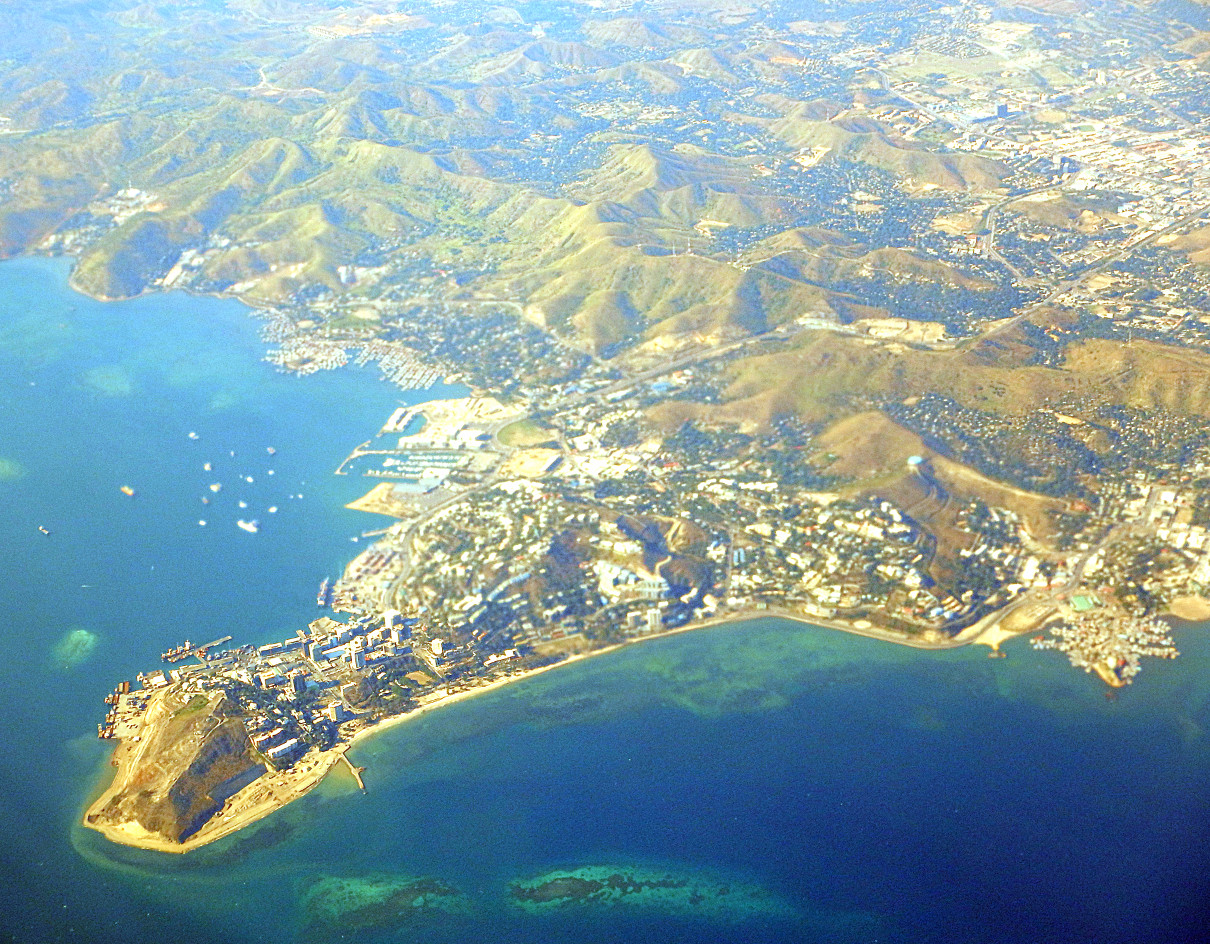
Les mois suivants ont été occupés à préparer le matériel, à placer les endroits où des agrumes avaient été vus sur la carte du GPS (mon smartphone Galaxy S2), à charger les cartes détaillées de PNG sur le smartphone, à collecter toutes les informations sur les plantes et la PNG, et à apprendre les rudiments de Tok Pisin le pidgin local. La 4 mai 2014 j'achetais le billet: Départ le 26 aout de Bordeaux, escales à Paris et Hong Kong et arrivée à Port Moresby (capitale de la PNG) le 28 aout.
Je vais directement acheter mon billet d'avion pour Goroka. Ce sera pour le 8 septembre, ce qui laisse une bonne semaine de libre. Je vais à l'université en stop. Je trouve un petit coin tranquille pour m'installer. Je m'endors en entendant des chants étranges et répétitifs tout près de mon bivouac.
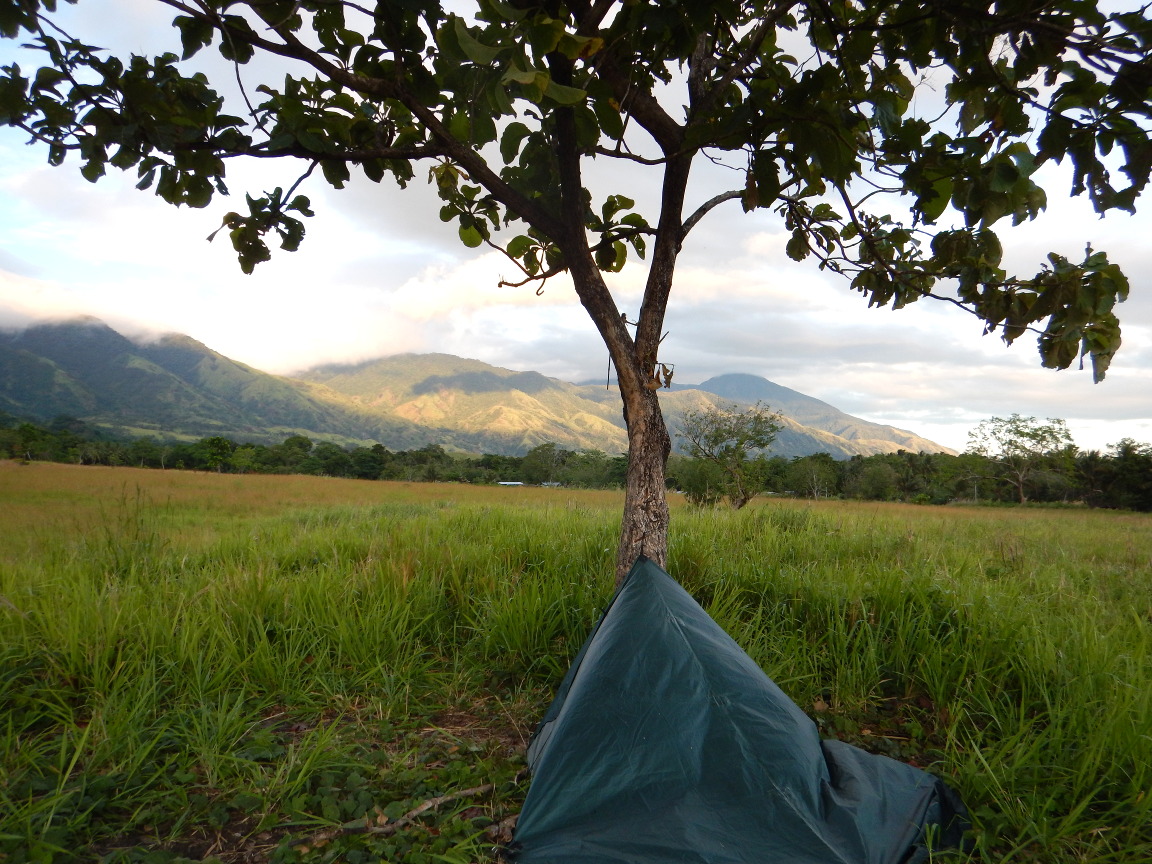
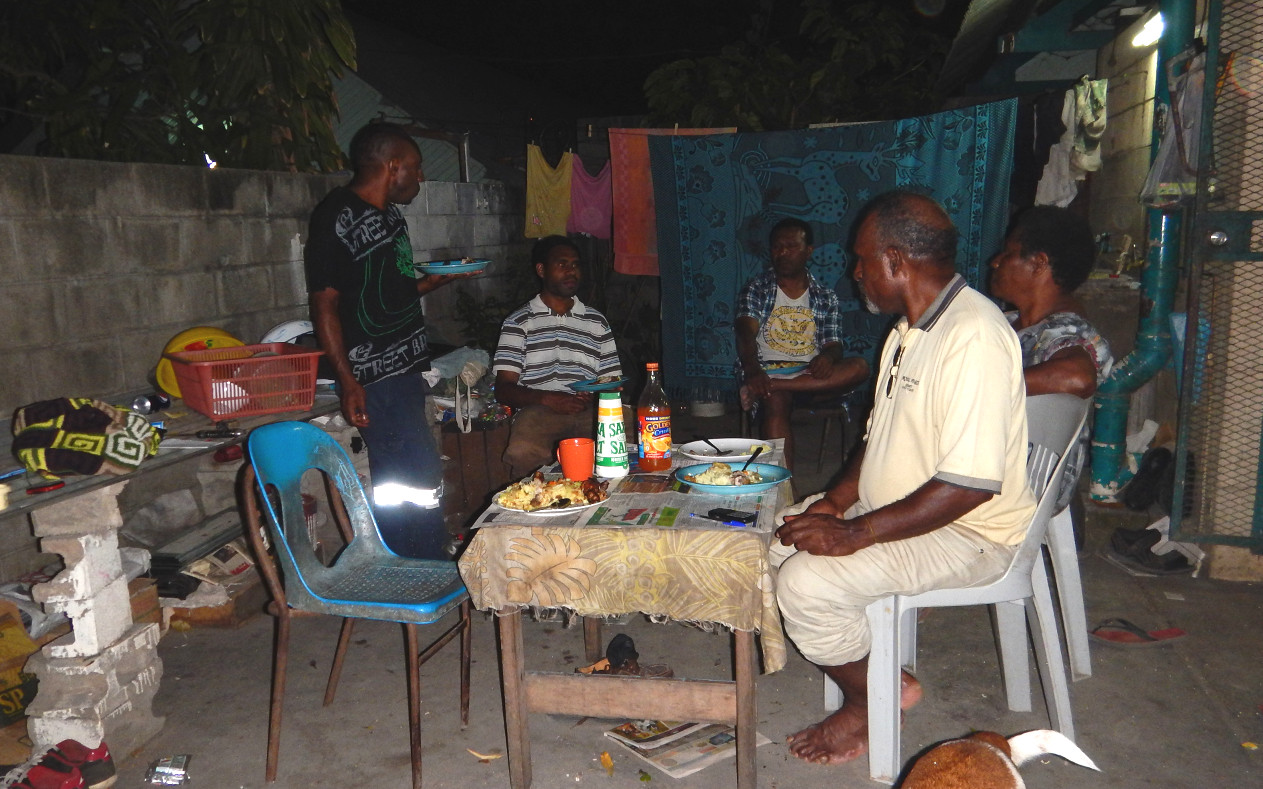
Je suis réveillé au milieu de la nuit par des vigiles qui sont les gardiens de l'université. ils m'expliquent qu'il est trop dangereux de dormir dehors ici car il y a des "settlements" (en fait, des bidons-villes) tout près. Ils m’emmènent à leurs bureaux où je pourrai dormir dans un grand hall. Je préfère dormir dehors car la petite brise éloigne les moustiques. Campement des 3 premières nuits:
Samedi 30 Août.
8h, je vais visiter le jardin botanique qui longe l'université. Après renseignement il n'y a pas d'agrumes.
Vidéo de casoar.
Vidéo de kangourou arboricole:
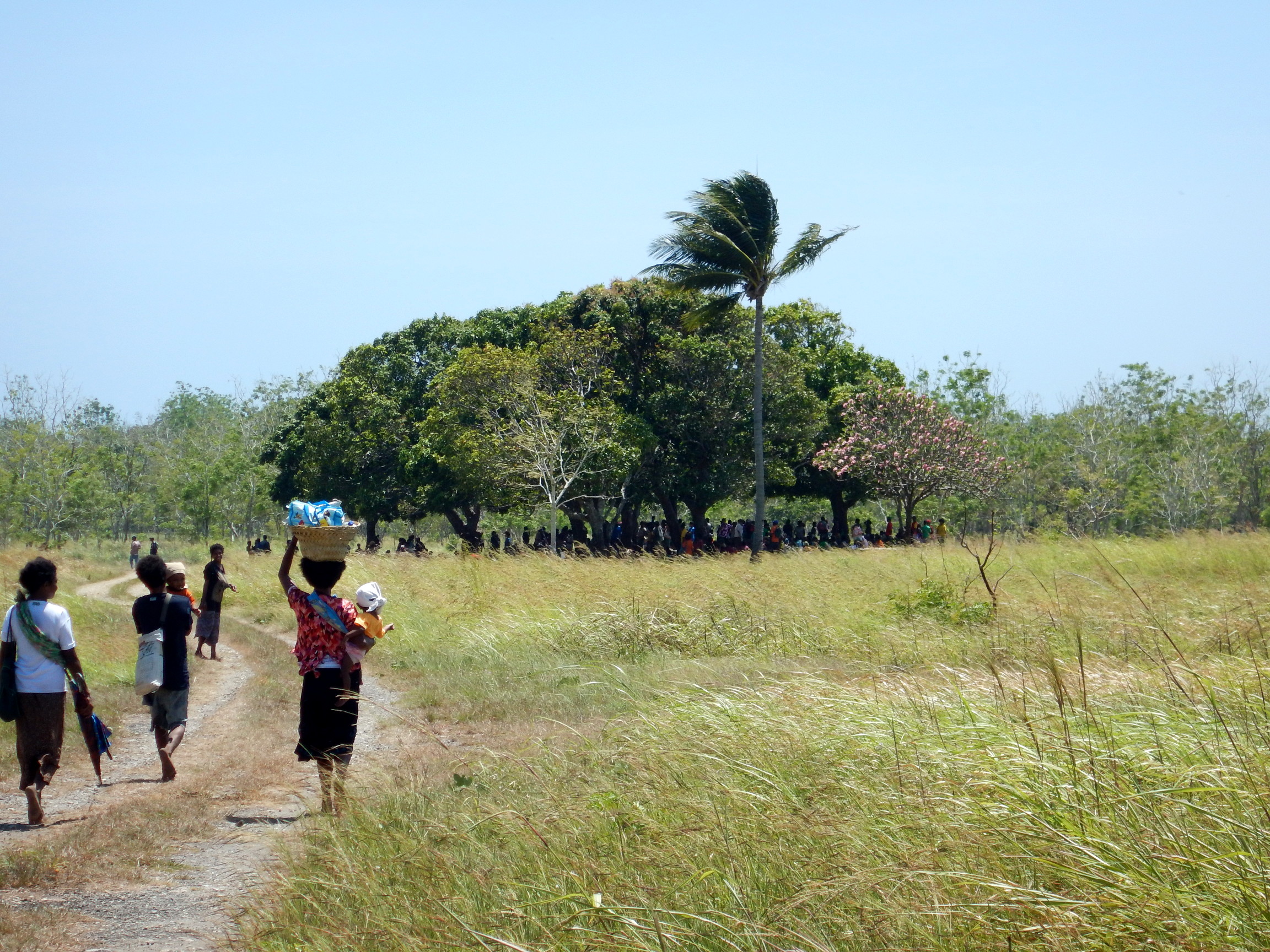
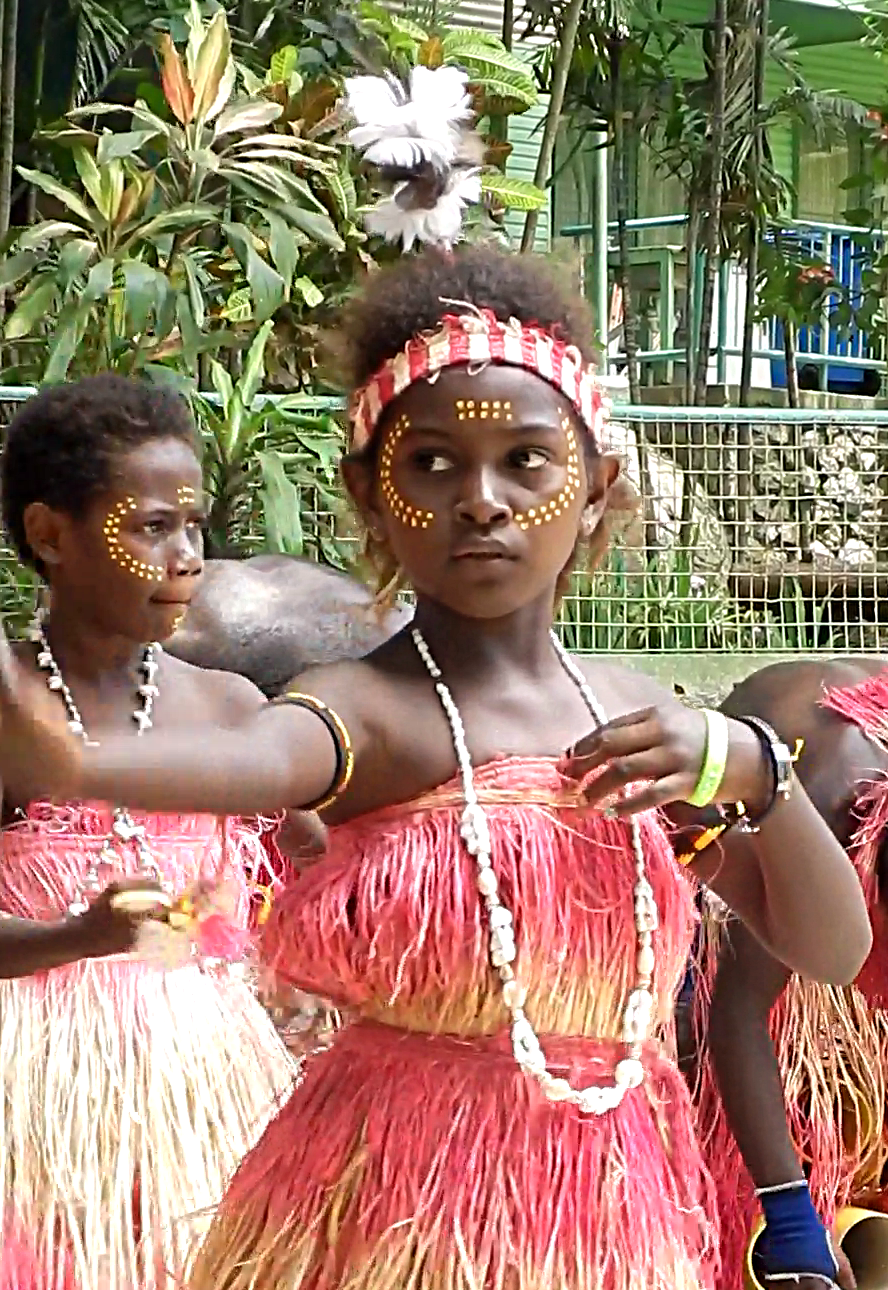
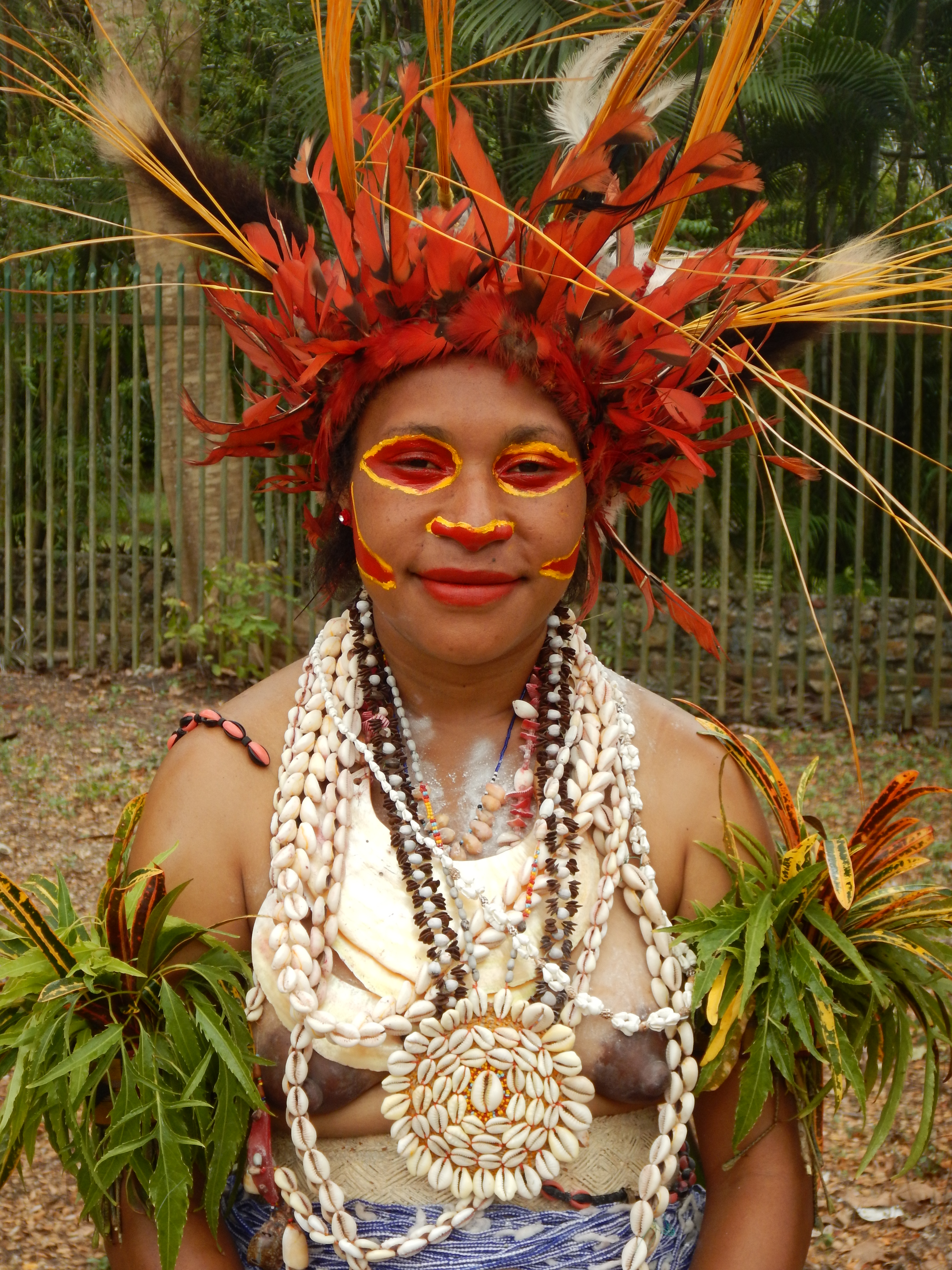
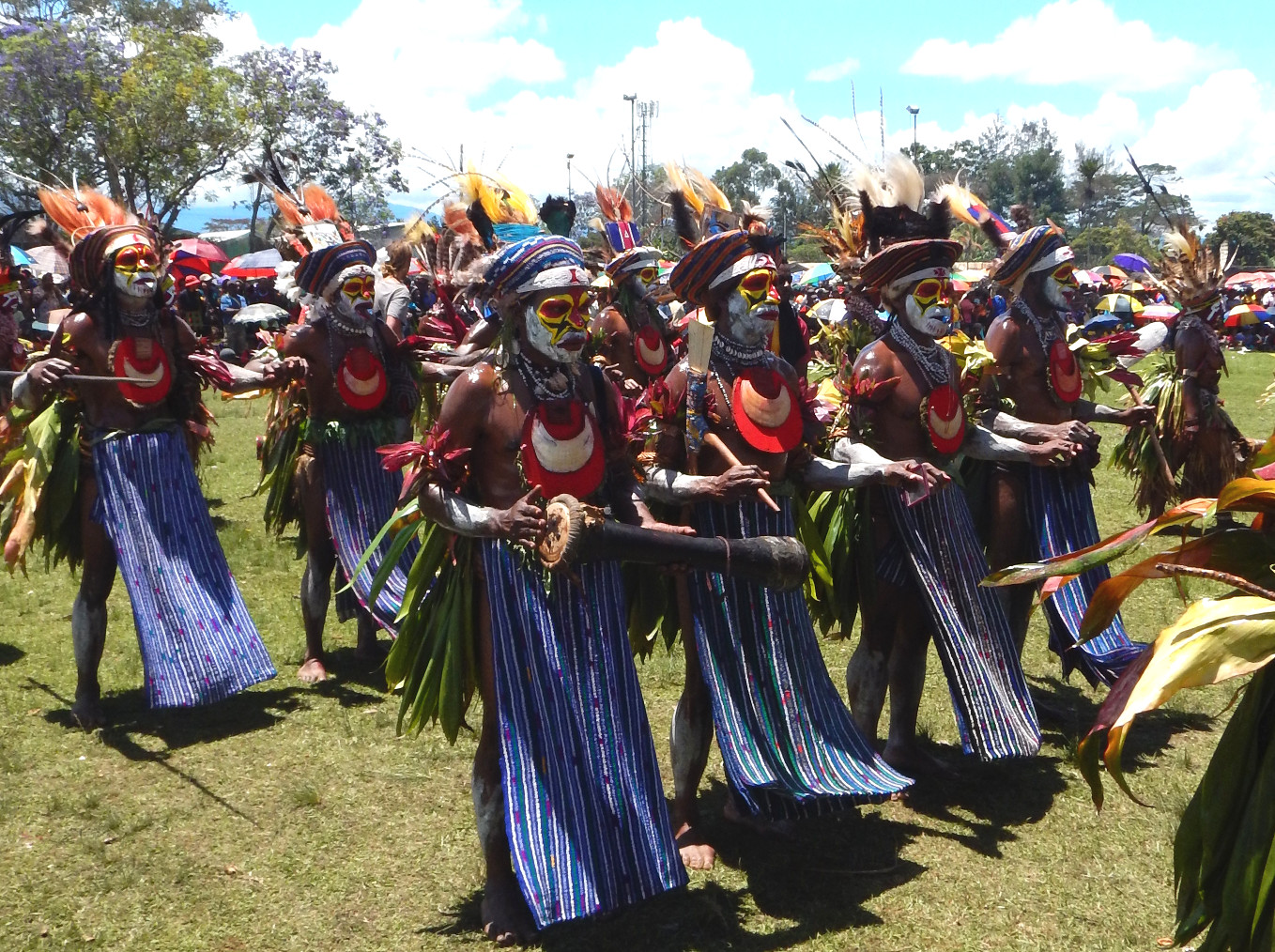
À 11 heure je sors et je tombe sur un groupe de l'université qui prépare un singsing.
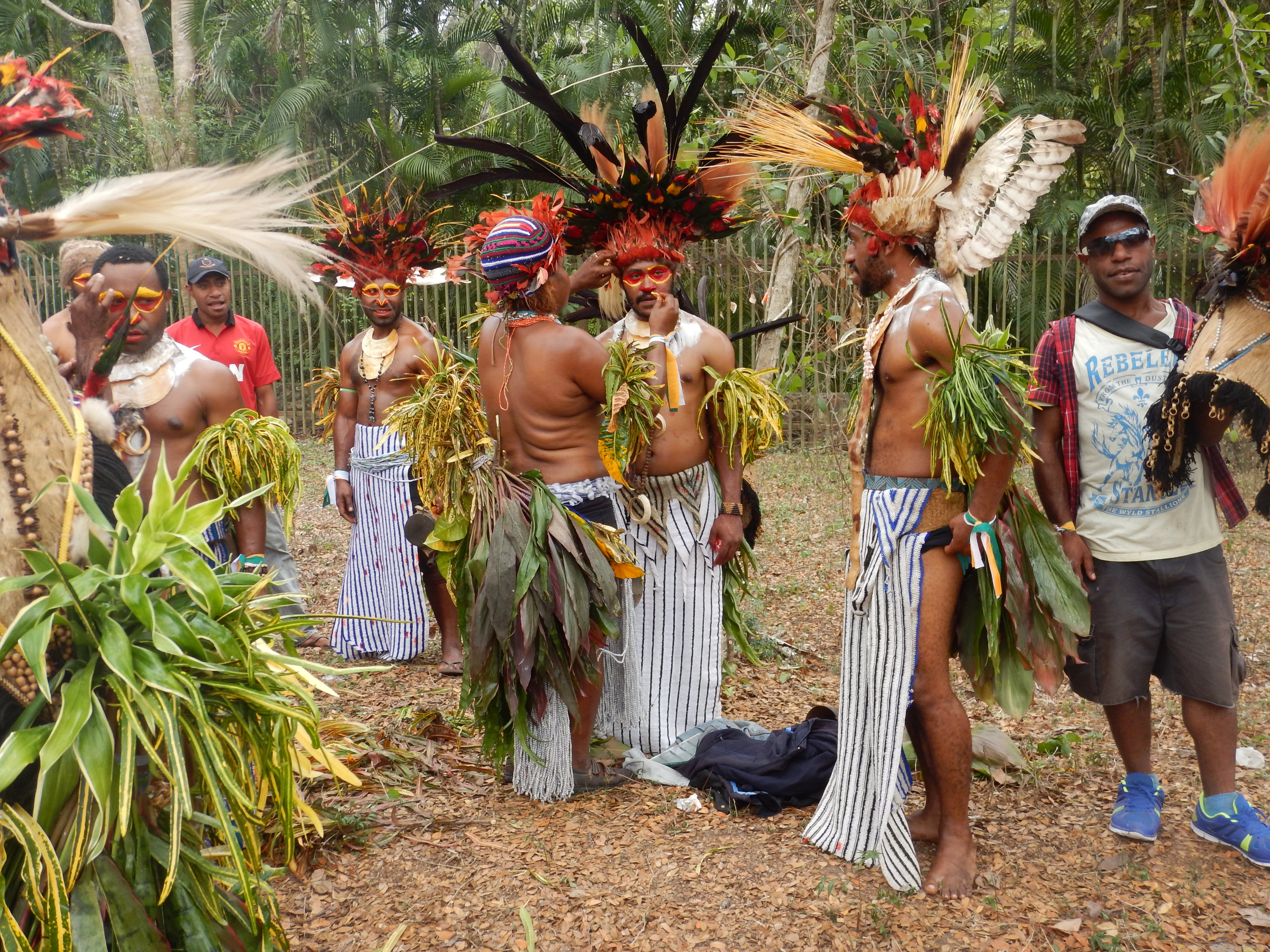
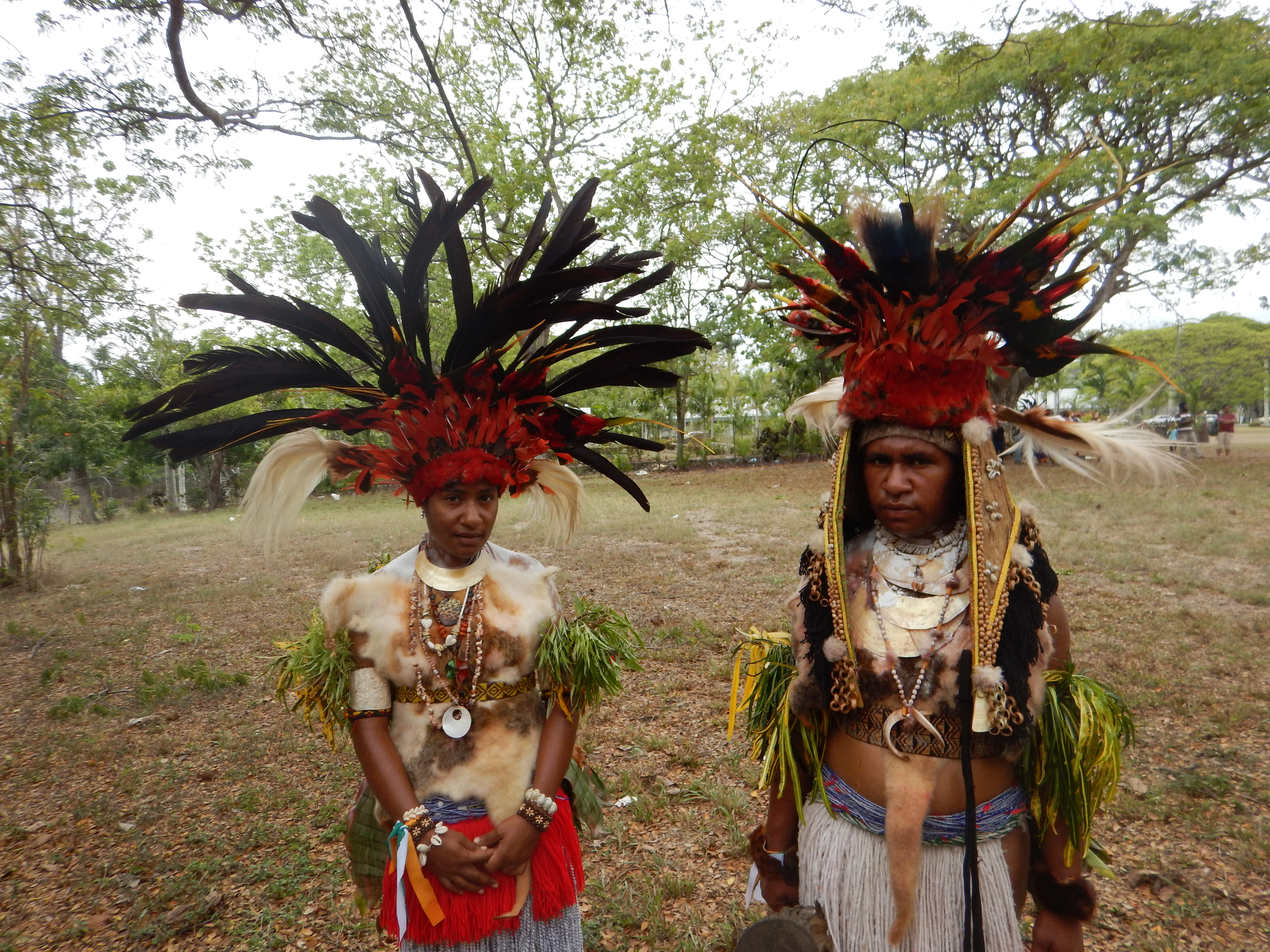
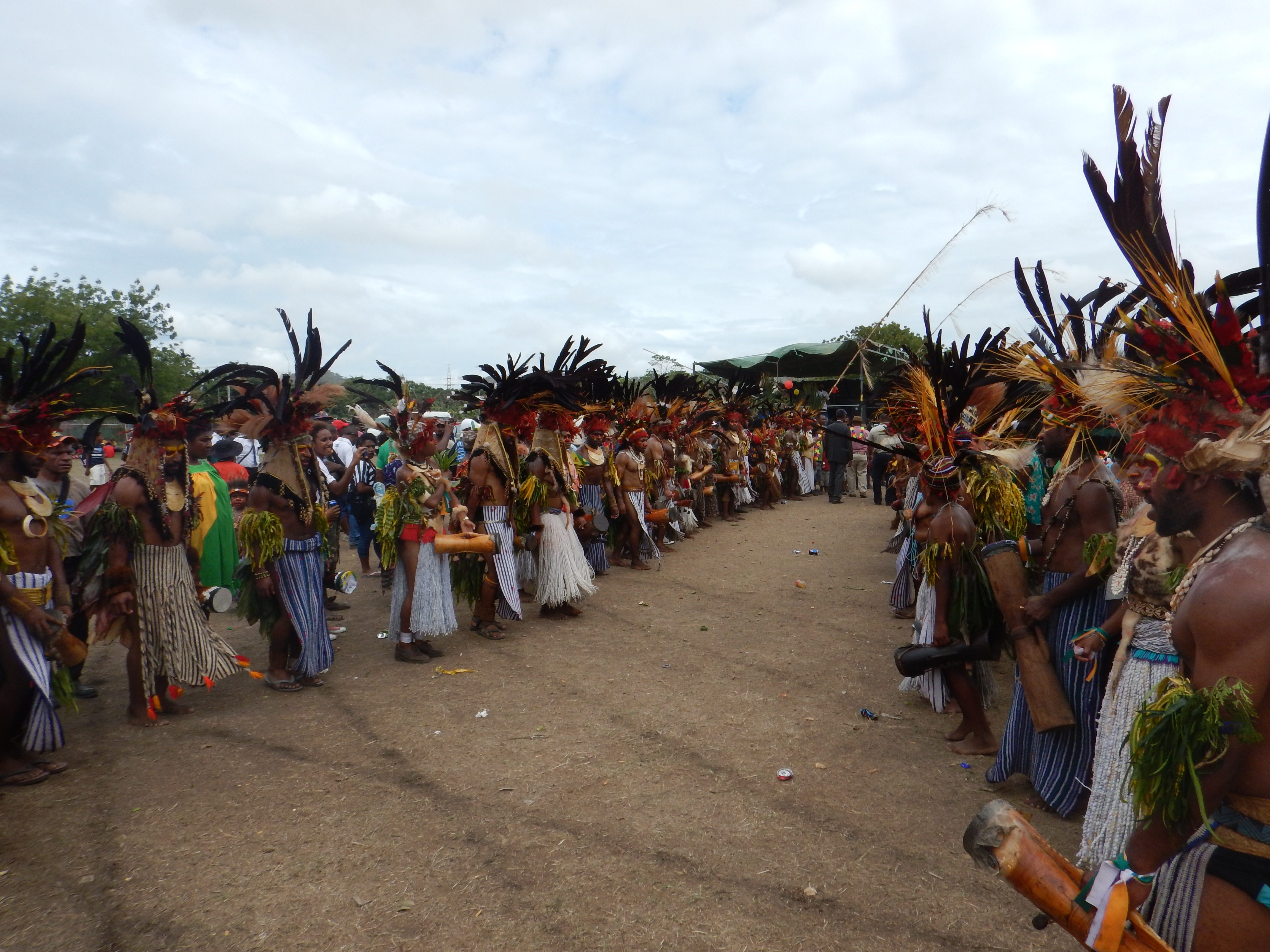
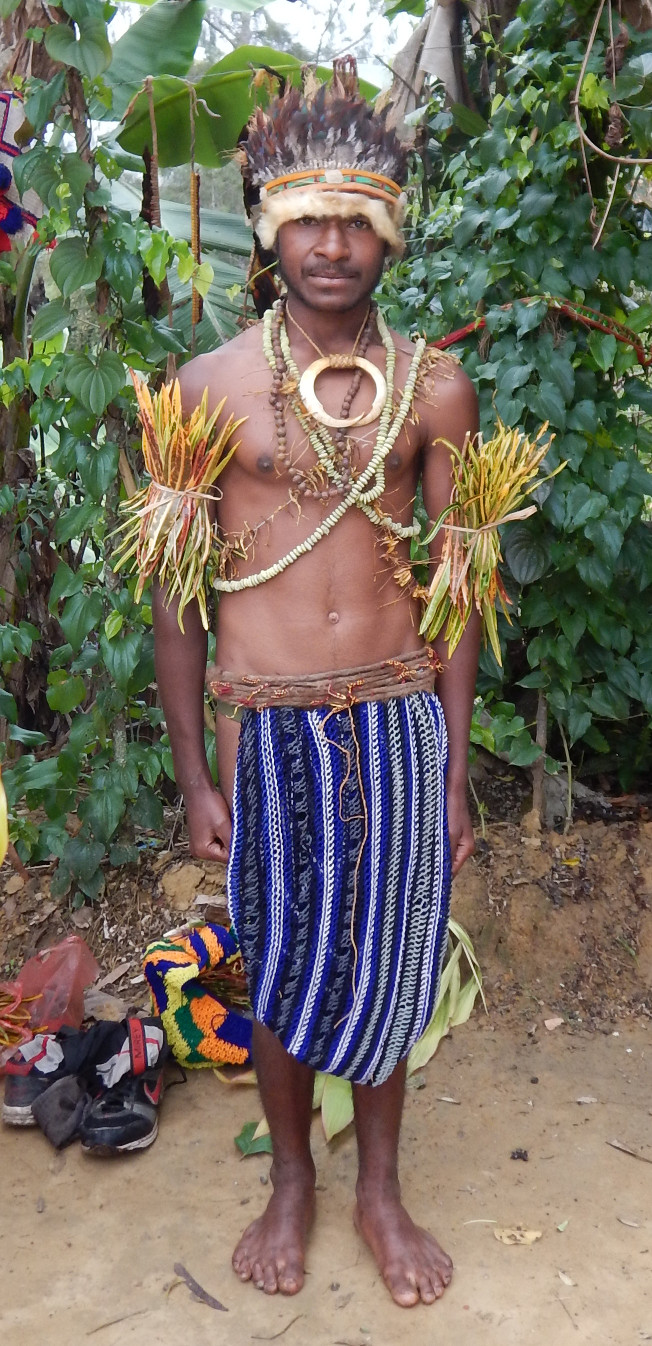
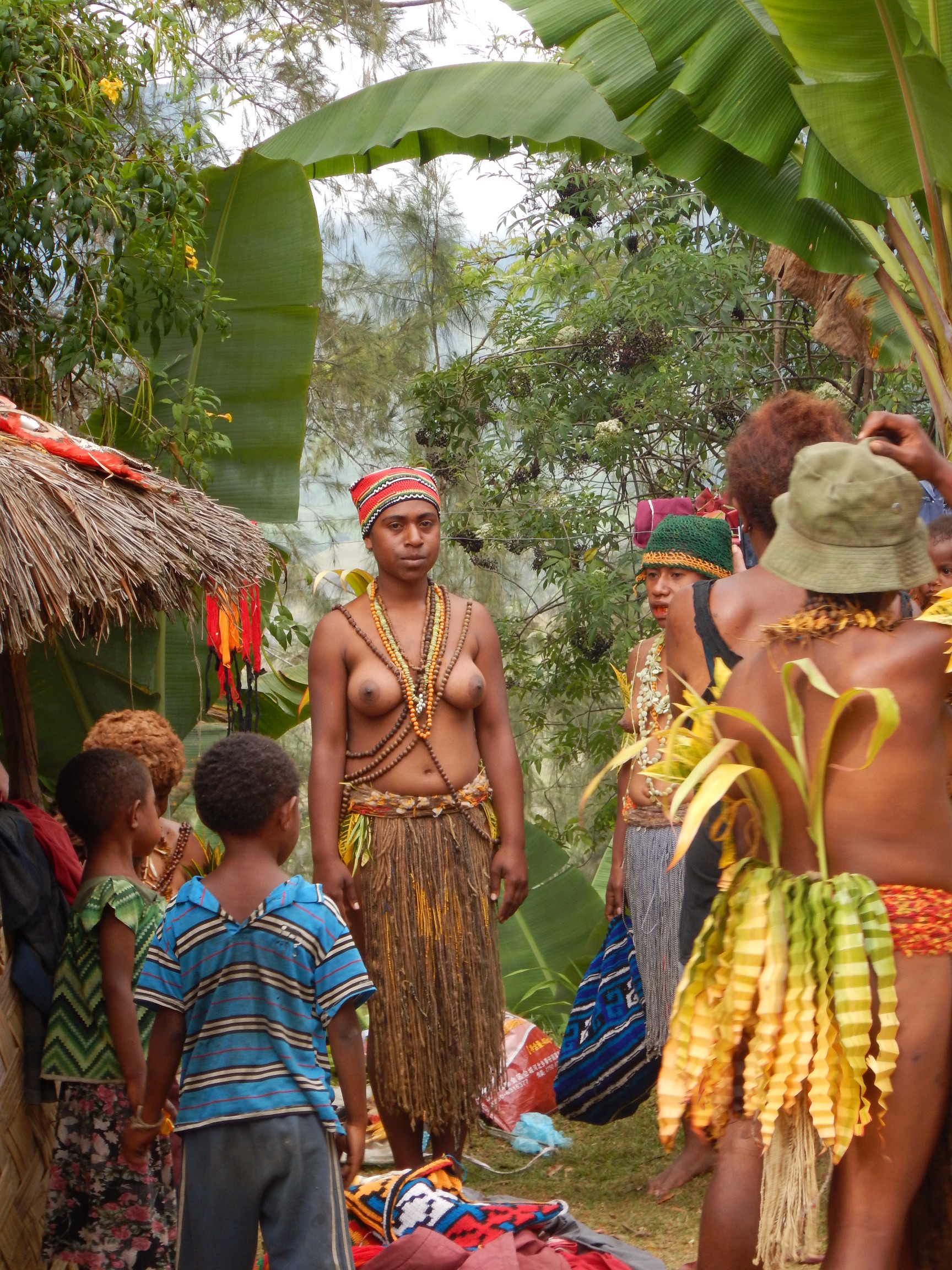
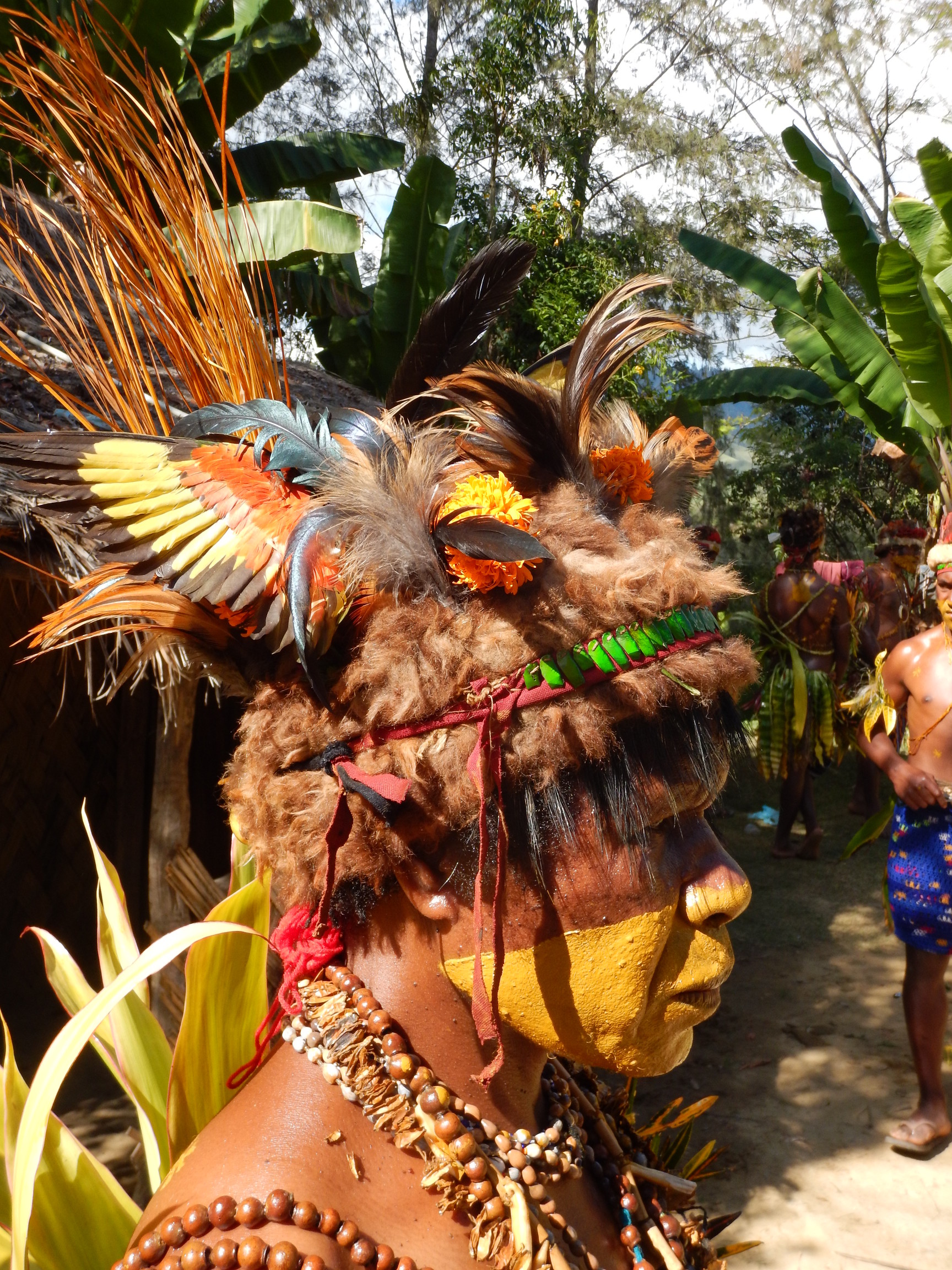
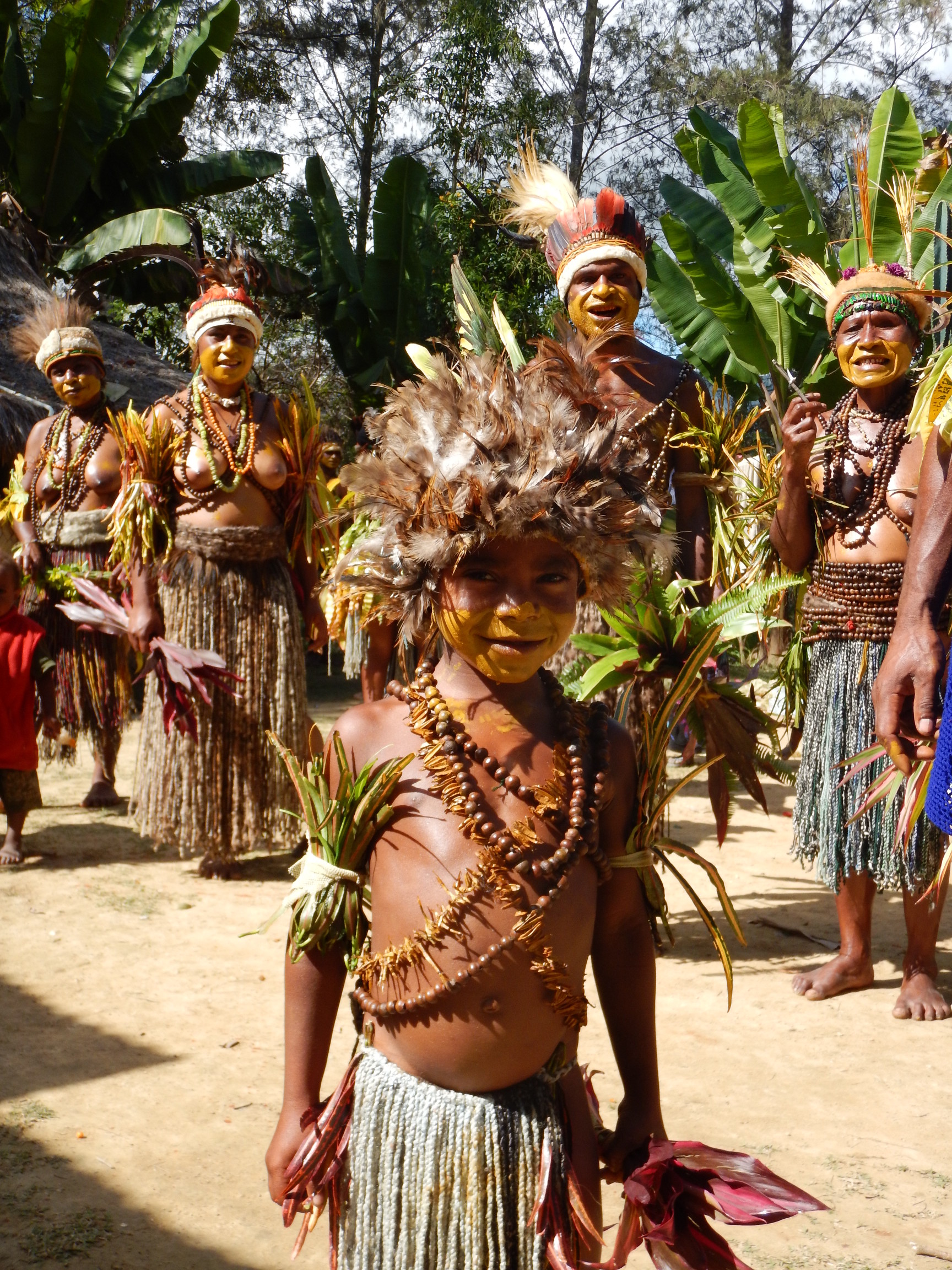
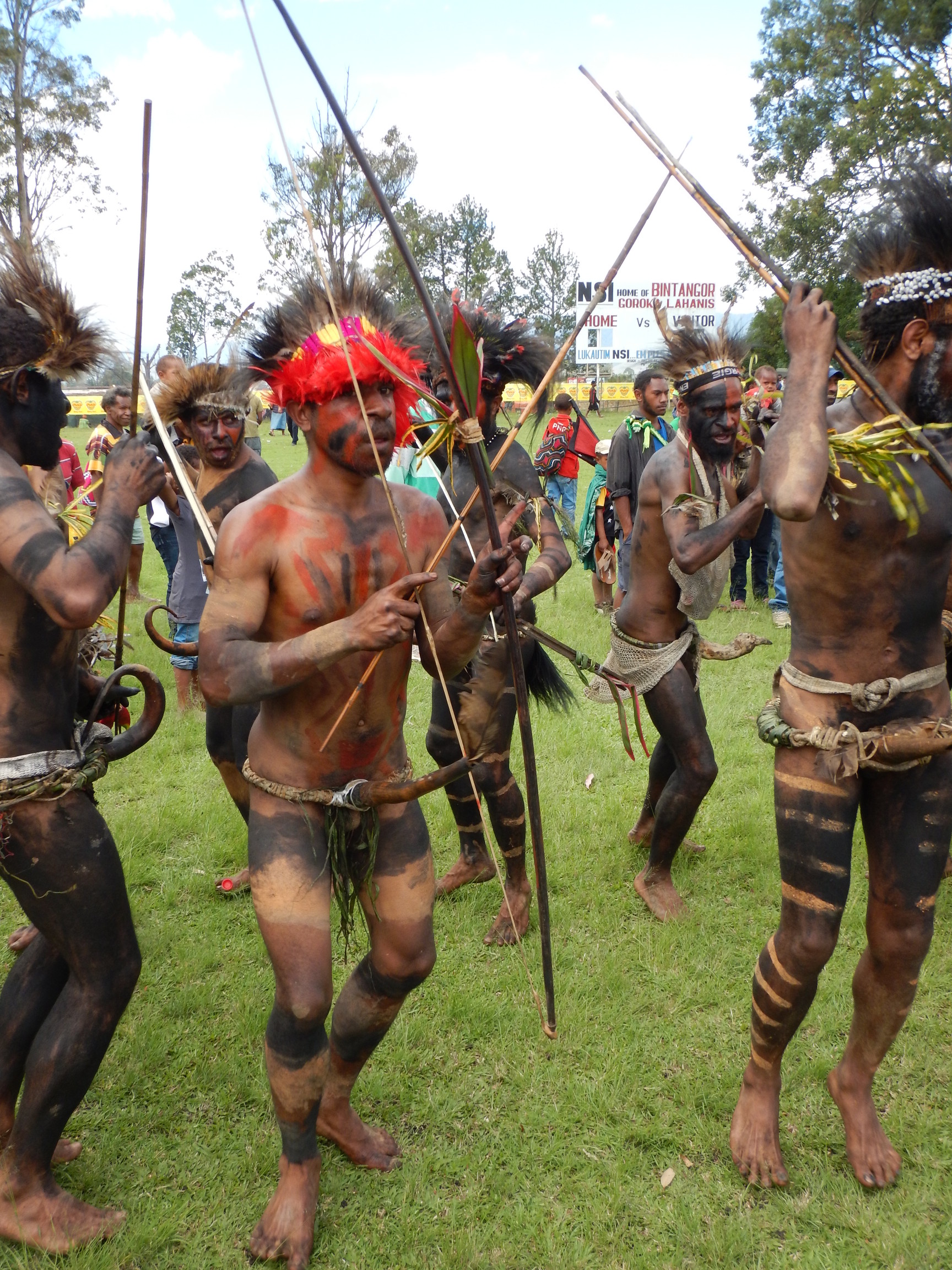
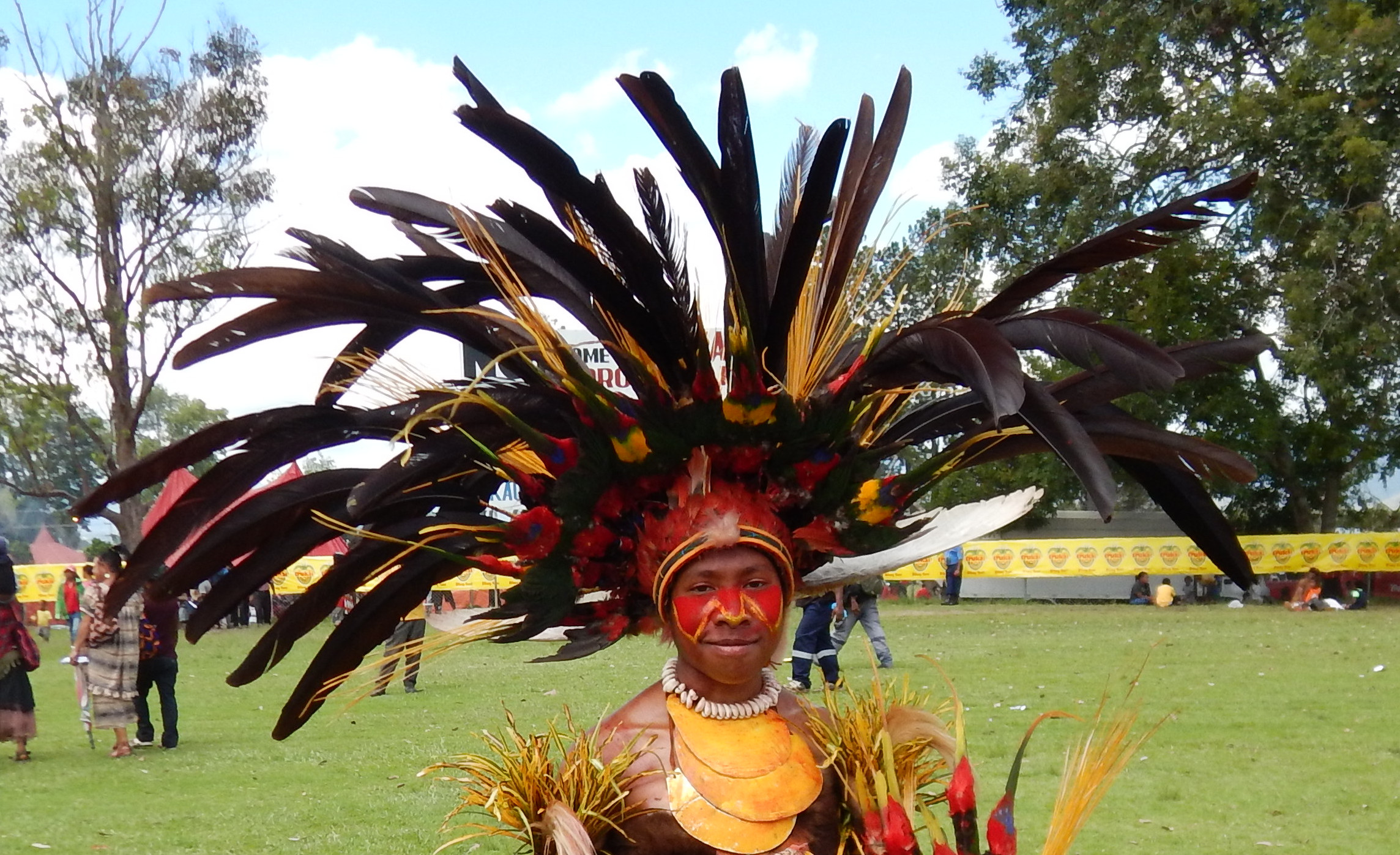
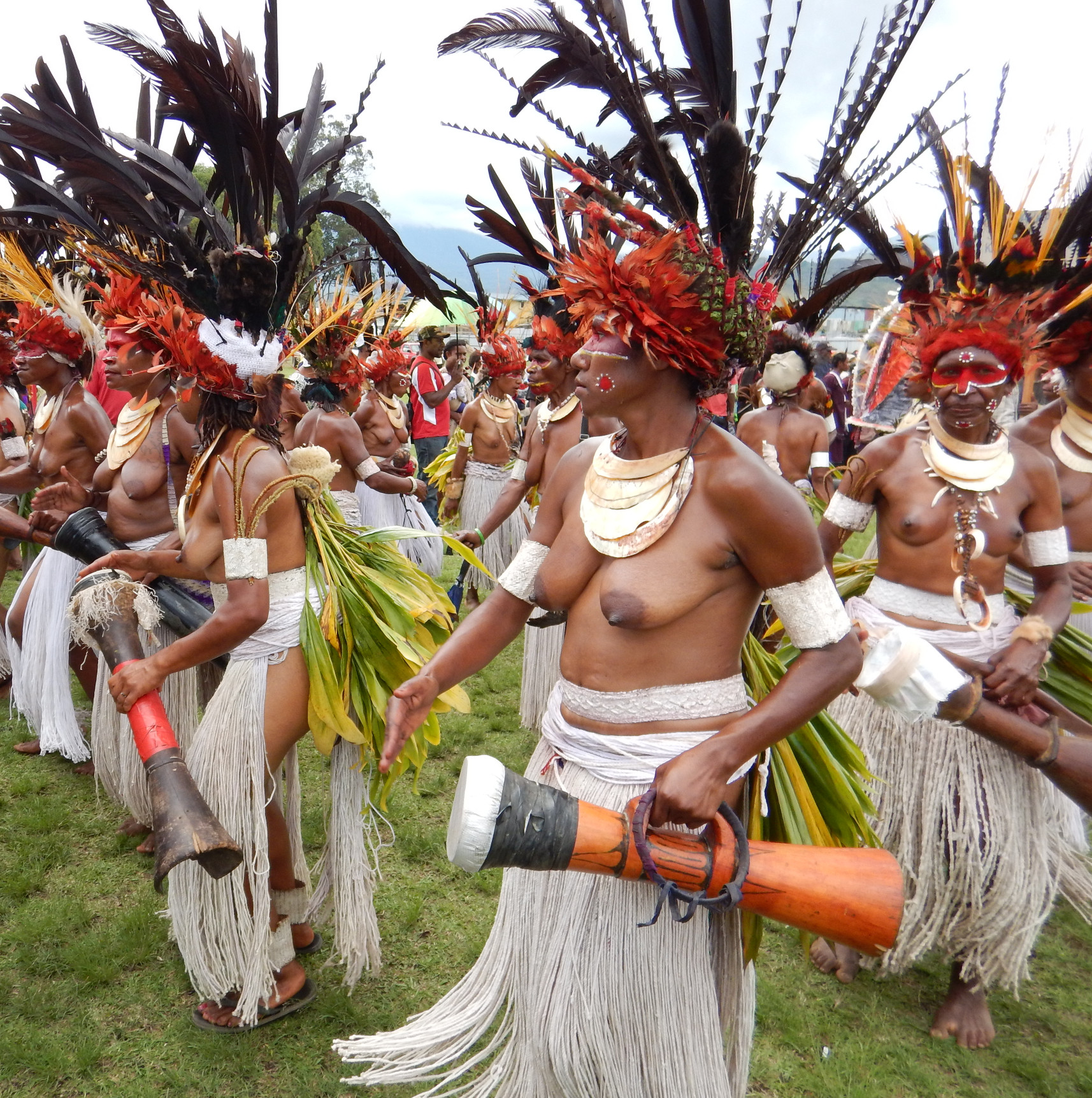
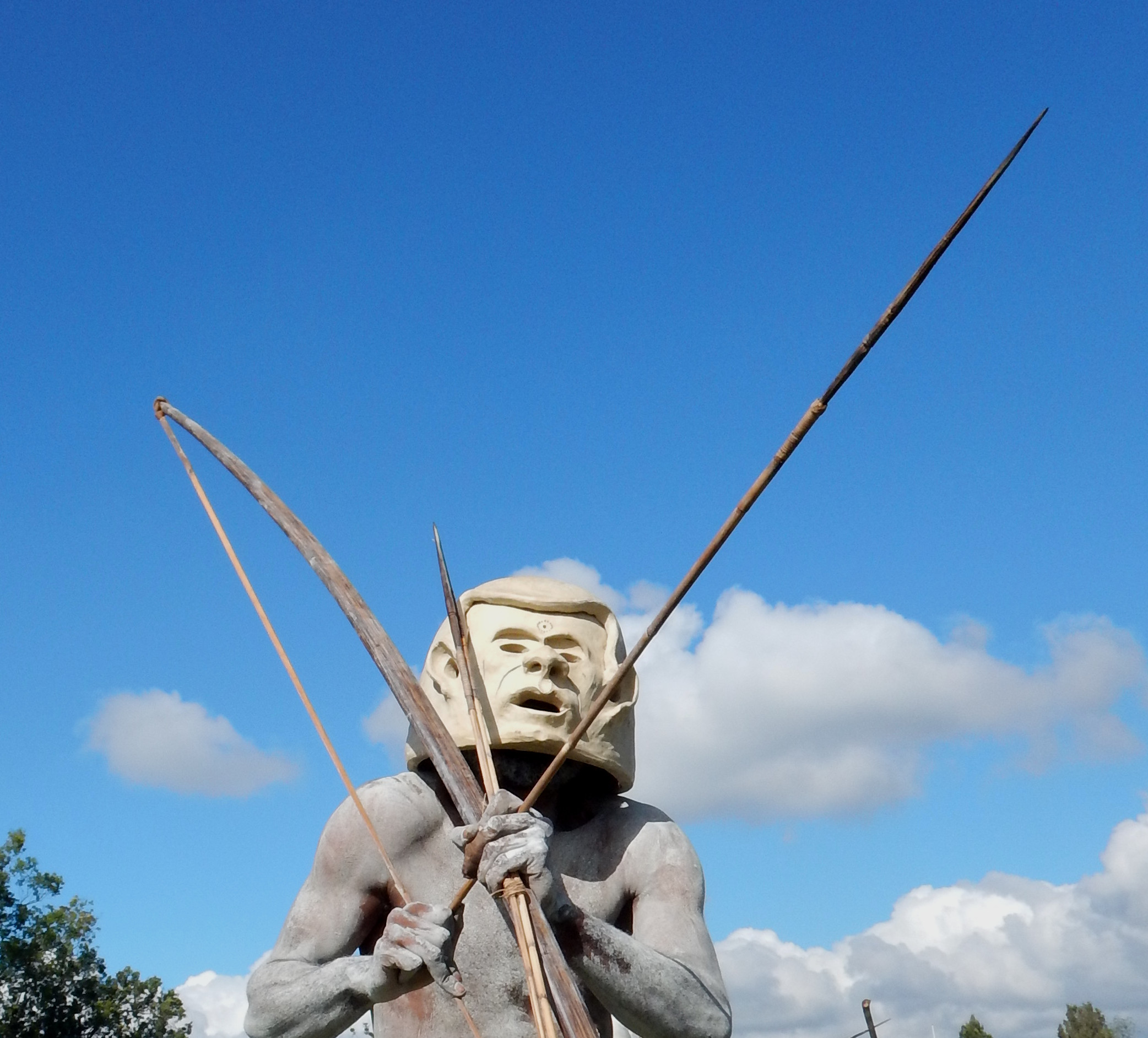
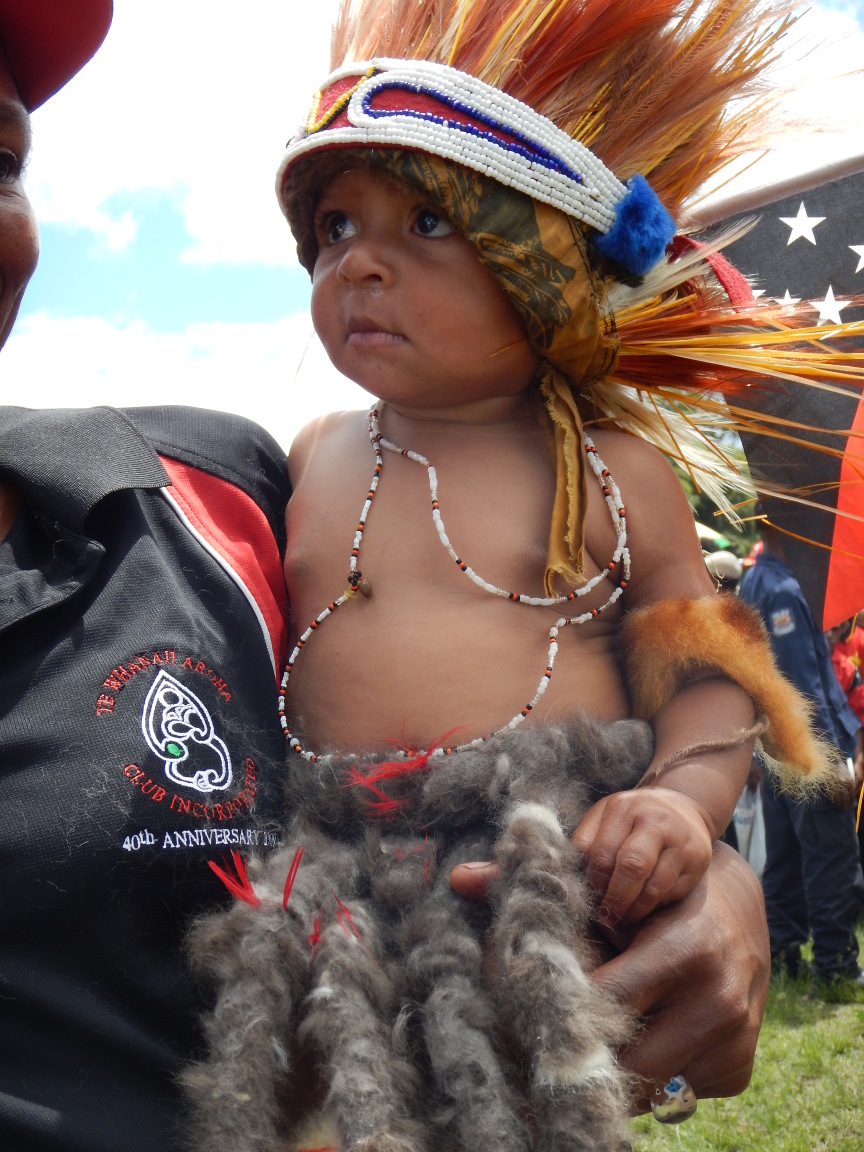
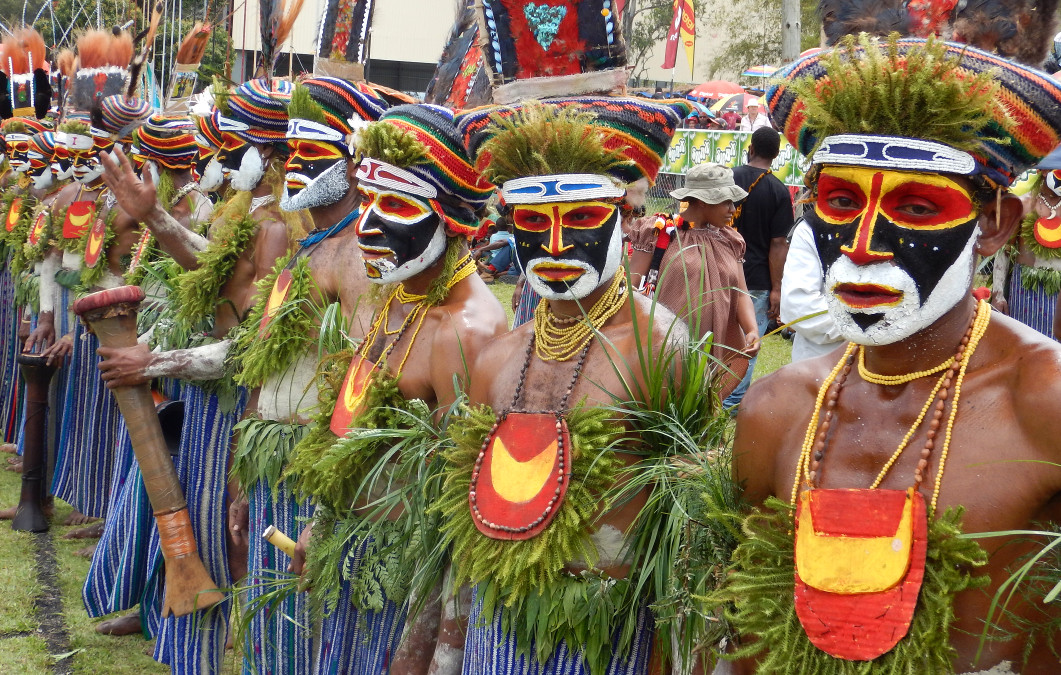
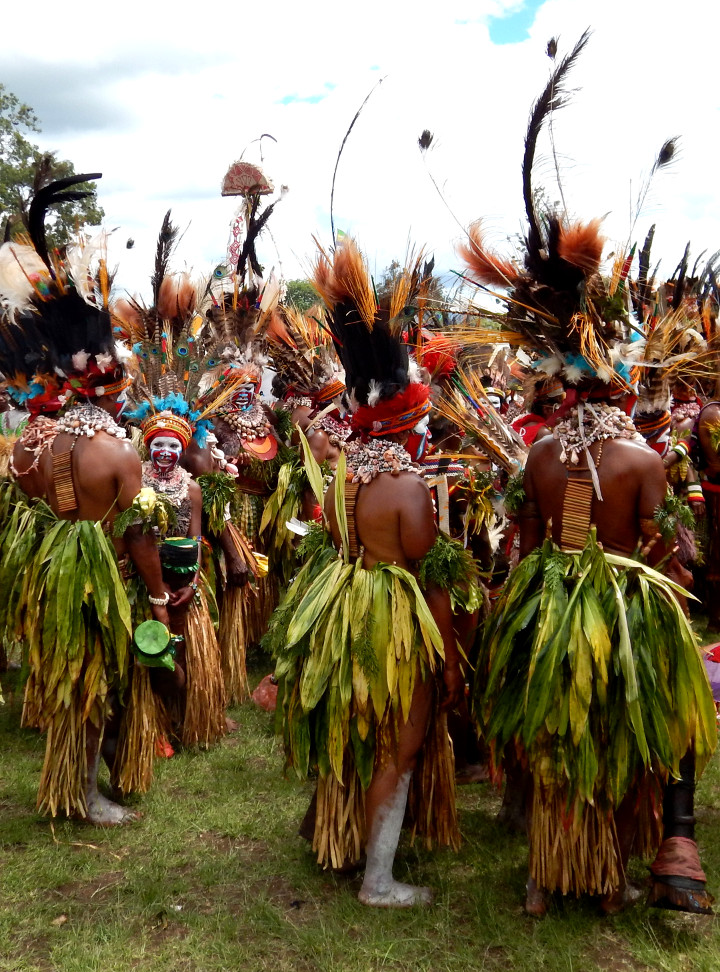
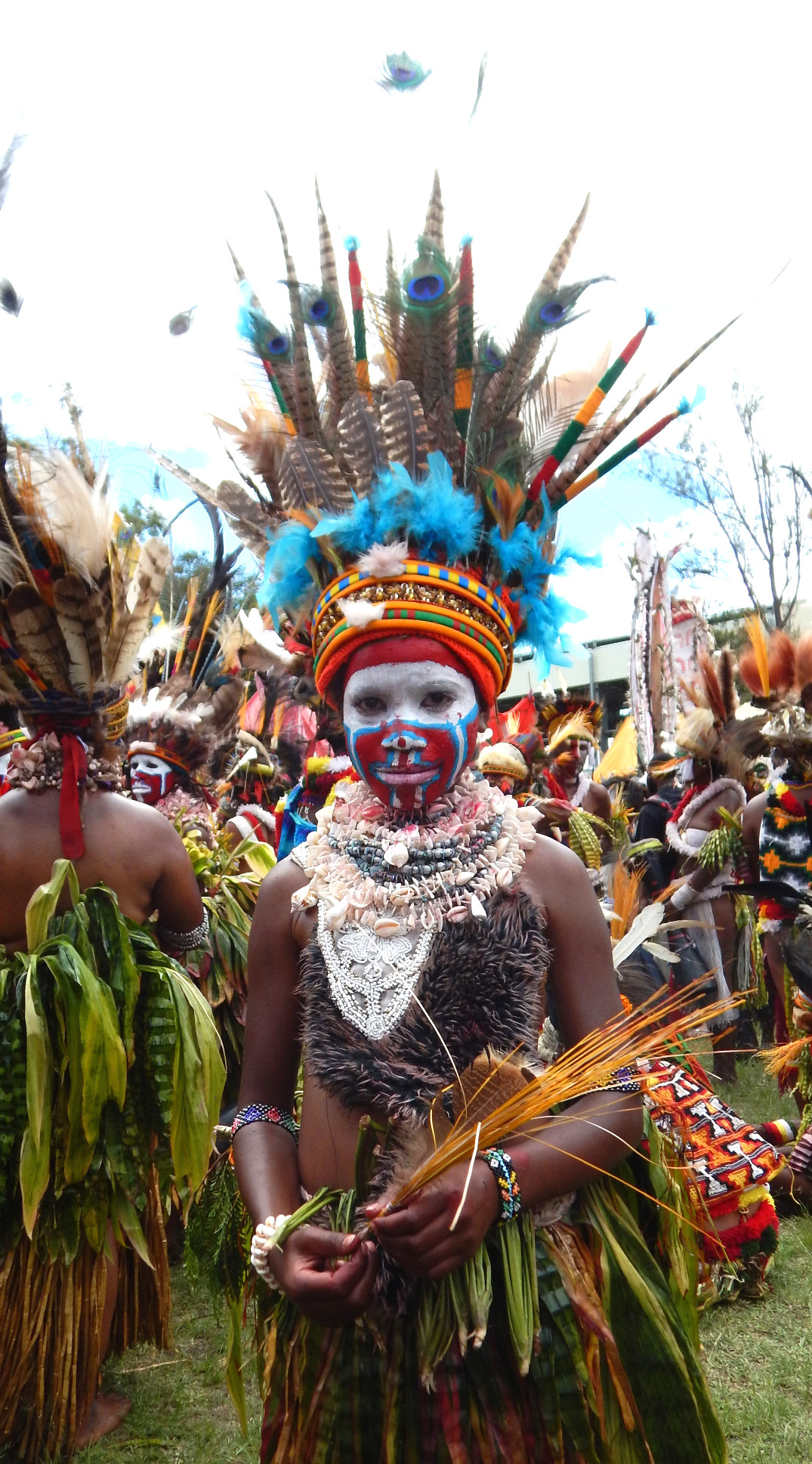
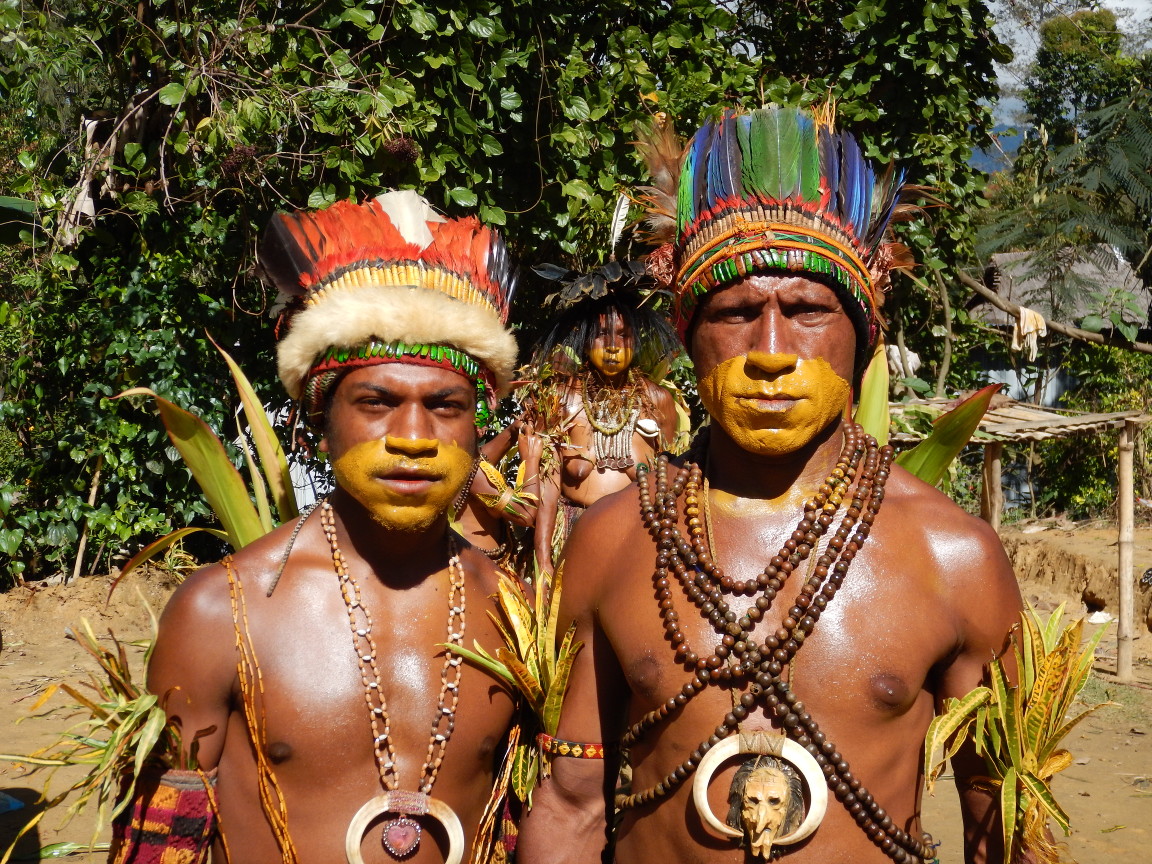
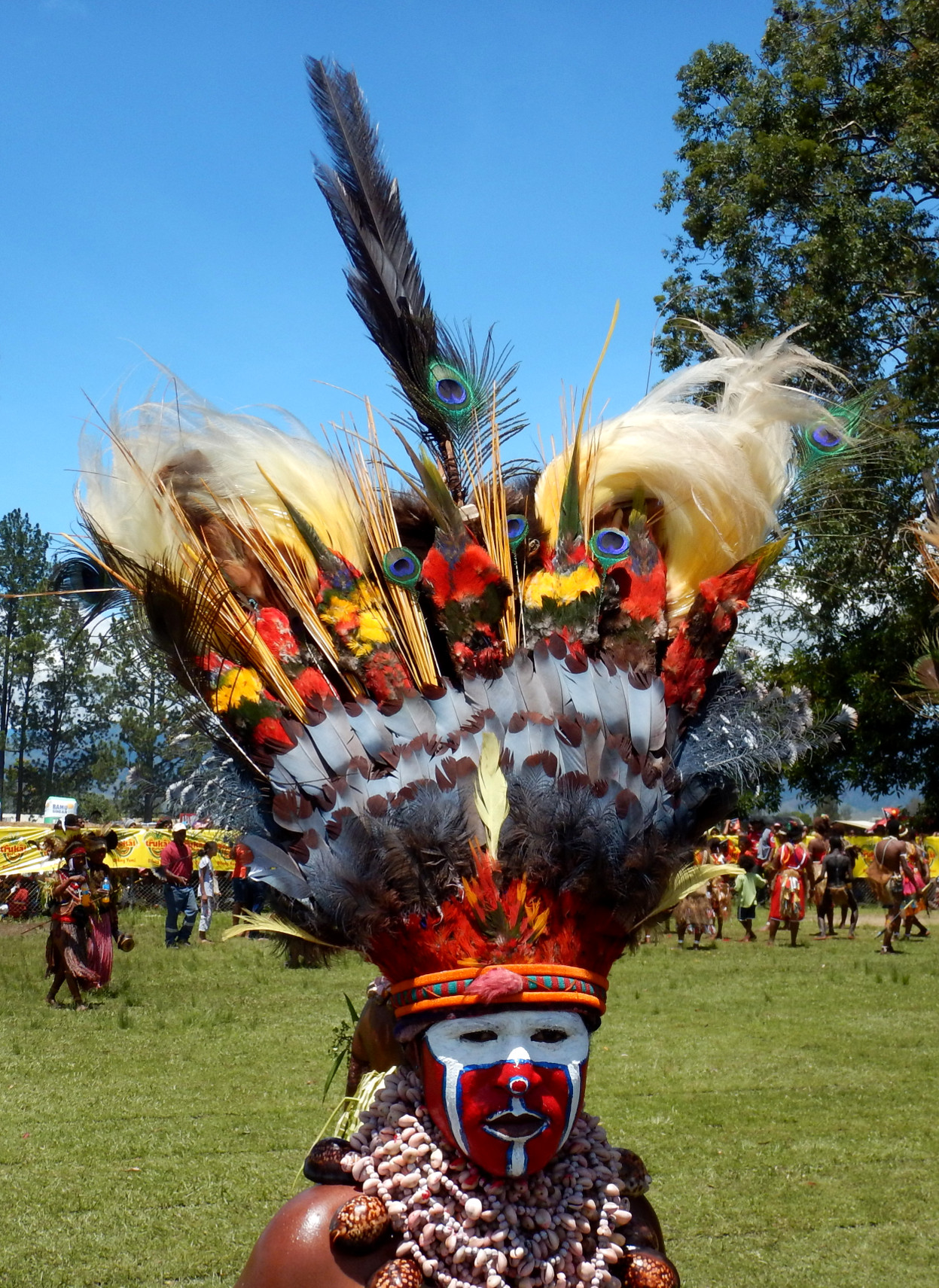
Selon Wikipedia: Les sing-sings sont, en Papouasie-Nouvelle-Guinée, des rassemblements de tribus ou villages pour montrer leur cultures, leurs danses et leur musique. L'objectif de ces rencontres est de partager pacifiquement les traditions. Pour le sing-sing, les villageois se peignent le visage et le corps et se décorent de plumes, de coquillages et de peaux.
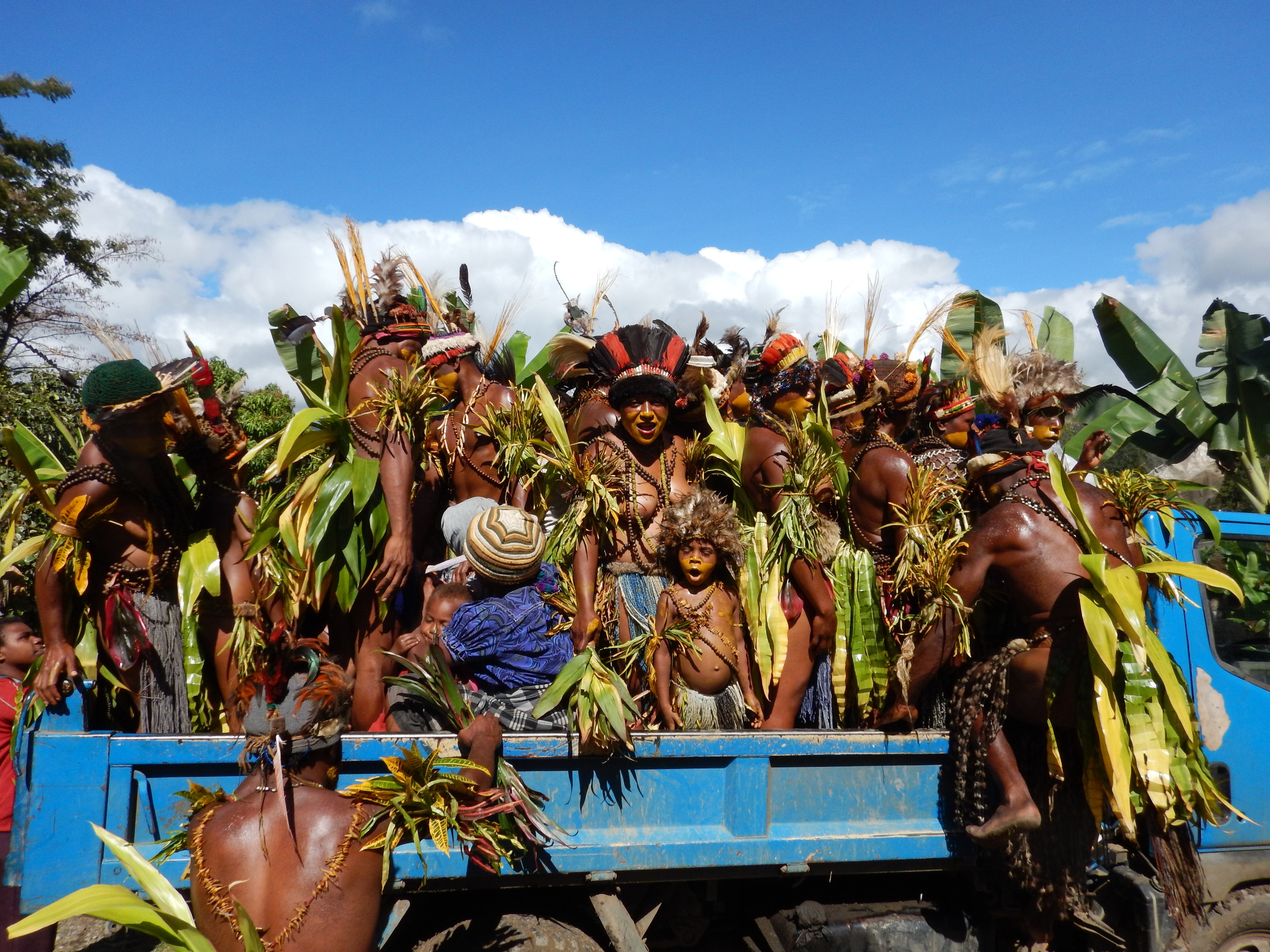
On monte dans les camions et on part pour le singsing.
Là j'ai compris que les chants de la nuit étaient une répétition. C'était le premier singsing de ce groupe d'étudiants pour représenter une nouvelle province, la province de Jiwaka.
Ceci est un panoramique, il faut agrandir l'image.
Voilà ma première journée en Papouasie-Nouvelle Guinée. L'immersion a été brutale!
Sauvegarde des photos, films et enregistrements sur le disque dur, douche et lessive vu que je porte les mêmes habits depuis mardi et que mes habits de rechange sont dans mon sac entre Paris et Port Moresby... Je vais en ville acheter une carte SIM locale avec un forfait téléphone et internet pour mon smartphone. Je vais enfin pouvoir communiquer avec le reste du monde et au moins dire que je suis arrivé. Je passe à l'aéroport. Mon sac est arrivé! Le soir, premier contact téléphonique avec ma famille.
Lundi 1er septembre.
Hier j'étais un enseignant en vacances, aujourd'hui je suis enseignant retraité! Je sympathise avec Eloïse Sédé qui travaille à l'entreprise de gardiennage de l'université. Elle accepte de garder mes affaires pendant mes différents périples. Je me fais voler mon smartphone avec toutes mes informations pour la recherche des agrumes. Moment de déprime. Le voleur est parmi les gardiens de l'université! Je décide de partir pour Brown River. Tout le monde me dit qu'il ne faut pas y aller, que c'est trop dangereux, surtout seul, mais le devoir m'appelle. j'ai une semaine pour trouver C. Wintersii.
J'arrive à Brown River et je suis accueilli par une famille adorable qui me reçoit comme si j'étais de la famille.
Les dents rouges sont dues aux noix de betel que la moitié de la population mâche à longueur de journées.
Ma maison.
Première sortie de prospection, Brown River rive gauche vers le Nord.
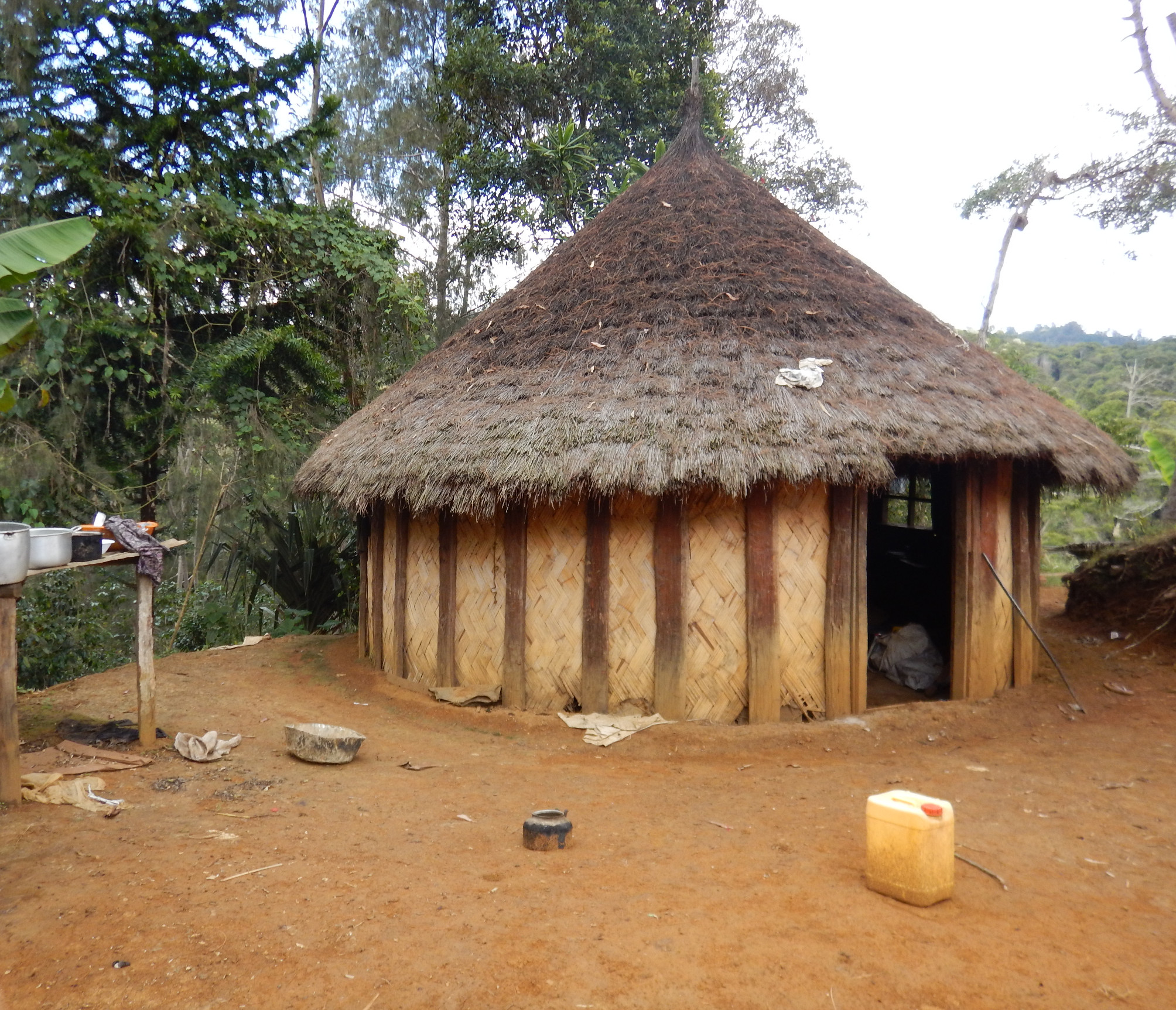
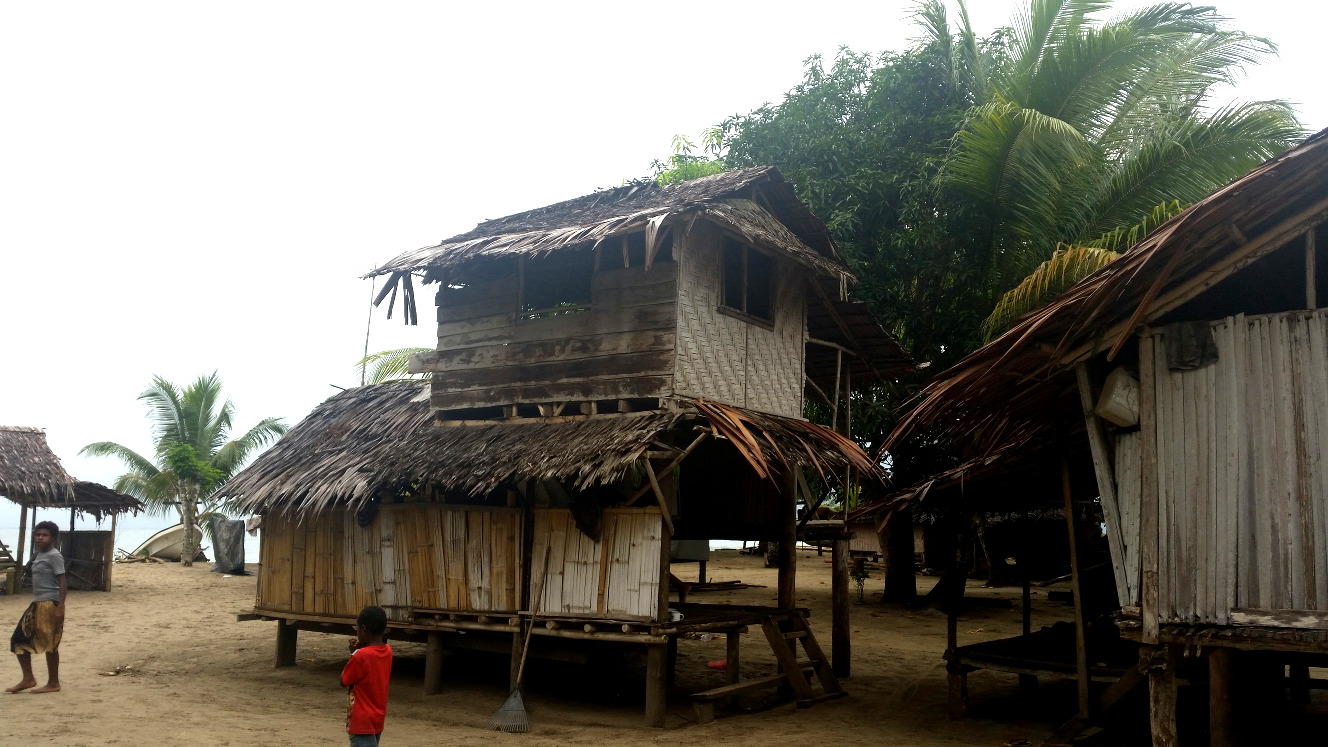
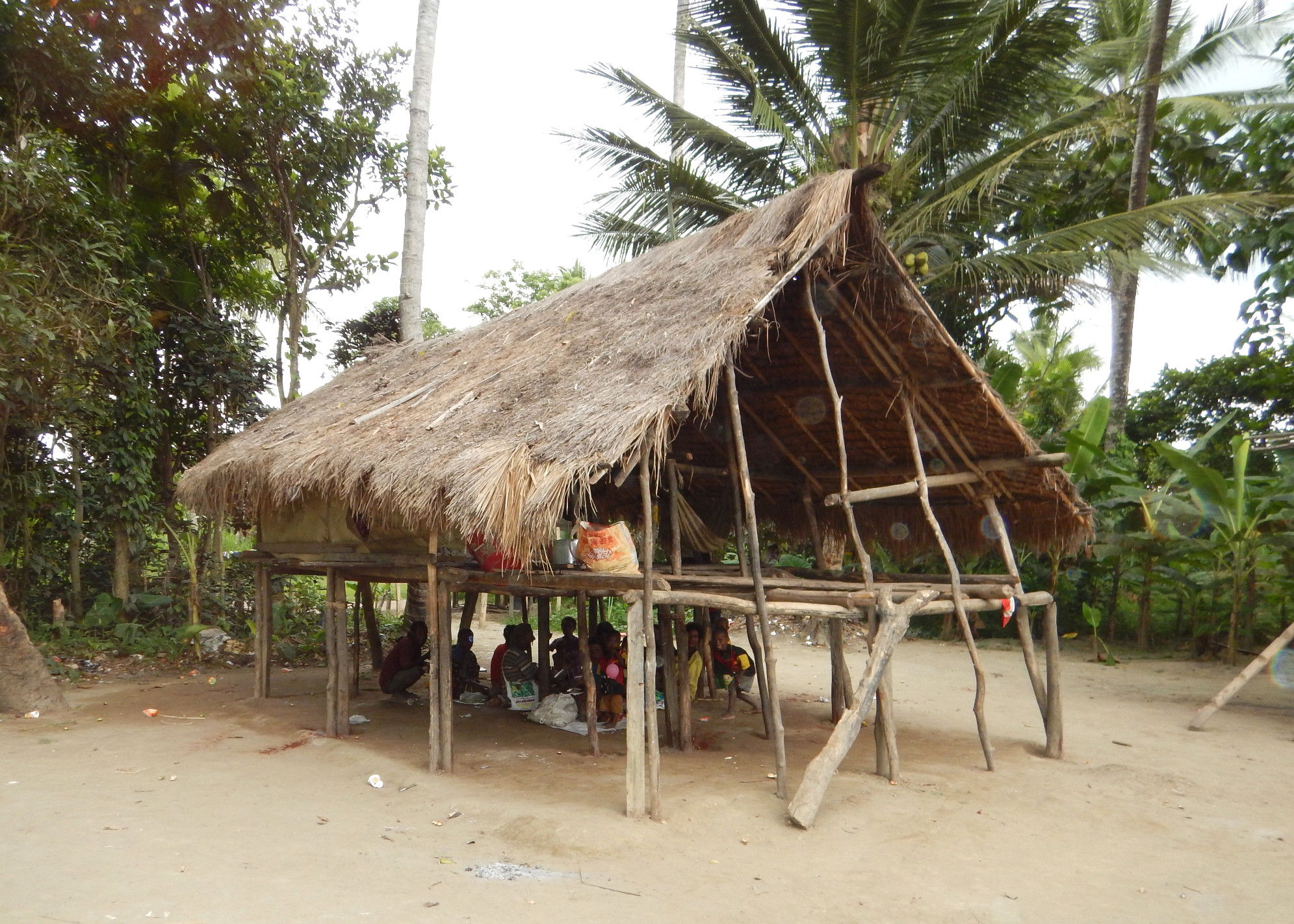
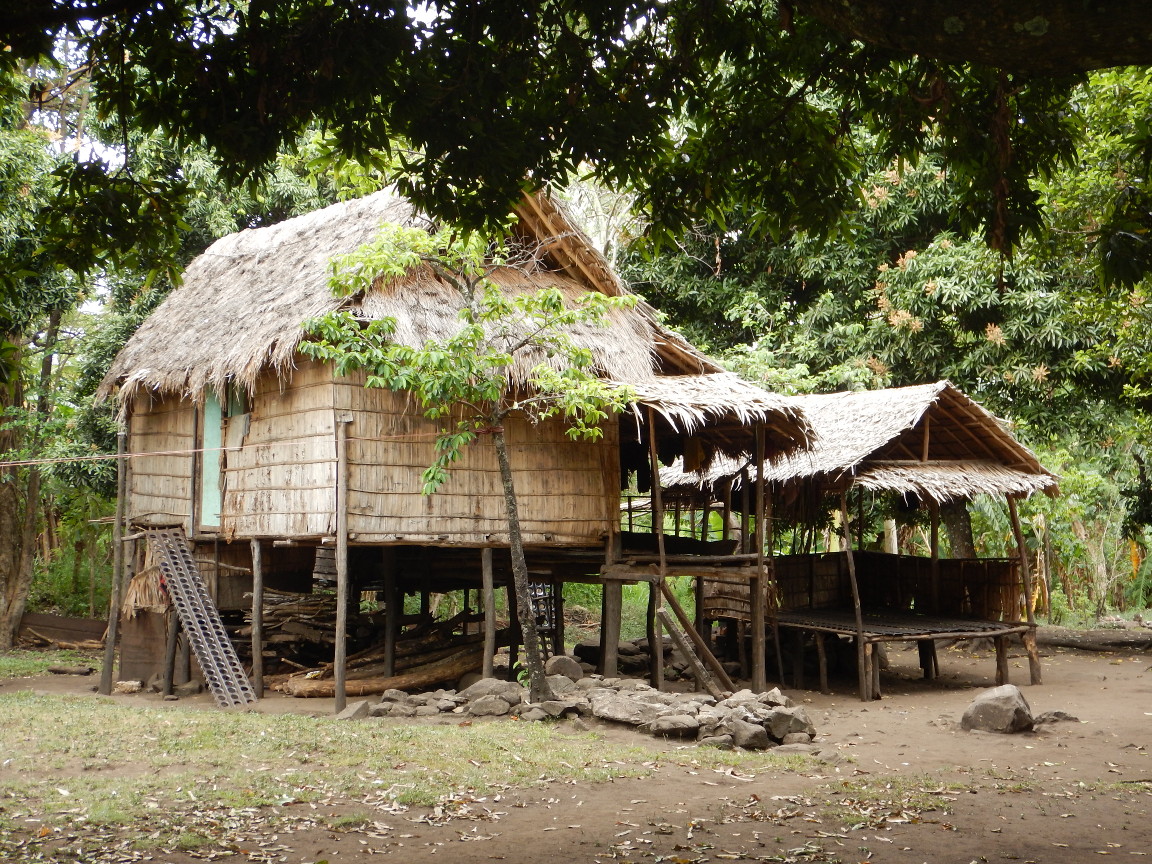
Une maison locale typique.
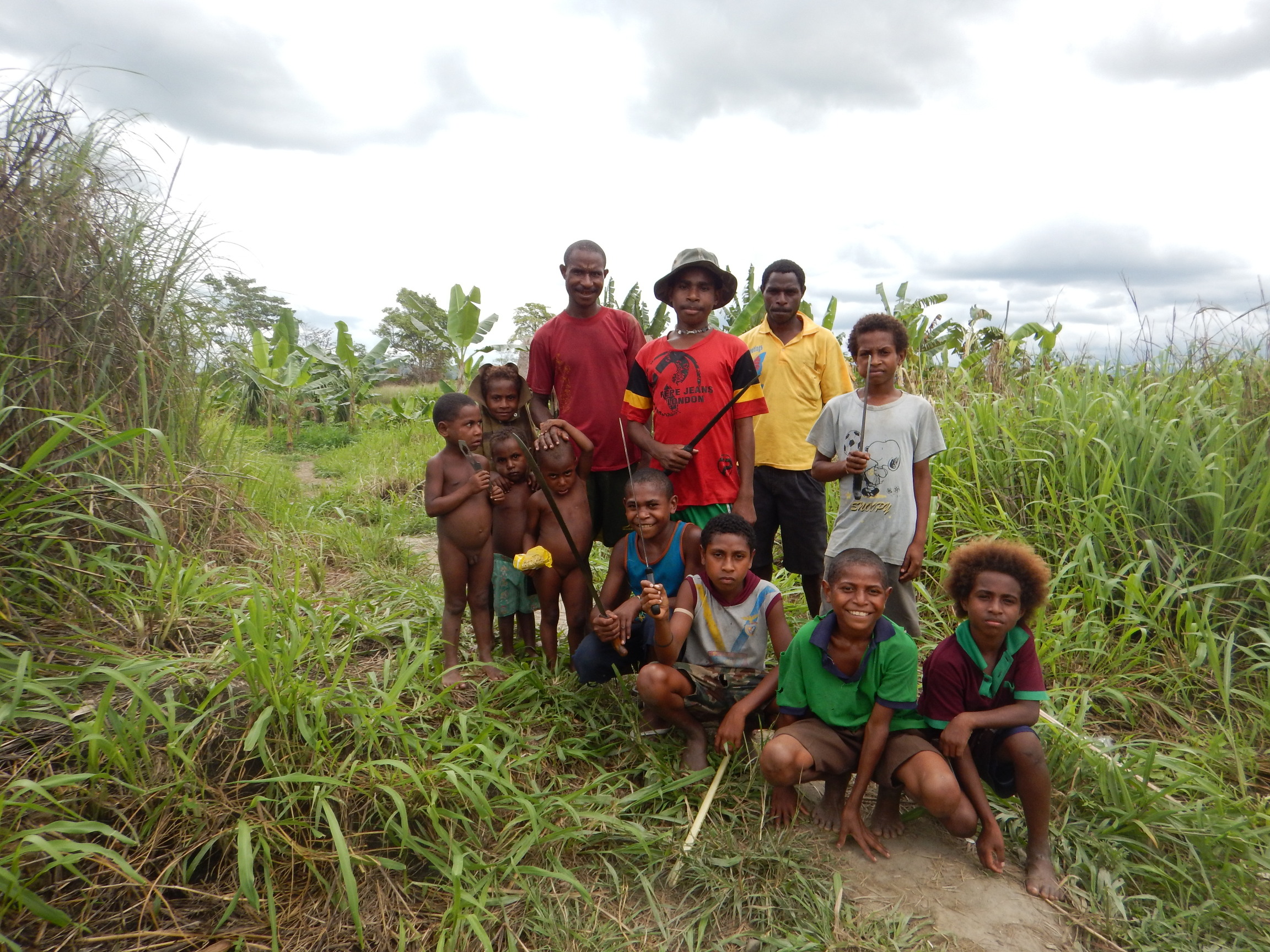
Les enfants qui nous suivent.
On ne trouve rien mais ce n'était qu'une sortie pour prendre contact avec l’environnement...
Je n'ai plus de GPS mais j'ai assez travaillé le sujet pour savoir aller au point le plus proche où le C. Wintersii a été vu. C'est le but d'aujourd'hui. J'arrive bien à trouver l'endroit mais on ne trouve rien sinon une plante qui y ressemble en plus petit et très aéré. Très différent des photos qu'on voit sur internet.
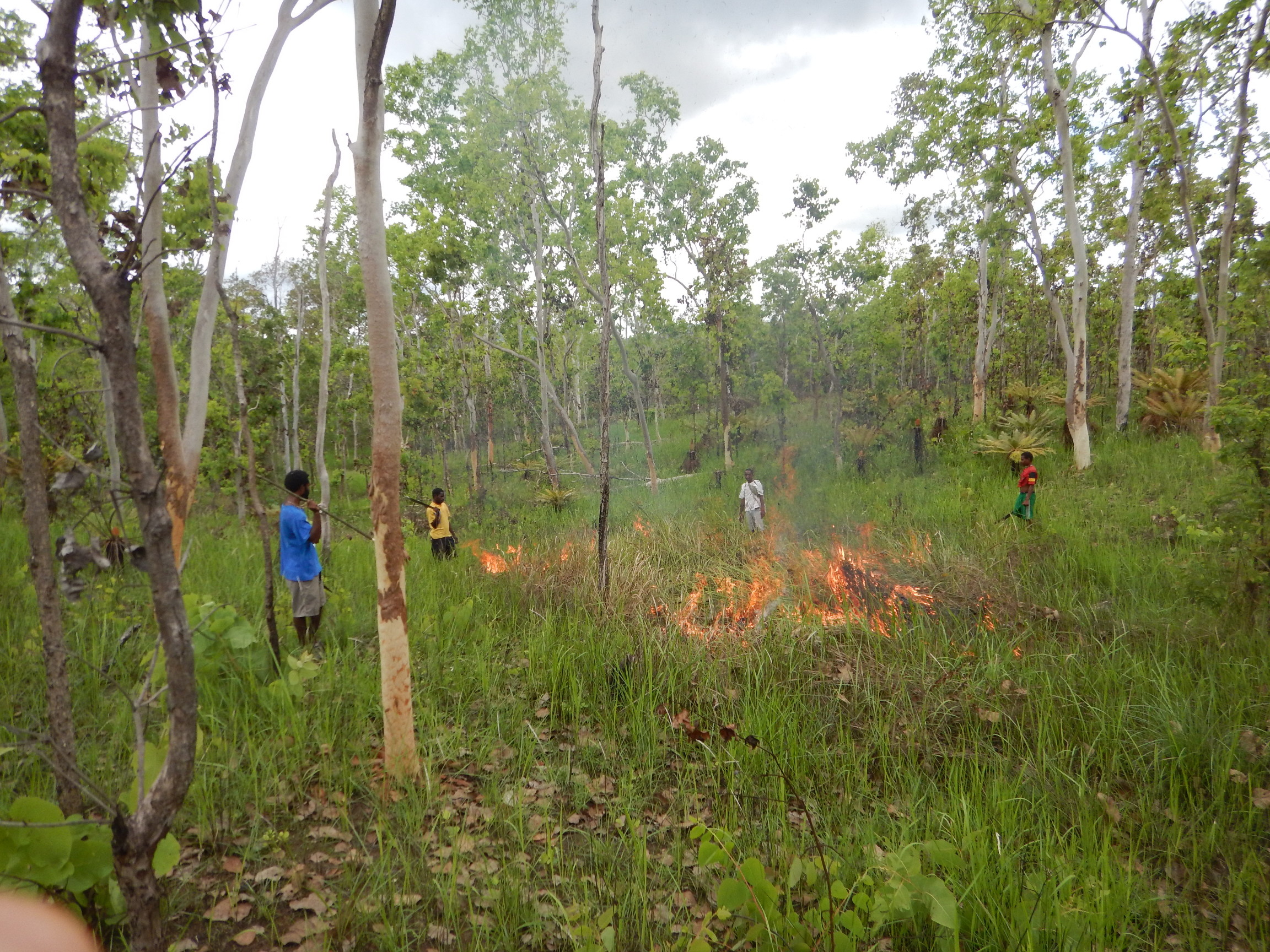
Sur le retour on trouve le nid d'un rongeur. Ils se taillent vite fait des lances et mettent le feu au nid mais rien ne va sortir.
Plus loin dans une clairière on voit un kangourou (en fait un wallaby) mais l'idiot d’appareil photo accommode sur les branches du premier plan!
Tout le monde se précipite avec les lances improvisées mais cette fois-ci c'est le kangourou qui a gagné.
Grand tour en forêt très dense. On part à quatre avec parapluie, machettes et fusil. Deux passages de rivière. Rien trouvé.
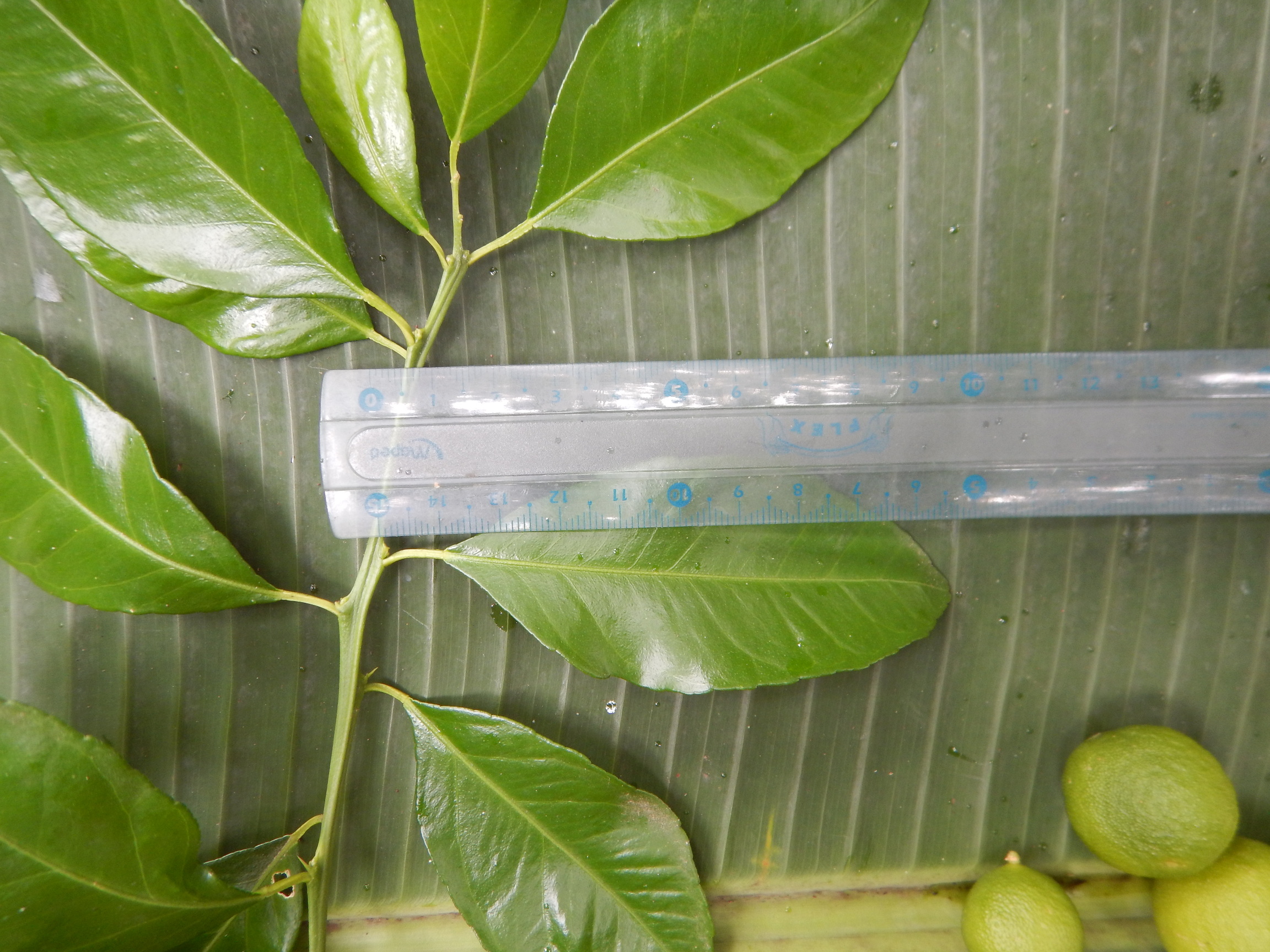
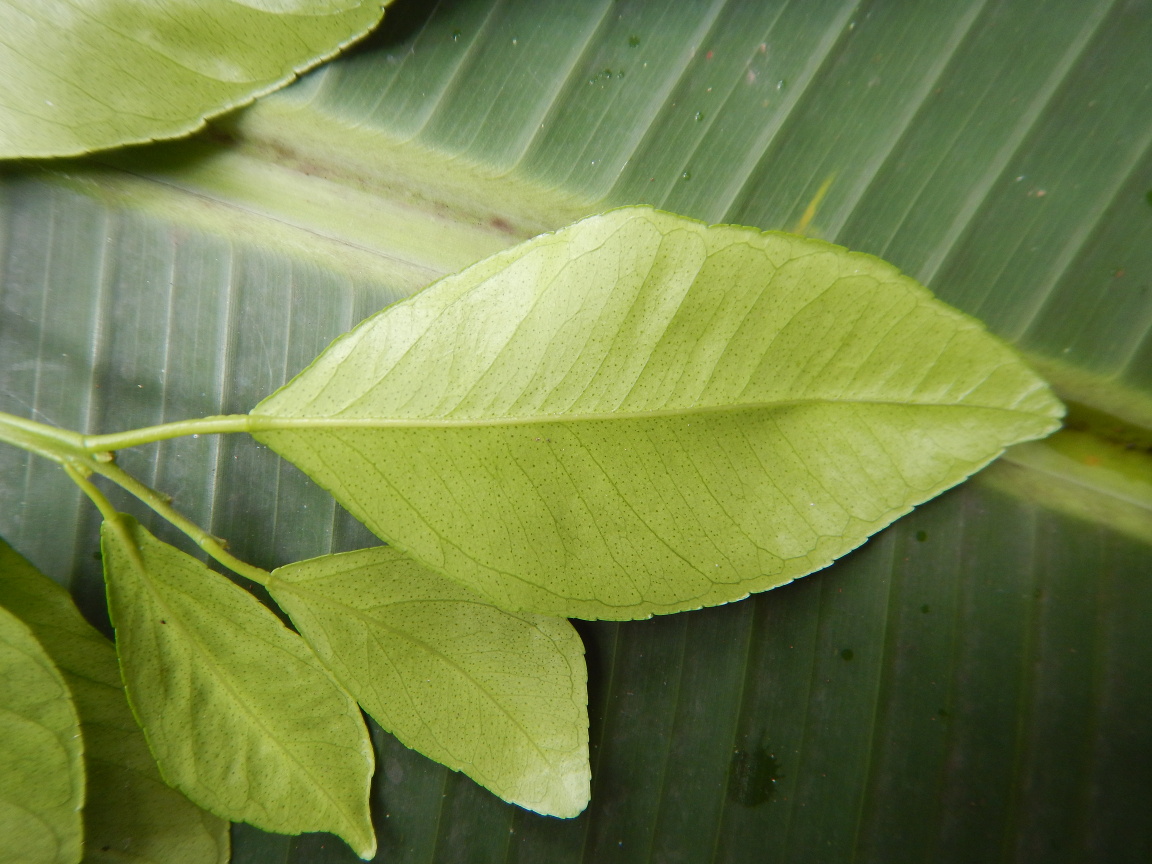
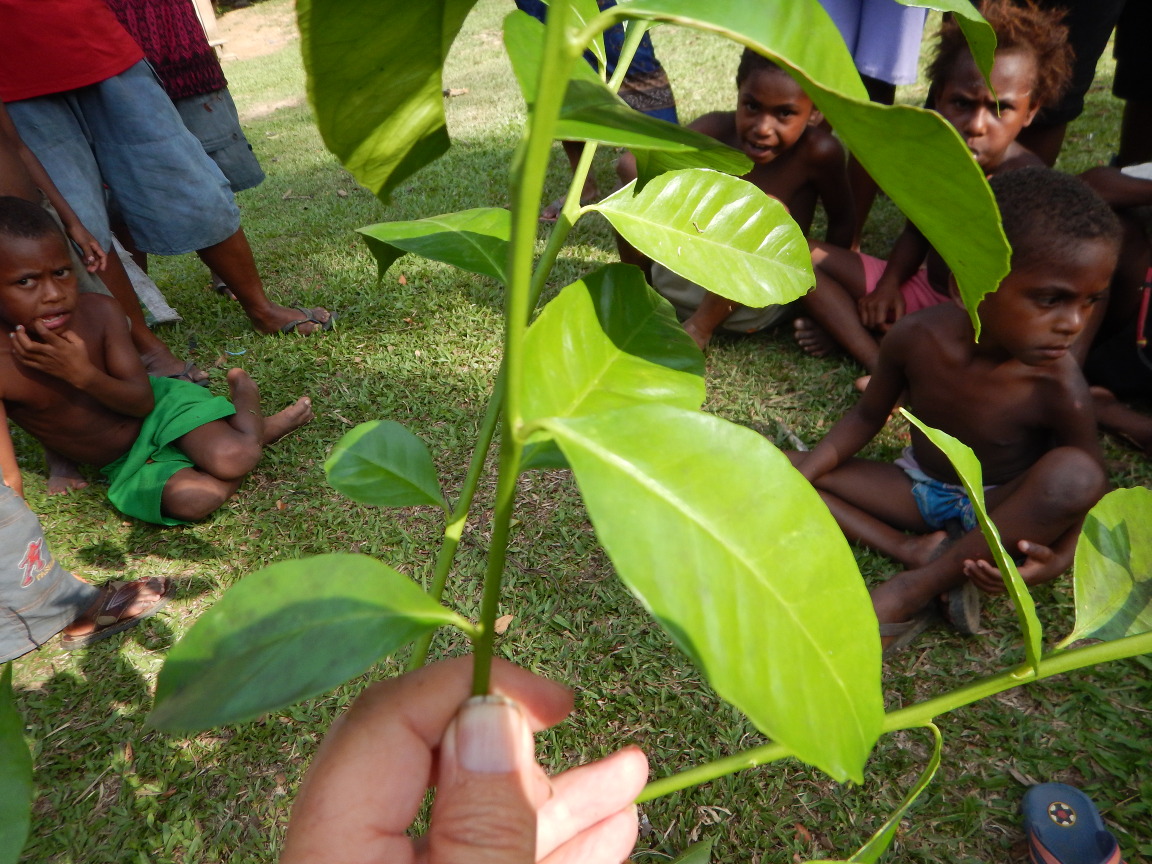
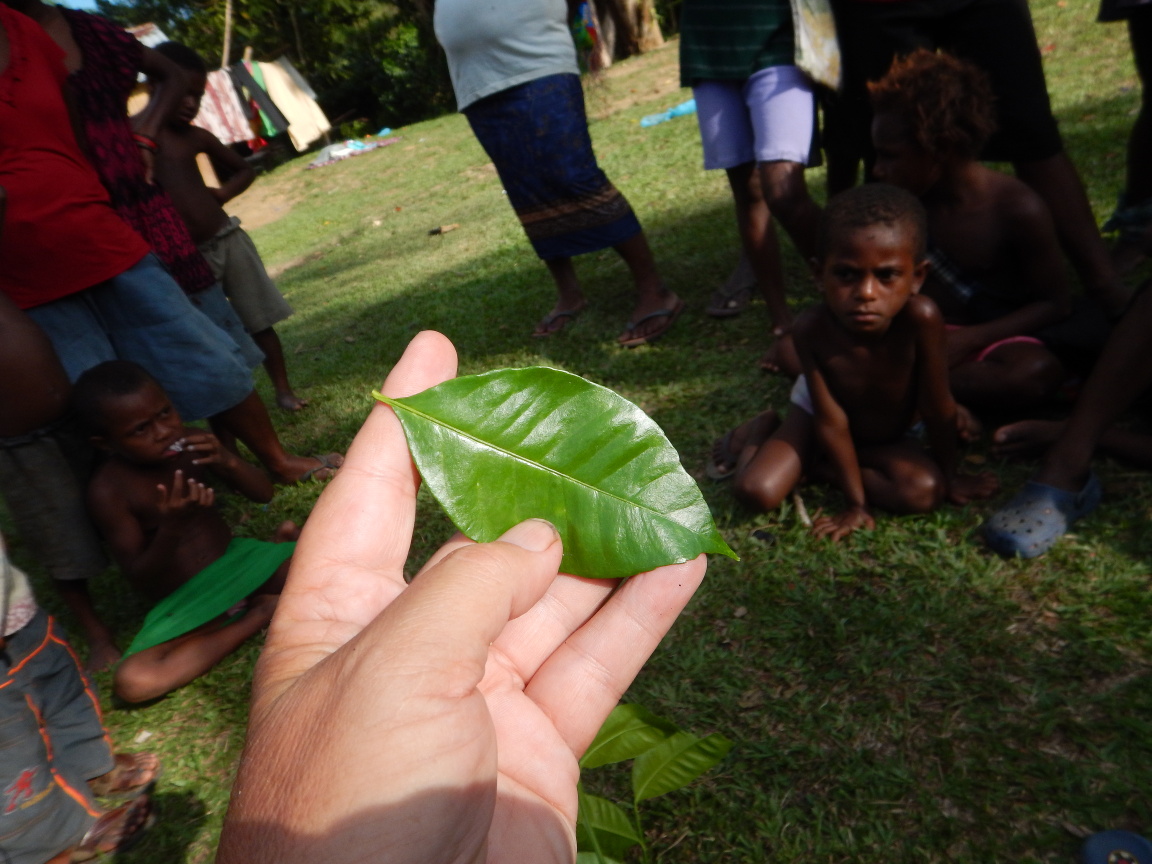
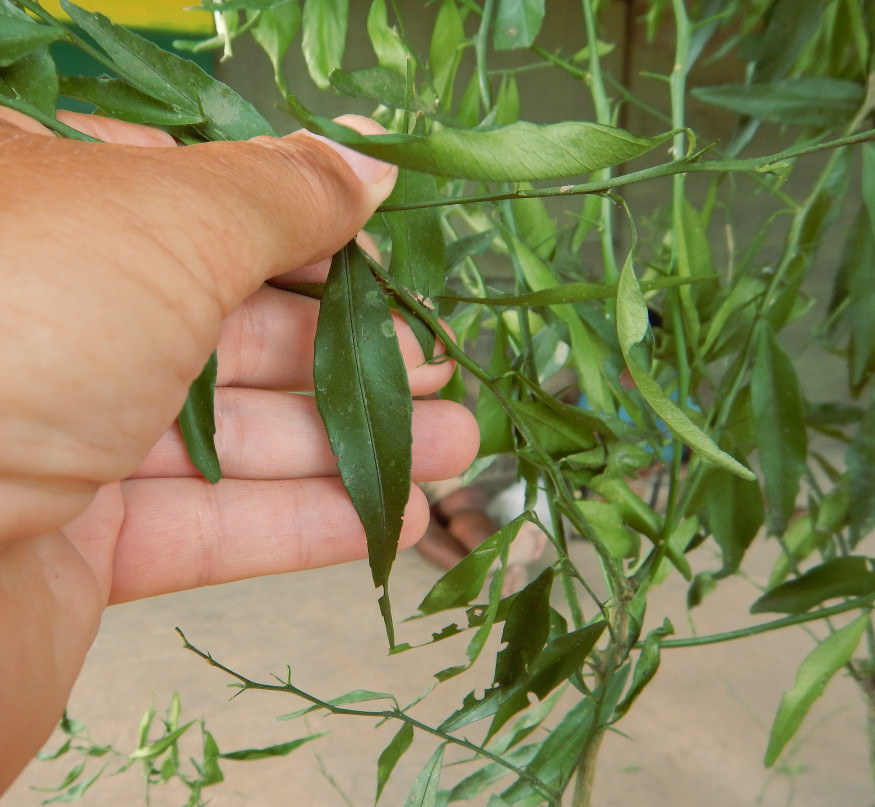
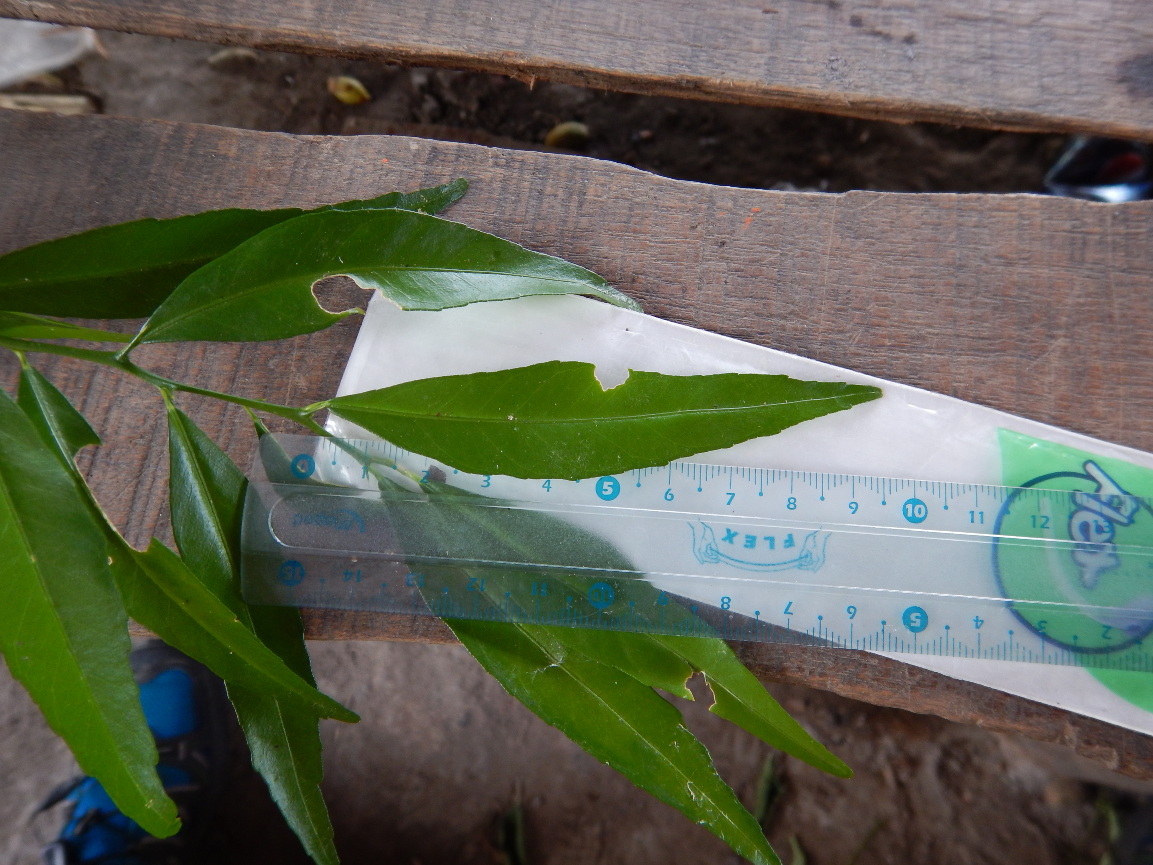
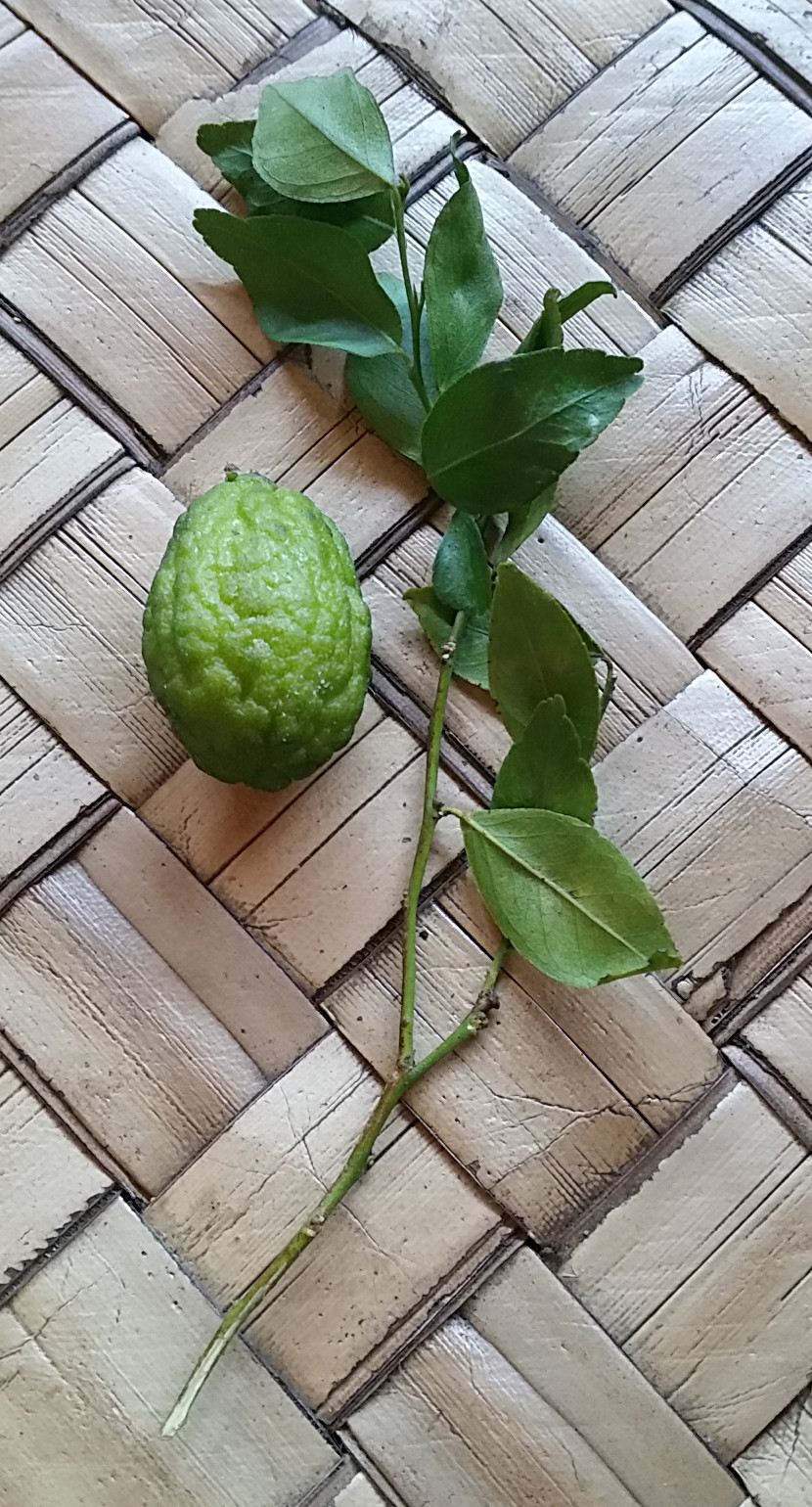
Quand on rentre, je trouve un agrume inconnu qu'on m'a rapporté de la montagne. Pas de fruit, pas de fleur. Feuille articulée, entière et lancéolée. Pétiole très court ~2mm. Épines ~2mm. Je lui donne le joli nom de BR1.
Les jours suivants sont pareil, prospection en brousse mais toujours rien. Alors un petit panorama de la concession.
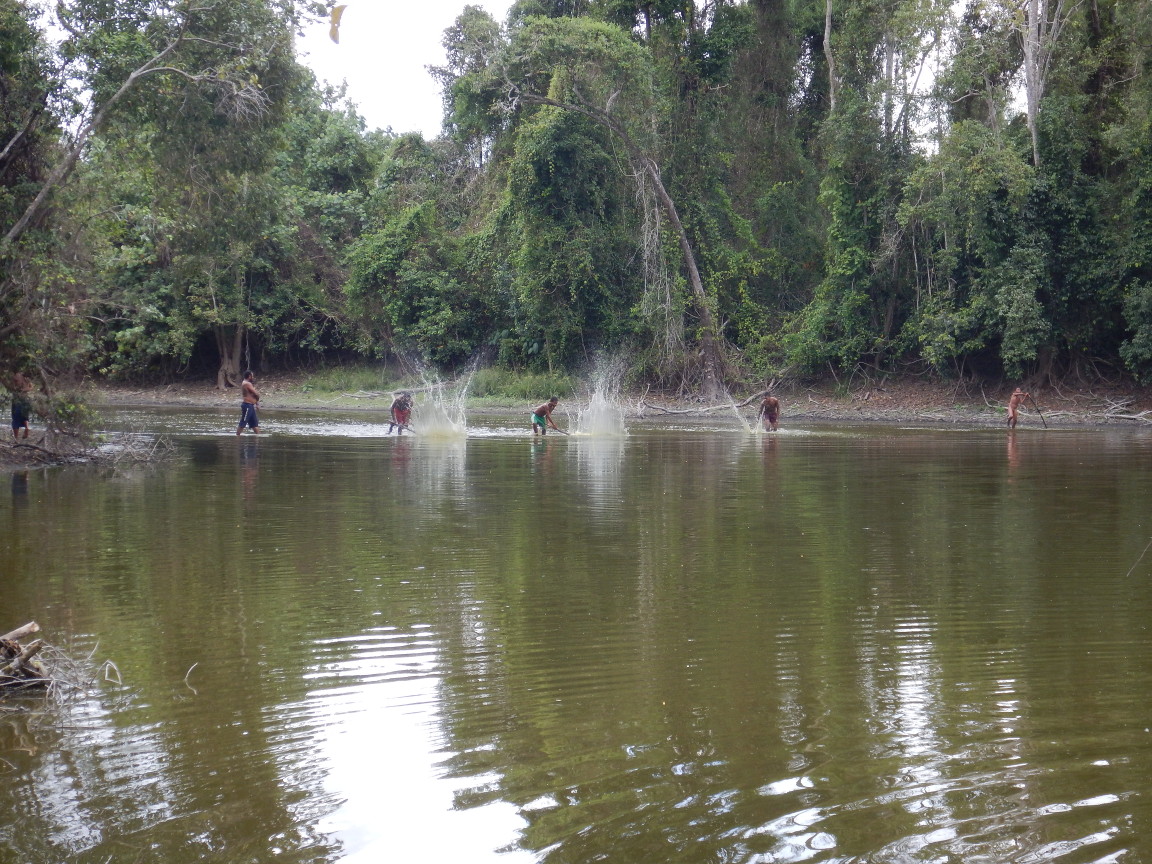
On monte une sortie en brousse avec un 4x4 pick-up. Le prétexte est la recherche des agrumes sauvages. En fait ça s'est avéré être une sortie "entre mecs".
Pêche au filet avec rabatteurs.
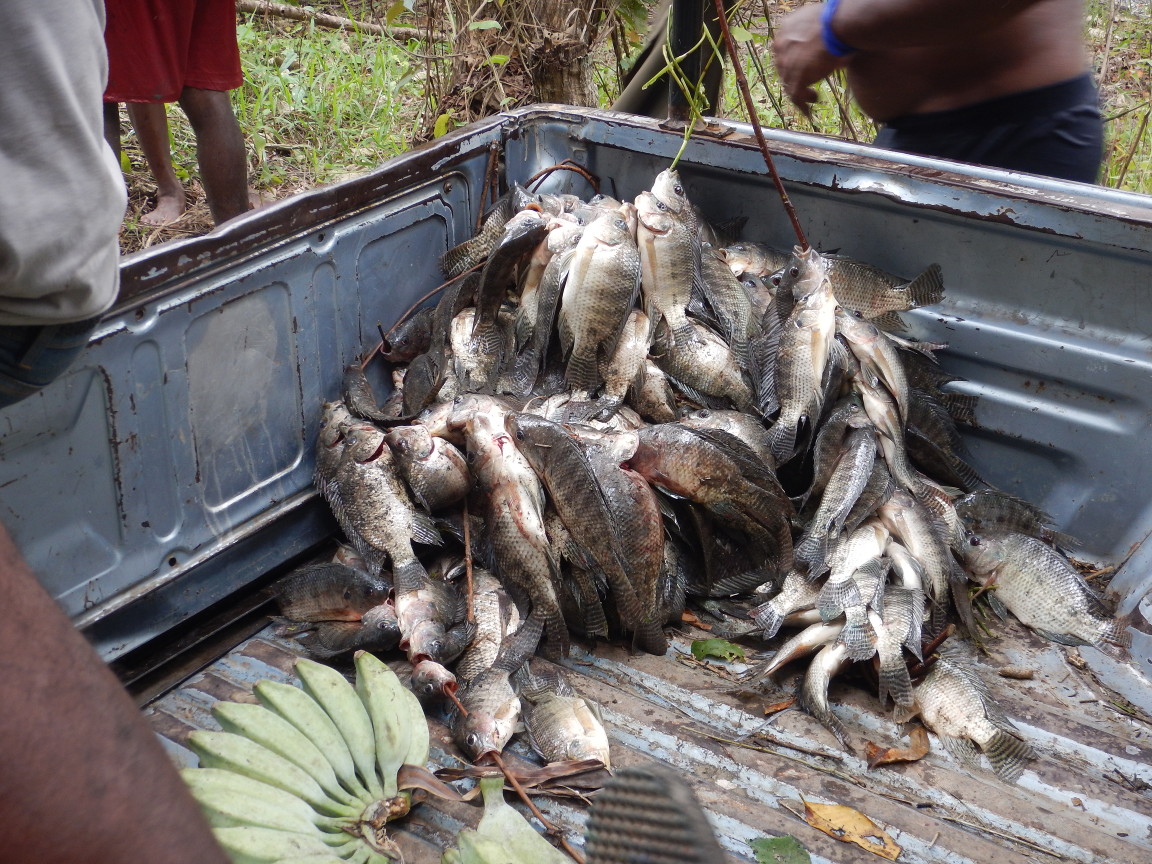
La récolte.
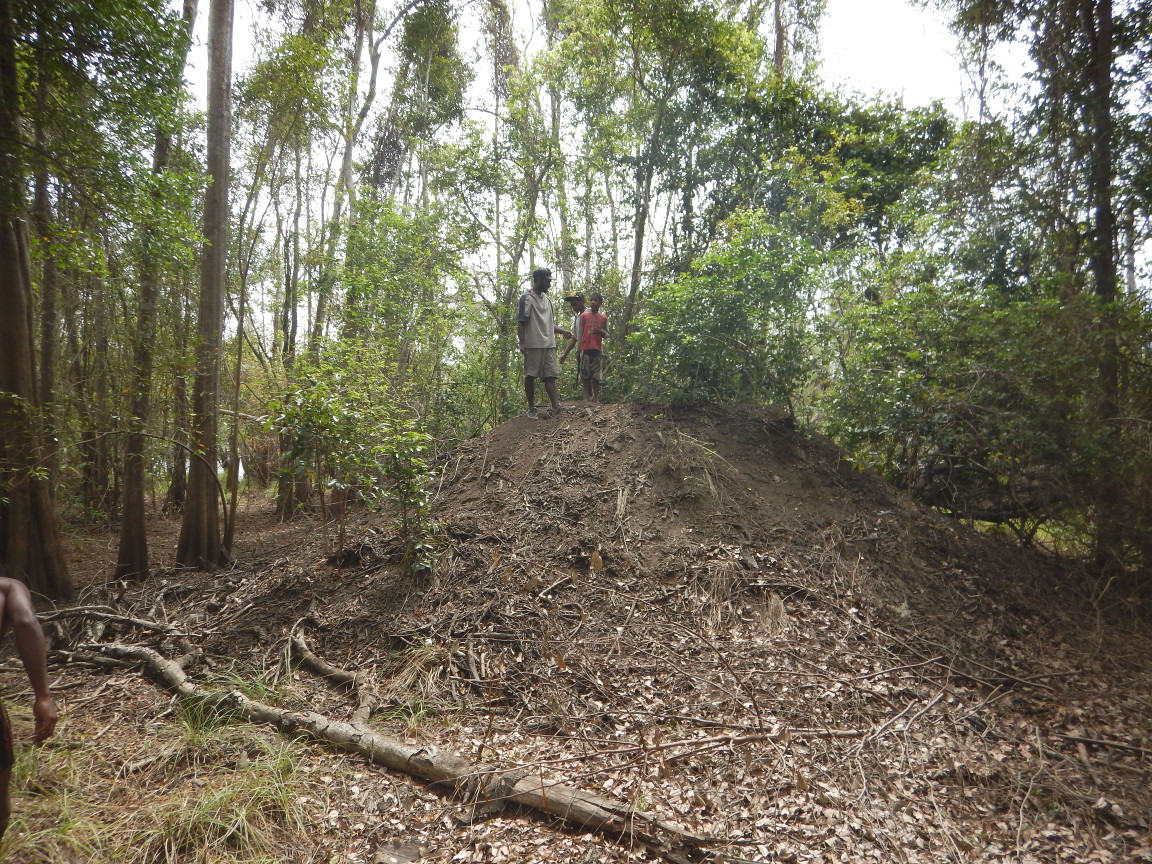
Nid de mégapode, 4 m de haut et 8 m de large tout de même! Ils se sont précipités pour creuser dans l'espoir de trouver les œufs mais ils n'ont rien trouvé.
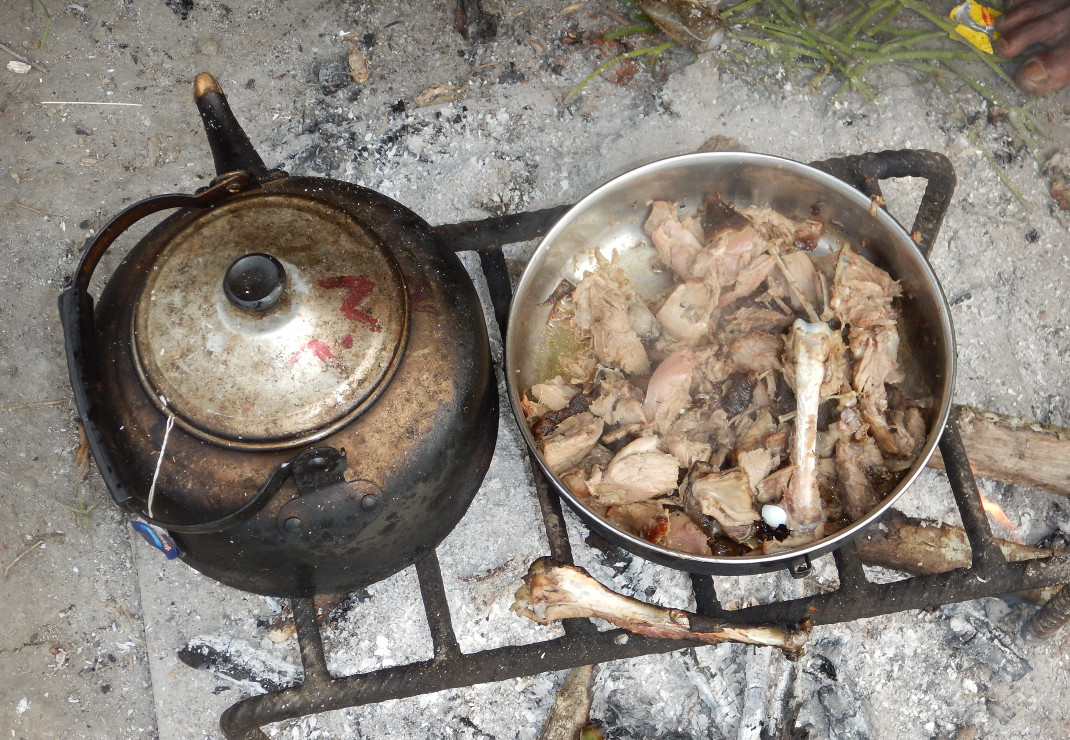
Le pique-nique, Bananes cuites, poissons grillés et noix de coco comme boisson. Le fusil n'a pas servi donc pas de viande. Sur le retour on a croisé deux fois des kangourous mais le chasseur sur le pick-up n'a pas été assez rapide.
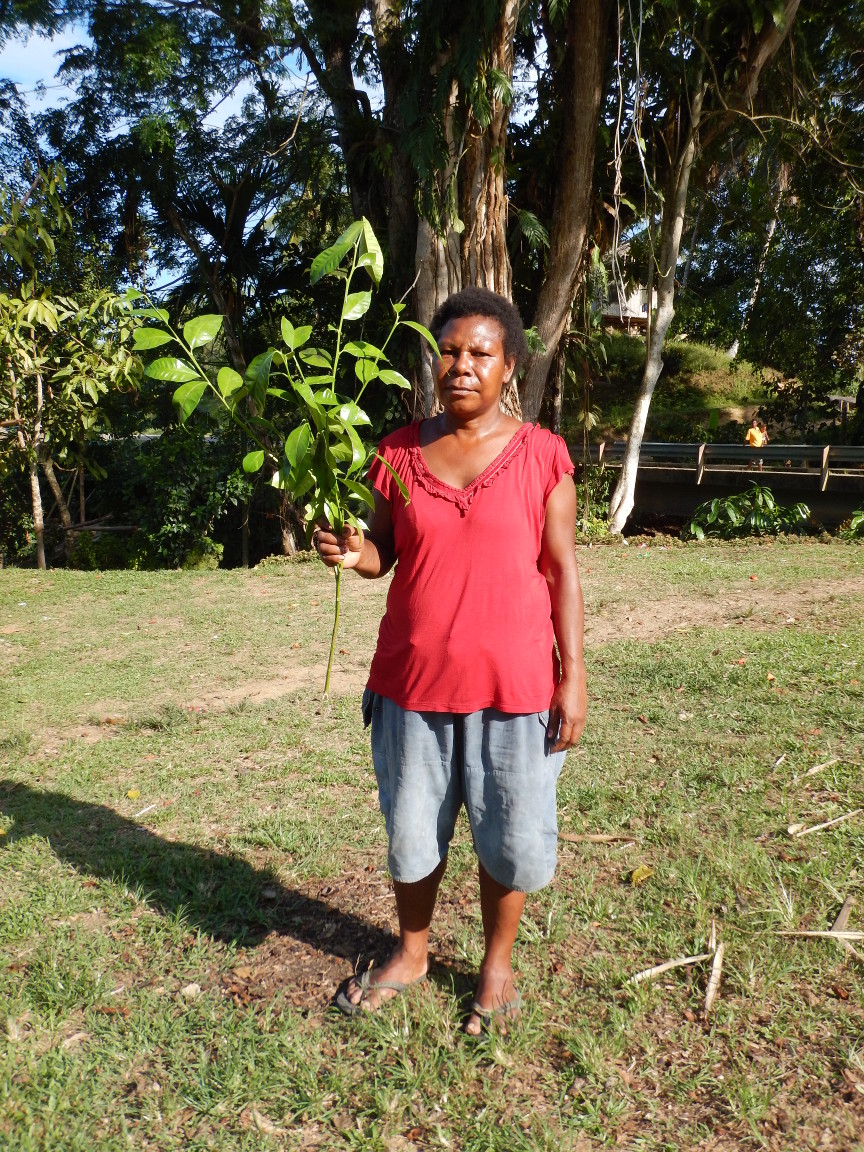
Le soir, de retour, une femme nous apporte des branches d'agrume. À la vue des fruits on comprend immédiatement que c'est le bon!
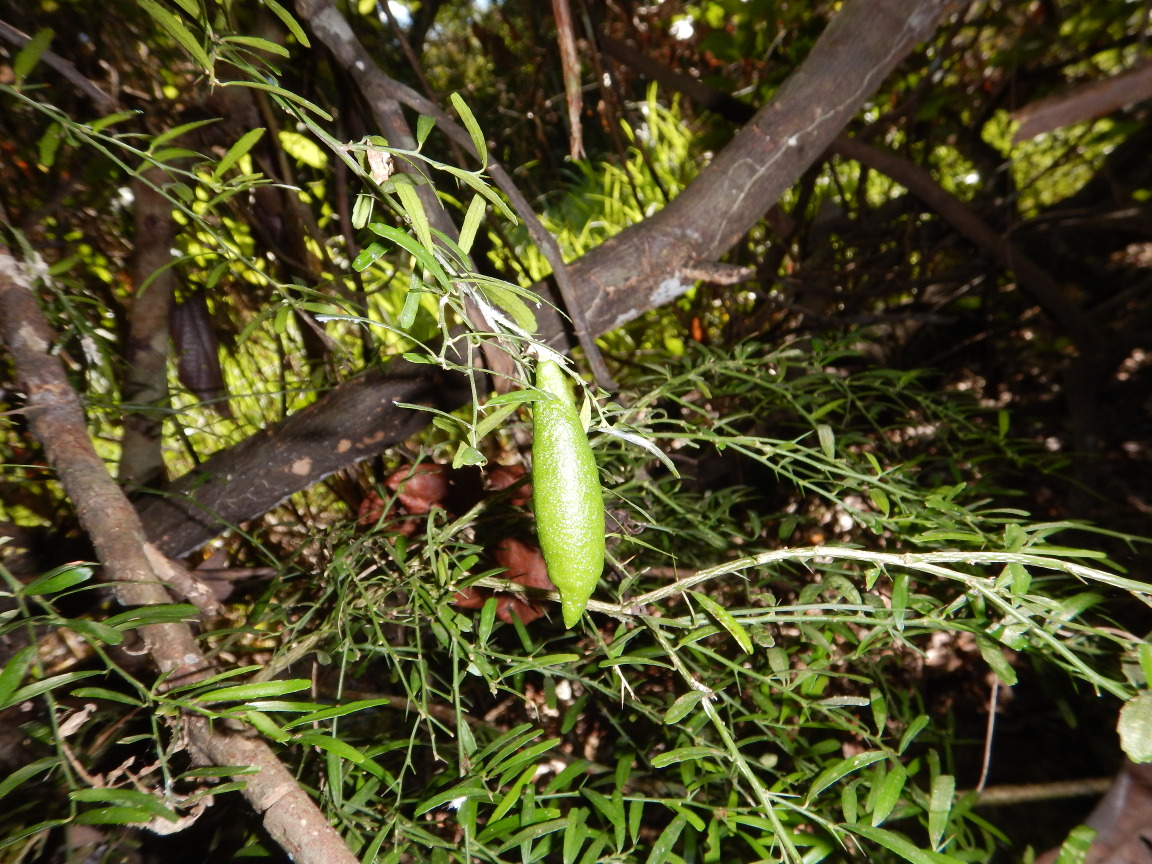
C. winterssii, ex Microcitrus papuana, Brown River finger lime, la lime digitée de Brown River est trouvé, un sur cinq. Au bout d'une semaine, je suis dans les temps.
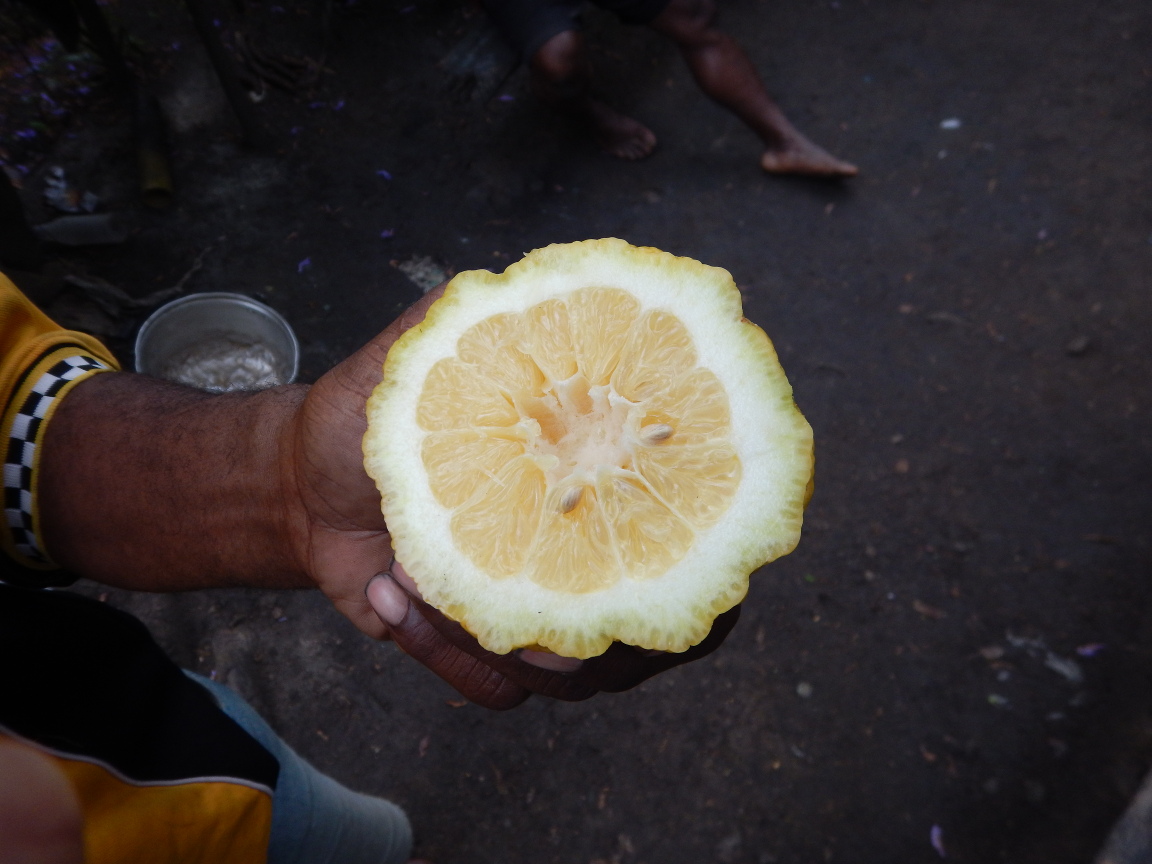
Déjà, une ambiguïté est levée. Le winterssi qui est cultivé aux États unis n'est pas le bon. Plus tard j'ai eu l'occasion de montrer aux locaux des photos des fruits ronds, ils disent n'avoir jamais vu de fruits ronds dans la région. Ils affirment aussi n'avoir jamais vu les fruits jaunir. Les informations sur Citrus Pages sont fausses. (Ça va être facile à corriger vu que maintenant, après Jorma Koskinen, j'en suis le responsable.)
Petit détail qui nous a un peu énervé, c'est qu'on a immédiatement compris que c'était la plante qu'on avait vue le mardi 2. Il y a quatre jours! Mais il n'y avait pas de fruits et la plante semblait tellement différente des photos trouvées sur internet...
Je prends l'avion pour Goroka dans les Highlands. Je n'ai pas d'agrume à collecter dans cette région, j'y vais pour faire trois jours de tourisme. Le vendredi 12, samedi 13 et dimanche 14 septembre à lieu le plus grand Sinsing de PNG, le Goroka show.
J'ai deux plans, le A une maison contre le terrain où se passe le Singsing, le B un village perdu dans la montagne à 20 km de Goroka. Évidement je choisi le plan B, je n'aime pas les villes. Ils sont de la famille Sédé. Le village se trouve au Sud de Goroka. Leur clan (ils ne disent pas tribu) est Musumawe (Moussoumawé) et vivent de manière traditionnelle.
Mardi 9 septembre
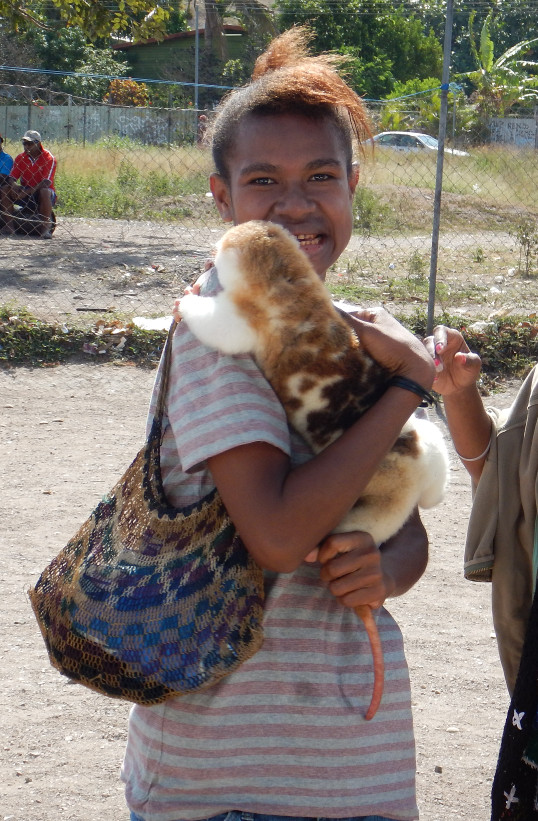
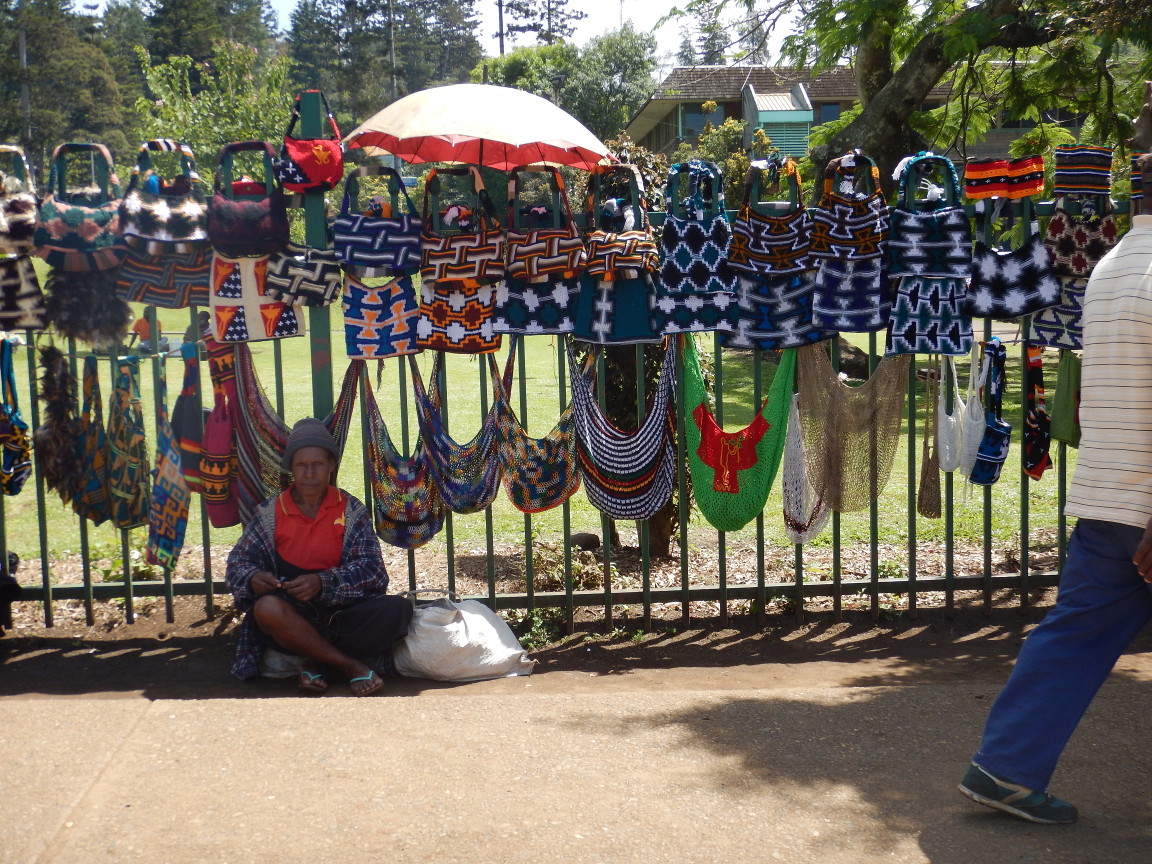
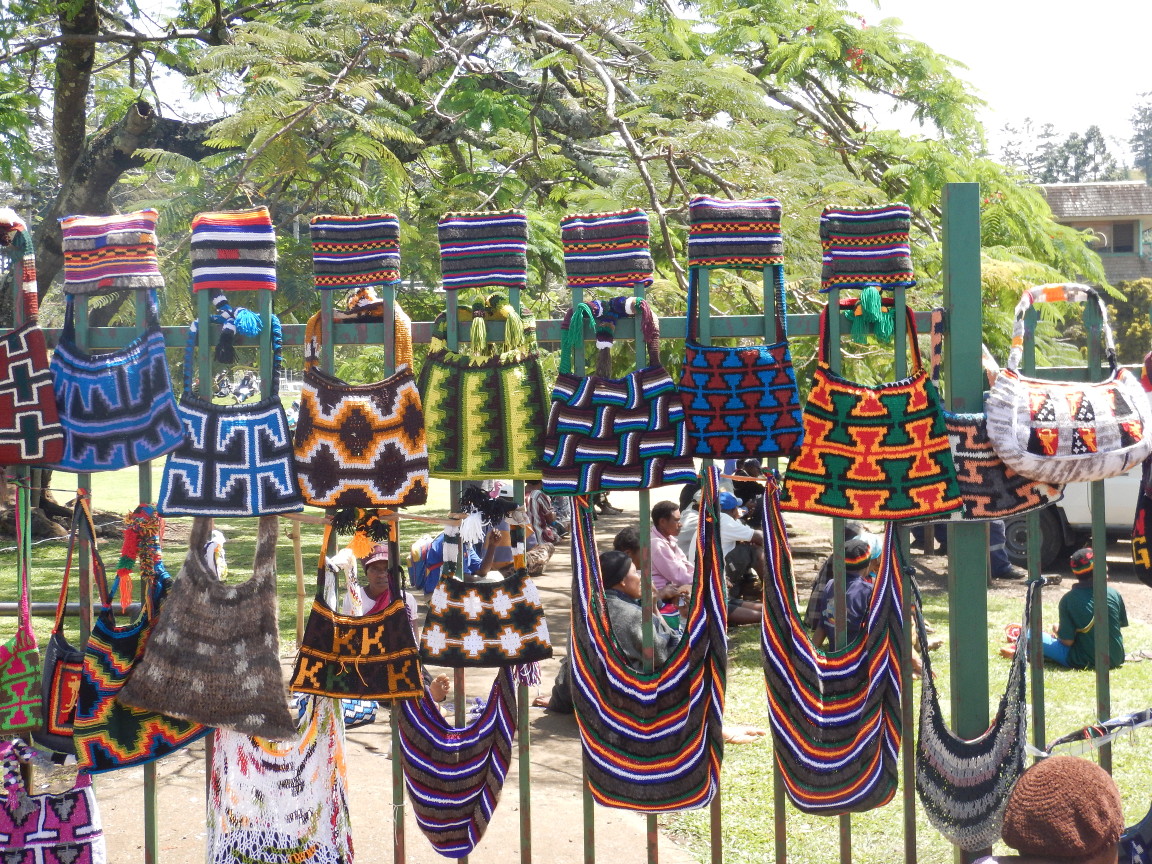
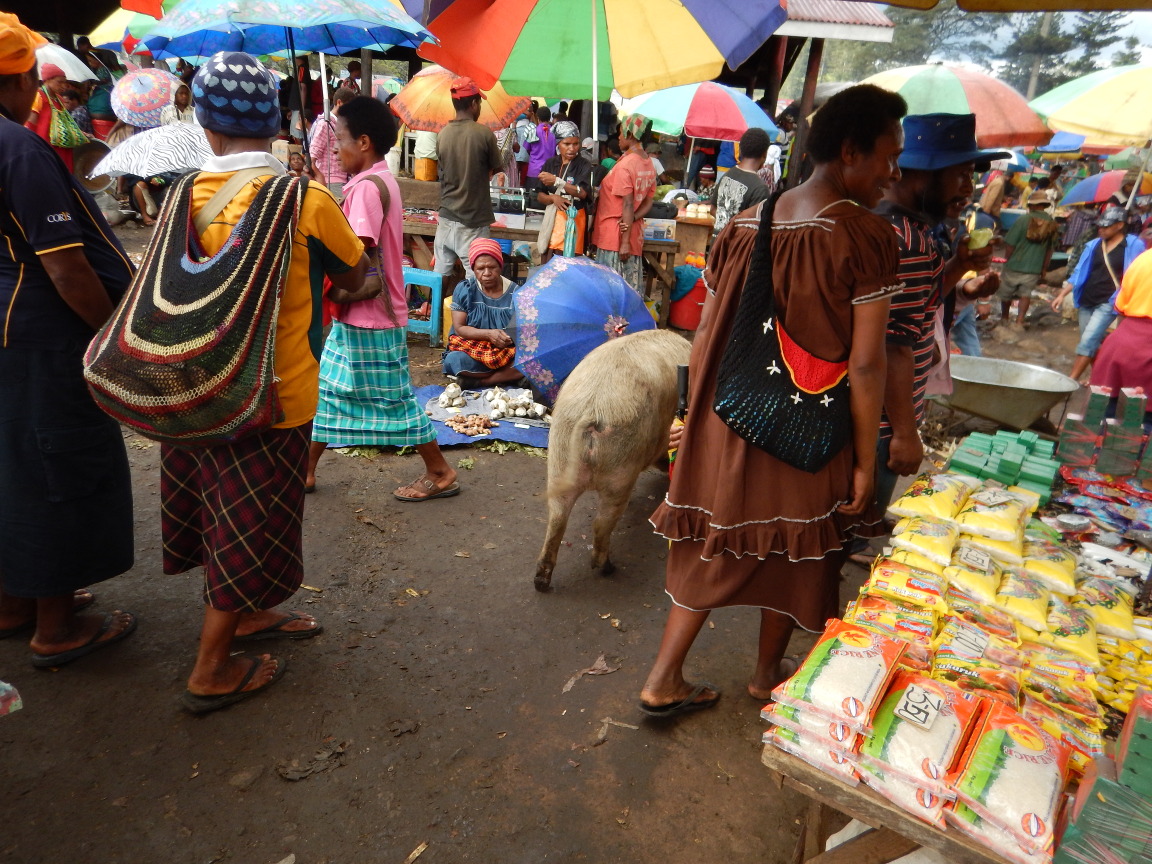
Je vais à Goroka acheter les billets pour le show. Tour au marché artisanal. 100 m de bilum, prononcer biloum, le sac traditionnel que tout le monde porte.
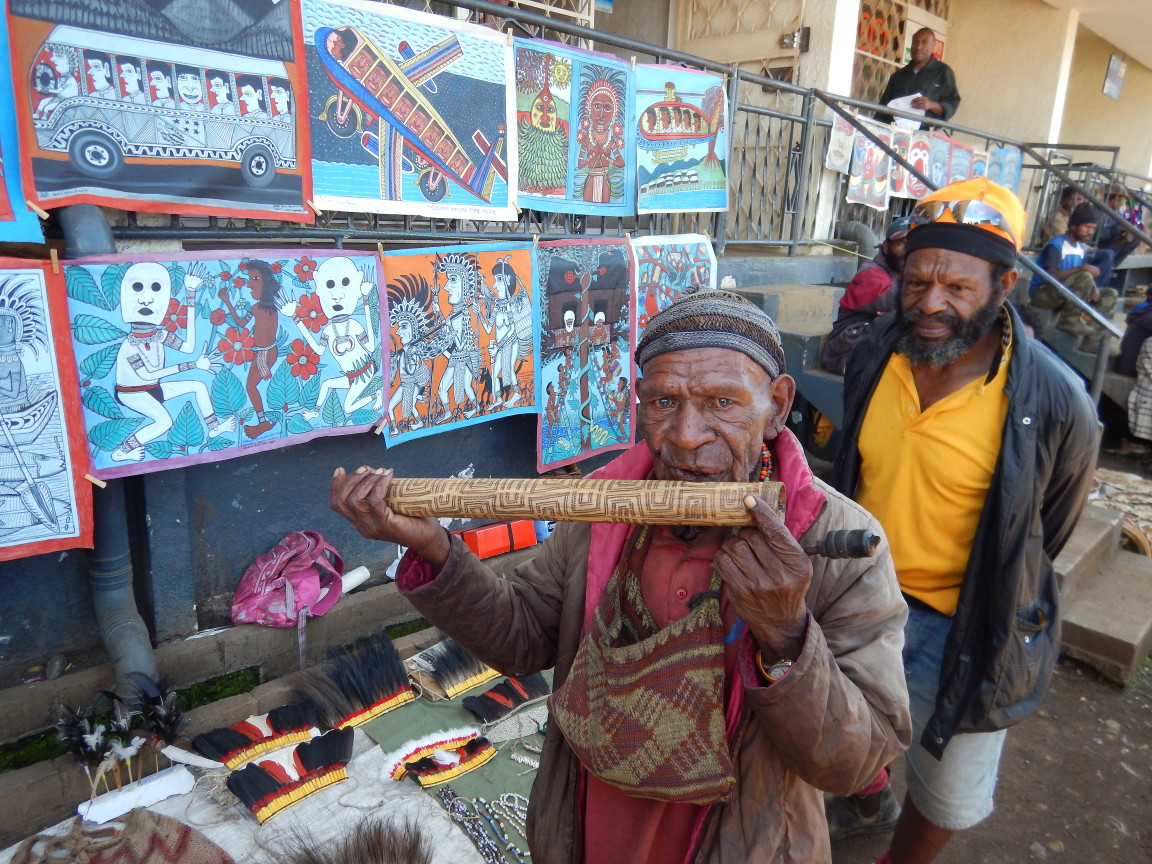
Sinon beaucoup d'arcs, de flèches, de haches de pierres, de parures: plumes, coquillages, peaux et dents d'animaux, dent de porcs sauvages et de chiens...
Je n'en peux plus, je vais acheter un smartphone en ville , Samsung Galaxy S5. Je prends des risques au prix que ça coûte. Je commence à recharger toutes mes données à partir des sauvegardes du disque dur et sur le cloud. Je récupère tout sauf les cartes du GPS qui n'étaient que dans le Galaxy S2. Je vais pouvoir communiquer avec le monde extérieur.
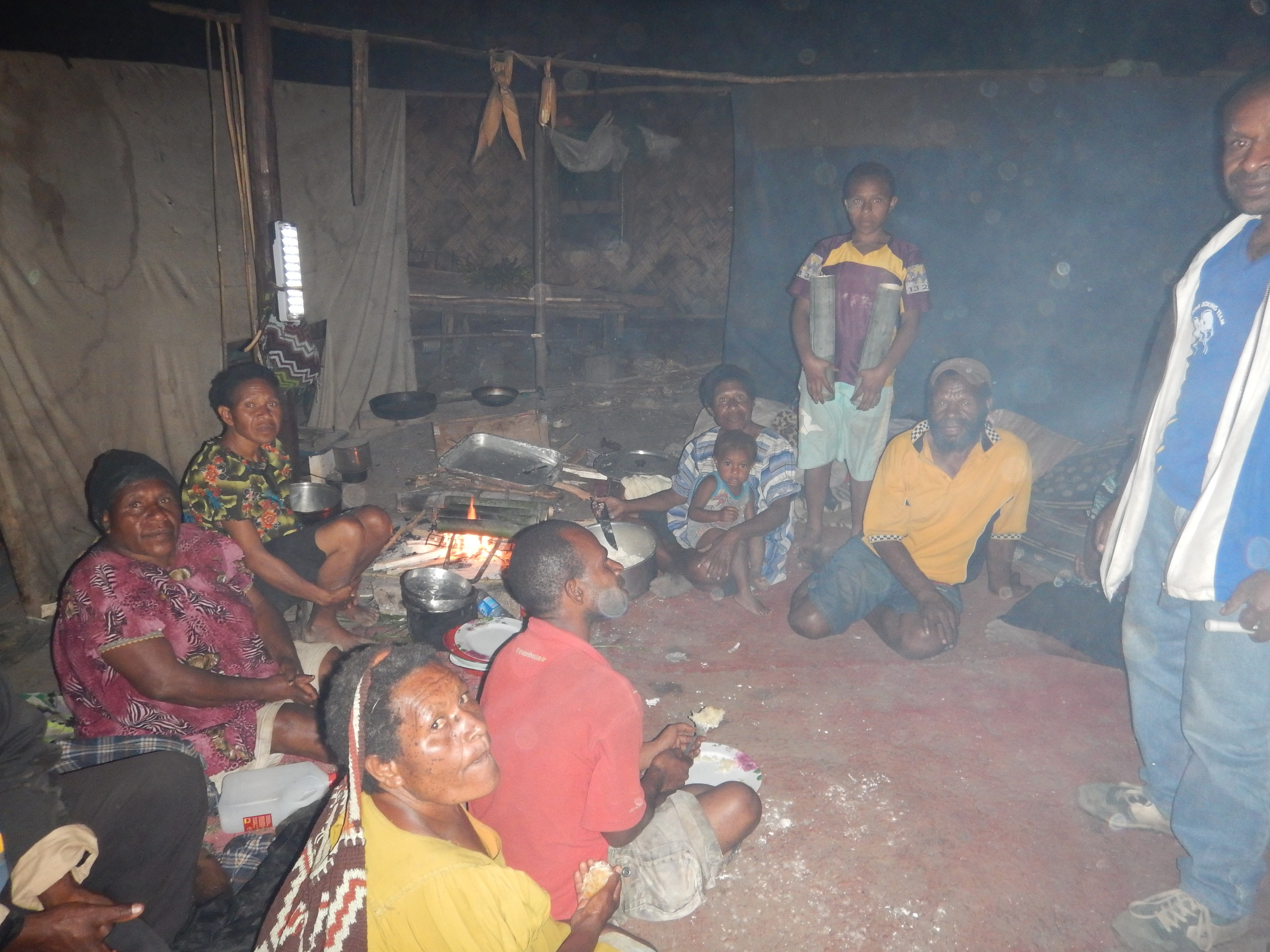
Et ce soir là, quelques photos de la case principale.
Et maintenant, ce que vous ne verez nulle part ailleurs. Immersion totale! Après le Singsing les gens se mettent à danser. Les bretons sont (presque) battus.
Je décide de refilmer la préparation au singsing. Je leur précise que cette fois ci il ne doivent pas poser et qu'ils ne doivent pas tenir compte de ma présence. C'est déjà un peu mieux.
Je l'ai repris en photos rien que pour les chandelles.
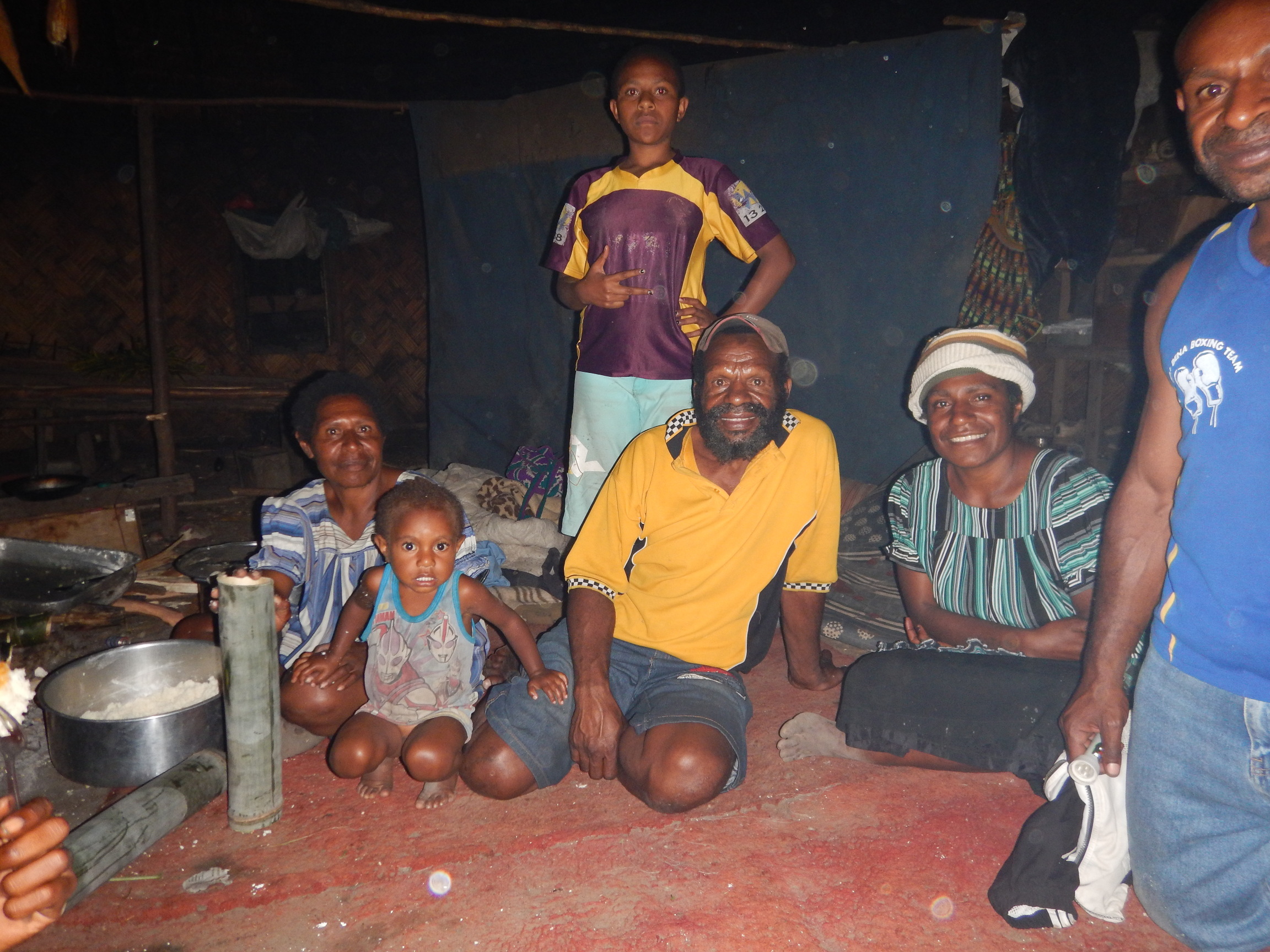
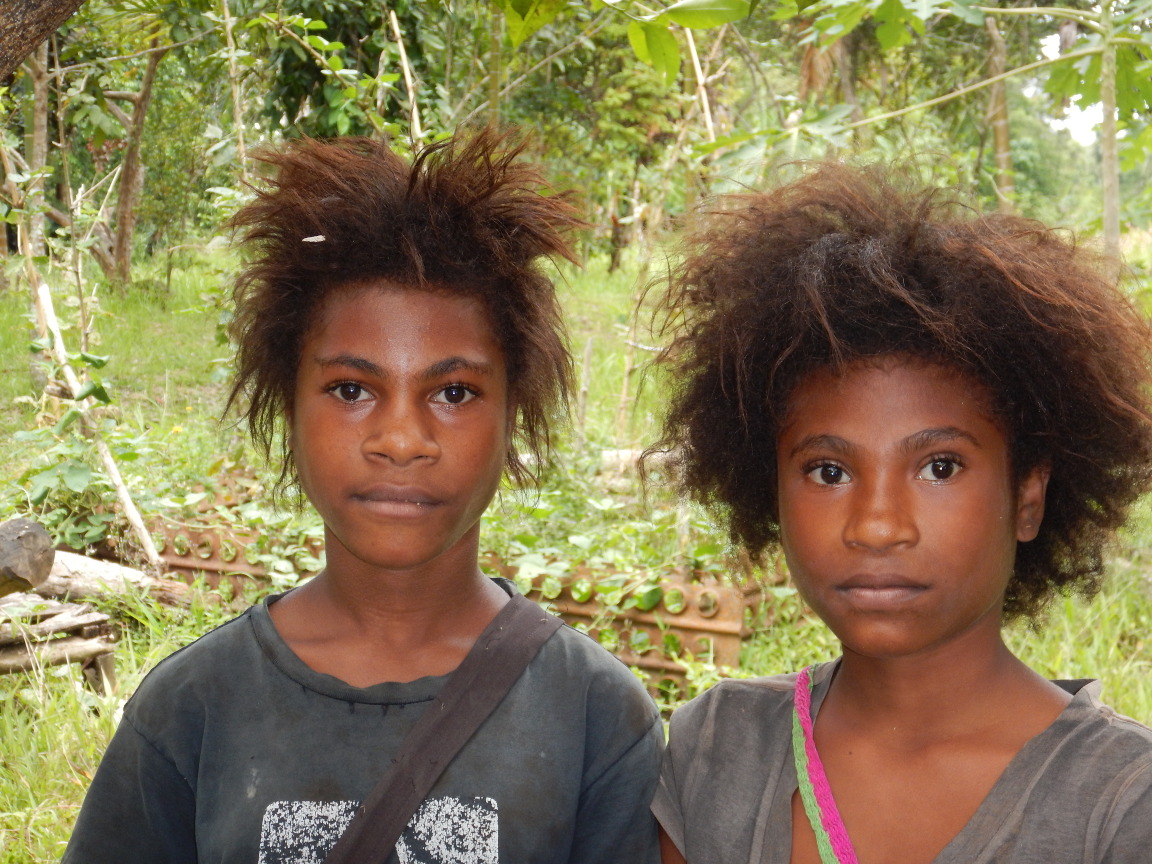
Les Papous sourient très rarement. Quand c'est le cas, il faut prendre une photo.
Au cours de la préparation de cette dernière journée de singsing j'ai plus précisément suivi un jeune homme et une jeune femme. Bien que vivant dans un petit village perdu dans les montagnes du centre de la Papouasie (Les Highlands), ce sont des jeunes comme on les trouvent dans le monde entier.
Au départ il y a ce jeune homme, Mohe,
et cette jeune femme, Oru.
À la fin on a ce couple des Papous.
Commençons par le jeune homme.
Restauration avant le singsing.
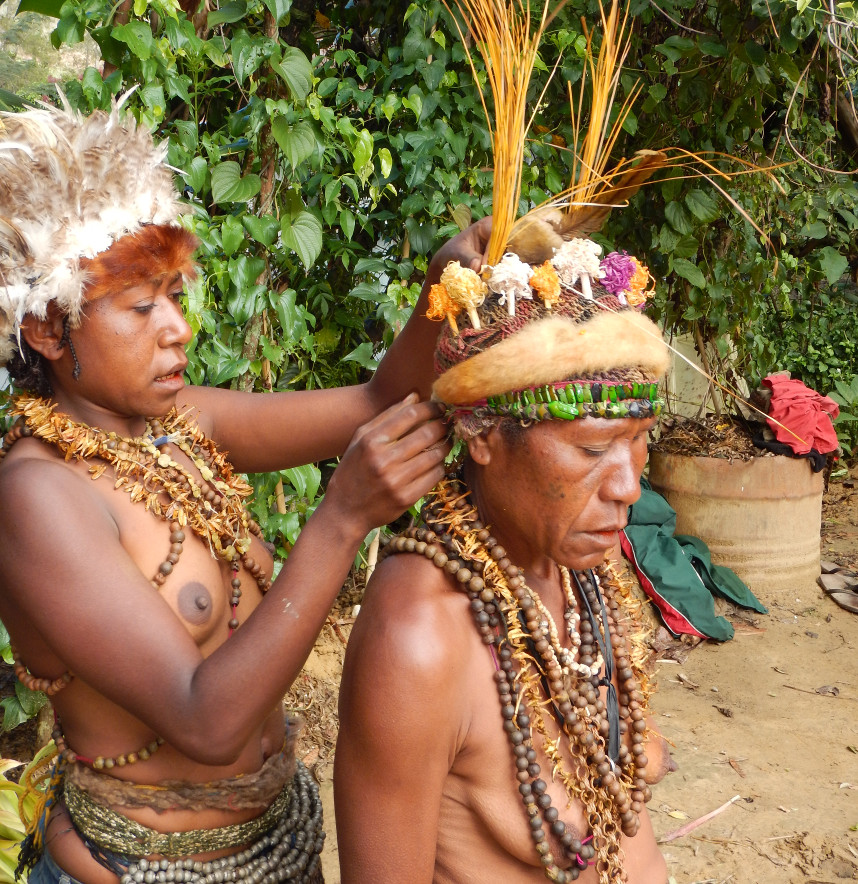
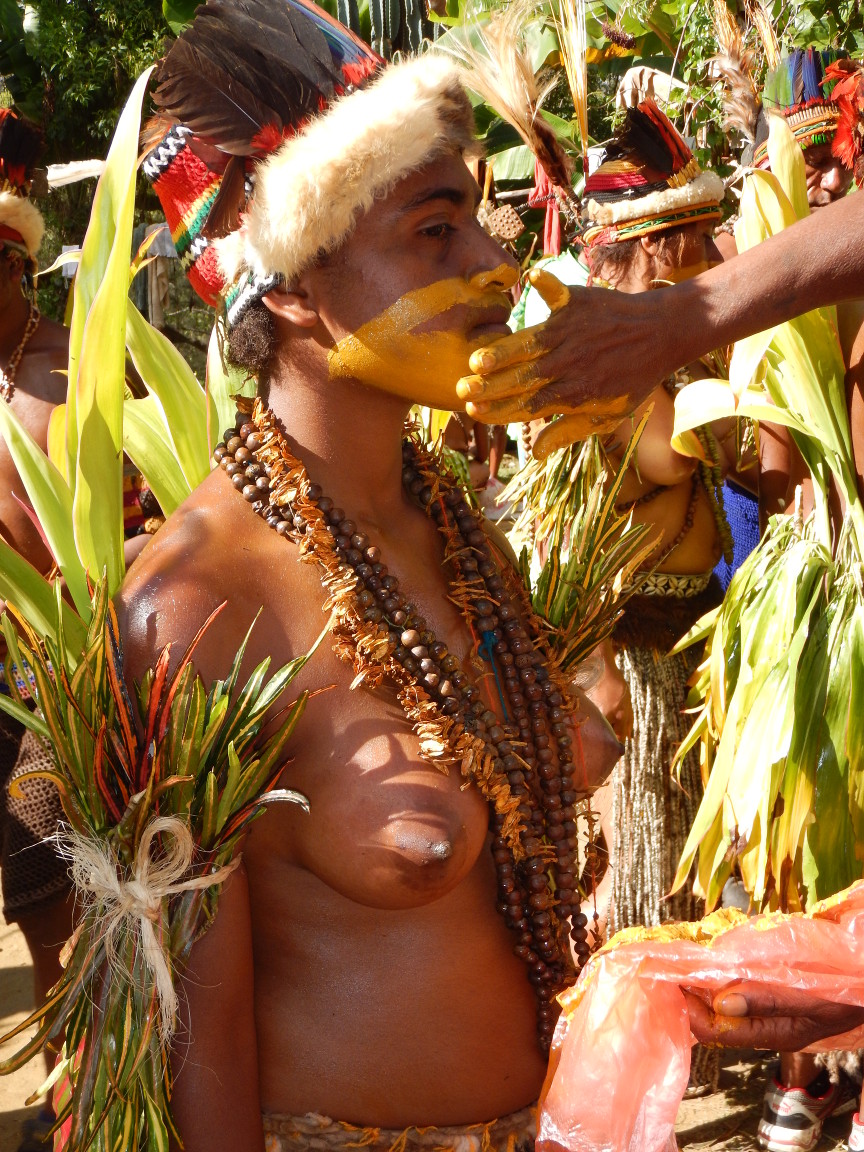
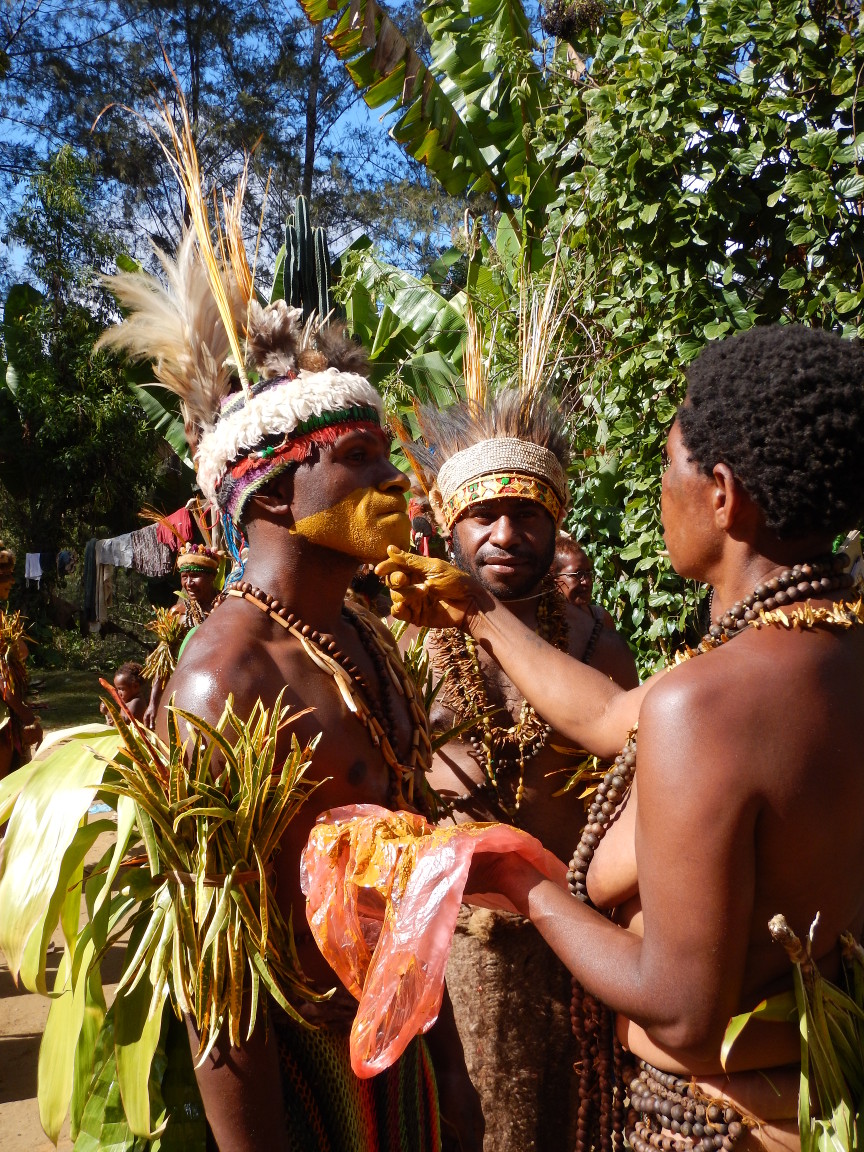
Maquillage.
Après huilage du corps et des feuilles décoratives.
Petite visite dans les coulisse du singsing. Les personnes qui sont prêtes à payer 20 fois le prix normal ont le privilège de pouvoir être seules avec les groupes en début de matinée quand les groupes entrent sur le terrain. Ce sont les VIP. Avant, c'était principalement des hommes âgés avec des appareil photo de grande qualité, genre photographes baroudeurs. Maintenant on voit la moîtié de femmes et beaucoup de jeunes femmes. Les appareil photo vont du plus petit au plus cher. La situation est un peu cocasse et fait penser à une visite de zoo.
Quelques photos sont intéressantes.
Une photo où touriste, locaux et danseurs ont une harmonie de couleurs.
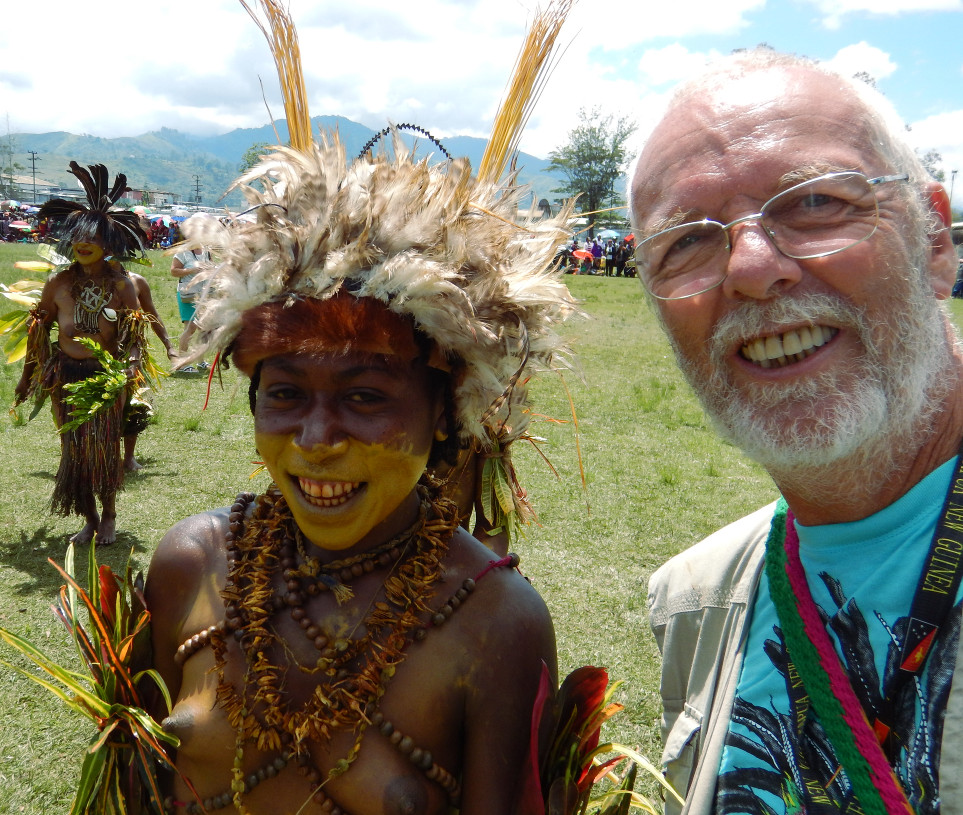
Je ne fais pas exception. Ici au milieu des danseuses et danseurs de mon village.
Une photo intéressante.
Une autre.
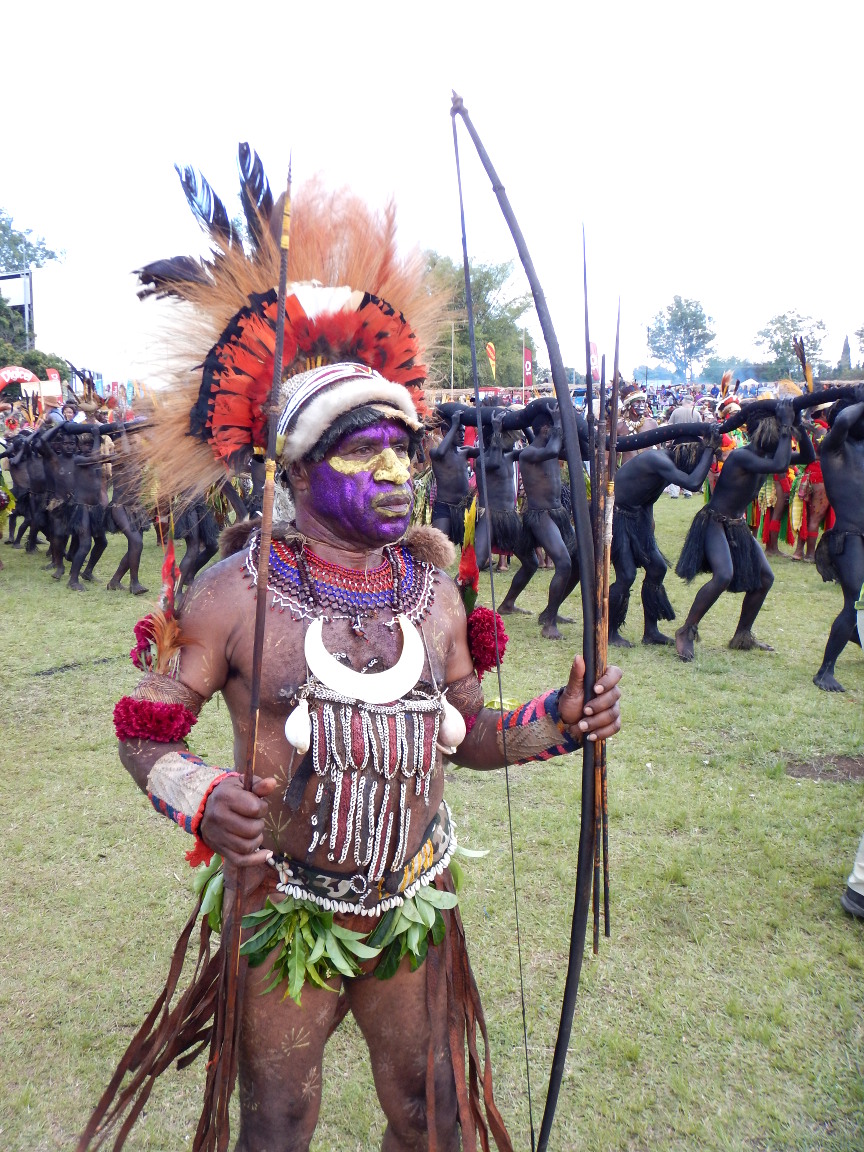
Parfois on a la chance de saisir un instant magique. Le guerrier face à la chasseuse d'images.
Pendant ce temps, ceux qui ont payé 5 kinas attendent derrière les fils-de-fer!
Plus tard, un concert de musique actuelle est donné sur le terrain adjacent. Les locaux sont très intéressés.
Petit tour à Goroka. Ambiance sur la plus grande place, face au grand marché (National Park).
Ambiance au grand marché.
Entre les deux une affiche m'intriguait beaucoup, surtout la dernière phrase: « Pendant les élections faites attention au sida »!?
Retour au village puis on monte au sommet de la montagne juste au dessus du village. La plaine est à 1500m d'altitude et la photo est prise à 2200m. Il faut agrandir l'image.
Petite balade sur les crêtes.
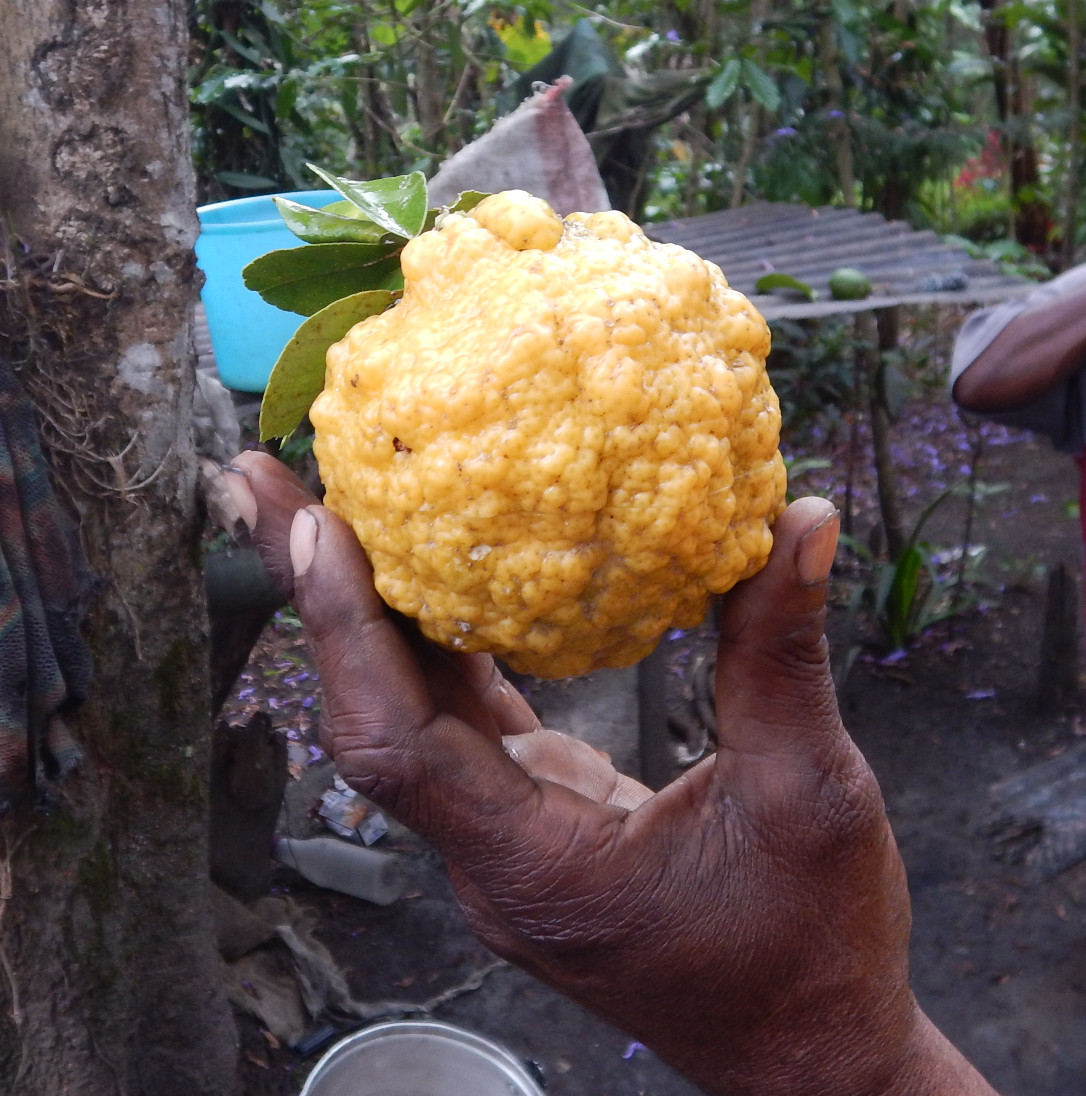
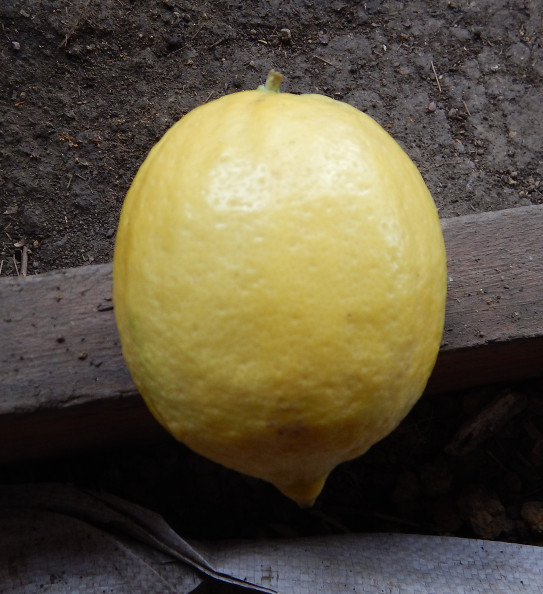
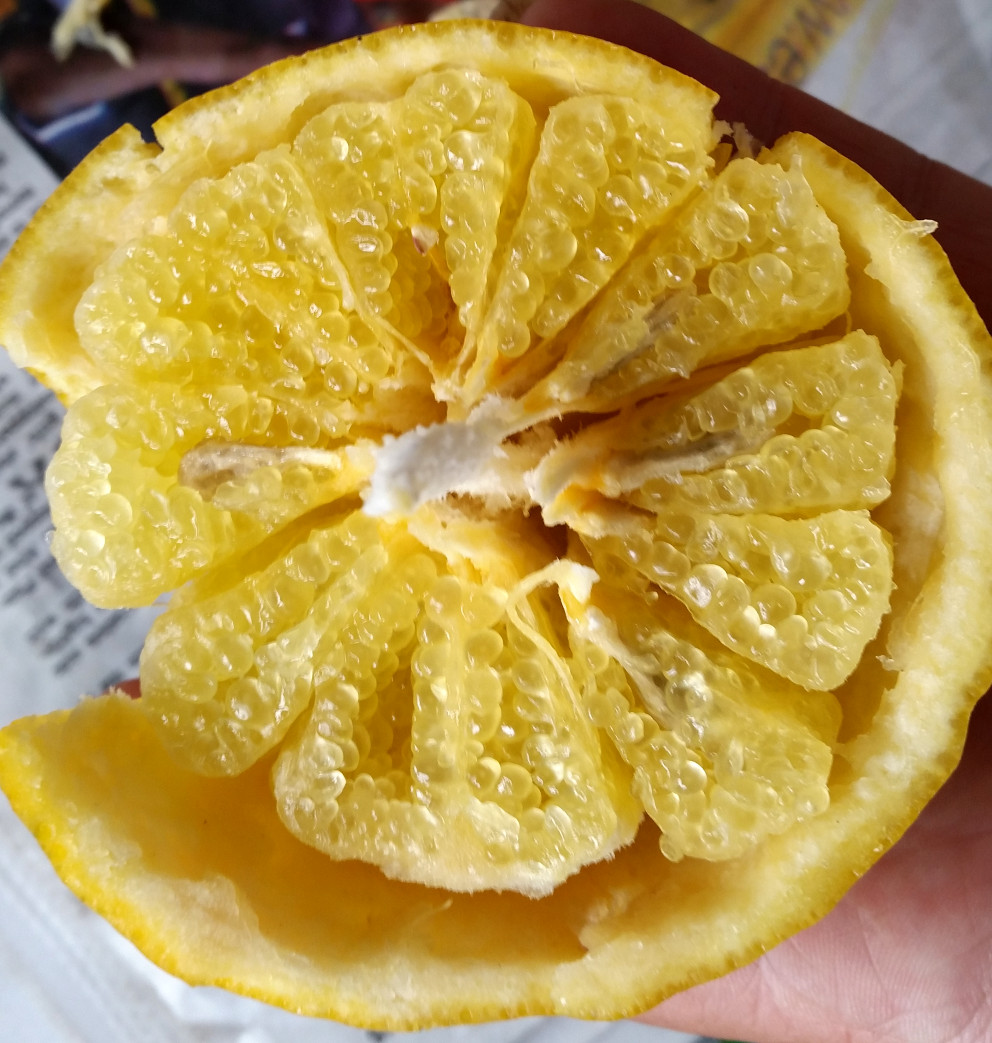
À plus de deux mille mètres d'altitude on trouve encore des agrumes et du café. Il semble qu'ici il y a beaucoup de ces croisements de cédrat, jus acide et peau sucrée.
Retour au village.
Le soir, deux vieux du village viennent nous faire une démonstration de flutes de bambou:
Aujourdhui je devais prendre la route pour Madang (prononcer mèdèng) sauf que des gars des Highlands de l'Ouest ont tué un instituteur des Highlands de l'Est. La route pour la côte Nord est bloquée. Elle le restera jusqu'à vendredi. Je vais visiter le musée de Goroka. Après deux photos il viennent me prévenir que c'est interdit. En voici une. Colliers fait de doigts séchés.
COLLIERS DE DOIGTS: Communément appelés colliers de doigts, mais plus proprement dits colliers de deuil, ces colliers ont été recueillis dans la région linguistique Simbari, district de Kokenara, au cours de la fin des années 1960. Les restes humains, les doigts et les petits os sont portés par les membres de la famille et les proches de la personne décédée. Leur objectif était double: signifier un état de deuil et protéger ceux qui les portaient des mauvais esprits et des aléas de la guerre. Les doigts ont été coupés après la mort et séchées sur un feu dans la maison du défunt. Après séchage, ils ont été montés en collier pour être portés. D'autres ossements sont prélevés sur le corps décomposé et peint à l'ocre rouge avant d'être séché au soleil. Une fois secs, ils sont frottés avec de la cendre recueillies à partir des restes de rats brûlés. Ce rituel symbolise la fin de le phase de décomposition. Ces coutumes ont leur parallèle dans la coutume européenne de prélever une mèche de cheveux d'un défunt aimé et de la porter en médaillon. Tout comme le port de médaillons de cheveux est passée de mode chez les Européens au début du XXième siècle, le port des colliers de deuil à progressivement disparu chez les Anga à partir de leurs contacts avec le monde extérieur au cours des années 1960.
Au marché je trouve une guimbarde traditionnelle.
Sur internet j'ai trouvé cette petite vidéo que montre son utilisation.
Il y a une rumeur comme quoi le passage est possible. Je prends le risque d'essayer et ça passe. La guerre tribale est évitée. Je passe la nuit à Madang chez le propriétaire du PMV (Public Motor Vehicle. Moyen de transport local, camion ou minibus).
Le lendemain je fais un petit tour de ville. C'est très sympa, aéré et calme avec de l'eau partout.
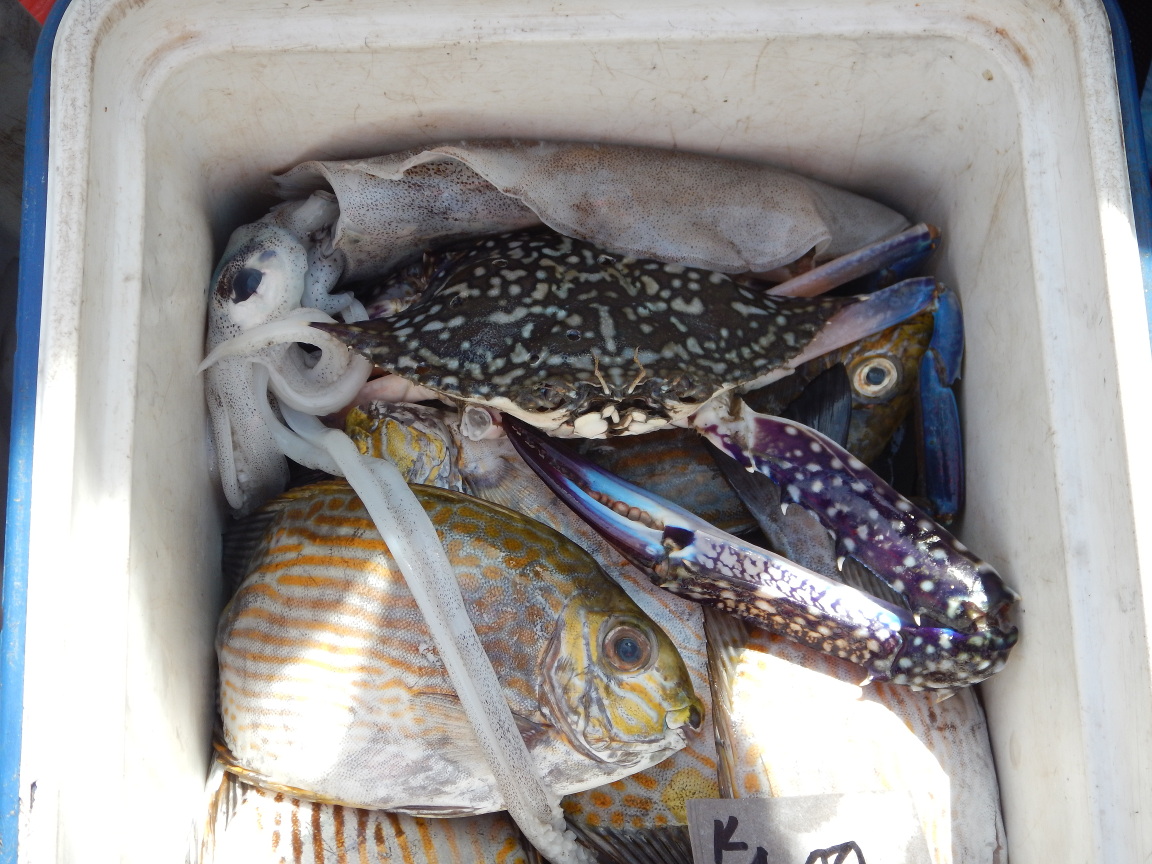
Je tombe sur le marché des pêcheurs.
Les poissons sont plus colorés que chez nous!...
Les bilums servent à tout.
Je pars pour Gogol River, à la recherche de Clymenia polyandra, mais il faut d'abord attendre que le PMV soit plein.
En route je commence mon enquête et un des passager me dit qu'il n'est pas nécessaire de remonter la rivière Gogol, qu'il connaissait cette plante (Clymenia polyandra) et qu'il y en a dans son village, Bau. Je lui fait confiance et je descends avec lui. Il est prof de mécanique dans un lycée professionnel. Je m'installe sur la place du village et je fais mon enquête. Au bout de deux heures Clymenia polyandra est trouvé! Là, ça a été vraiment rapide.
Mundu, la trouveuse.
Le seul fruit est immature.
Surprise, les vésicules sont rondes comme pour le Citrus australasica, de type «caviar».
Il n'y a pas d'épines.
Les feuilles ne sont pas articulées.
Maintenant que tout le village a compris ce que je cherchais, ils m'apportent des fruit mûrs.
Notez celui qui a amené sa mamie pour qu'elle soit sur la photo.
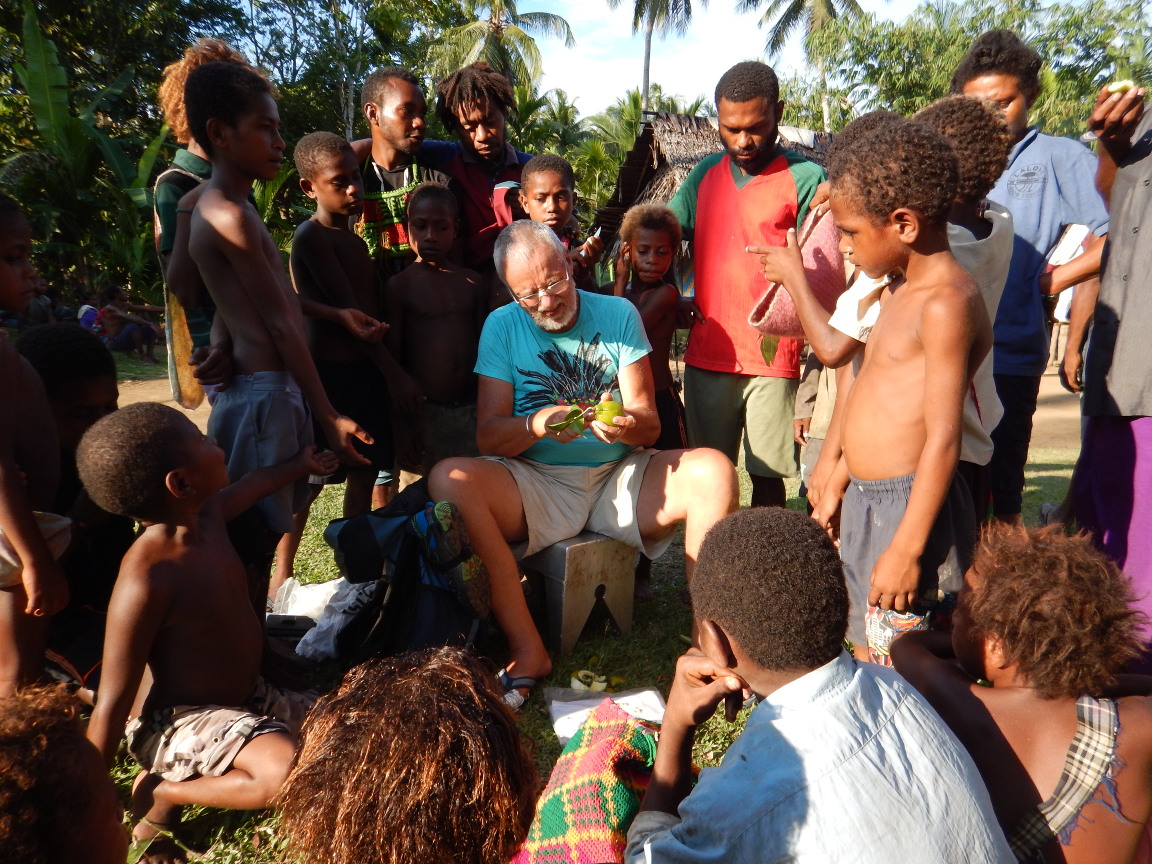
Préparation des échantillons pour les photos. C'est toujours un spectacle.
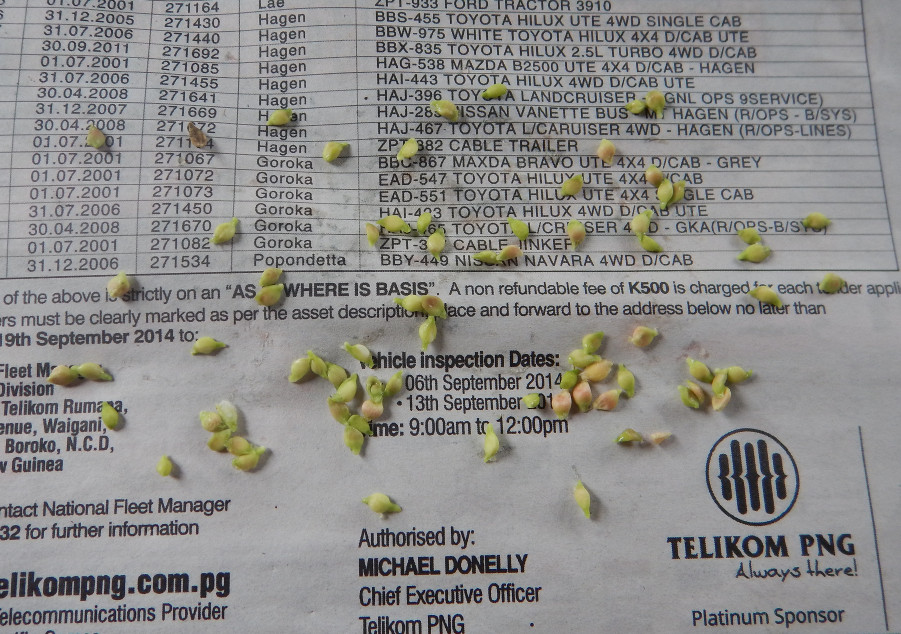
Les graines portent les empreintes des vésicules qui les touchaient.
Le soir je dors au lycée professionnel. Ce sont les vacances et il ne reste que cinq étudiants dans le dortoir. Il y a de la place. On est samedi, la poste est fermée le dimanche. Je décide donc de rester à Bau jusqu'à lundi.
Réveil, je vais à la rivière Mia pour me laver, faire ma lessive et prendre mon petit déjeuner. Mais au bout de deux minutes il y a une trentaine d'hommes et de garçons qui me dévisagent à 5 mètres et me harcèlent de questions... On se croirait en Inde! J'avais décidé d'avoir un matin tranquille, c'est loupé. Je leur explique gentiment que je veux être tranquille une petite heure et qu'après j'irai au village (Waput) répondre à toutes leurs questions, impossible de les faire partir. Certains font mine de partir et se cachent dans les bosquets pour me surveiller. J'étais assez énervé.
Rivière Mia.
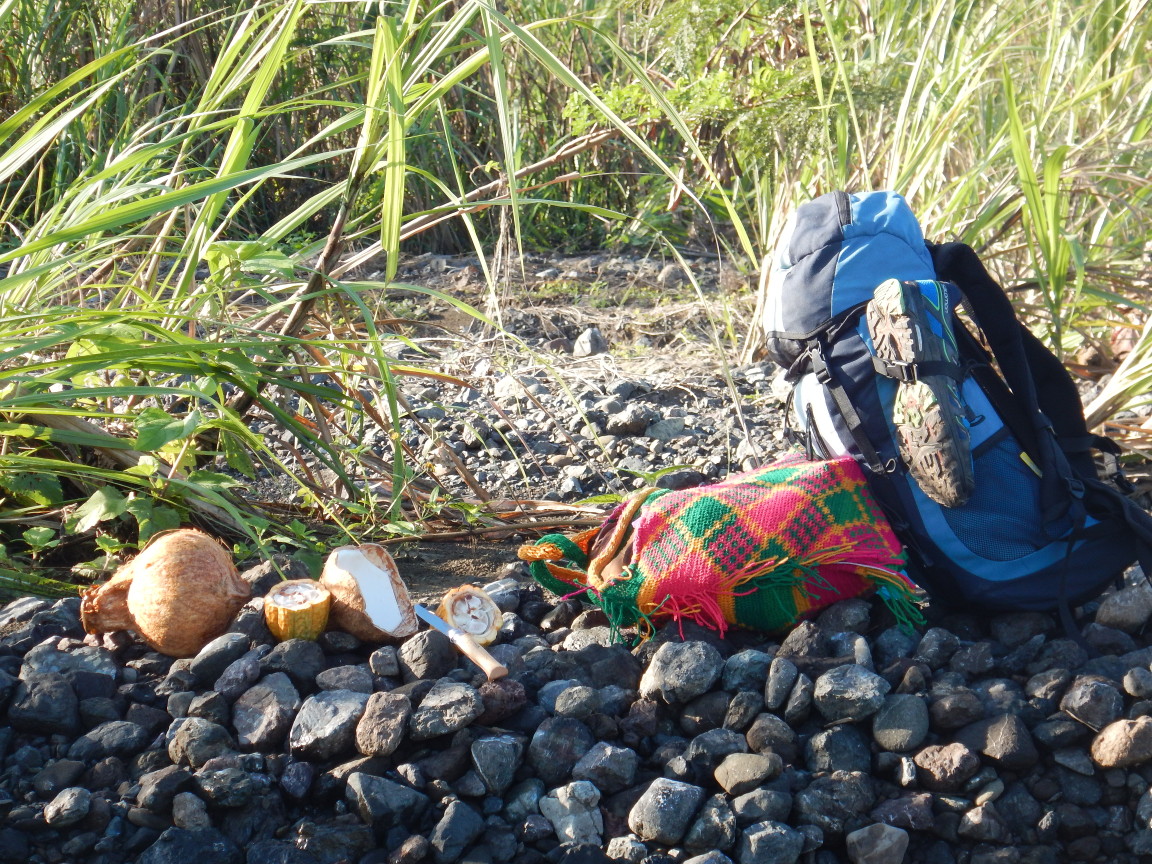
Petit déjeuner. Noix de coco et cabosse de cacao.
Je vais au village et je me mets à faire du stop pour Lae car je ne voulais pas trainer ici. Débarquent le chef du village et quelques femmes. Il me demande ce qui se passe pour que je veuille partir, alors je lui raconte la scène précédente et je me retourne vers les femmes et demande « Vous aimeriez qu'une troupe d'hommes vous regardent quand vous allez vous laver à la rivière? ». NON unanime. Là, j'avais gagné. Le chef s'excuse et explique que c'est une bande d'idiots. Et m'invite à rester. On s'installe devant une case près de la route. Je réponds à toutes leurs questions et j'explique que je cherche un agrume sauvage (bus muli prononcer bousse mouli) mais que je n'ai aucune idée de ce que c'est ni d'où il est. là, la moitié du village était déjà autour de nous et tous disent qu'ils ne voient pas. Alors le chef dit que les jeunes n'osent pas aller en forêt et que seuls les vieux la connaissent et il ajoute: je connais le seul agrume qui existe dans notre région. Je lui demande de m'y conduire. Il y a une bonne petite marche.
L'agrume est juste au pied de cette pente.
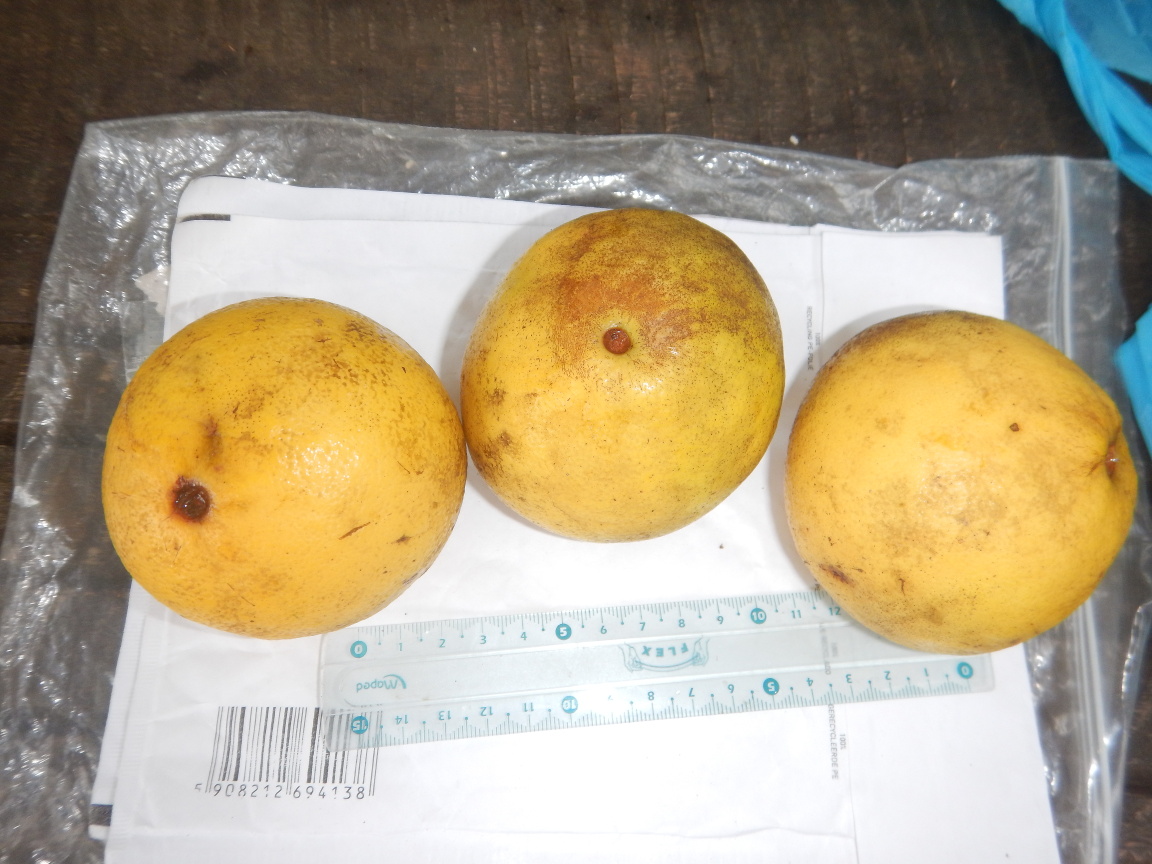
On arrive. Il me montre un arbre et quand je lève les yeux je sais exactement ce que c'est: Citrus macroptera. Les feuilles ne peuvent pas tromper. Trois agrumes de trouvés sur les cinq cherchés.
Le chef du village au pied du macroptera. J'évalue la hauteur de l'arbre à 12 mètres.
Un jeune grimpe dans l'arbre pour rapporter des branches et des fruits. Il n'y a pas de fleurs. Les feuilles, 7-8 cm de large sur 25 cm de long.
Ici c'est une branche plantée dans le sol pour prendre les photos au soleil.
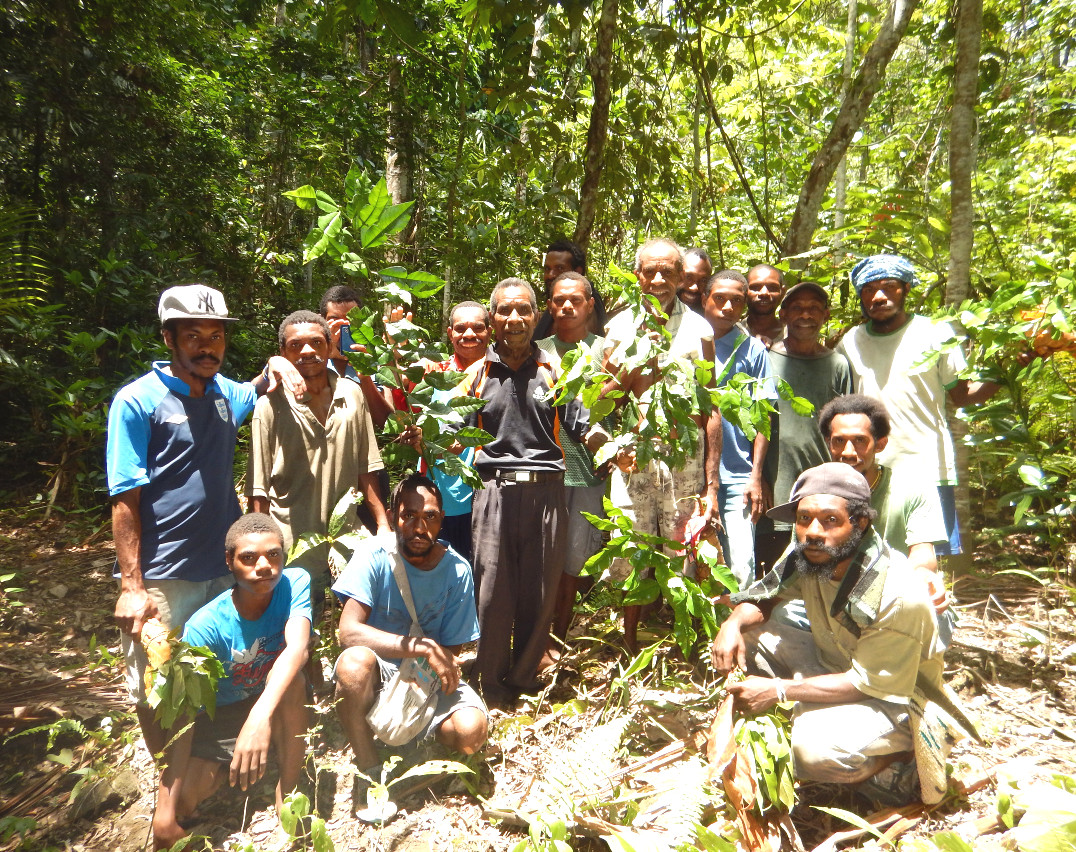
La troupe qui nous a suivi avec au milieu Manoa le découvreur (le chef du village).
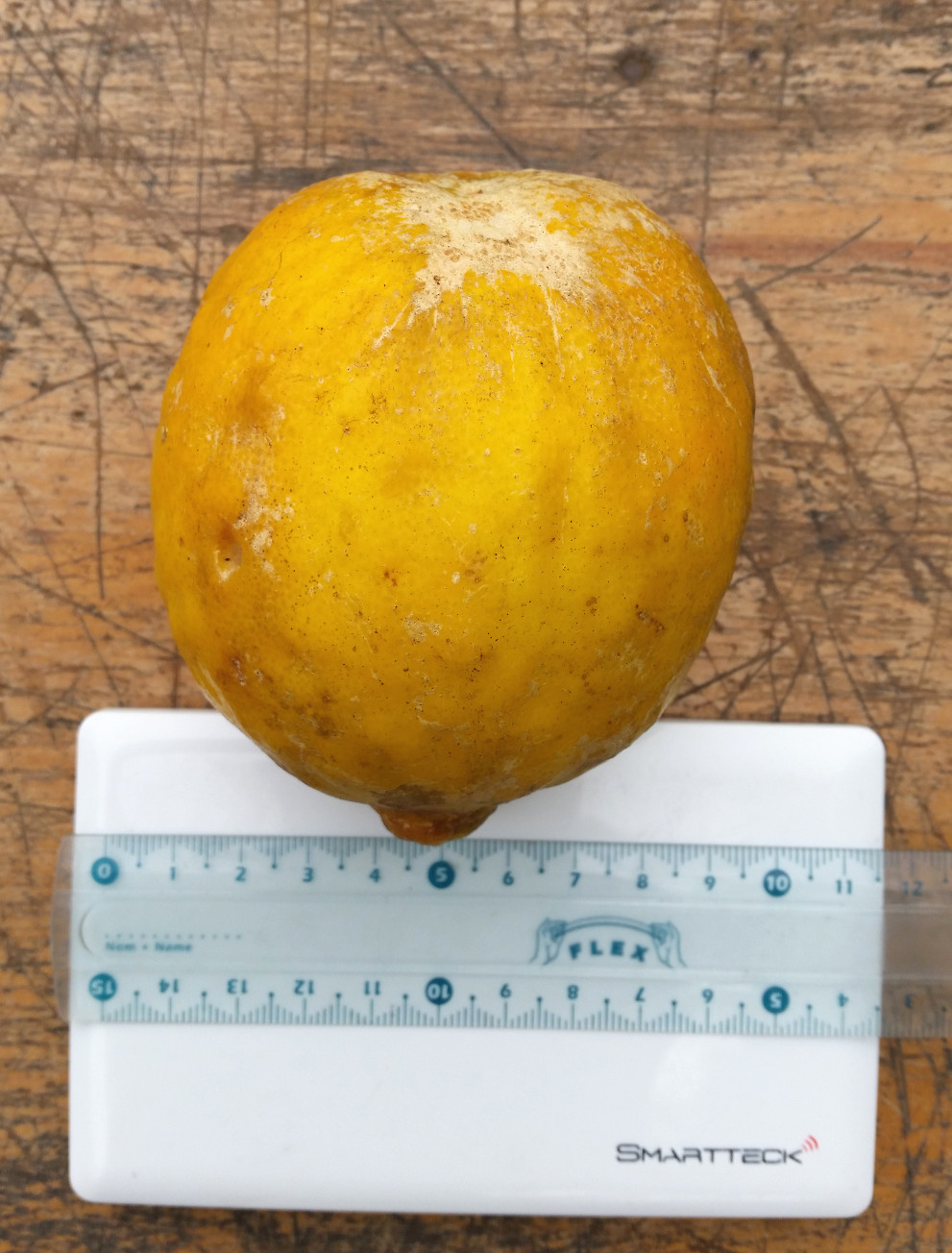
Trois beaux fruits.
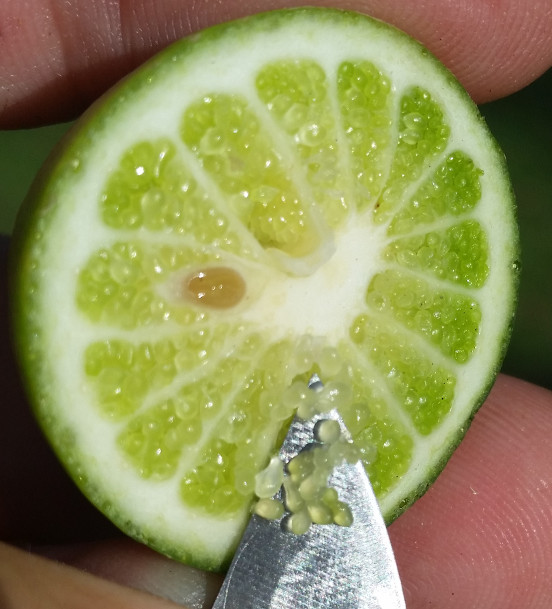
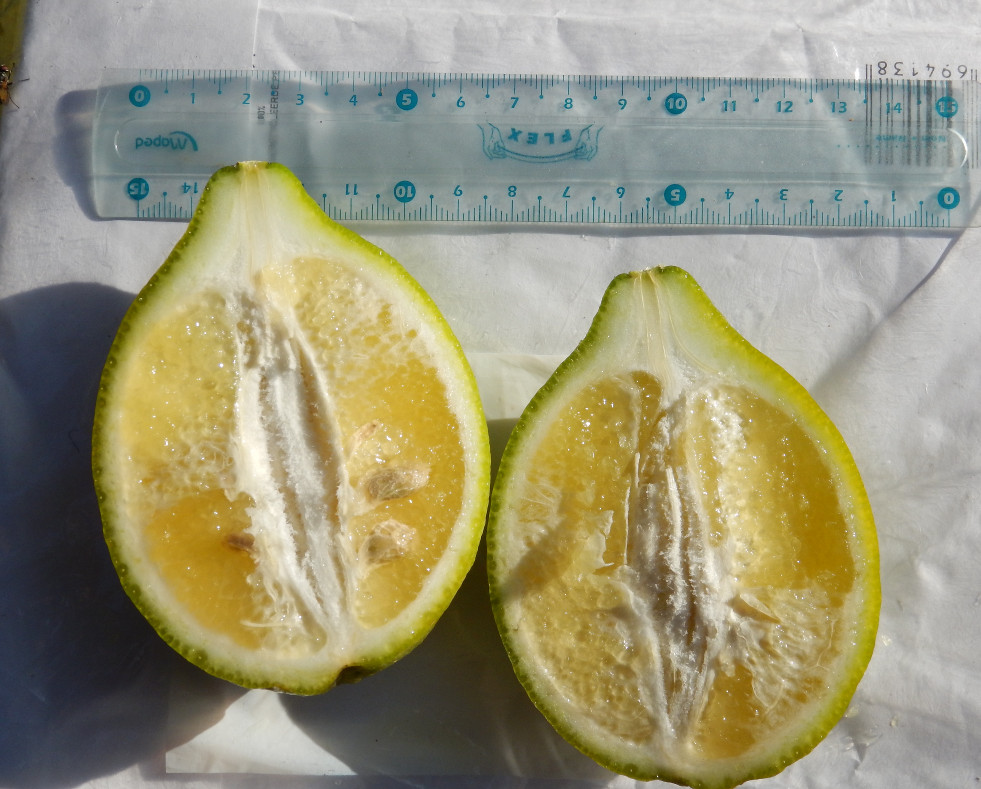
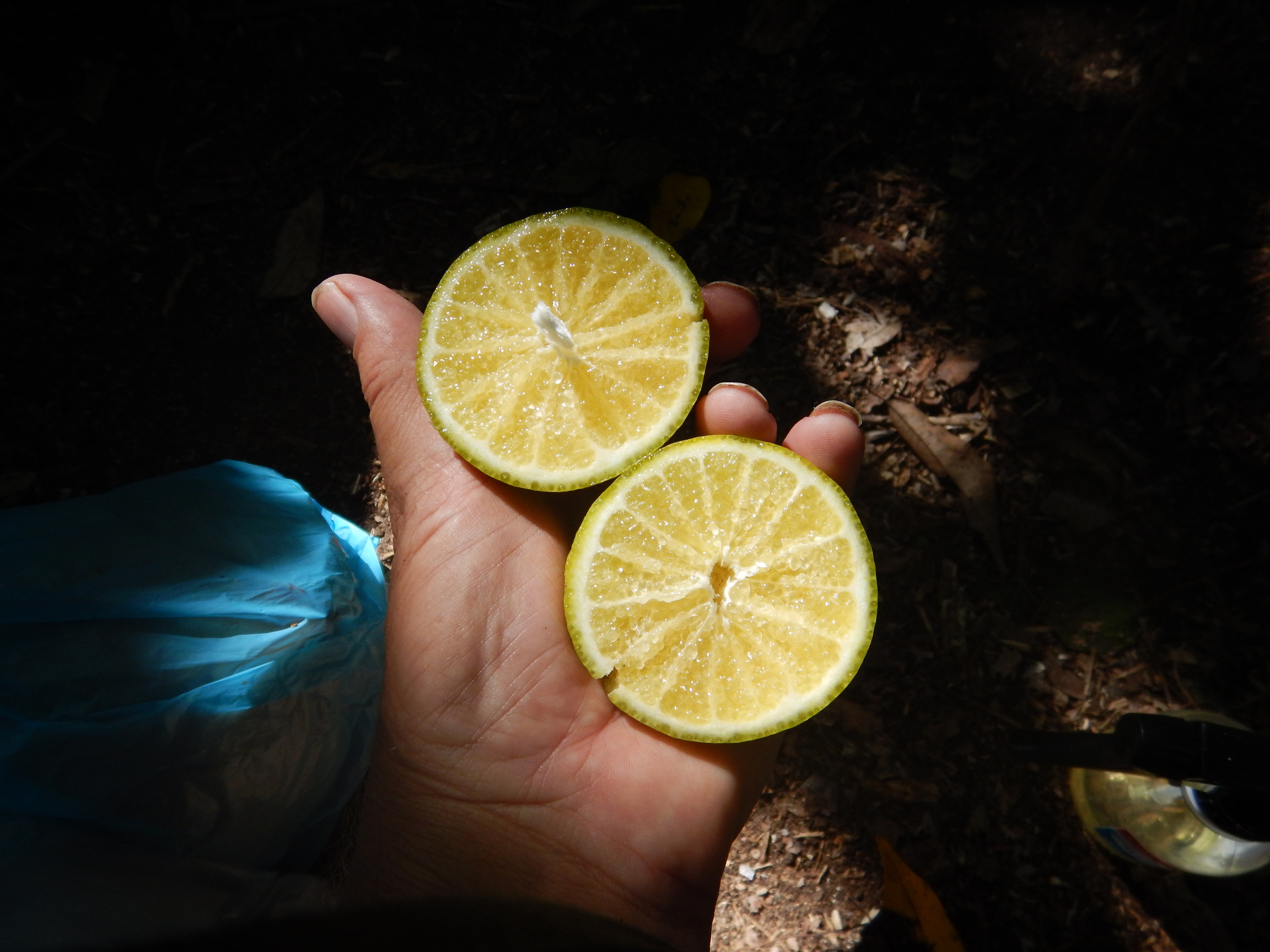
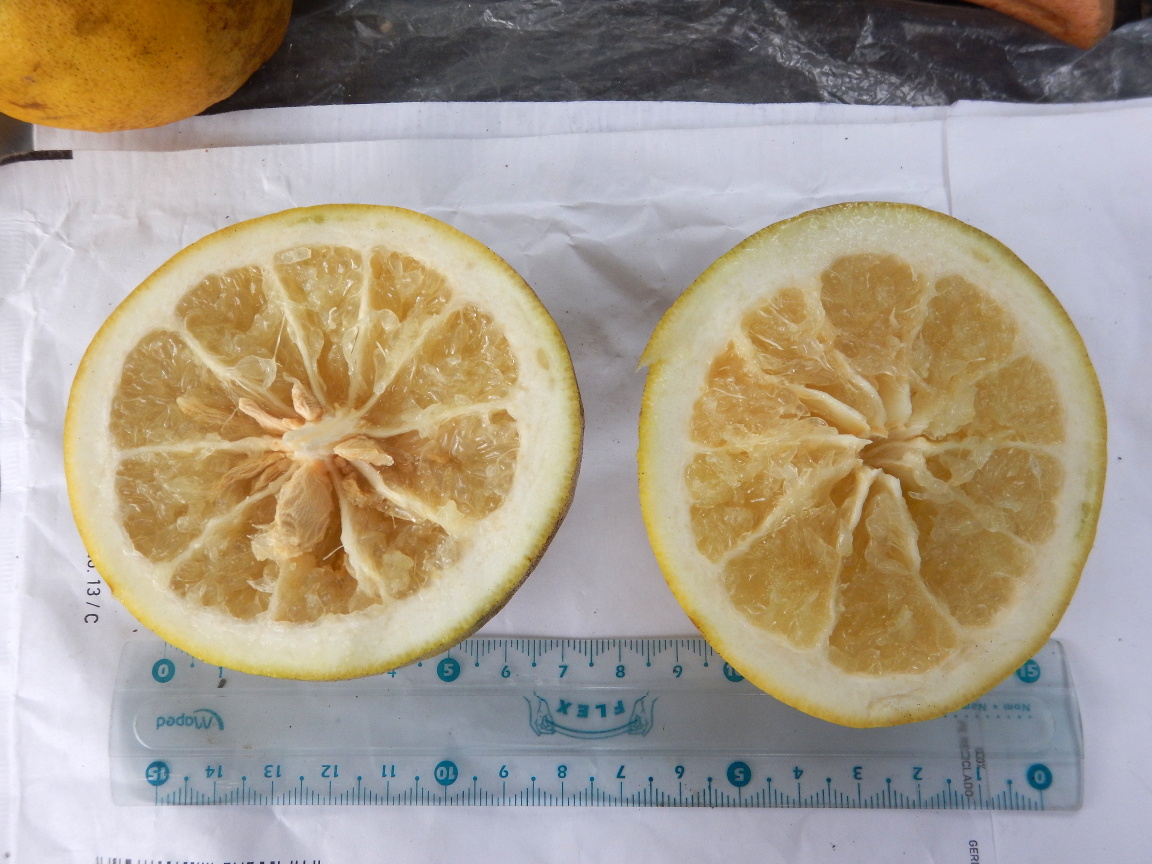
Contrairement à ce qui est dit partout le fruit est très juteux.
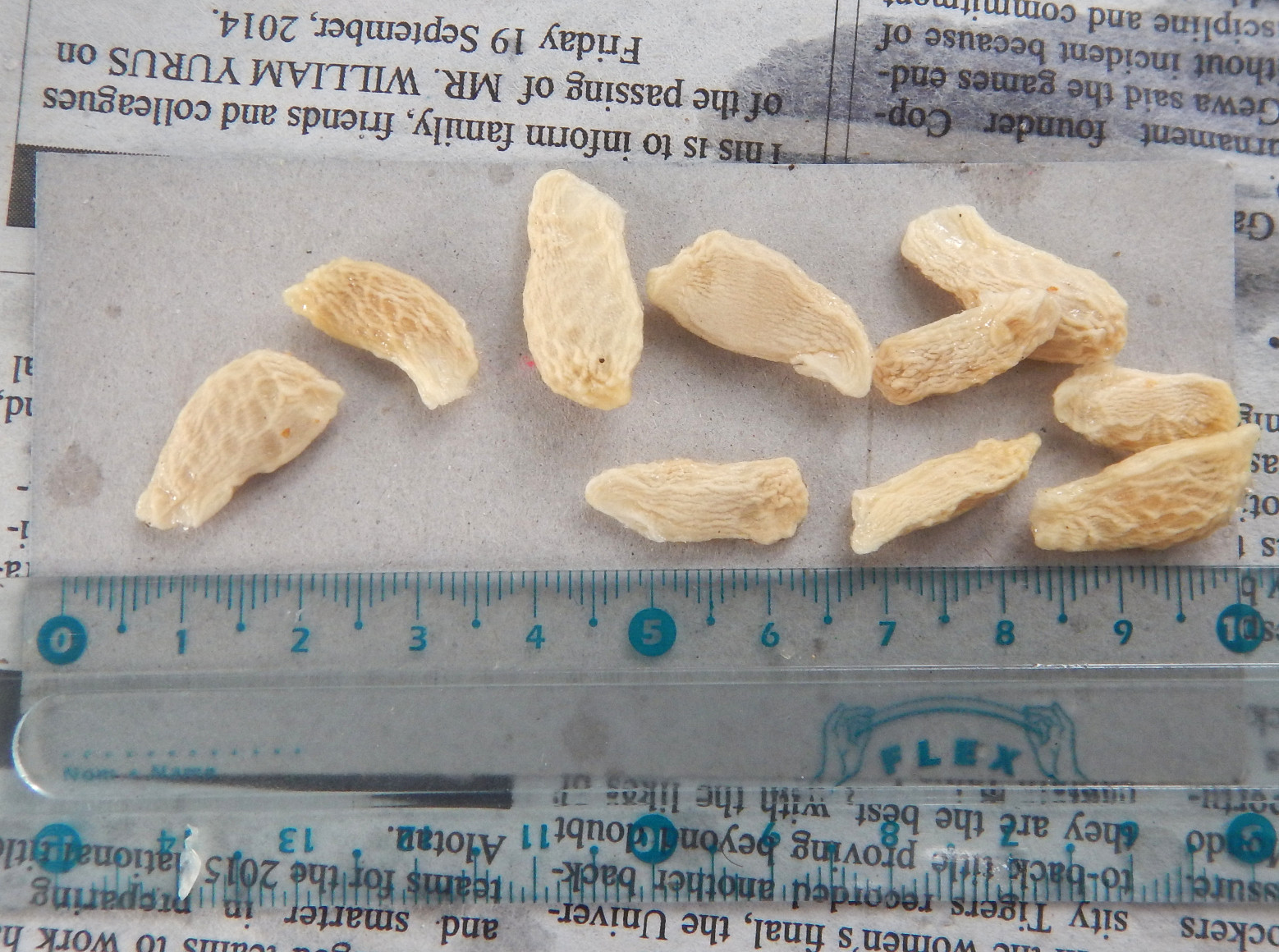
Les graines font presque 2 cm de long et portent les marques des vésicules.
On passe à la dégustation. Tout le monde veut essayer. Le zeste n'est pas déplaisant. L’albédo est insipide, aucune trace d'amertume. Tout le monde trouve la pulpe bonne sauf moi. La pulpe est très juteuse, acide avec un goût citronné et un petit arrière goût déplaisant mais peu d'amertume. Les descriptions qu'on trouve sur le net sont déjà très contradictoires mais là je suis en face d'un agrume qui ne correspond à aucune des descriptions!?
Le chef Manoa m'attribue une case et je décide de fêter la trouvaille avec une bière. Il faut aller au village suivant. Tout le monde me dit que je ne dois pas y aller seul car les gens de l'autre village sont dangereux. J'y vais quand même seul. Là bas tout le monde est très gentil. Je trouve ma bière et quand je commence à attendre un PMV pour retourner à Waput ils me disent on va vous accompagner car les gens de Waput sont dangereux! Je rentre seul évidement... La scène est caractéristique des locaux. Pour eux, tous les autres sont dangereux.
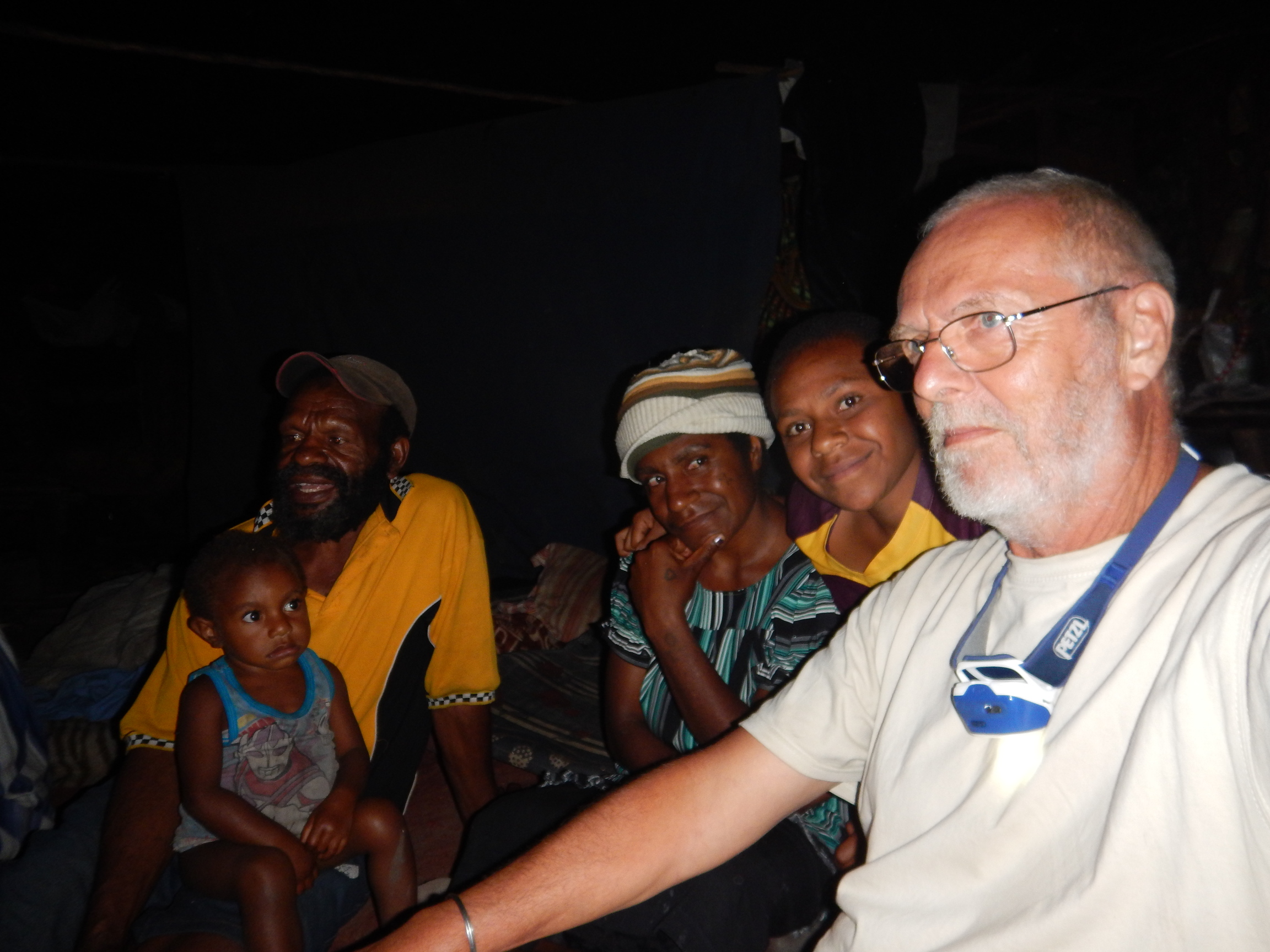
La soirée se passe en discussions avec les jeunes du village . L'institutrice du village est cultivée, ouverte d'esprit et on peut parler de tout.
On m'apporte un fruit trop mûr de Clymenia polyandra. Sa couleur est nettement orangée, peau et pulpe. Le goût est passé.
Ce fruit contenait 24 graines. Sur cinq fruits j'ai eu 3, 4, 12, 7 puis 24 graines. Moyenne de 10 pépins par fruit.
L'attache des graines est très particulière.
Le fruit se pèle facilement et les quartiers se séparent tout seuls.
Photo prise avec un autre appareil. La couleur est plus proche de la couleur réelle. On voit le disque dur, le smartphone et la batterie USB. Notez le thème de la toile cirée.
Je passe le reste de la journée à visiter le village. Le dessous d'une case est transformée en poulailler mais les poules sont des pigeons.
Les pigeons sont des Goura victoria gros comme des poules.
J'attends un PMV sur le bord de la route et je vois défiler le chef de village, le curé et même l'institutrice qui a collé un devoir à ses élèves pour pouvoir venir me dire au revoir. Sympa!
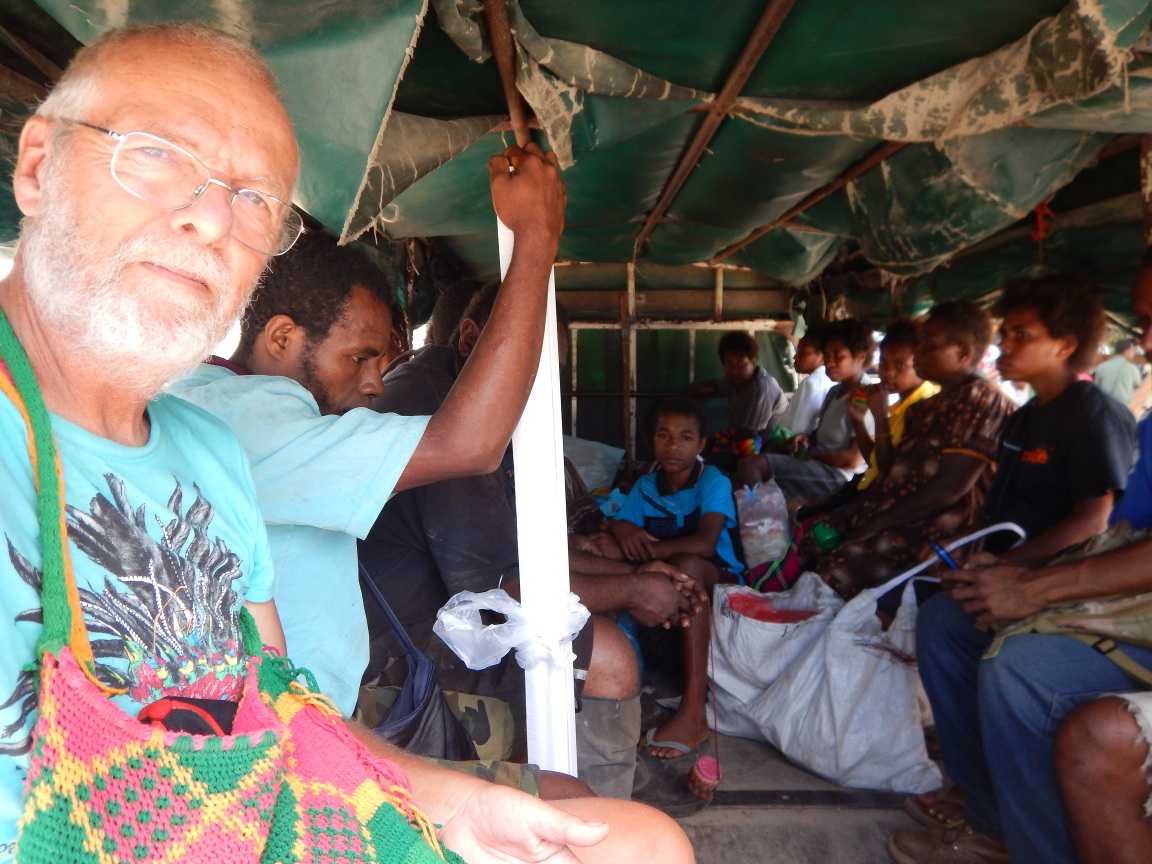
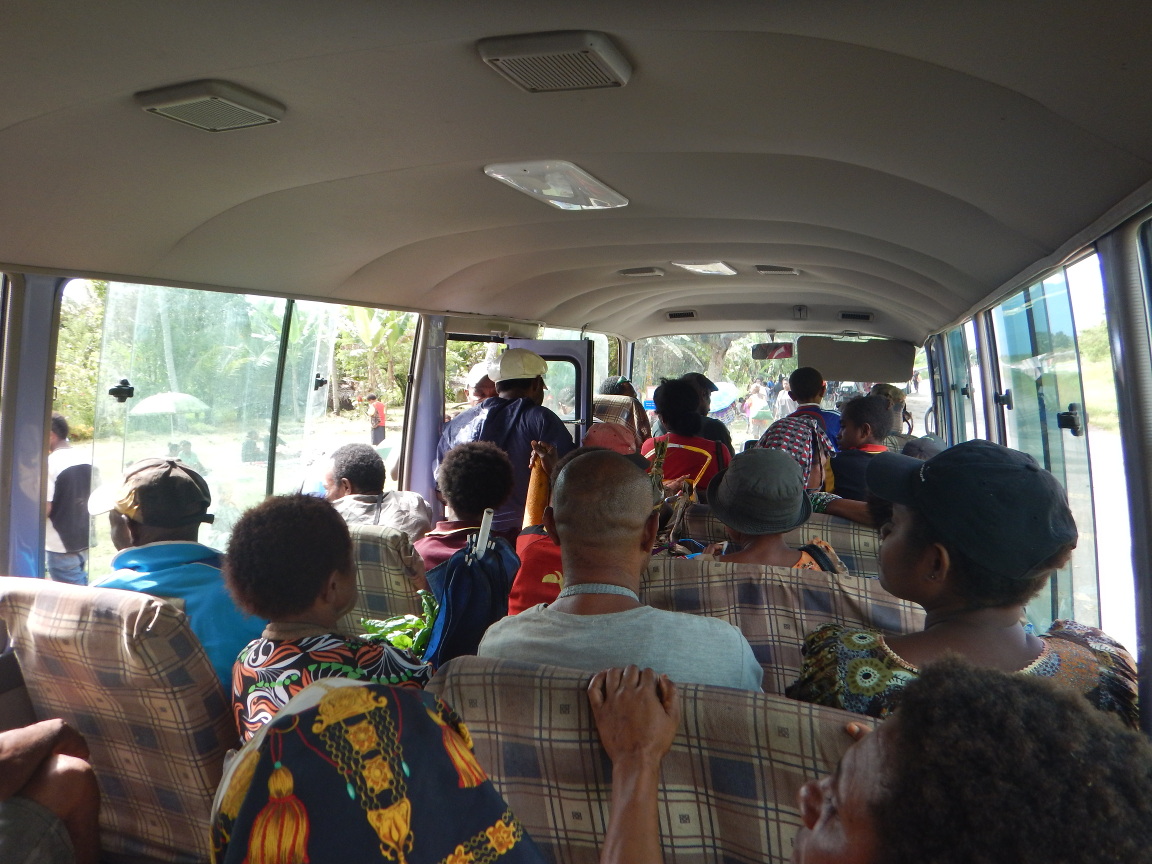
Oh chance! Le PMV est un car.
Quelques photos volées sur la route. Notez les pansements. Je suppose que le bébé a voulu le même que son papa...
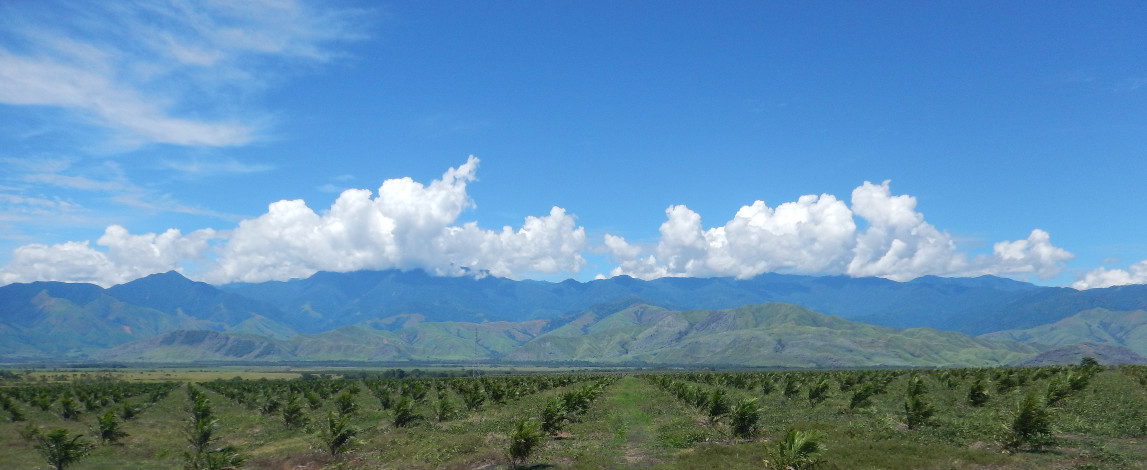
On suit une immense plaine entre deux chaînes de montagnes. Les plantations industrielles sont en train d'envahir toutes les bonnes terres. Ici des palmiers à huile.
Et ici de la canne à sucre.
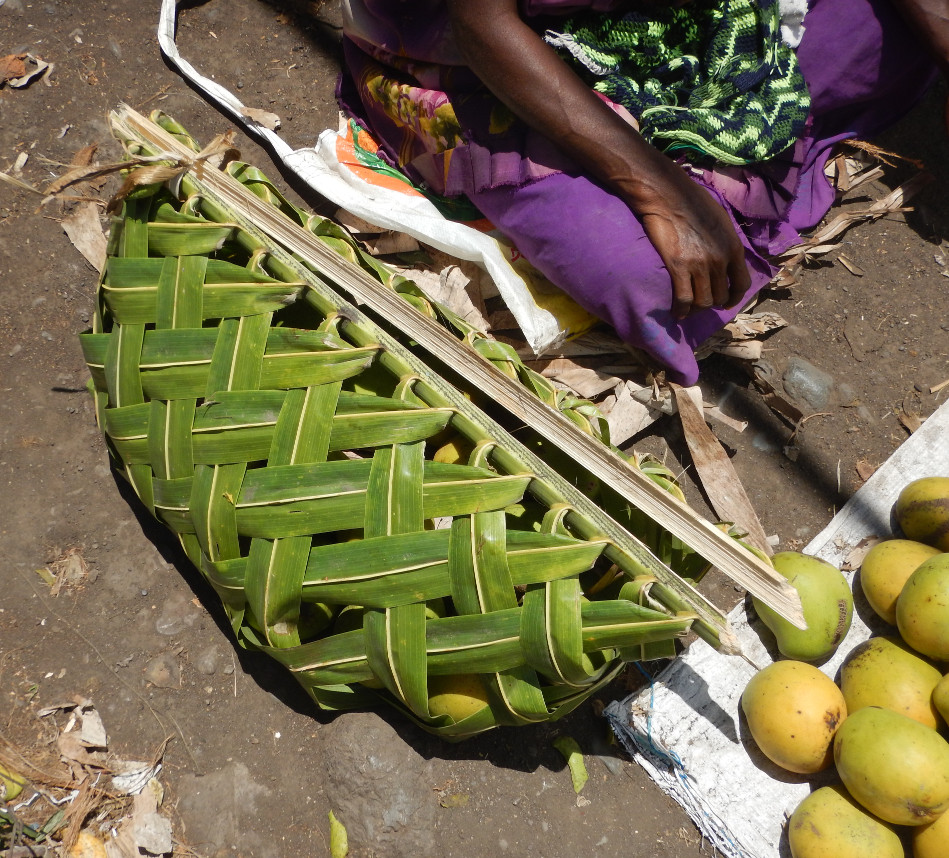
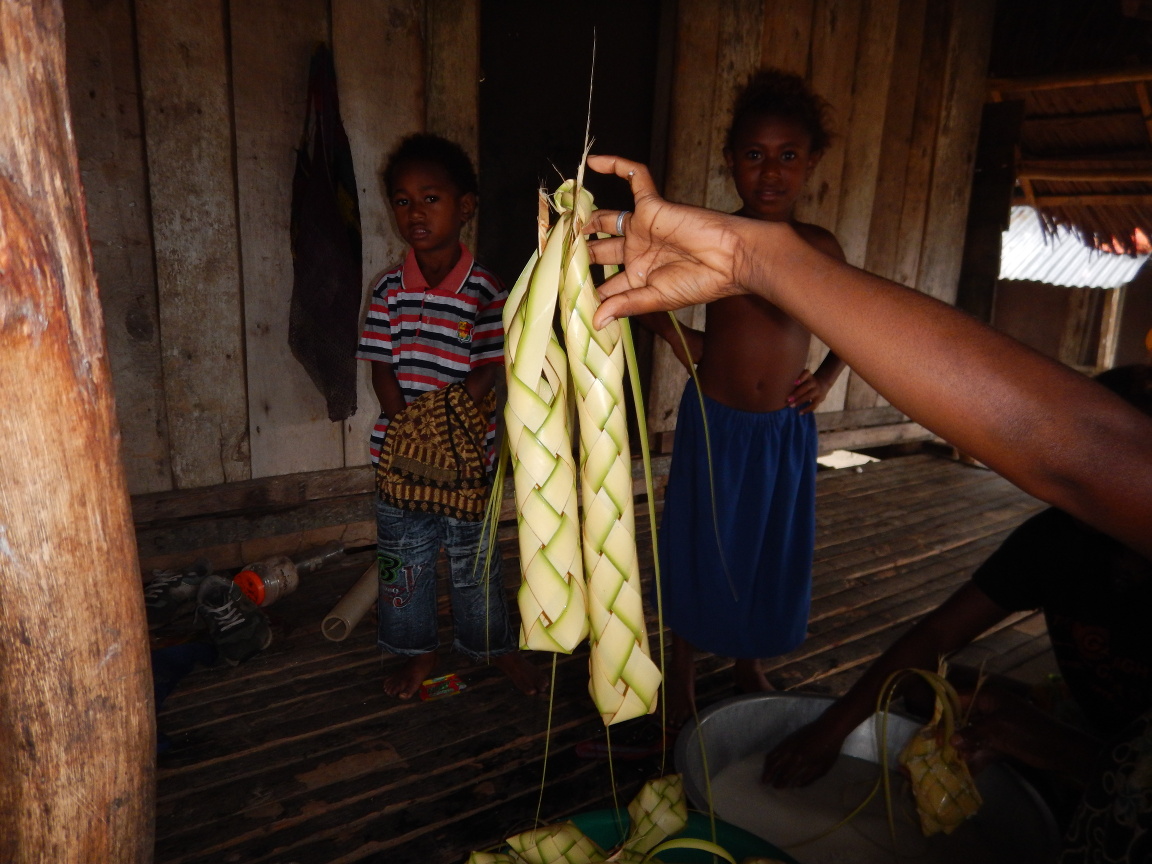
Comment faire un cabas avec une feuille de palmier.
On arrive à Lae pour un meeting religieux. Les Papous sont très crédules, du coup ils sont envahis par tous les missionnaires et toutes les sectes du monde. J'ai même vu des Bahaïstes.
Il arrive que les épiphytes dominent nettement sur les feuilles d'un arbre. C'est assez fréquent en milieu équatorial.
Arrivé à Lae (prononcer lè) je vais au port mais tous les dinghy pour les villages alentours sont partis. Le responsable de la pompe à essence du Yacht Club m'invite à dormir chez lui. C'est dans le plus grand (malfamé) bidonville (settlement) de Lae. Il se saoule et puis rentre ronfler dans la case. Des enfants de quatre ans regardent la télévision à fond jusqu'à une heure du matin. je décide de dormir dehors. Impossible de dormir, bouffé par les moustiques avec plein de gens bourrés autour qui n'arrêteront pas de hurler. Ce n'est que plus tard que j'ai compris pourquoi ils se saoulaient un jeudi. La vente d'alcool et la consommation en public est interdite le vendredi, le samedi et le dimanche. Ils se saoulent donc les autres jours!...
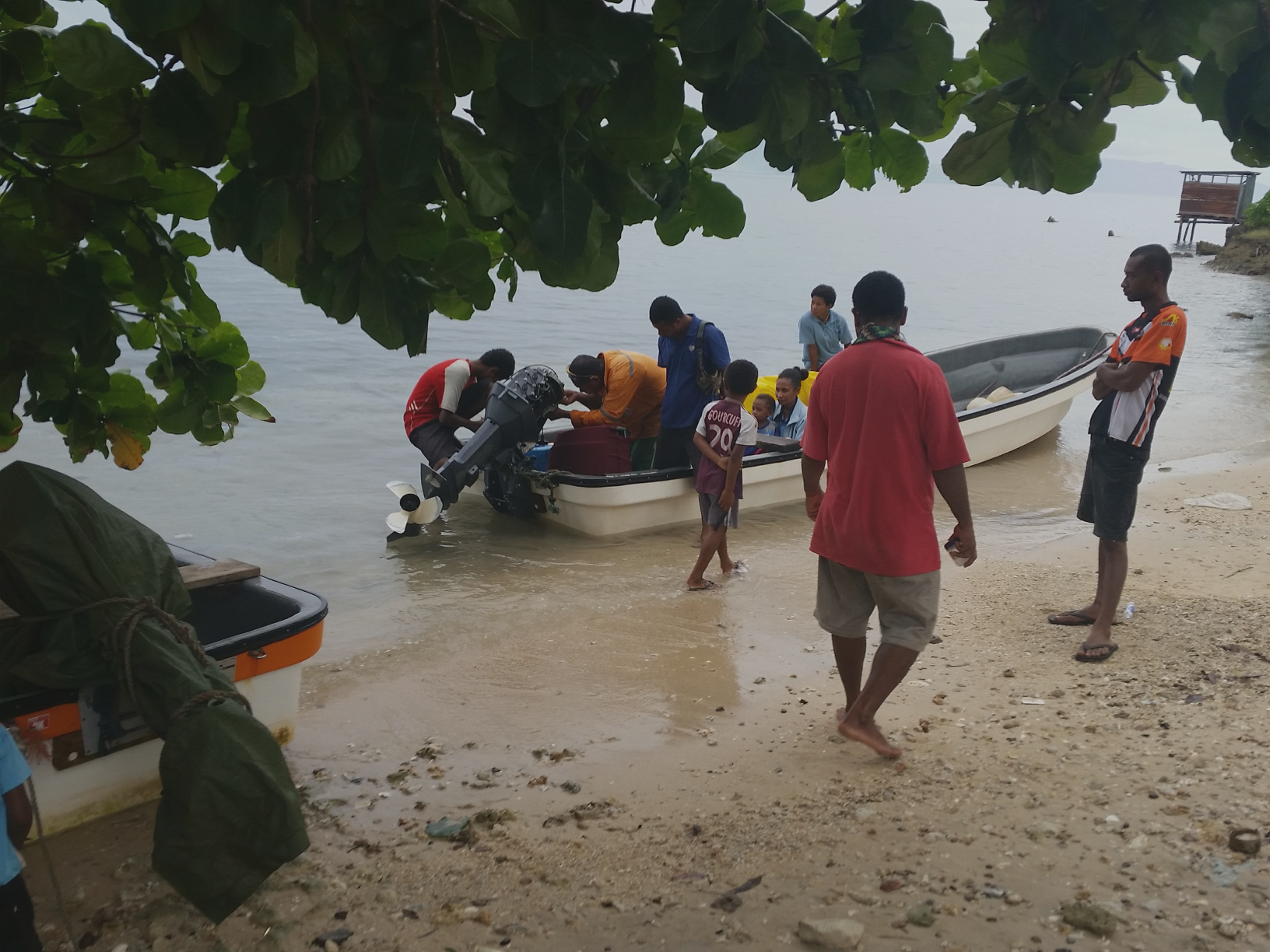
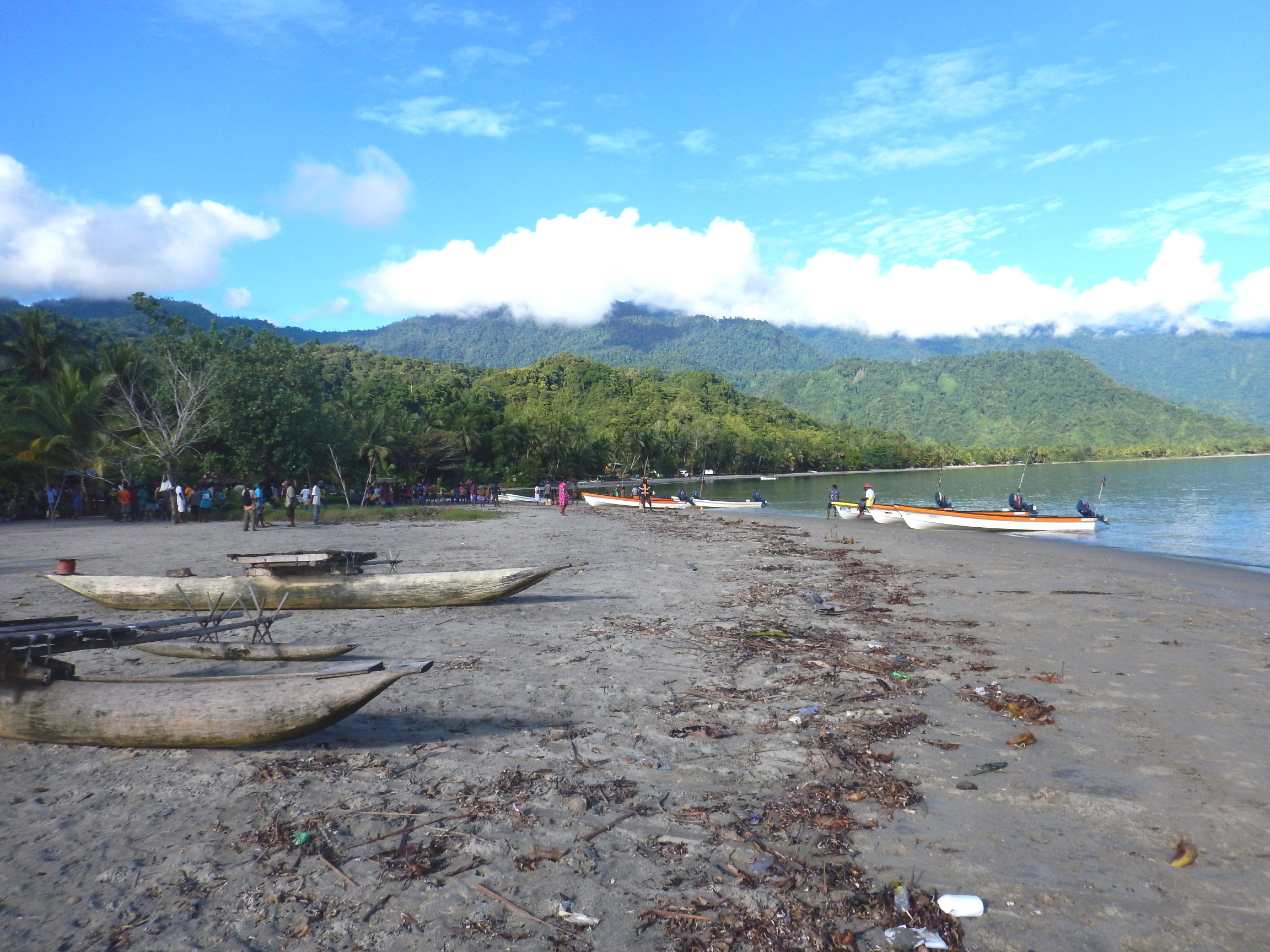
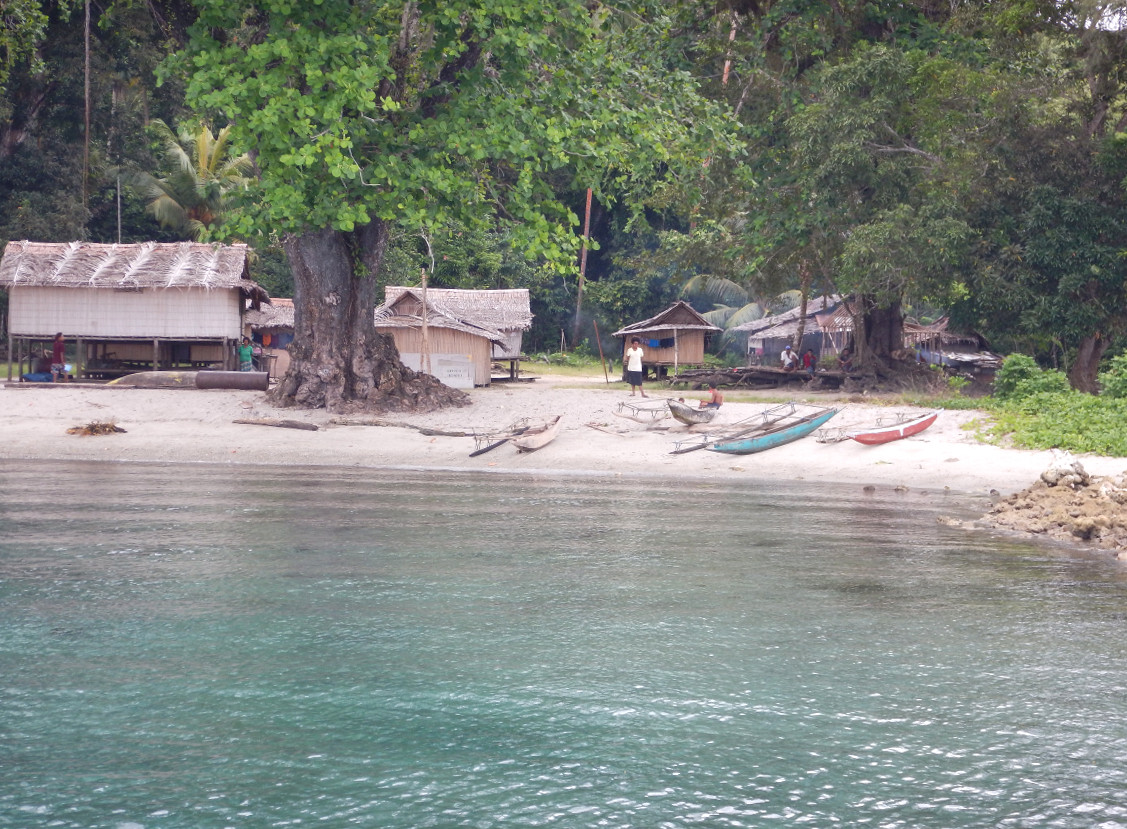
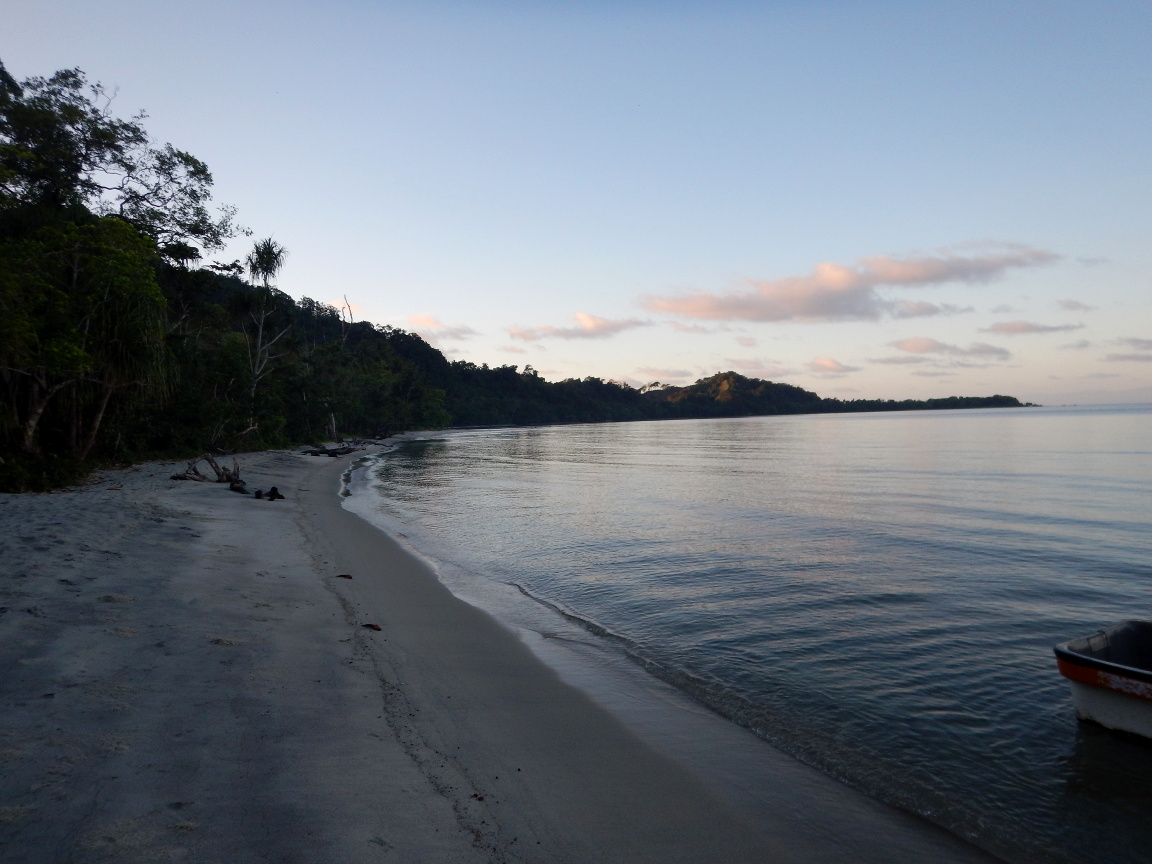
Je retourne à Voco point, le départ des dinghies. Comme destination je demande un village très calme et retiré. Après une longue attente sous la bruine, je trouve quelqu’un pour me prendre. Une heure sous la pluie battante sans aucun moyen pour se protéger. On approche d'une plage et le pilote me demande « Vous voulez débarquer ici? », oui, « Vous voulez vraiment débarquer ici!? », oui,« Vous êtes sûr que vous voulez débarquer ici?!! », euh... Oui. Je saute sur la plage et le dinghy repart.
Immédiatement tout le village se précipite vers moi et commence (tous ensemble) à me questionner genre interrogatoire de police. Pourquoi vous venez ici? Qu'est-ce que vous cherchez? Vous avez les autorisations? D'où vous êtes? Vous êtes envoyé par quelle entreprise? Etc. J'étais trop fatigué pour supporter ça longtemps et comment leur faire comprendre que j'étais épuisé par un mois de cavalcade et que je cherchais un coin tranquille et sympathique pour me reposer quelques jours? J'ai appris plus tard qu'ils n'avaient vu qu'un seul blanc avant, un allemand, et c'était plus de dix ans auparavant. Heureusement le chef de village (pas très sympathique) et un de ses amis Mathew, sympathique et très cultivé comme je le verrai plus tard, arrivent, m'extirpent de la foule et m'emmènent un peu plus loin. On s’assied au calme et on discute calmement. Plus tard le chef part et Mathew me demande où je veux dormir. Je montre une case vide au bord de la plage, là! Il est tout à fait d'accord et ce sera ma maison pour trois jours.
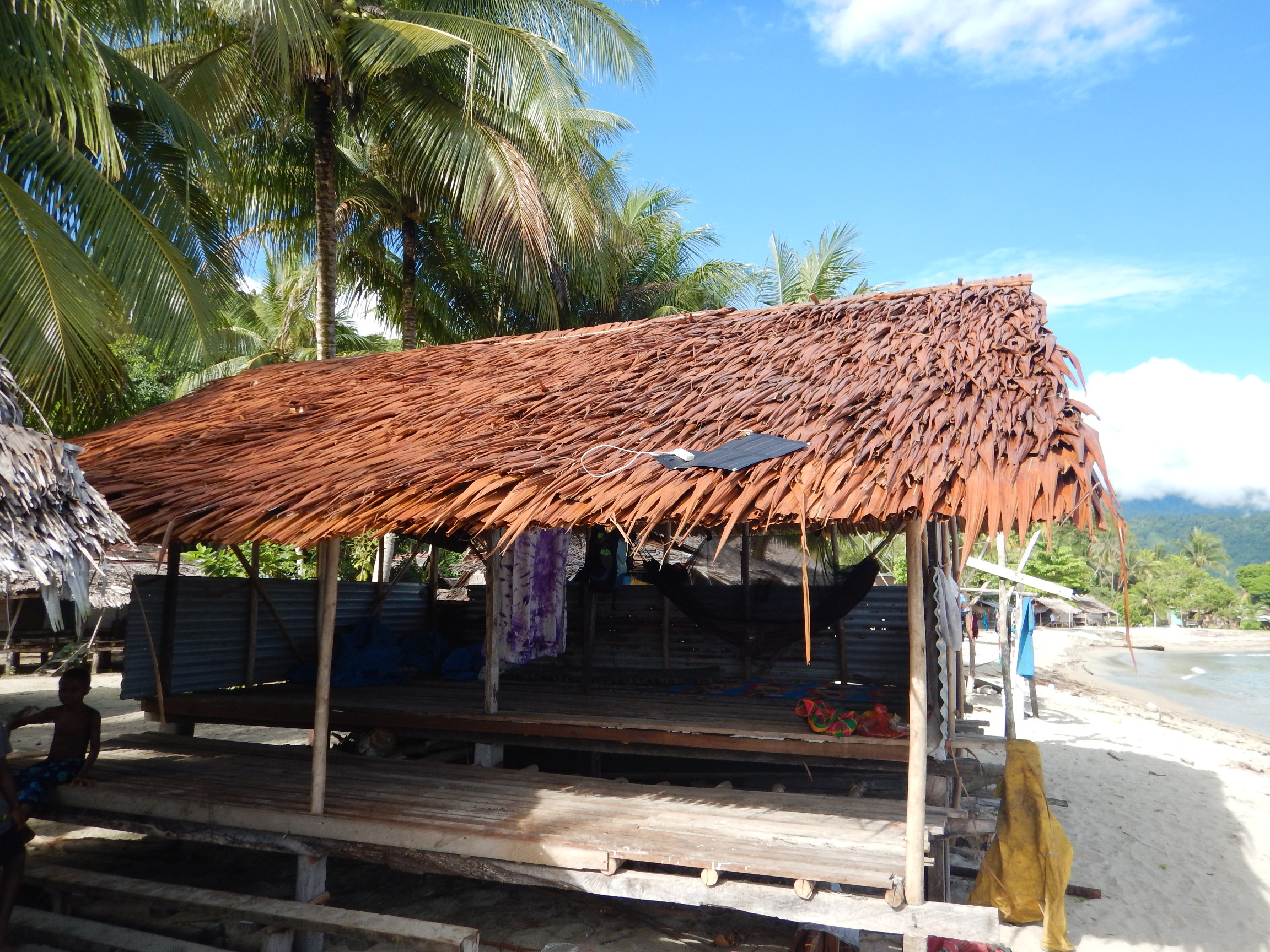
La case.
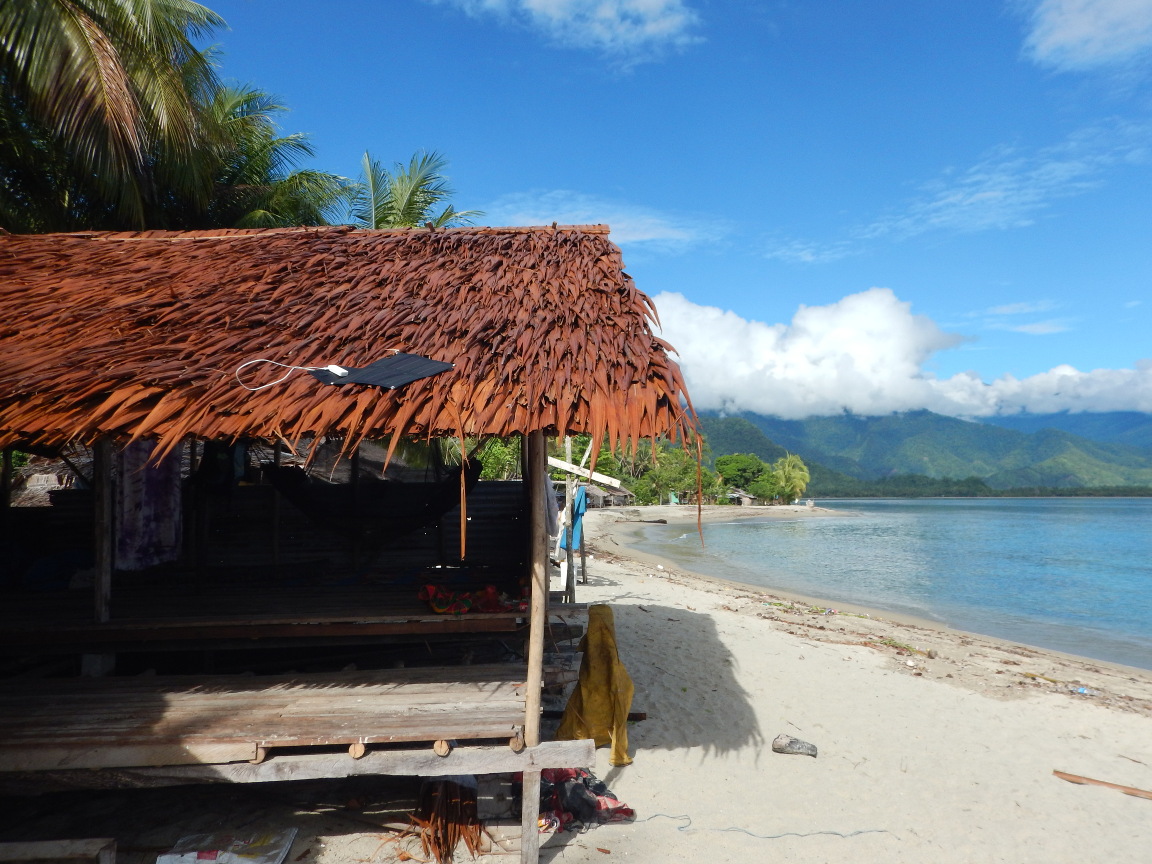
Le devant.
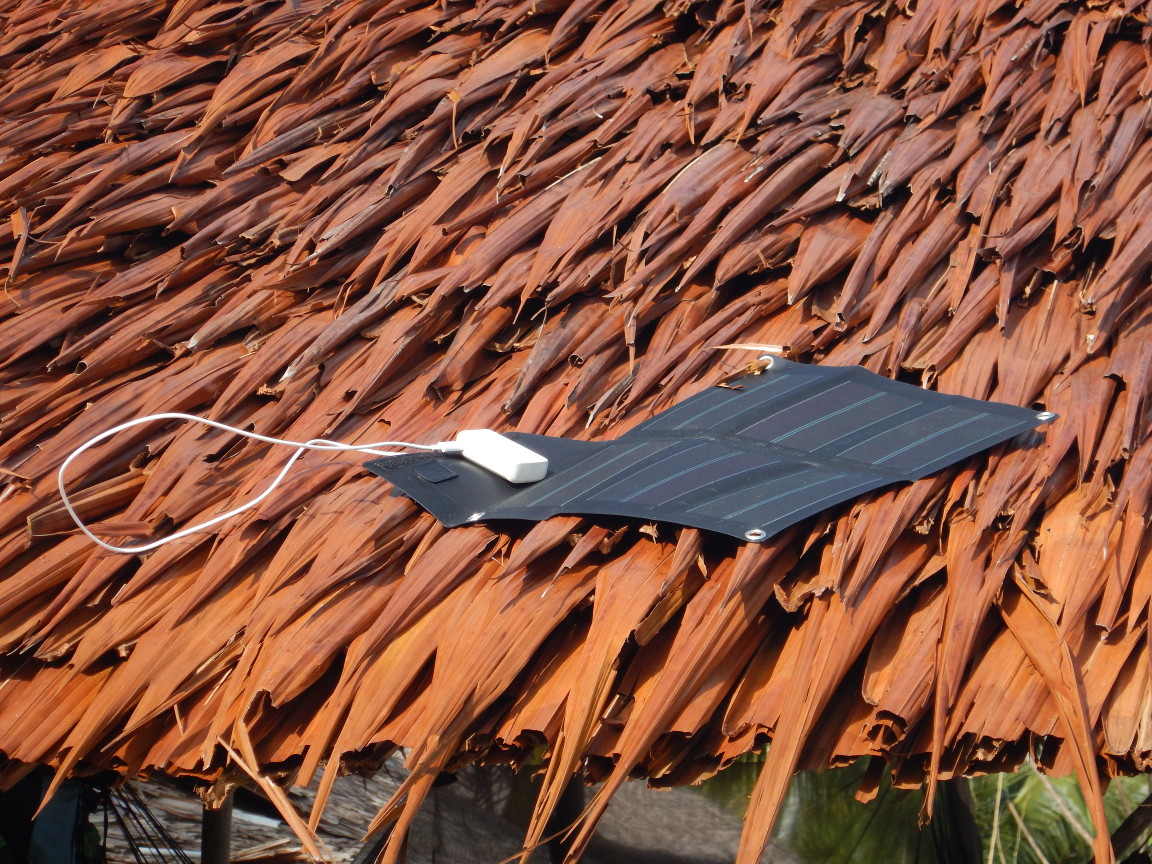
Le dessus avec le panneau solaire qui recharge une batterie.
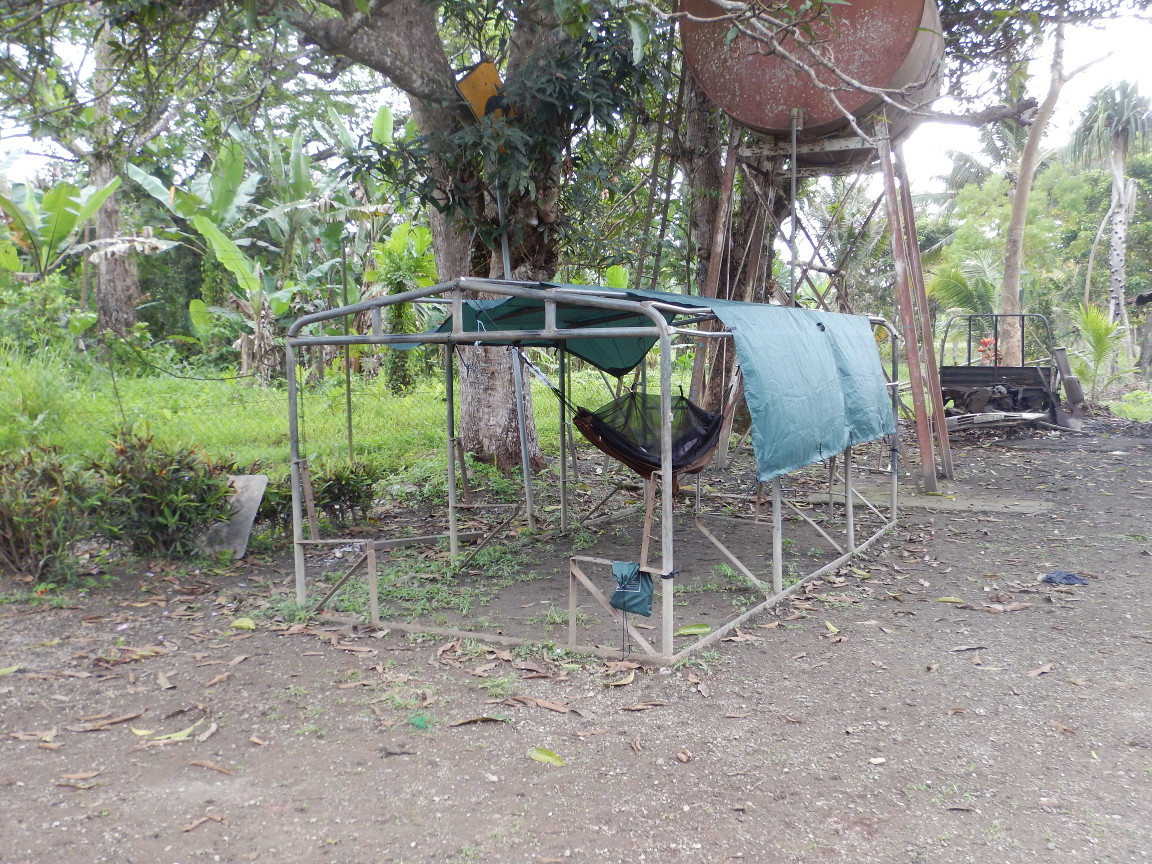
Le dedans avec mon pagne et mon hamac-moustiquaire.
Je vais passer les deux jours suivants à dormir la nuit, à dormir le matin et à dormir l'après-midi. Entre deux siestes, je vais au marché, je me baigne dans les coraux et je prends quelques photos. Le soir on refait le monde avec Mathew.
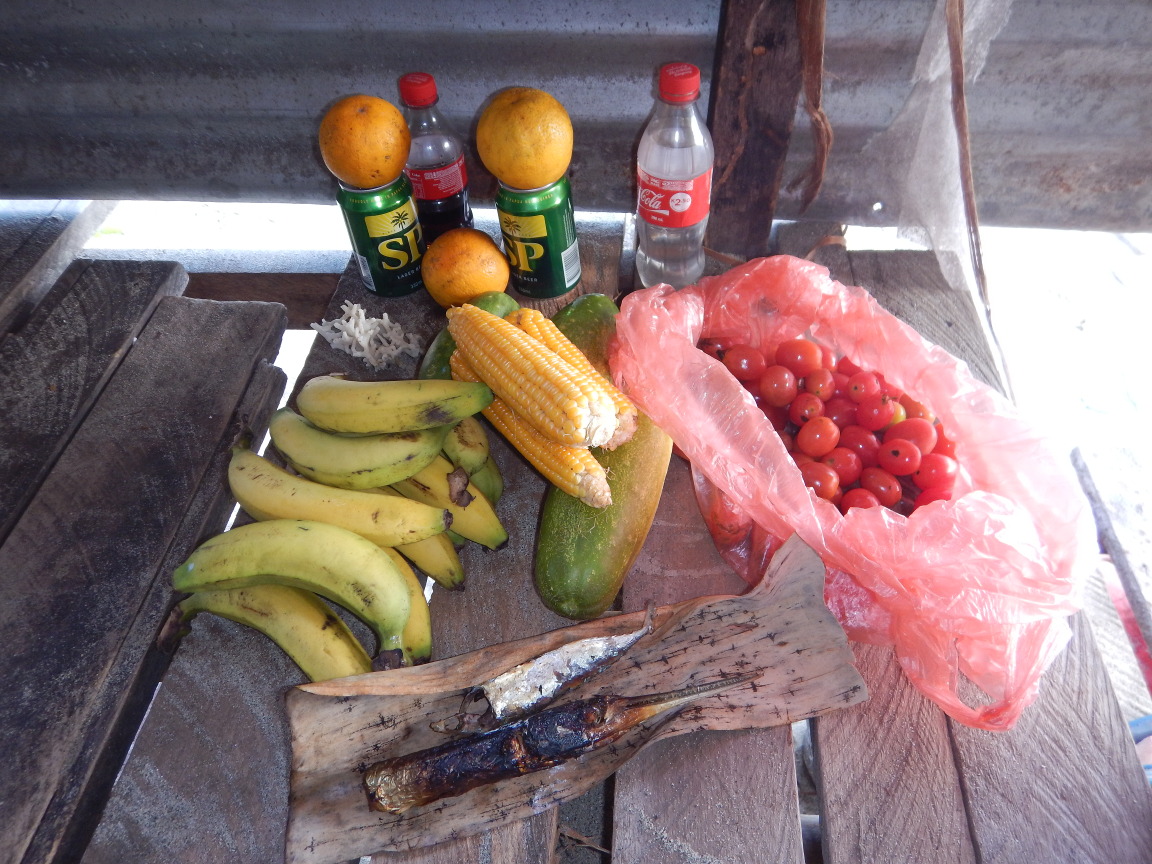
Ma nourriture.
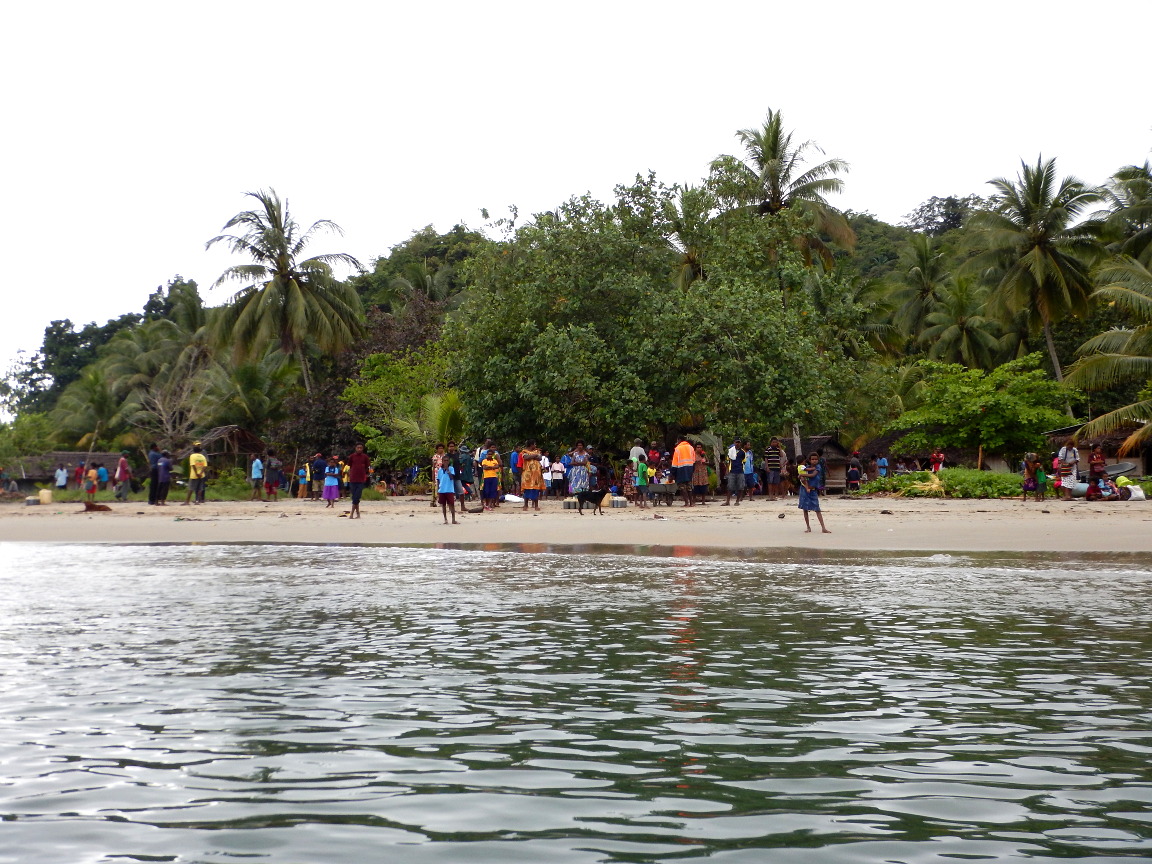
Un panoramique pris de la mer. Ma case est celle au toit rouge.
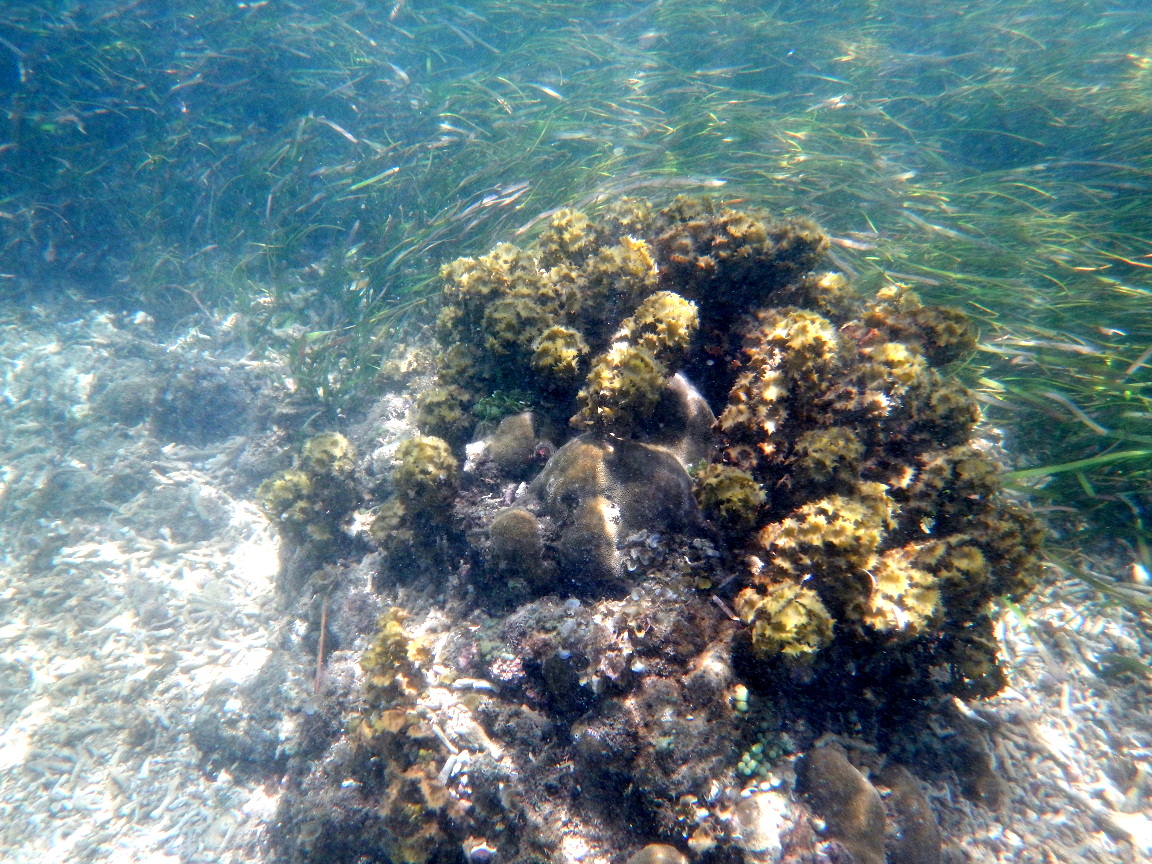
J'ai choisi un appareil photo qui permet de descendre à 18 m sous la mer. Malheureusement cette photo est la seule que j'aurai le temps de prendre au cours de deux mois de voyage.
Les bilums servent à tout.
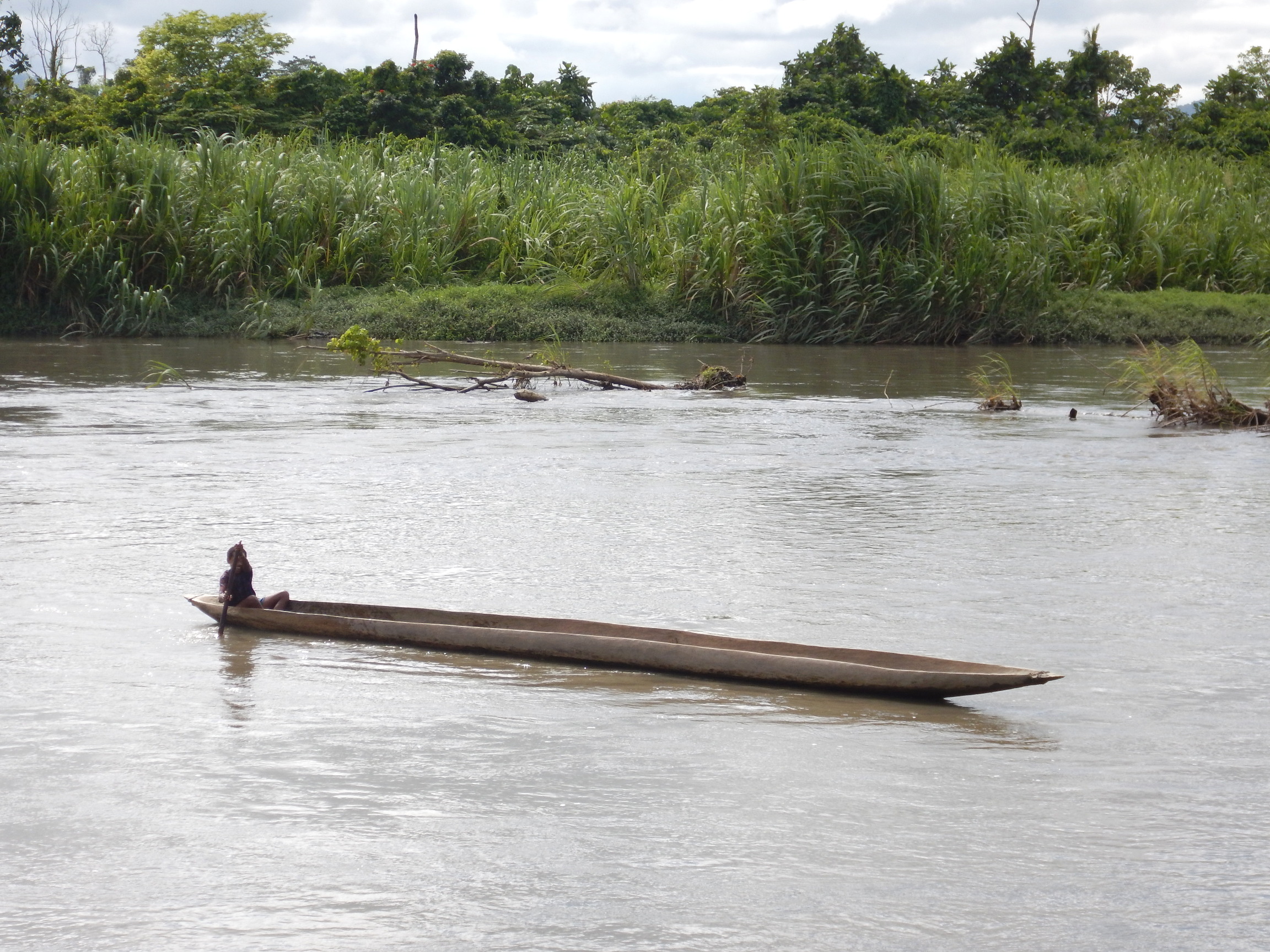
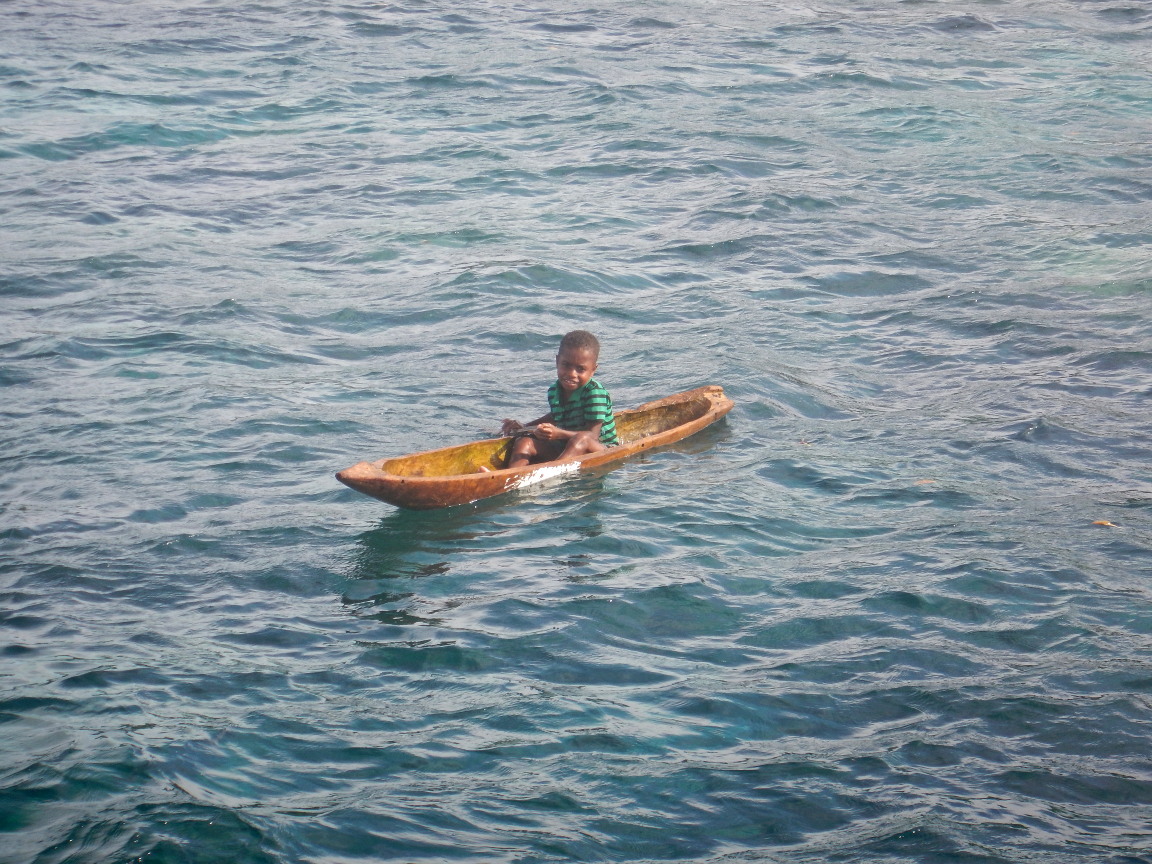
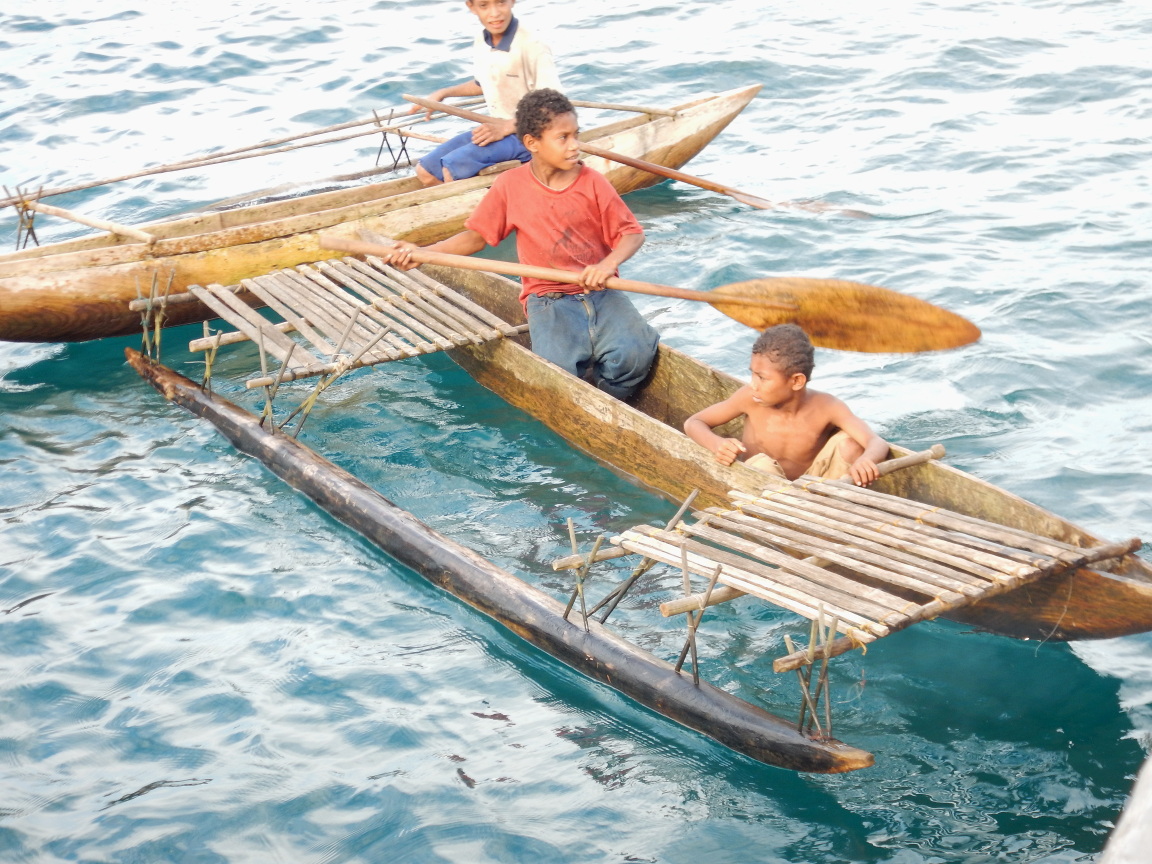
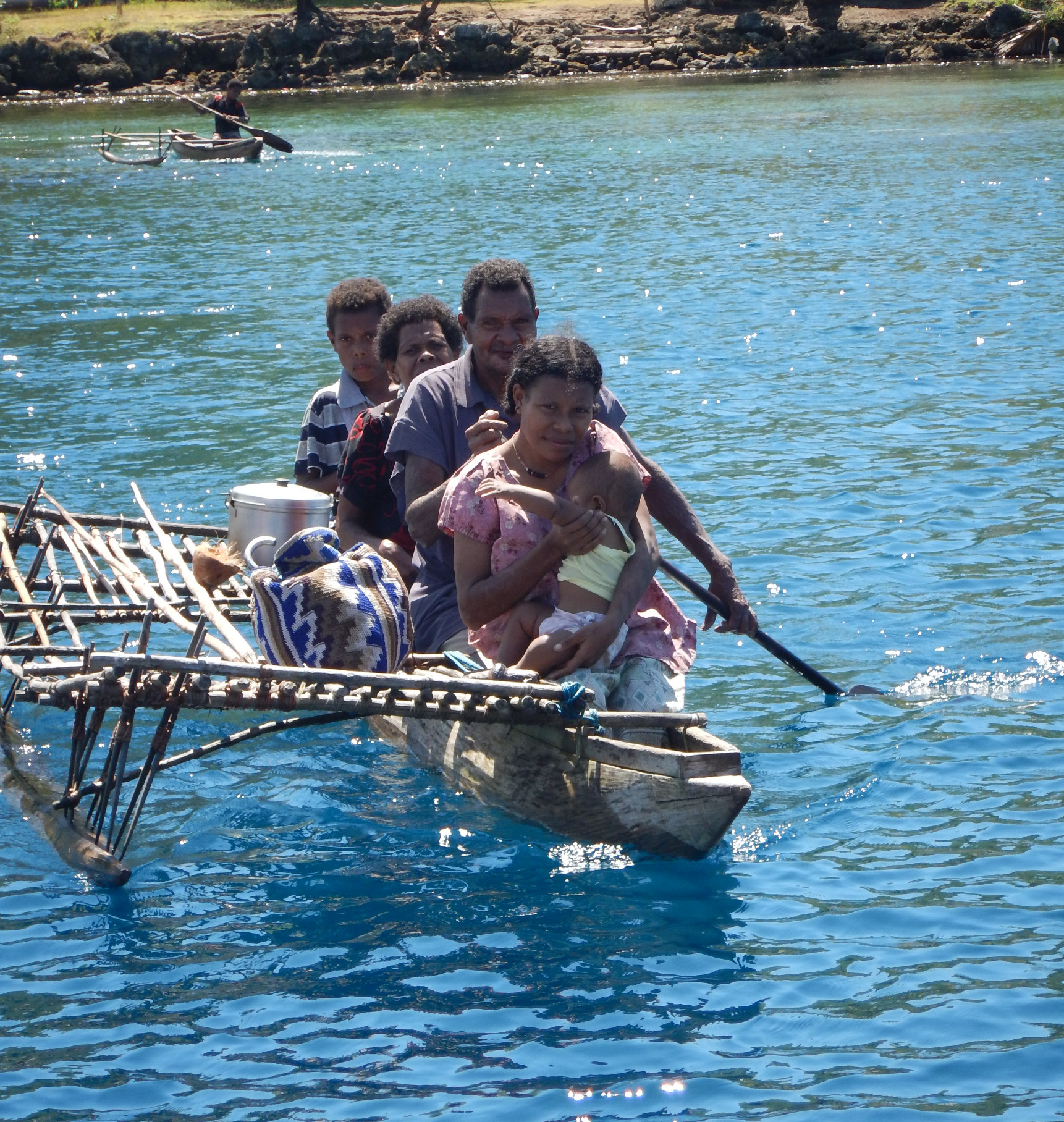
Pas de route, pas de piste, pas de véhicule, pas d'électricité, pas de téléphone et pas d'internet. La pirogue est le seul moyen de transport. En longeant la côte elles passent devant chez moi.
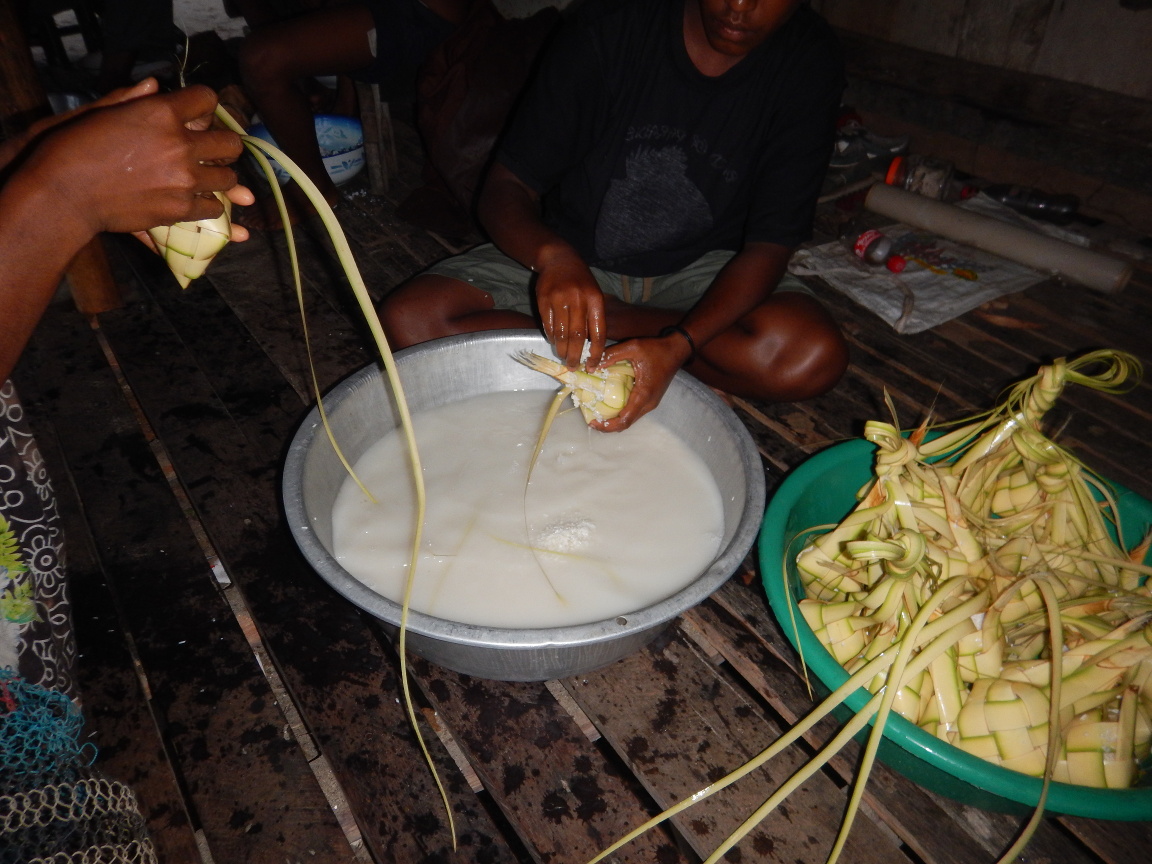
Aujourd'hui c'est dimanche. Les voisins préparent le repas. Riz à la noix de coco. On remplit des petits paniers de feuilles de palmier avec du riz trempé.
On râpe la noix de coco à l'aide d'un siège qu'on trouve dans toutes les maisons.
On lave la noix de coco râpée,
et on cuit le riz dans le jus obtenu.
Il y a différentes tailles de paniers.
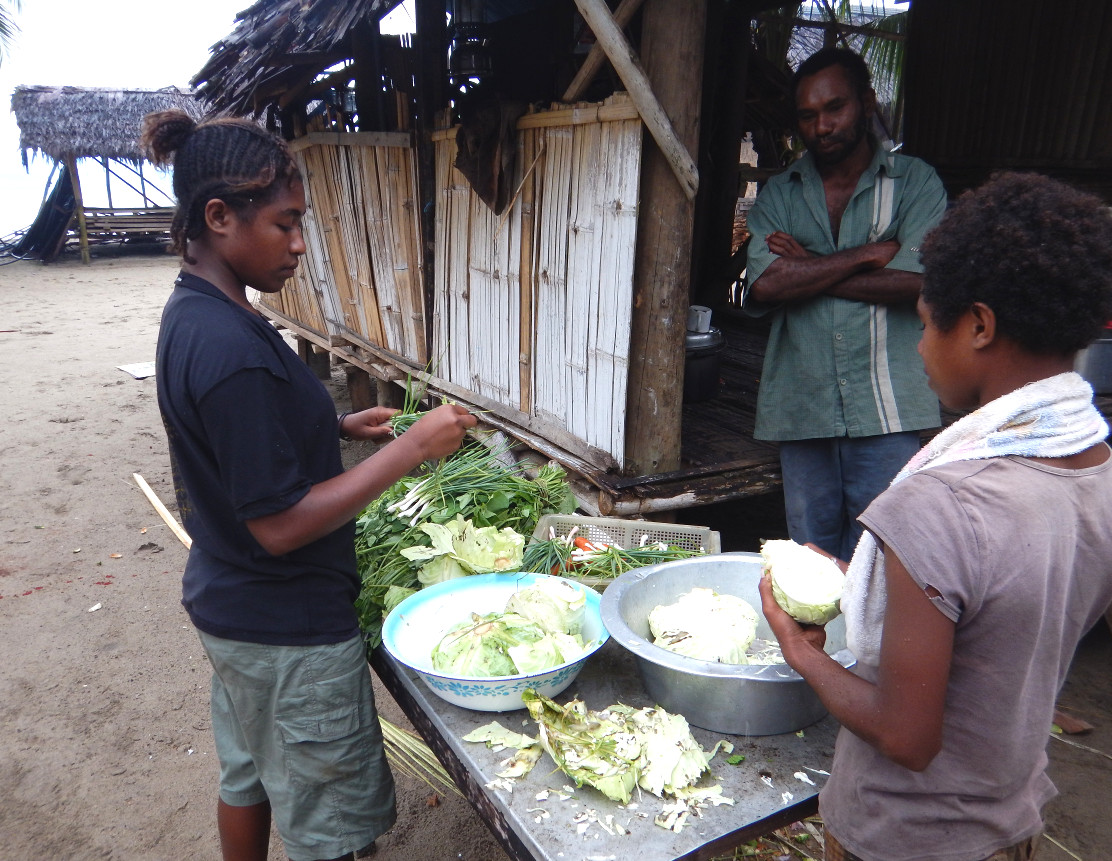
Le reste du repas est préparé avec de beaux légumes. Tout cela sera partagé avec les voisins et les amis.
Lundi 29 septembre.
Je suis en pleine forme, bien reposé. Pas de chance c'est couvert et il pleut la plupart du temps. Je me balade et fais quelques photos.
Un tambour parlant comme en Afrique.
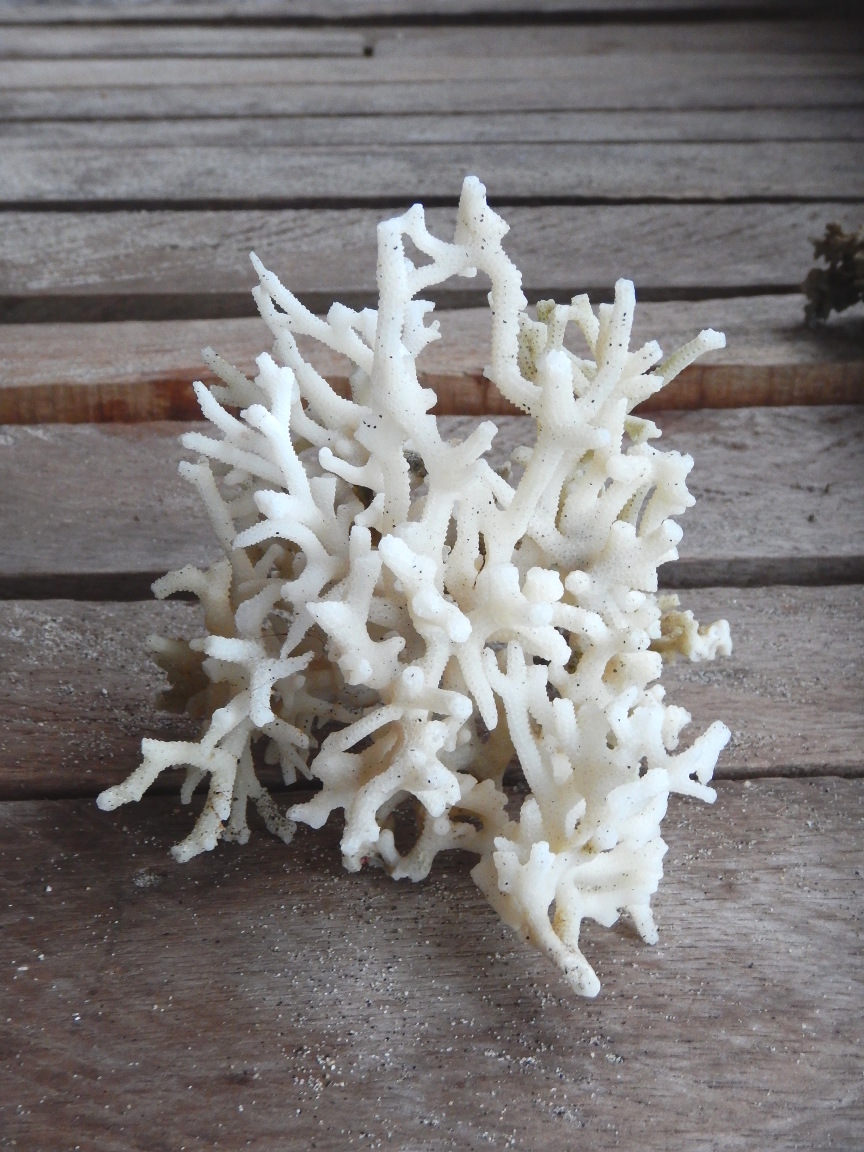
Le premier jour j'avais ramassé un morceau de corail dans la mer.
Depuis tous les enfants du coin font la compétition pour couvrir mes marches de corail.
Ils ont dû être déçus quand ils ont vu que je les avais laissés en partant. C'est très fragile et je n'ai qu'un tout petit sac-à-dos...
Demain je retourne à Lae. À part la première scène il faut dire que les habitants du village ont été adorables.
Je vais à l'ancien aéroport pour acheter mon billet pour Port Moresby et là, vision surréaliste issue de la colonisation: des Papous jouant de la cornemuse pour accueillir un ministre.
Je vais visiter le jardin botanique de Lae. J'y fais la connaissance du conservateur de la collection et de l'herbarium. Échange très intéressant, on garde le contact. Il me demande d'identifier une plante. C'est deux mois plus tard que je trouverai: Monanthocitrus (alias Wenzelia) bispinoza.
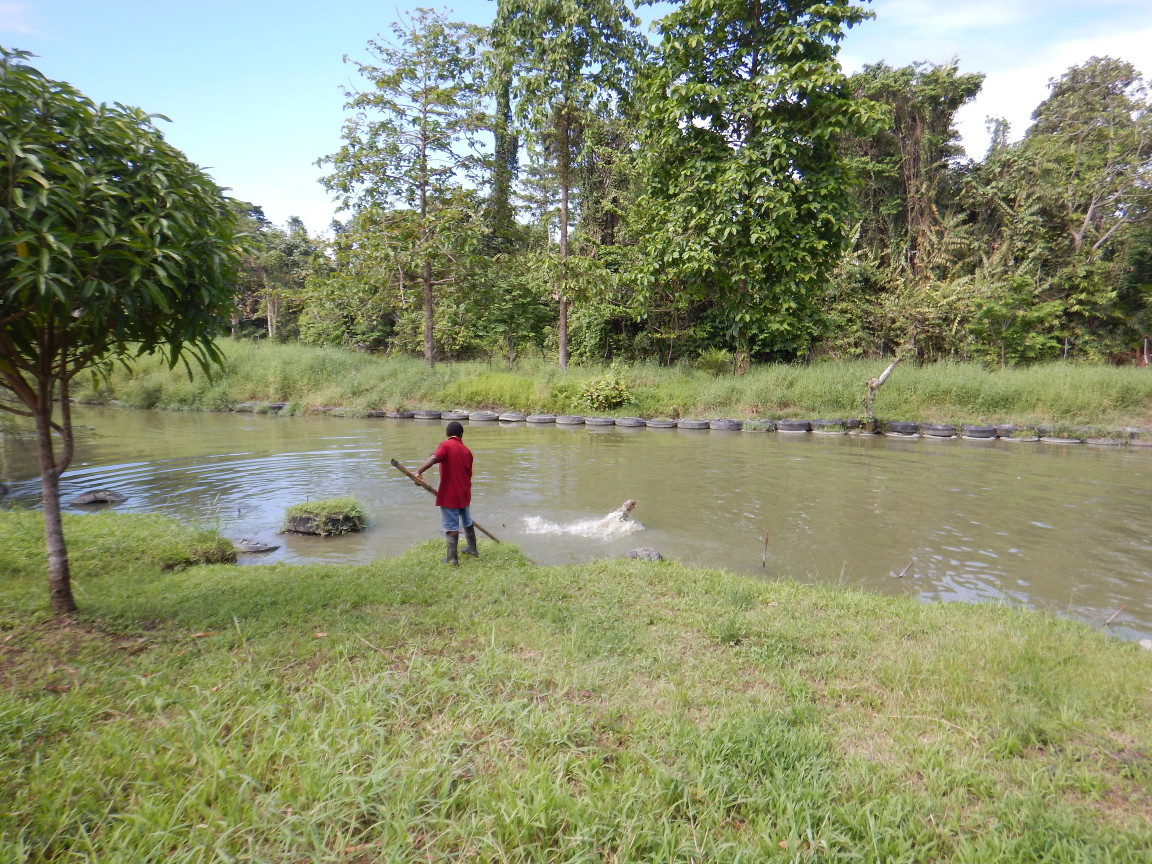
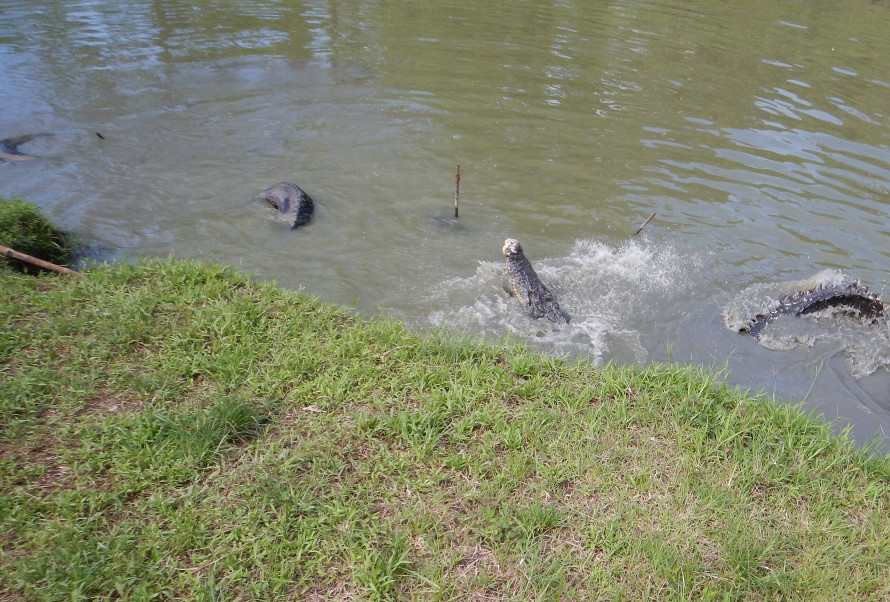
Sur la route de l'aéroport je m'arrête pour visiter un élevage de crocodiles. Quelques photos dans un enclos de reproducteurs. Un gros mâle.
Encore plus près.
Les gardiens m'expliquent que quand on rentre dans l'enclos il faut toujours quelqu'un avec un bambou. Je demande ce que l'on fait si les crocodiles chargent. ils répondent on court le plus vite possible. Et à quoi sert le bambou? À rien!
Une femelle.
Je sympathise avec Éric le responsable de l'élevage. Il m'invite à passer la nuit chez lui. On passe quelques heures fascinantes à nous raconter nos aventures d'Afrique et de Papouasie.
Éric me fait transporter à l'aéroport. Je prends l'avion pour Port Moresby. Je vais dormir à l'université chez la famille Sédé comme d'habitude. Chaque passage est l'occasion de changer d'habits et de préparer ce que j'emporte dans le périple suivant et à passer des soirées en discussions passionnantes. De plus à chaque fois je copie tous mes fichiers sur l'ordinateur de Murphy un des fils de la maison, étudiant à l'université. Au cas où il arriverait un malheur à mon disque dur, j'aurais une sauvegarde.
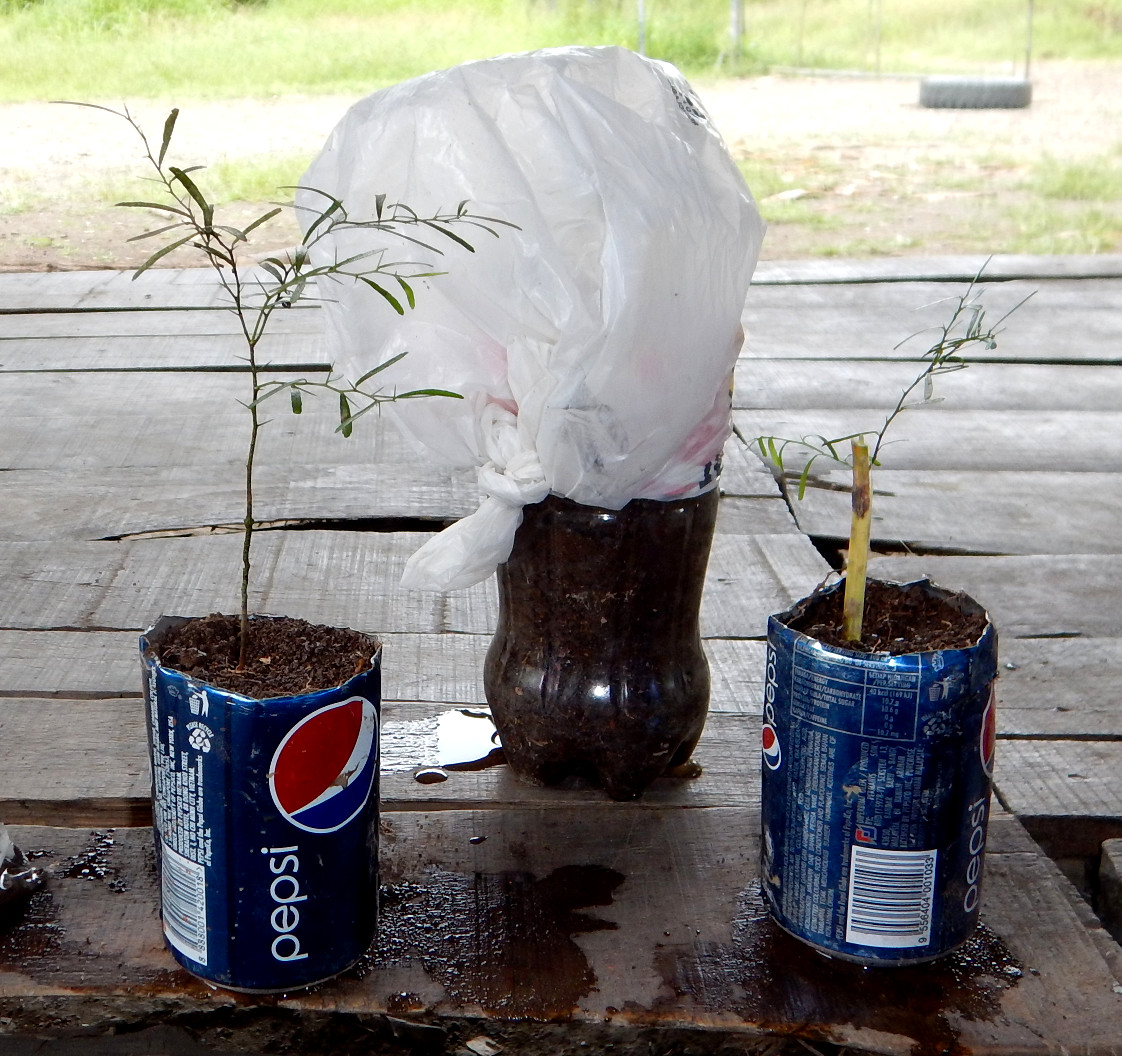
Mike m'avait mis en contact avec Nathalie qui travaille pour la S.I.L. (Summer Institite for Linguistics). Elle se propose de faire pousser les agrumes que je trouve dans les jardins de la SIL à Lae et Goroka. Je décide donc de retourner à Brown River pour lui trouver des graines de C. wintersii.
Jeudi 2 octobre.
Je pars pour Brown River retrouver mes copains. L'ambiance a changé car des jeunes d'une autre tribu rackettent les gens qui empruntent le pont de nuit. Dès le soir tombé tout le monde est sur ses gardes. Ce qui ne m’empêche pas d'aller chercher ma bière de l'autre côté tous les soirs malgré les conjurations de ne pas y aller. Le magasin est sur l'autre rive...
Vendredi 3 octobre.
Un garçon rapporte de quoi manger de la rivière.
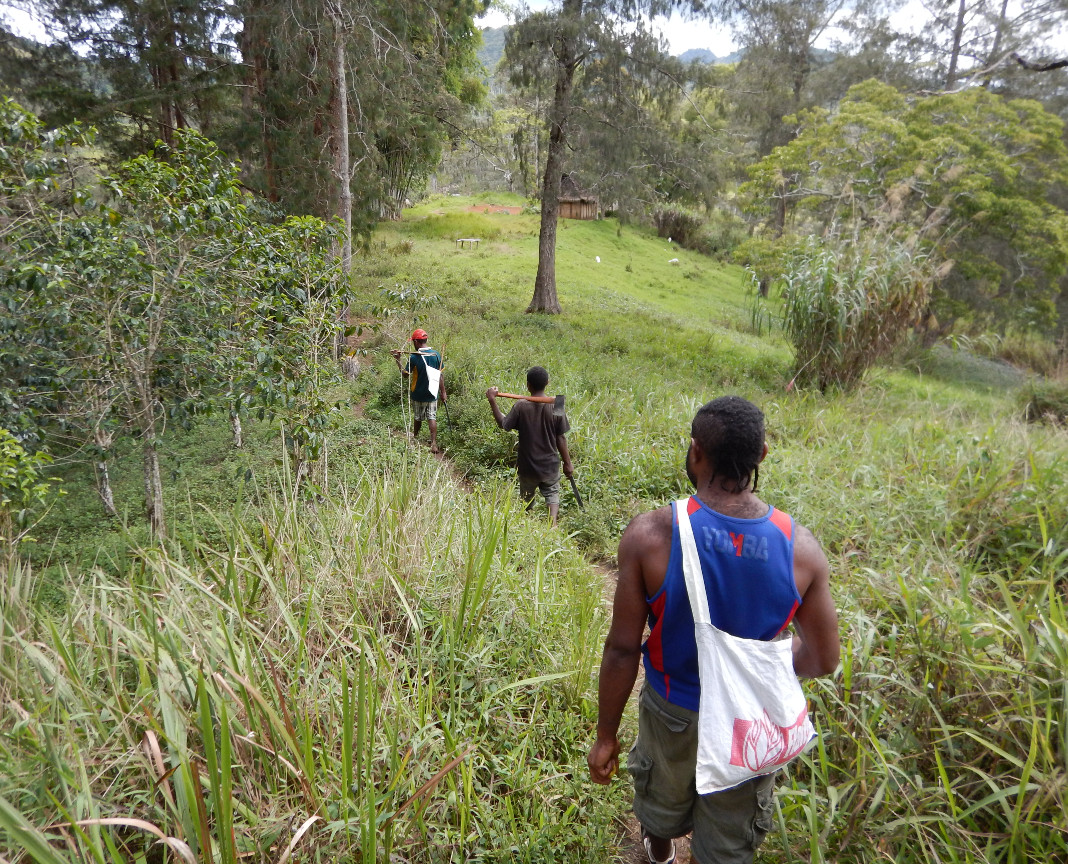
Je repars en brousse faire les relevés GPS que je n'avais pas pu faire un mois plus tôt pour cause de smartphone volé. Les fruits qu'on avait laissés comme tests n'ont pas jauni. Je prélève de la terre et de jeunes plants car ils veulent en faire pousser dans la concession.
Au retour on rencontre un chasseur au lance-pierre.
Retour à la maison. Les fruits pour prélever les graines.
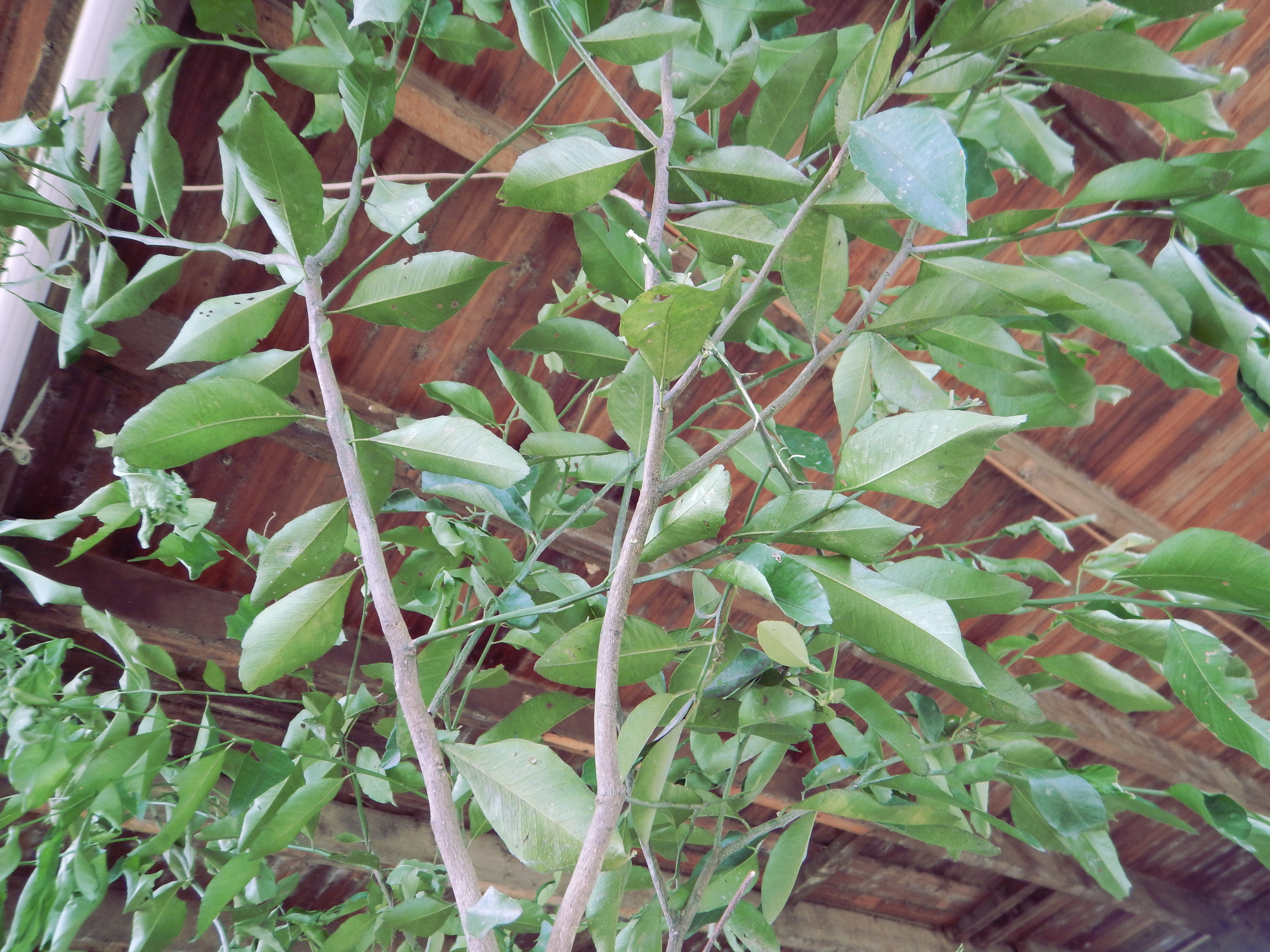
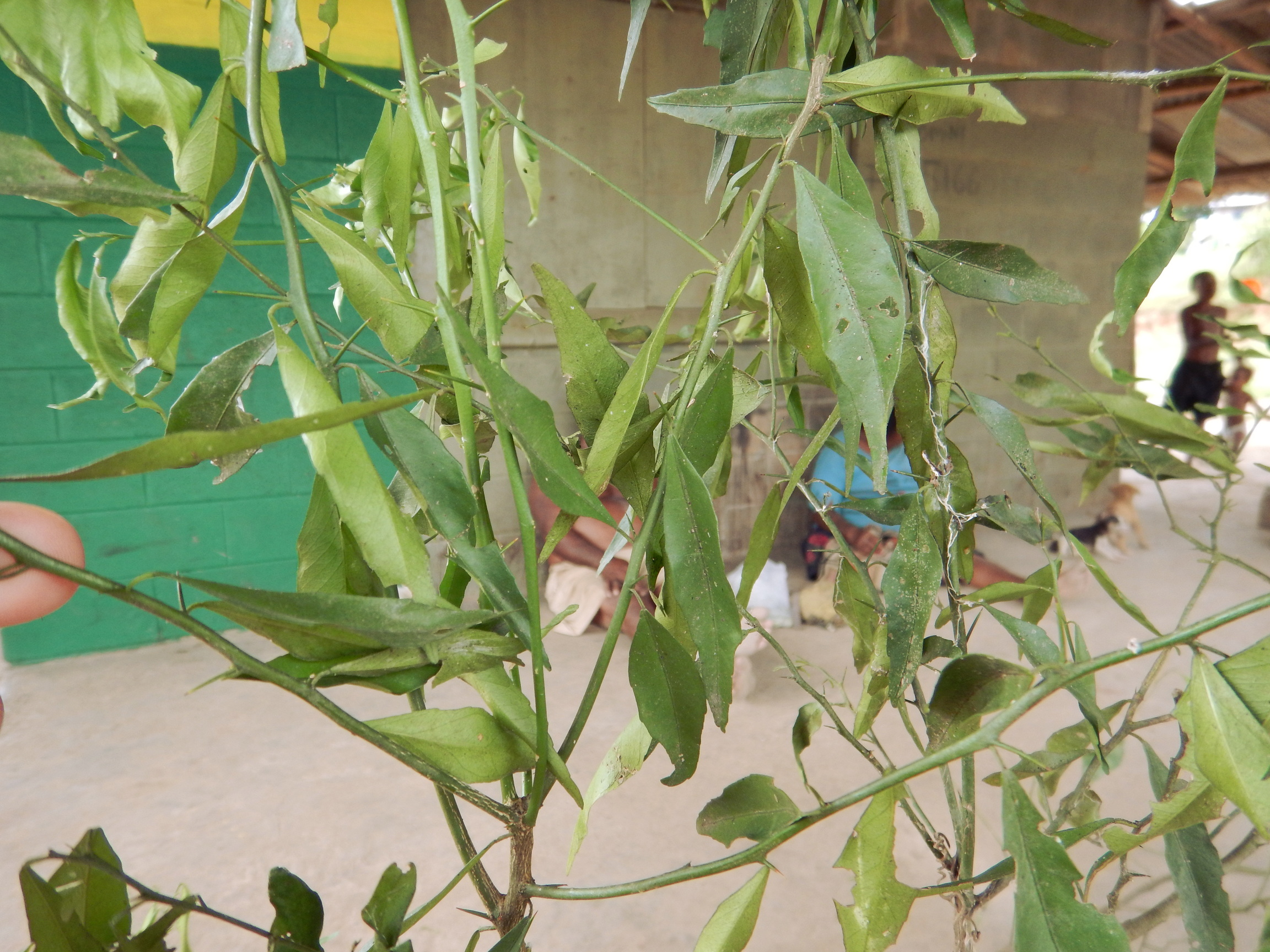
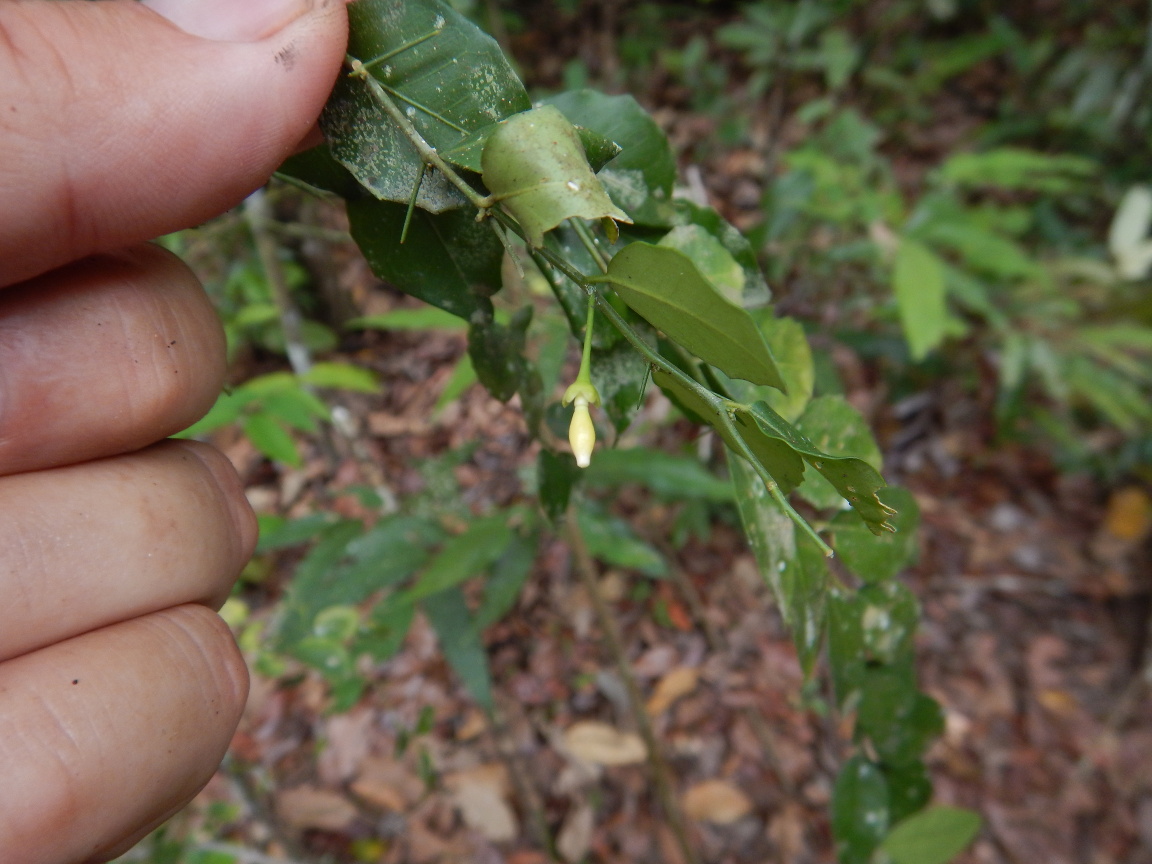
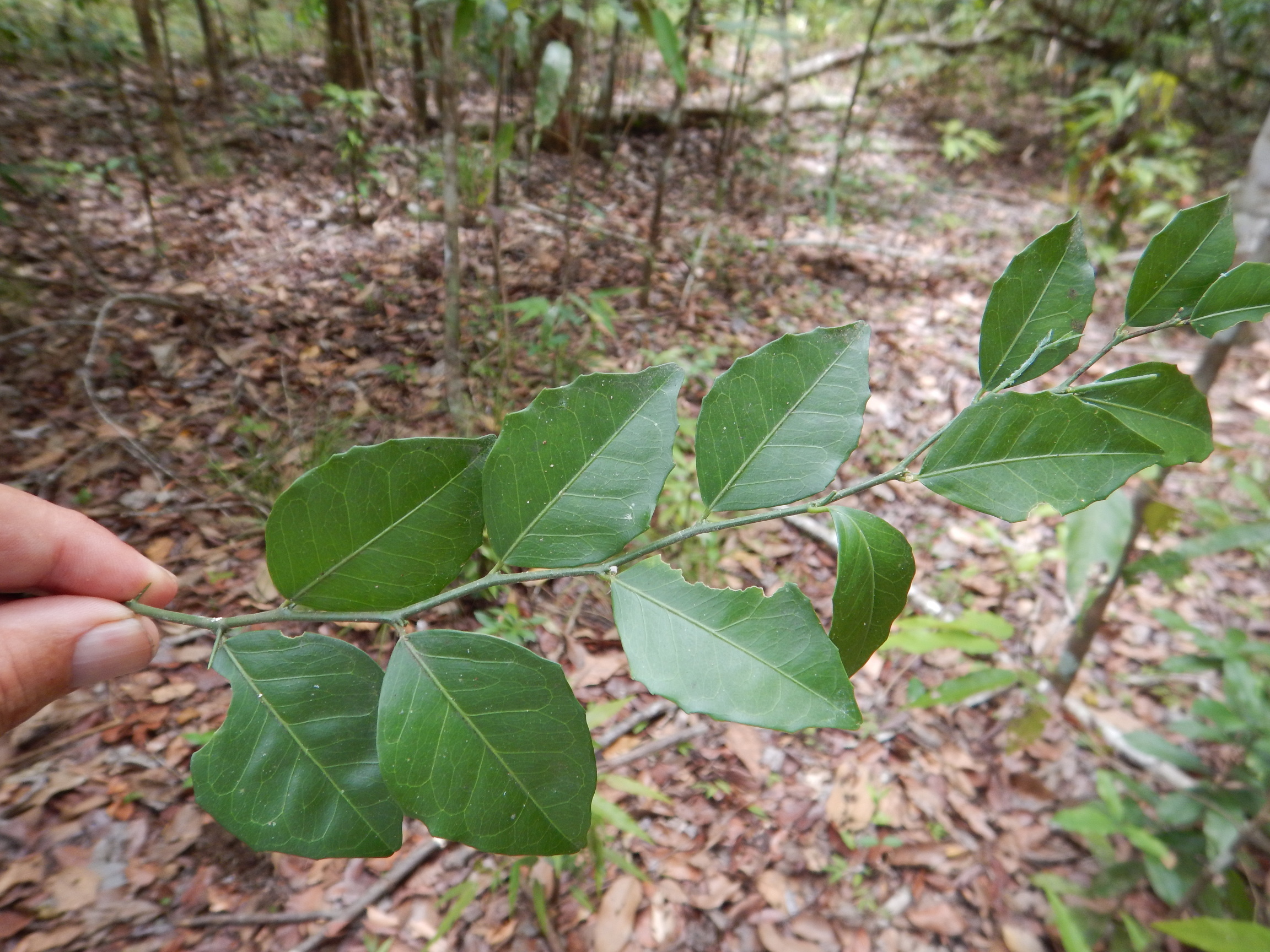
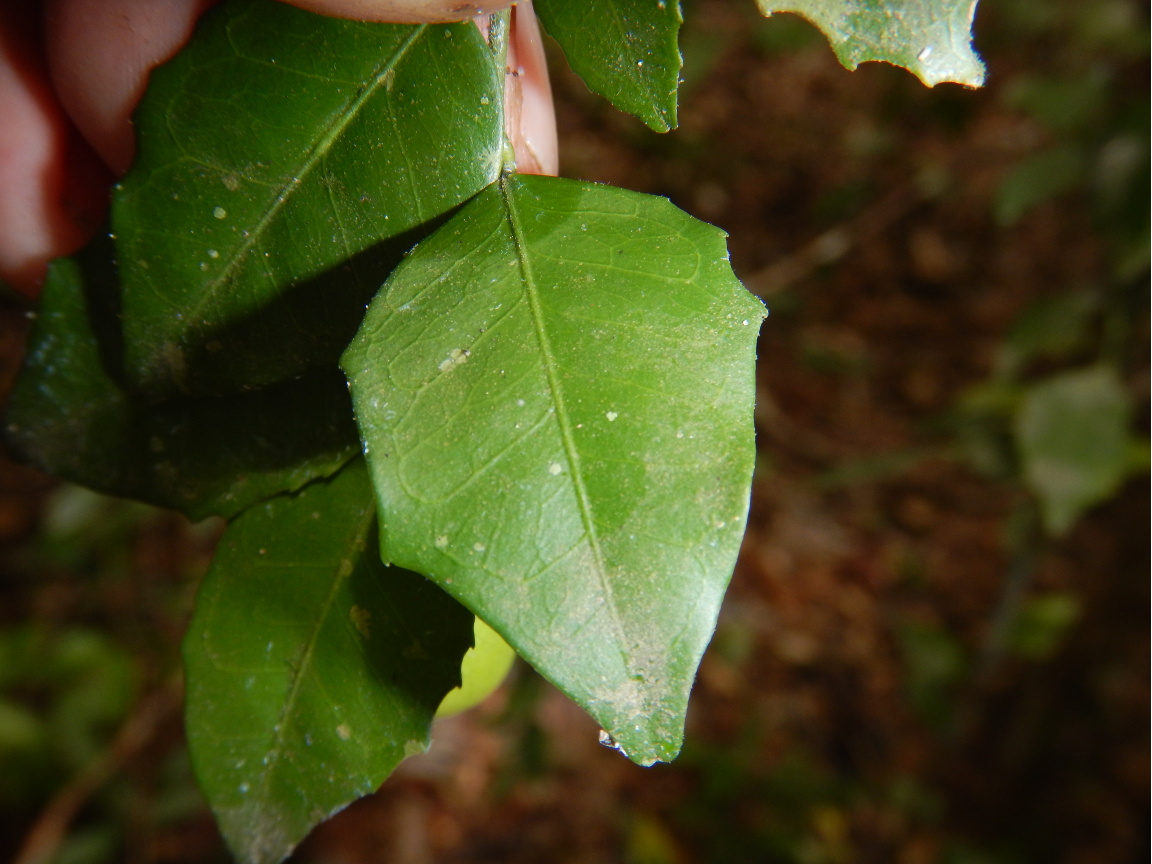
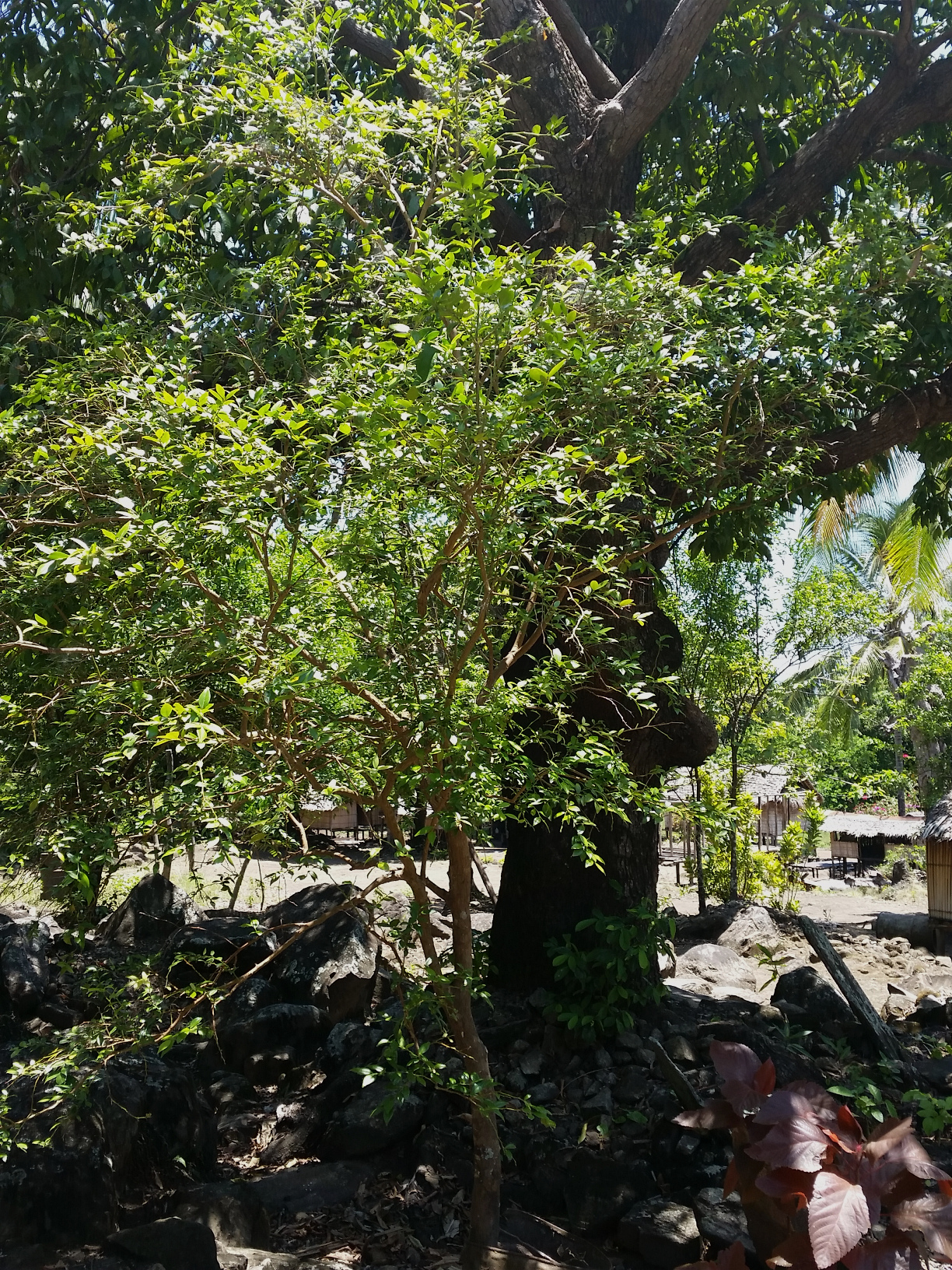
Le propriétaire de la boutique vient de défricher un nouveau jardin à quelques kilomètres et il a trouvé deux nouveaux agrumes. Un avec des feuilles comme le warburgiana mais sans épines.
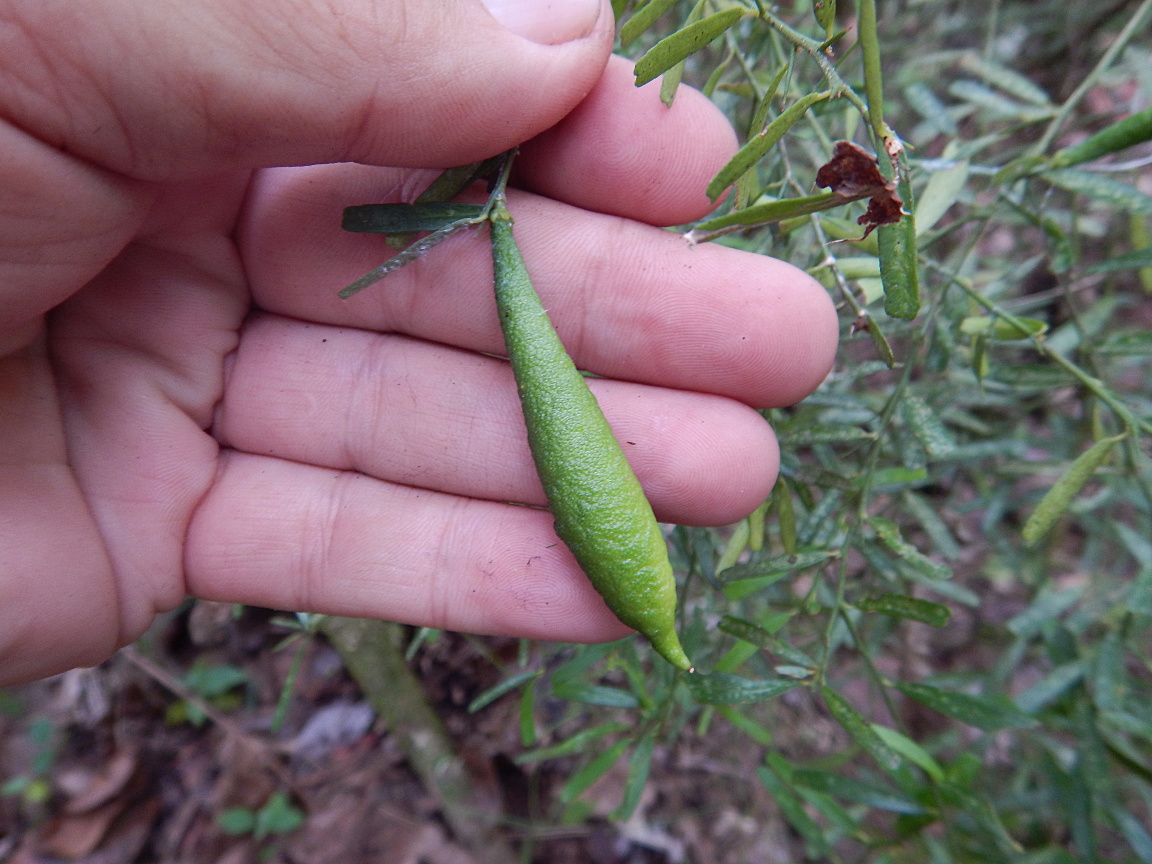
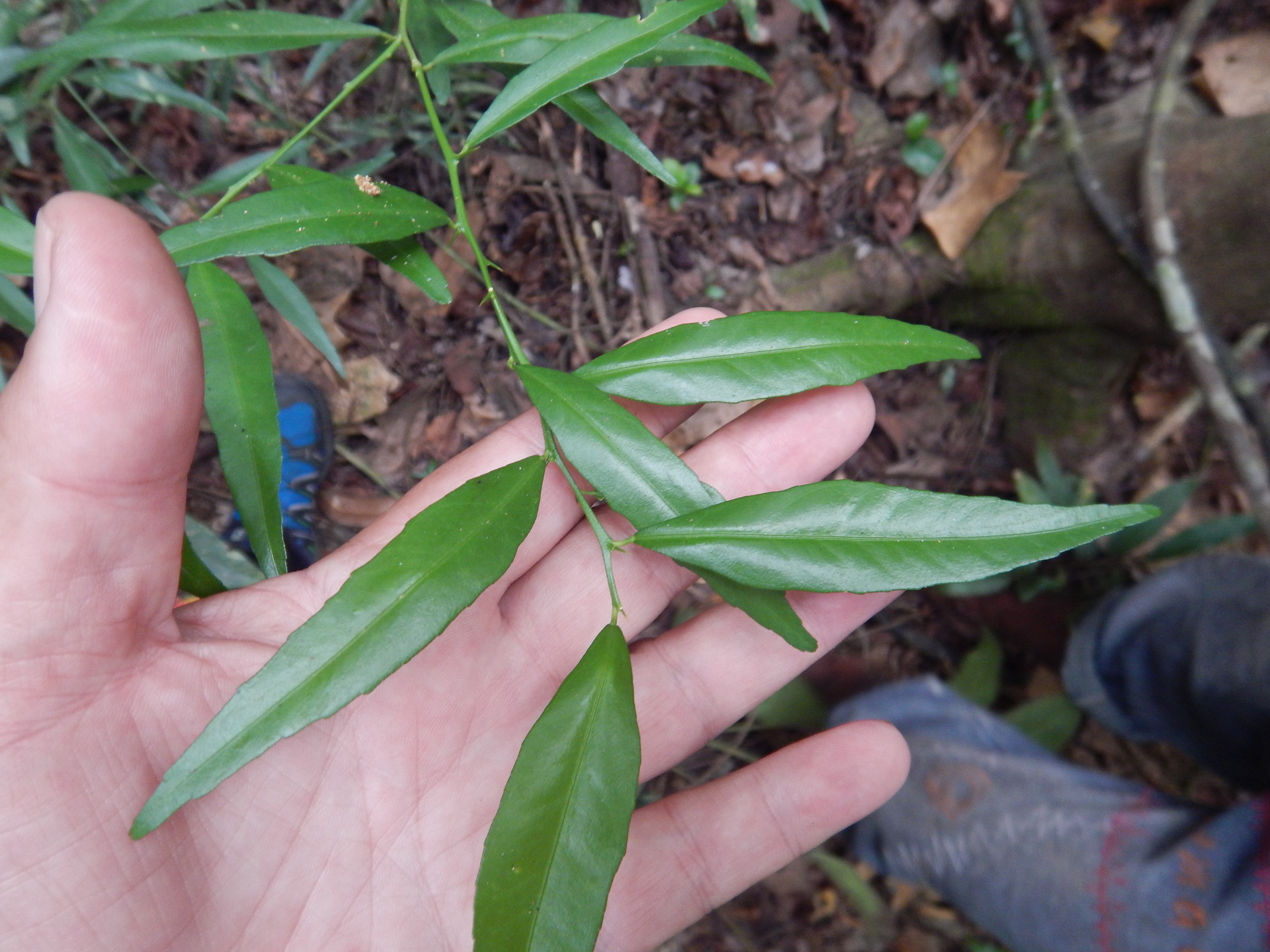
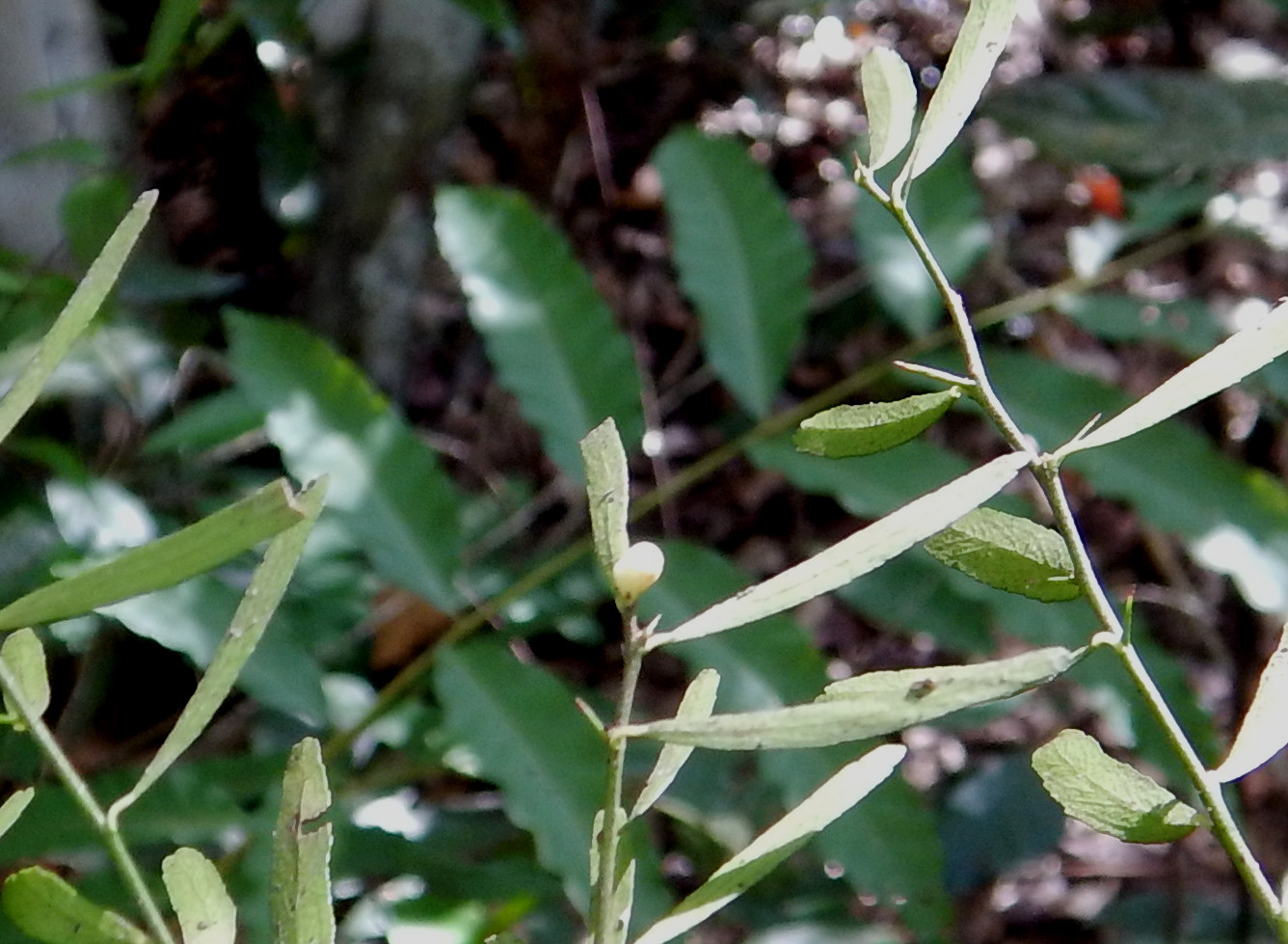
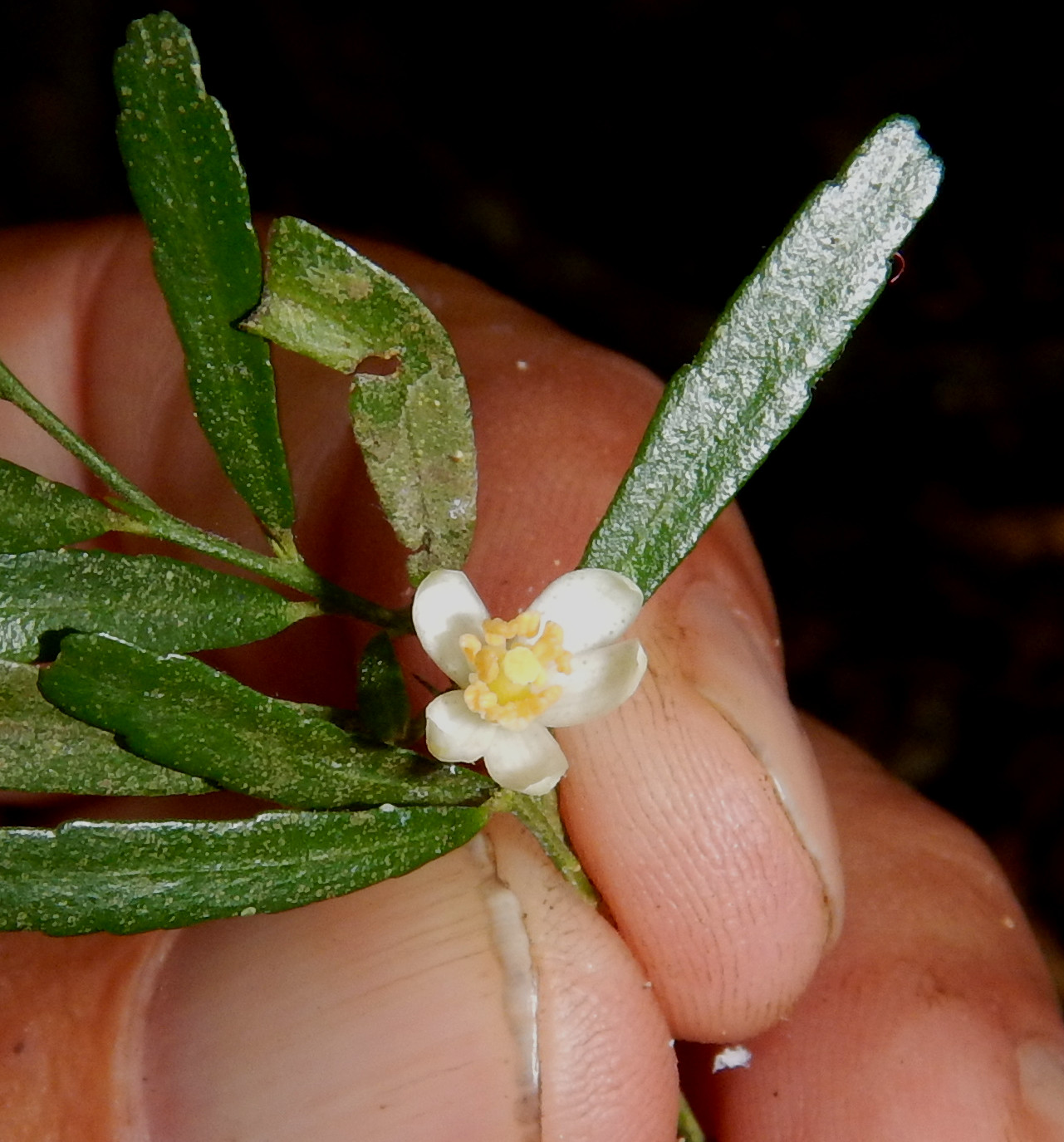
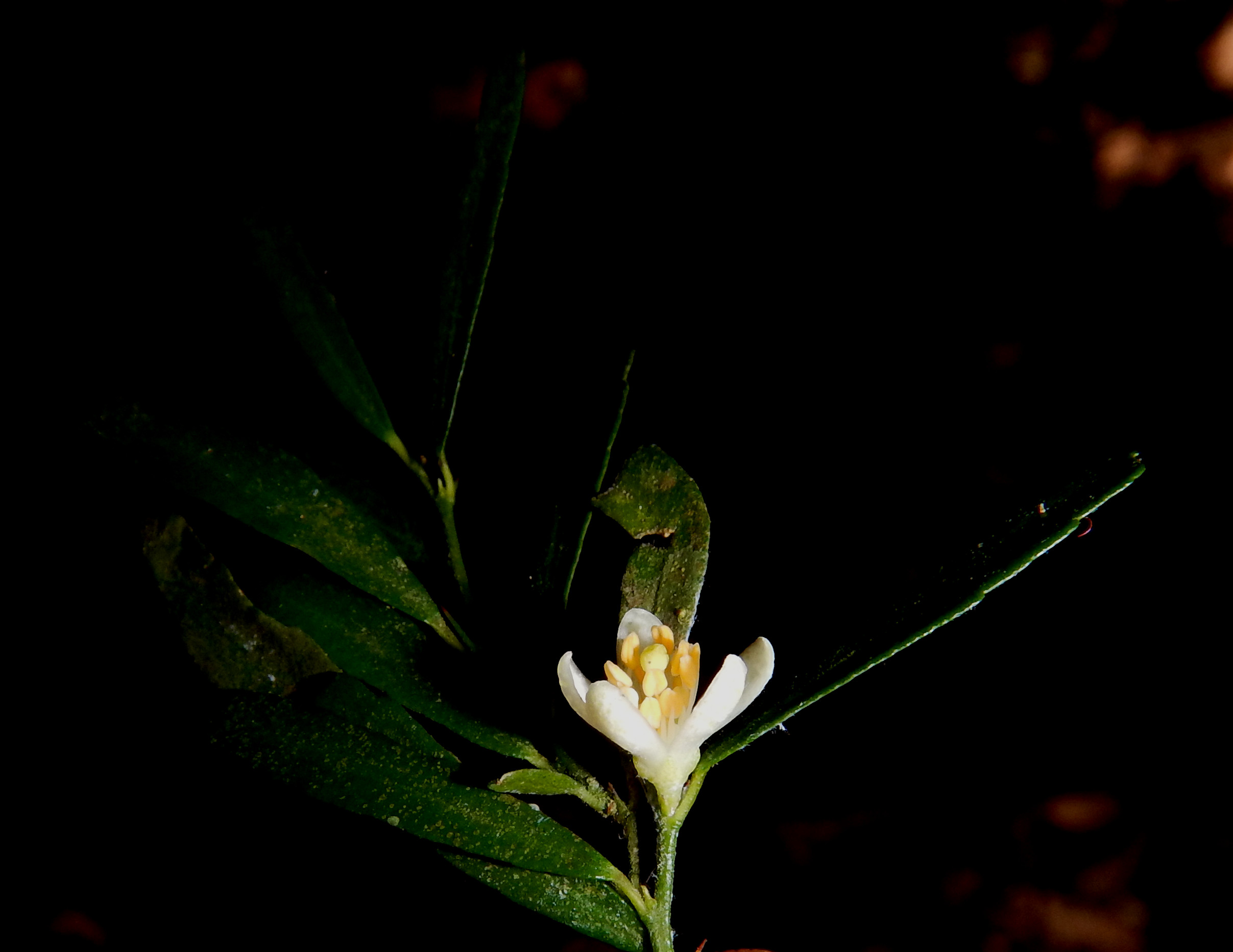
Et l'autre avec des feuilles de saule.
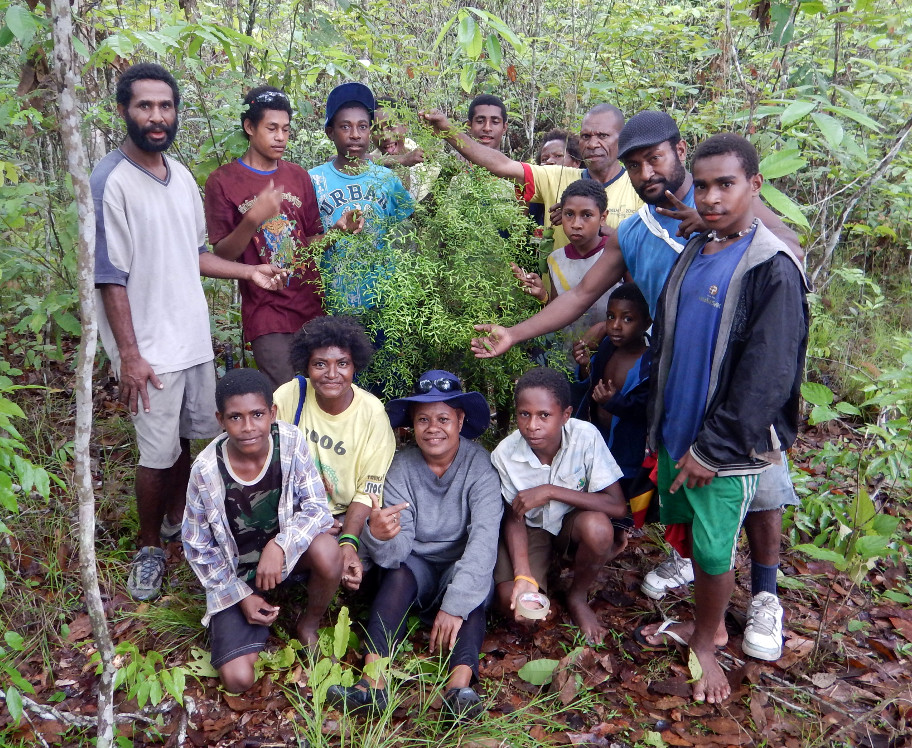
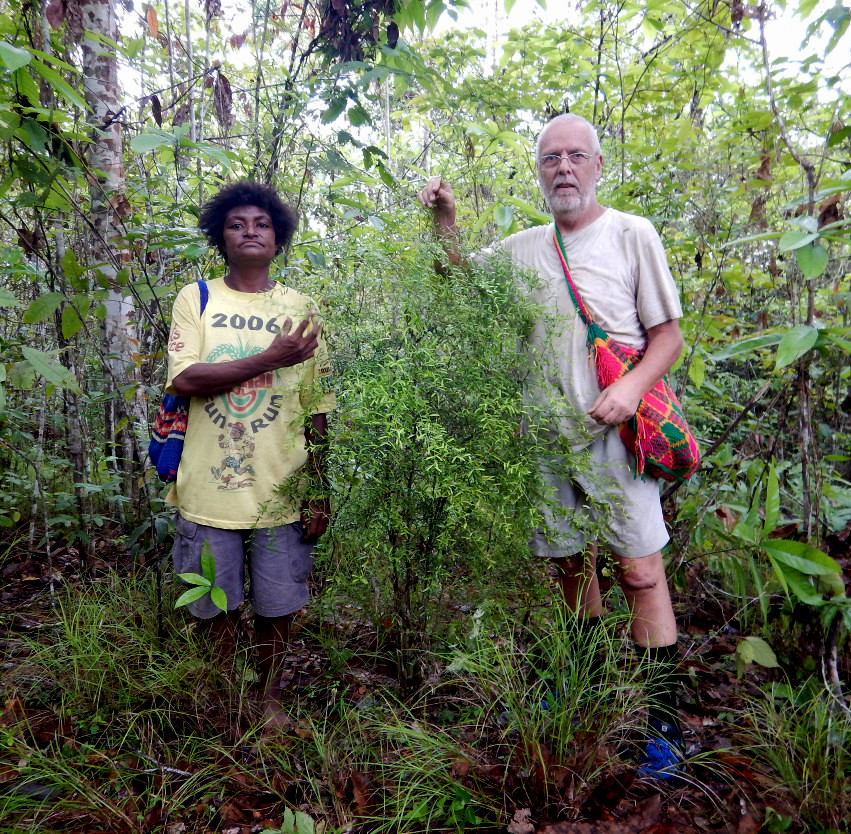
Si le premier est du warburgiana, ce serait la première fois qu'il aurait été vu au Nord de Port Moresby mais l'absence d'épine fait penser à une autre espèce. Quand à la deuxième c'est (pour moi) une espèce totalement nouvelle. c'est sûrement la chose la plus intéressante jusqu'à maintenant dans ce voyage. Je donne les noms BR2 à celui aux feuilles de saule et BR3 à celui qui ressemble au Waburgiana.
Je demande où sont les arbres et la réponse est « Ben on défrichait alors on les a coupés, mais ne vous en faites pas, il doit y en avoir d'autres dans les environs. ». Les feuilles sur les branches apportées étant à moitié sèche je ne pense pas utile de prélever des échantillons. On organise une prospection pour demain.
Dimanche 5 octobre.
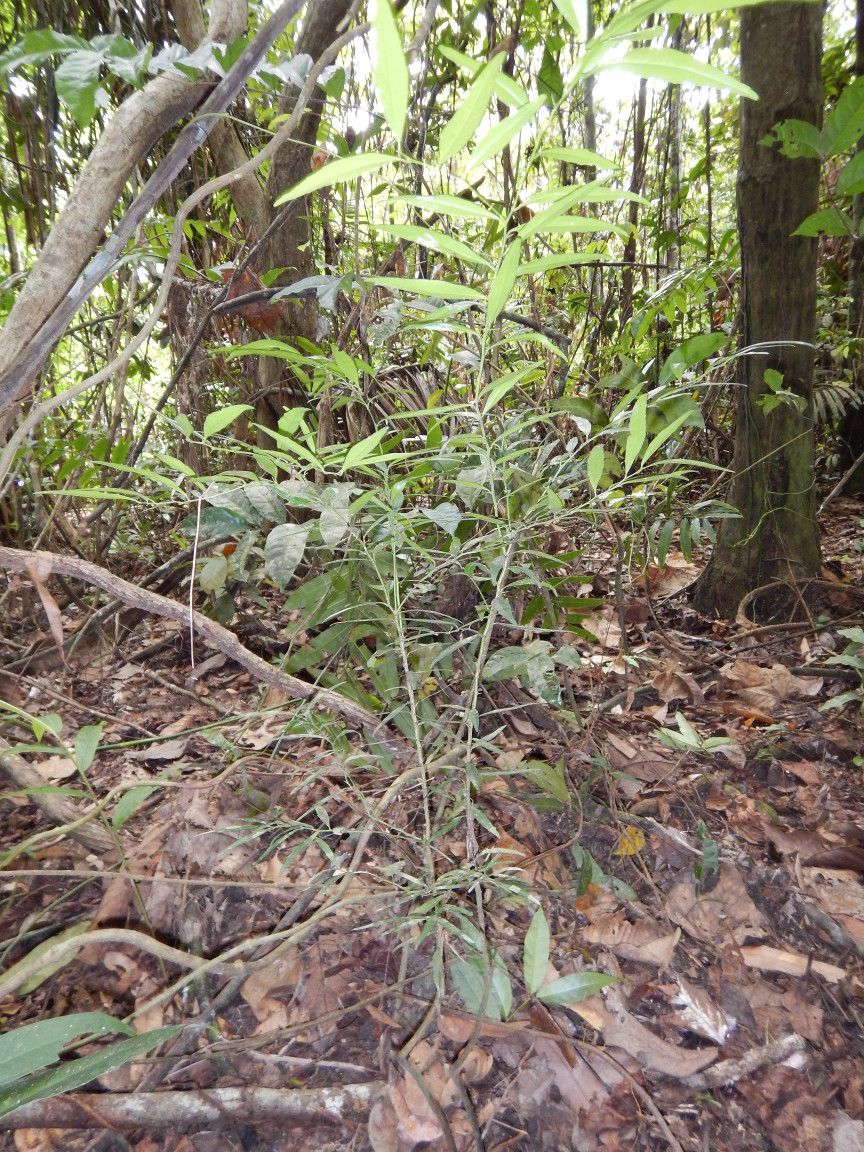
On part au terrain défriché. On cherche et on cherche, impossible de trouver l'agrume à feuilles de warburgiana. On trouve un minuscule exemplaire de celui à feuilles de saule.
Je prélève le minimum possible. On enveloppe les branches dans des feuilles de bananier et on rentre à la maison.
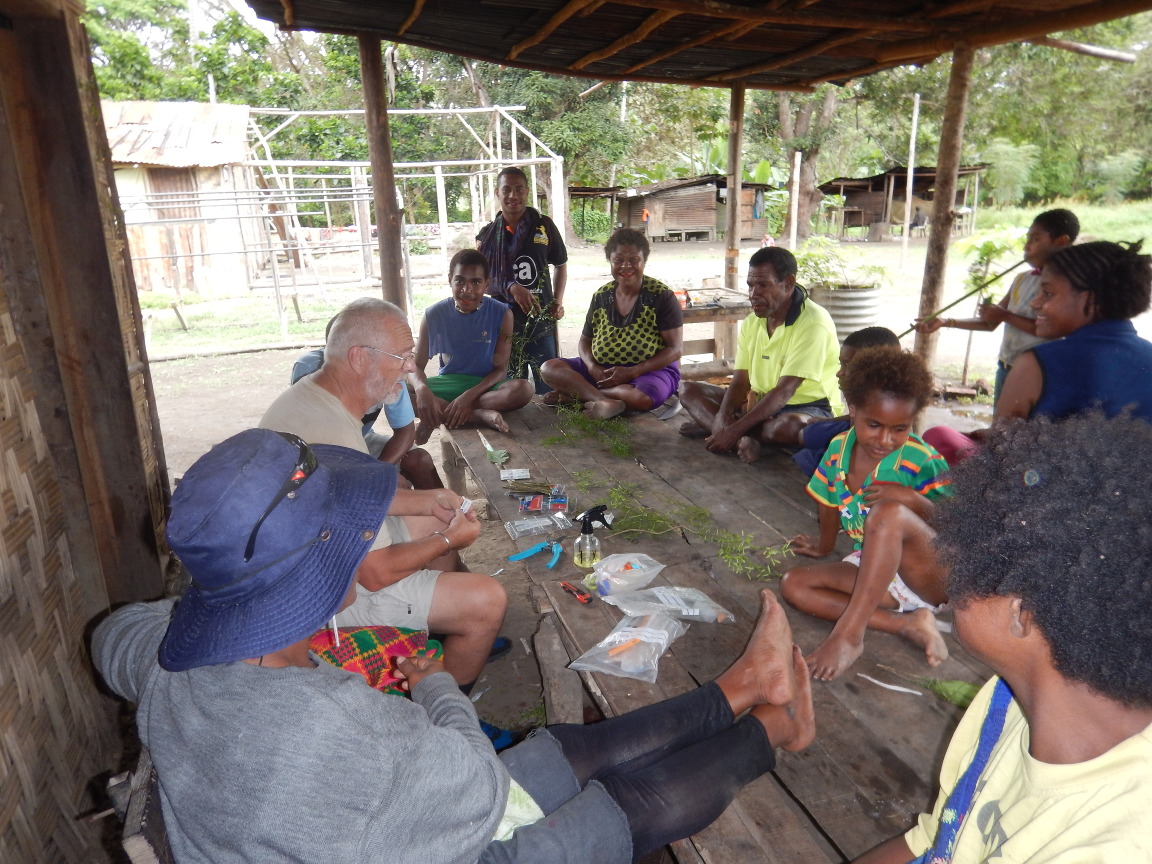
Je prépare les échantillons.
Je vais chercher derrière la maison les branches de l'agrume à feuilles de warburgiana que j'avais jetées hier. Je les mets à réhydrater dans de l'eau avec quelques gouttes d'alcool. La seul eau disponible ici est l'eau de la Brown River.
Lundi 6 octobre.
Je prépare les échantillons réhydratés de l'agrume à feuilles de warburgiana et je pars à Port Moresby. Il n'y a ni fleurs ni fruits, donc pas de graines. Les locaux disent que ces agrumes vivent dans la montagne et que les rivières, les crues et les oiseaux apportent les graines dans la plaine. Les plantes poussent mais finissent par mourir à cause de la sécheresse (relative). Ils disent aussi qu'elles ne font pas de fruits ici.
J'en profite pour faire passer mon smartphone de 3G à 4G. Eh oui! Il y a la 4G en Papouasie.
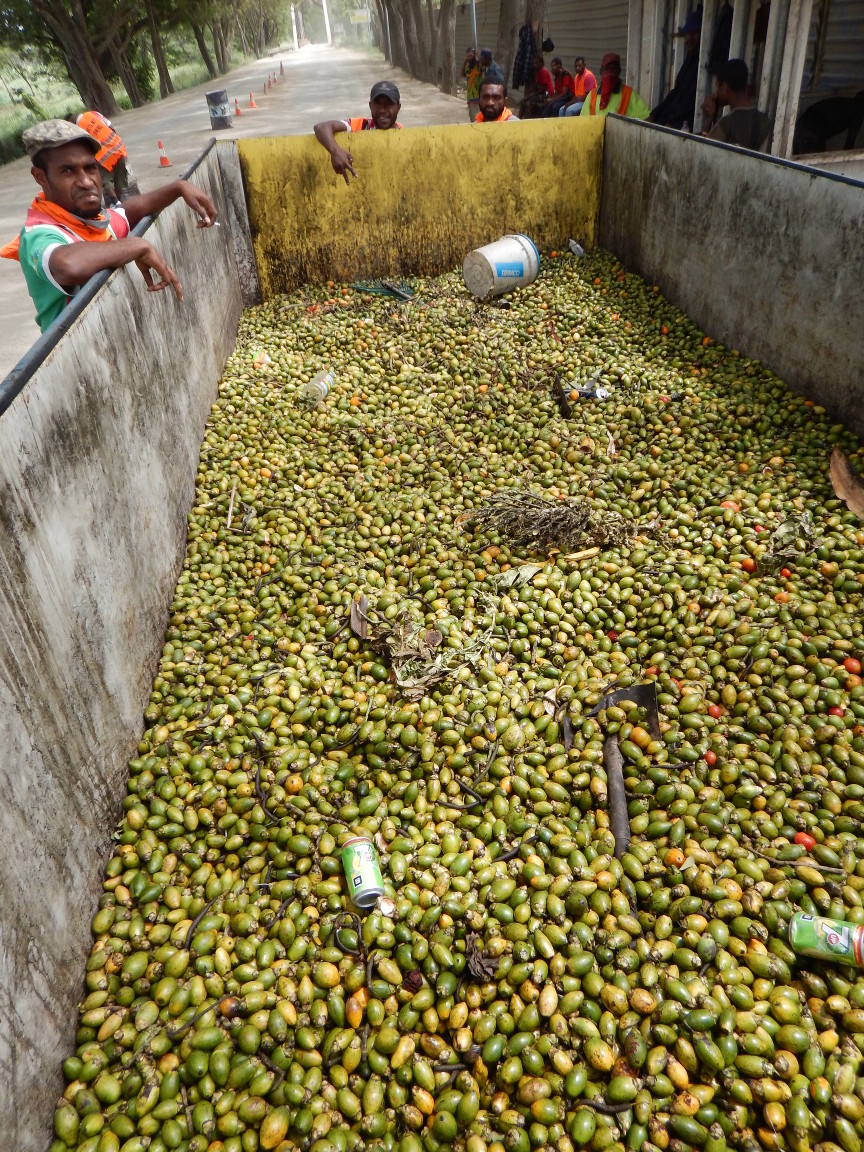
L'introduction et la vente de noix de bétel est interdite à Port Moresby ce qui induit une forte contrebande. Pour lutter, des postes de contrôle sont installés aux entrées de la ville. Voici les quantités saisies en deux semaines sur la route Brown River - Port Moresby.
De retour à Brown River. On m'avait signalé un endroit où il y avait des "near-citrus", genres les plus proches du genre Citrus, et peut-être une autre variété. J'organise donc une sortie. Il faut aller jusqu'au pied des montagnes. On part à deux pour rejoindre un hameau près des montagnes et les gens du hameau nous emmèneront sur le lieu.
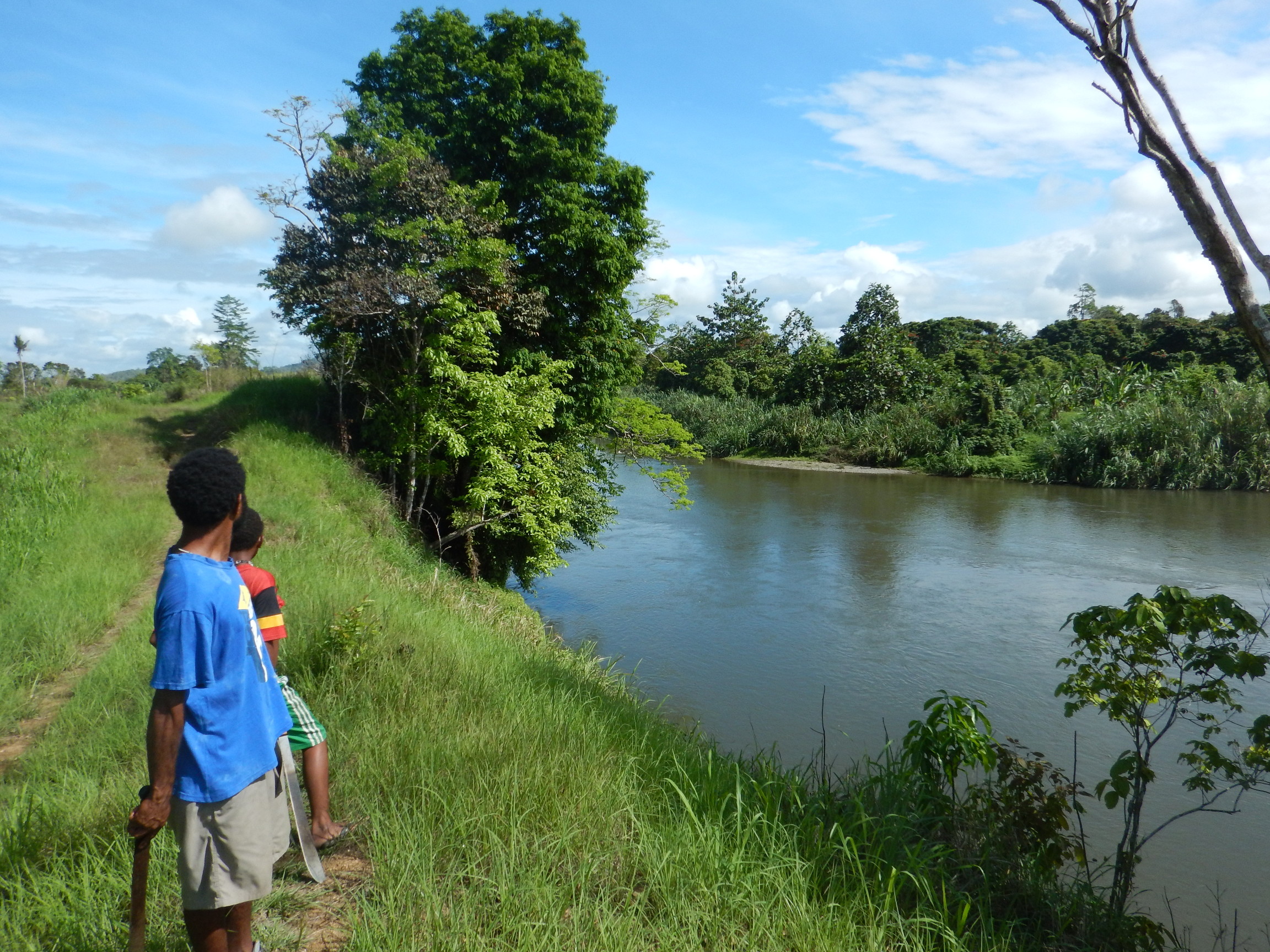
Il faut traverser la Brown River.
Dans le fond on voit les montagnes où nous allons.
On appelle un passeur.
Un enfant nous fait traverser.
La maison et la famille du passeur.
On arrive dans le hameau au pied des montagnes qui sont plutôt des collines à cet endroit là. La famille du chef.
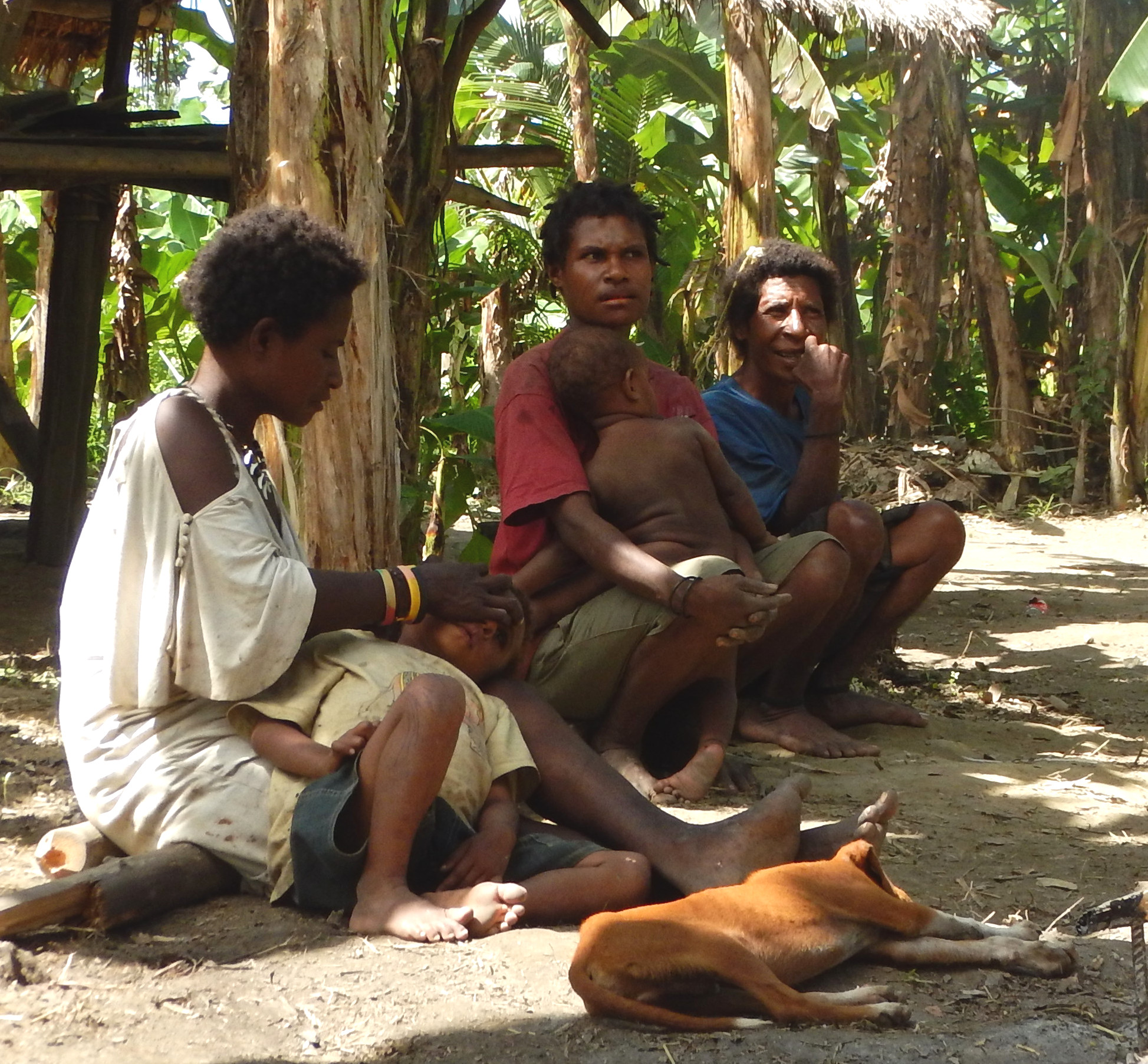
On attend l'arrivée soit du chef, soit d'un de ses fils qui sont aux champs. Ce sont les seuls à connaître l'endroit où aller. L'épouillage est une des activités principales en Papouasie.
On part dès que le fils arrive. Très vite on trouve le near-citrus à petites feuilles, celui que je connais déjà. Jeune fruit tout juste noué. Sur les photos suivantes je laisse mes doigts pour donner un idée de l'échelle.
Les feuilles font entre 1 et 2 centimètre.
Puis tout près l'autre variété. Les feuilles font entre 4 et 5 centimètres.
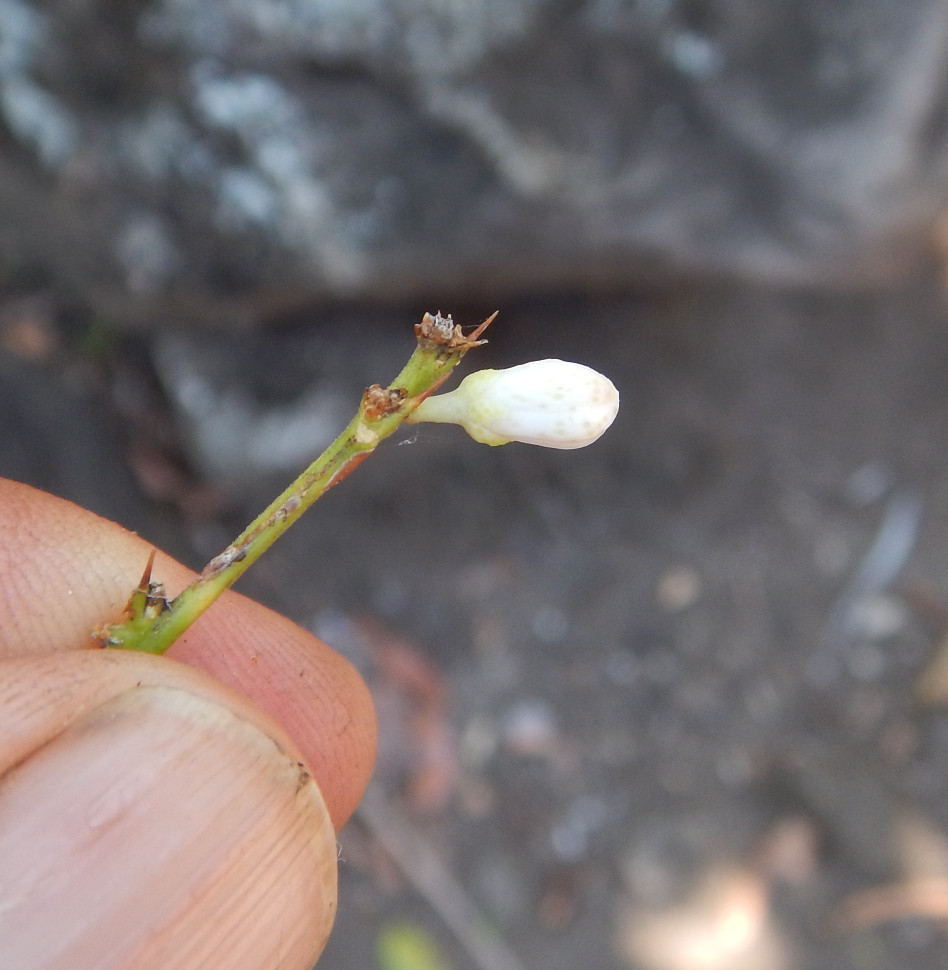
Fleur non éclose.
Fruit. Notez les glandes à essence caractéristiques des agrumes.
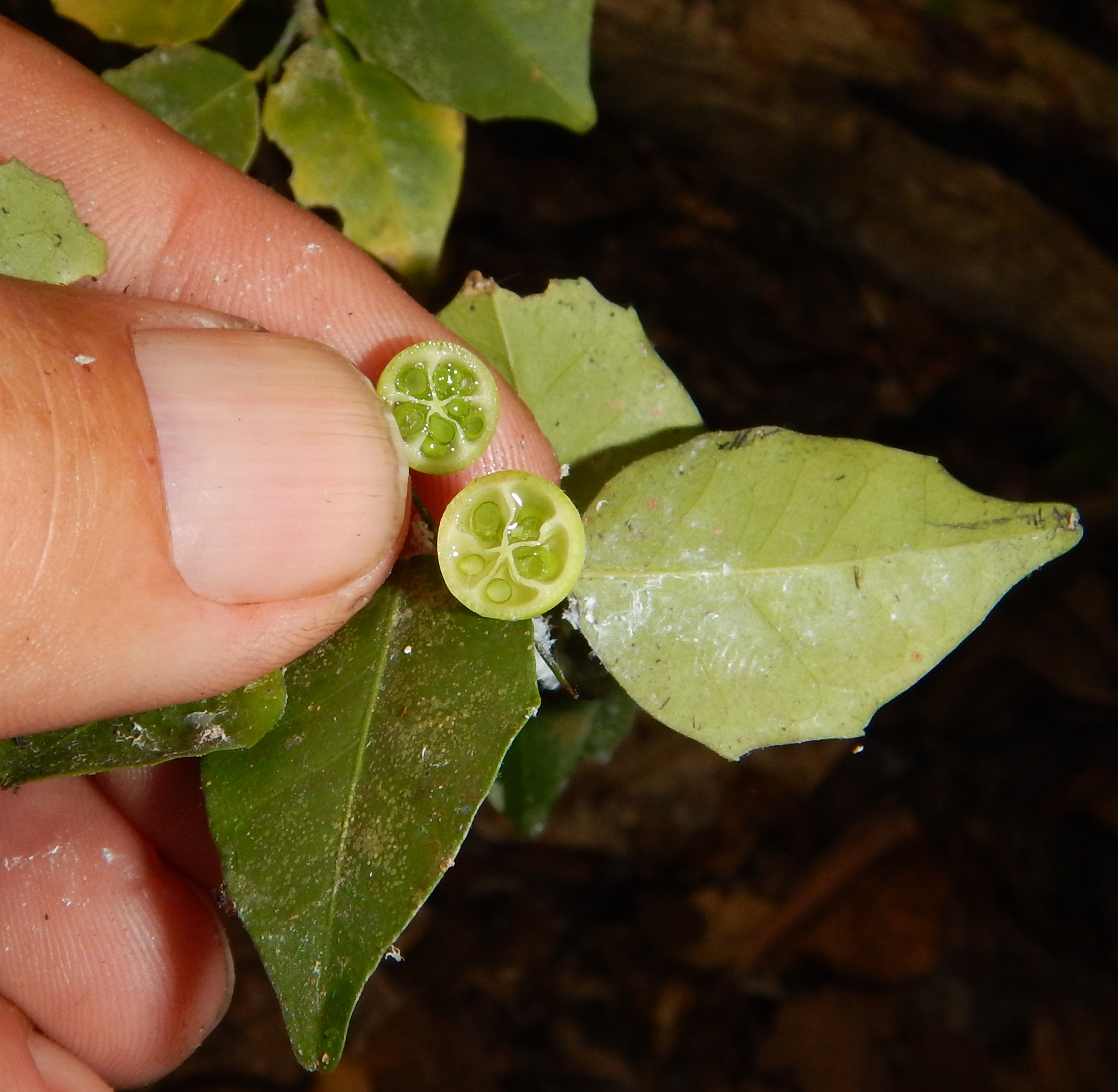
Coupe du fruit. La structure est bien celle des agrumes mais les vésicules sont absentes. Les graines baignent dans un liquide gélatineux comme pour d'autres near-citrus.
Feuille en feuille de houx caractéristique de cette plante.
La ressemblance entre les deux plantes me donne un doute et en cherchant bien on trouve une plante de taille intermédiaire qui porte les deux sortes de feuilles, les petites en bas et les grandes en haut. C'est bien la même plante qui fait des petites feuilles jusqu'à un mètre de hauteur et des grandes feuilles après. Les fruits on toujours la même taille par contre.
On part sur le chemin du retour et on trouve le chef au hameau.
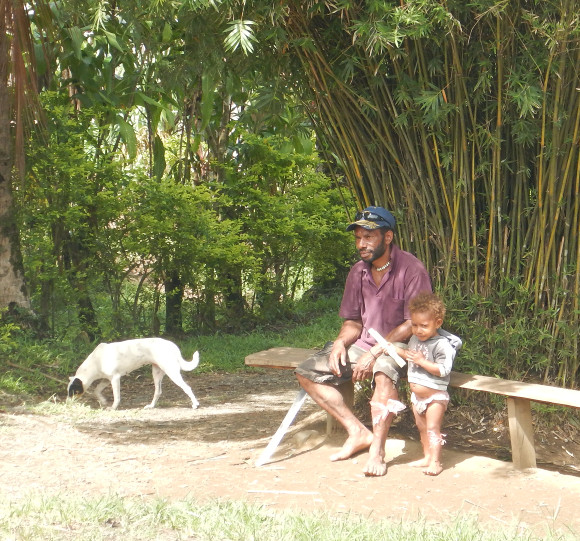
Il a sa petite fille entre ses jambes. Une branche de la plante dans une main et une cigarette de tabac local, roulée dans du papier ordinaire dans l'autre main. Notez la marque rouge du jus de bétel sur la cigarette et sur les lèvres.
Maison sur le chemin du retour. On voit un hamac ce qui est rare en PNG et une "échelle" très rustique.
On rentre par une autre piste pour voir de nouveaux endroits. Journée bien remplie!
J'ai assez de graines de C. wintersii. Je peux les porter à l'université mais avant j'ai un repas à prendre.
Les Kangourous ne peuvent pas gagner à chaque fois. Celui-ci a perdu.
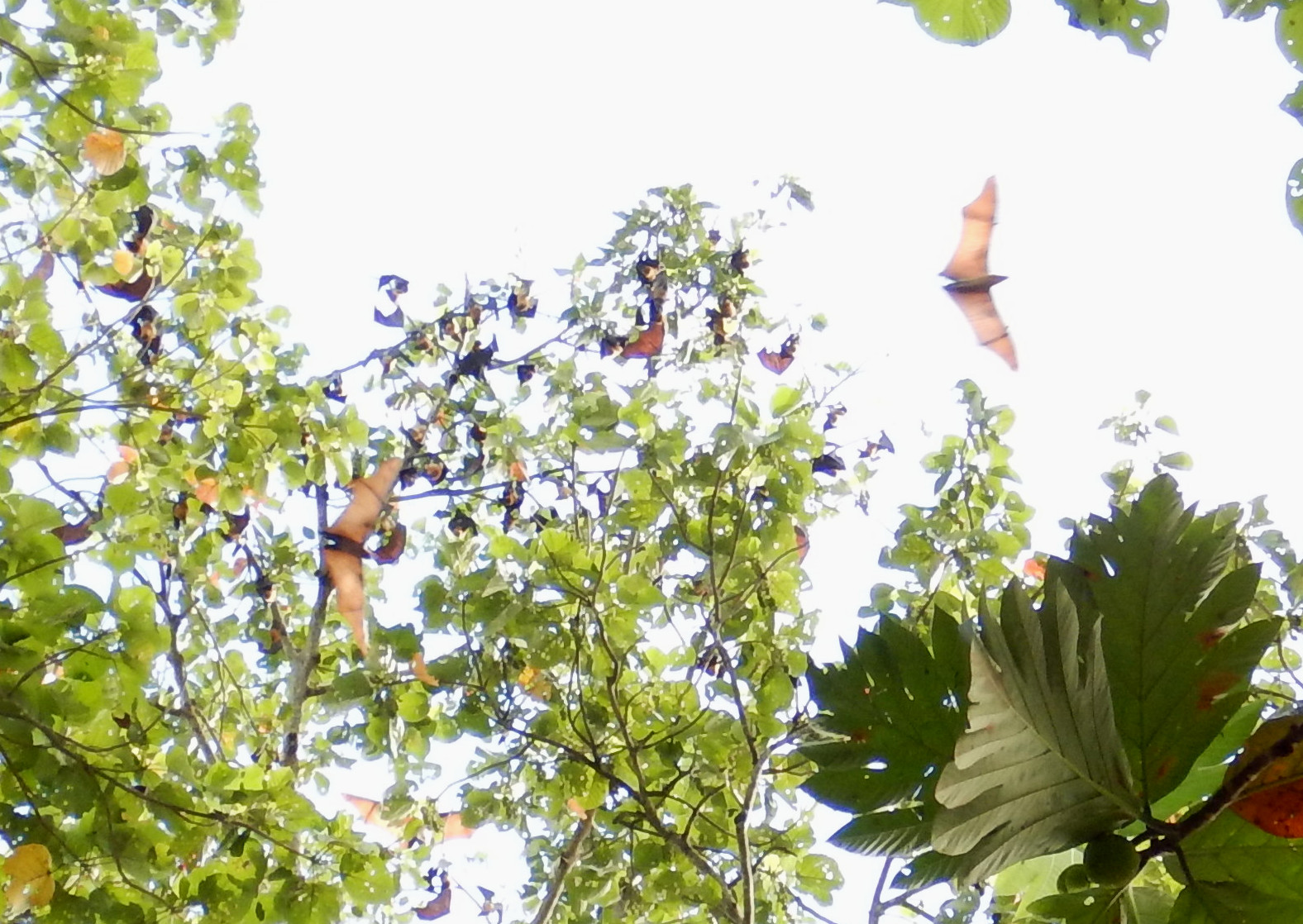
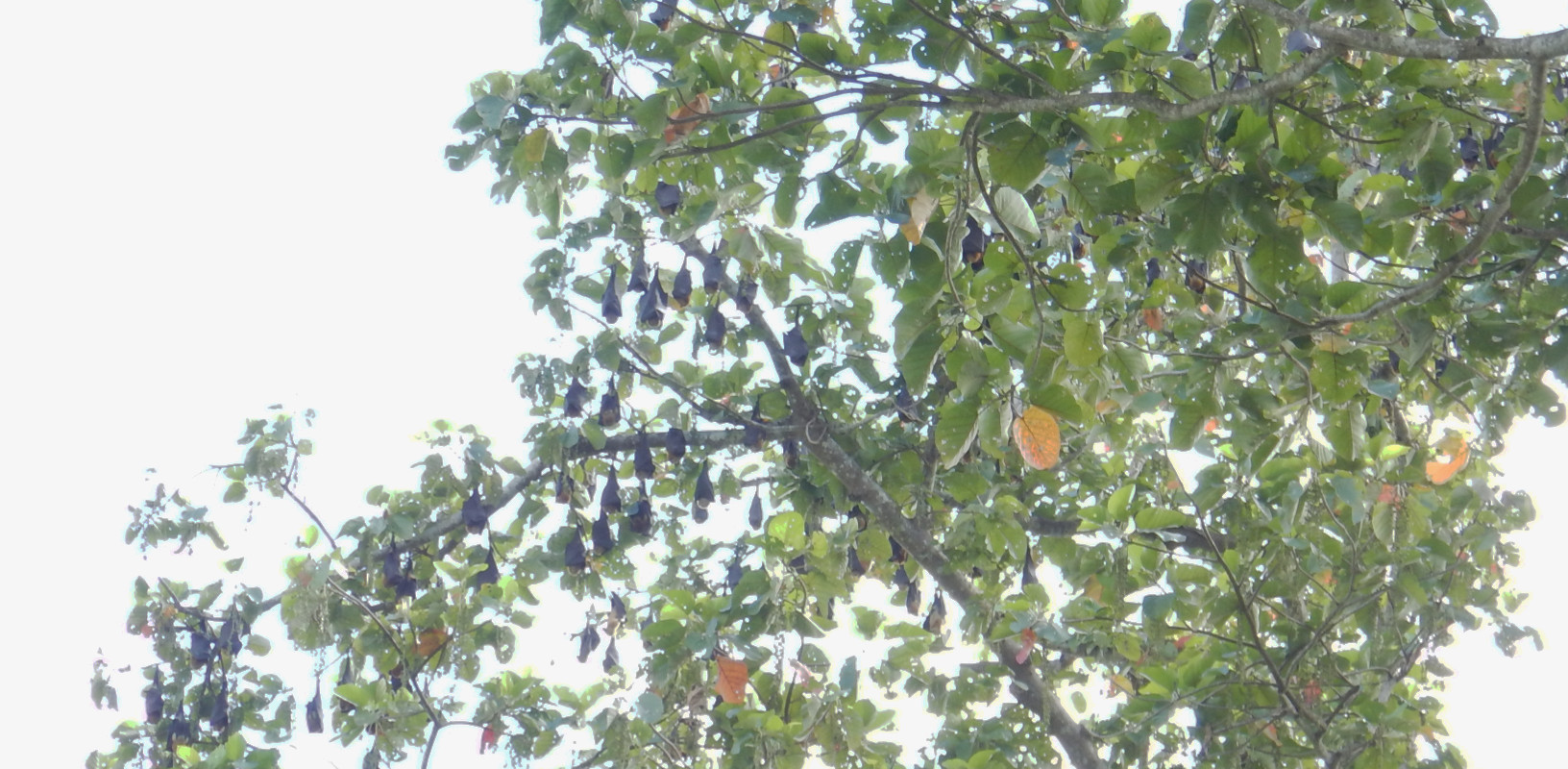
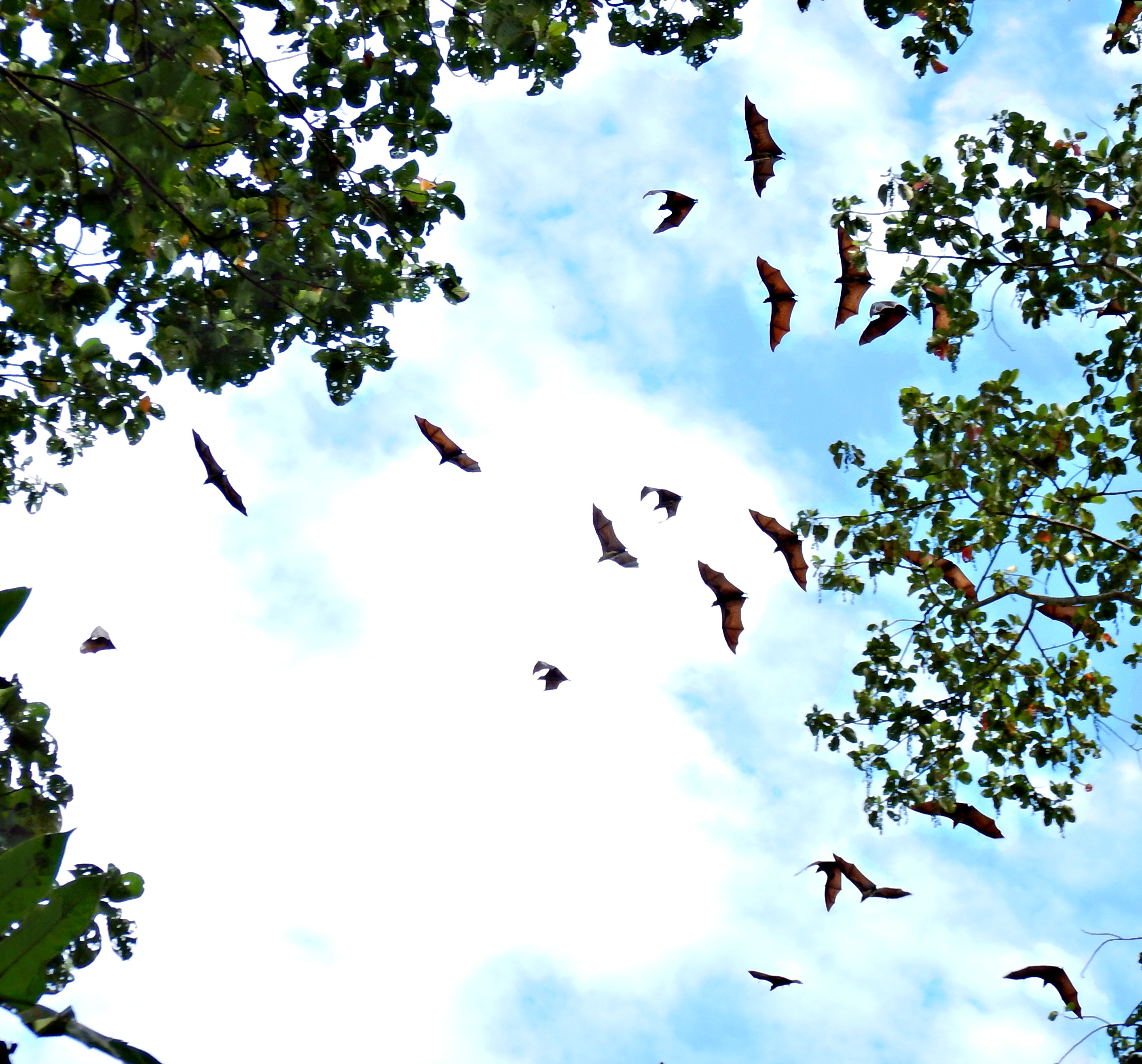
Une autre chose que je veux faire avant de partir c'est visiter le dortoir des "flying fox", des chauve-souris frugivores géantes. Toutes les nuits elles venaient faire du raffut dans l'arbre sous lequel je dormais. Je veux me venger. Elles logent dans deux grands arbres de l'autre côté de la rivière. Les conditions pour prendre des photos sont les pires qu'on puisse rencontrer. Les arbres sont très grands je dois donc utiliser le zoom. Il y a des branches au premier plan qui perturbent la mise au point et le contraste entre le ciel et les chauve-souris est tel que je dois surexposer les photos pour pouvoir les discerner. En plus je ne dois pas faire de bruit ou de gestes brusques. Soyez indulgents...
Je n'ai pas trop réduit cette photo pour pouvoir voir la tête des chauve-souris.
Maintenant je pars à Port Moresby déposer les graines au labo de botanique de l'université. Ils vont faire pousser les plantes pour Nathalie du S.I.L., puis j'irai chez la famille Sédé. Demain je prends l'avion pour Alotau.
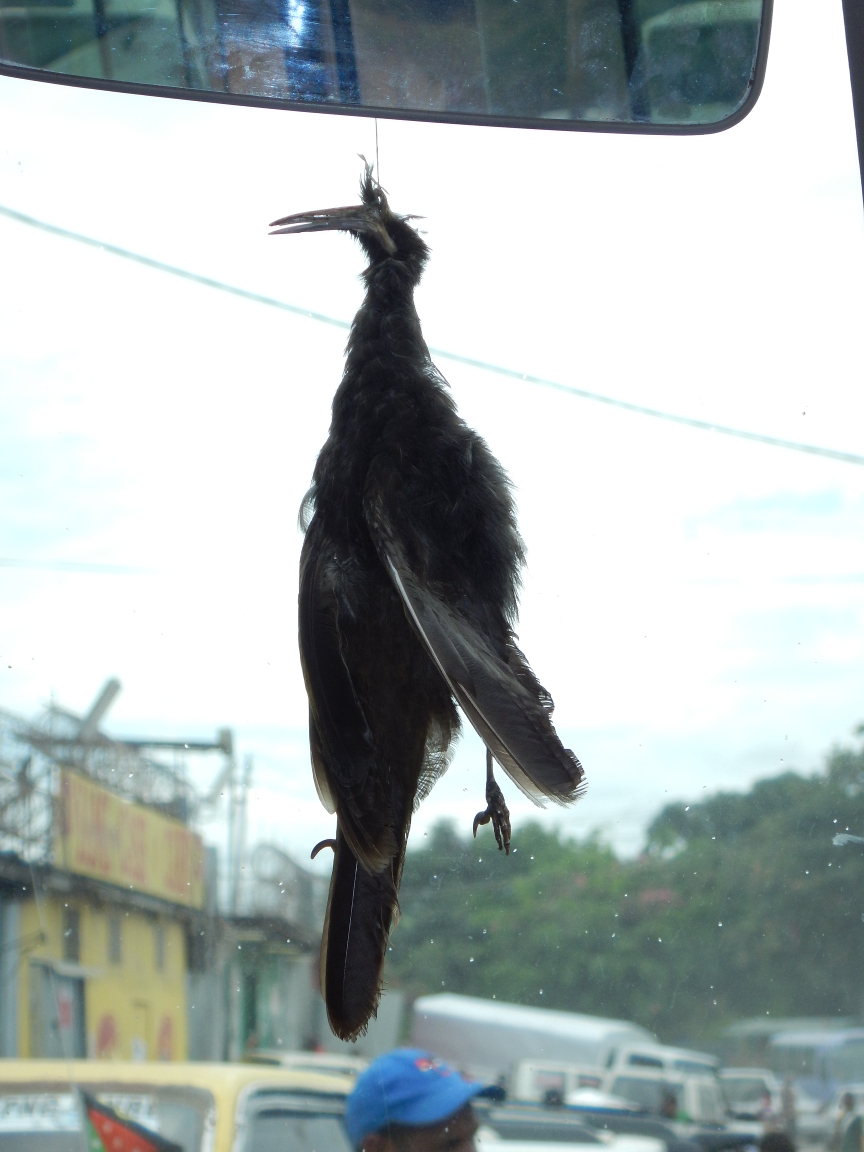
Une nuit à l'université et je pars prendre l'avion pour Alotau. Décoration accrochée au rétroviseur d'un PMV.
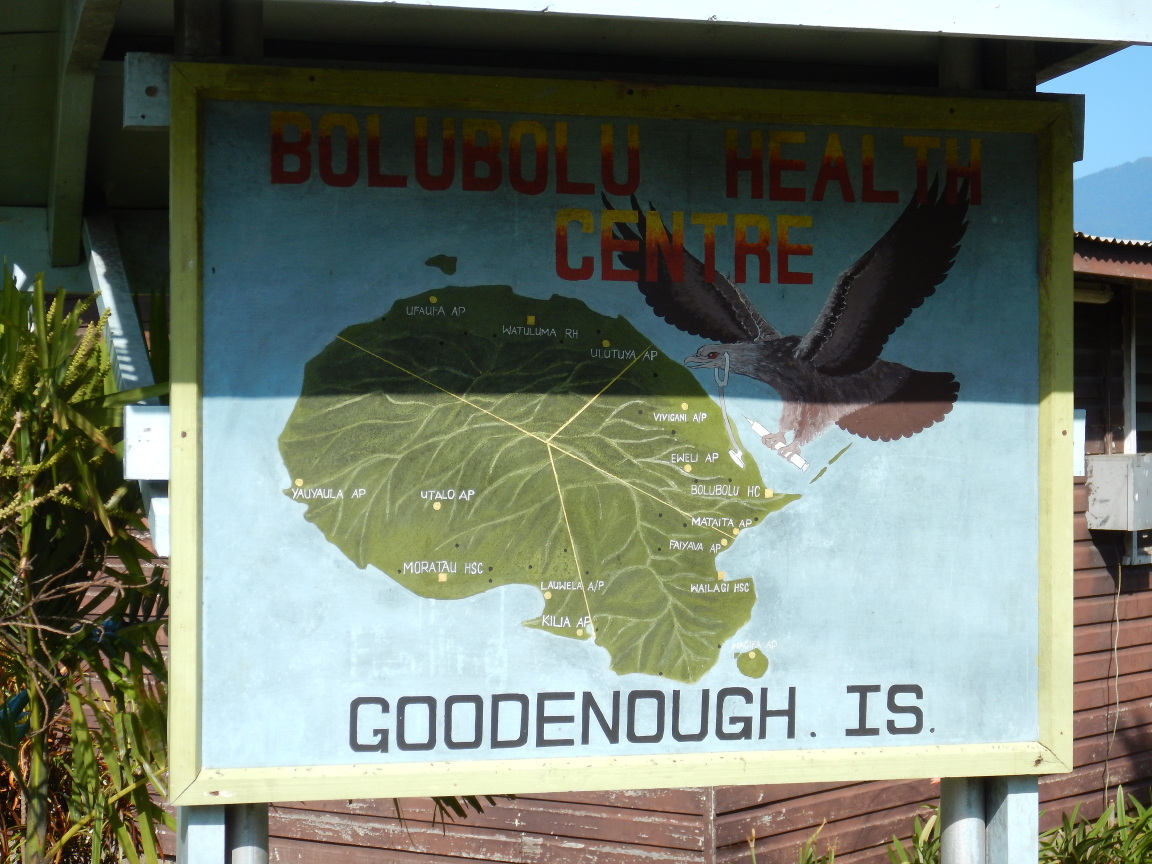
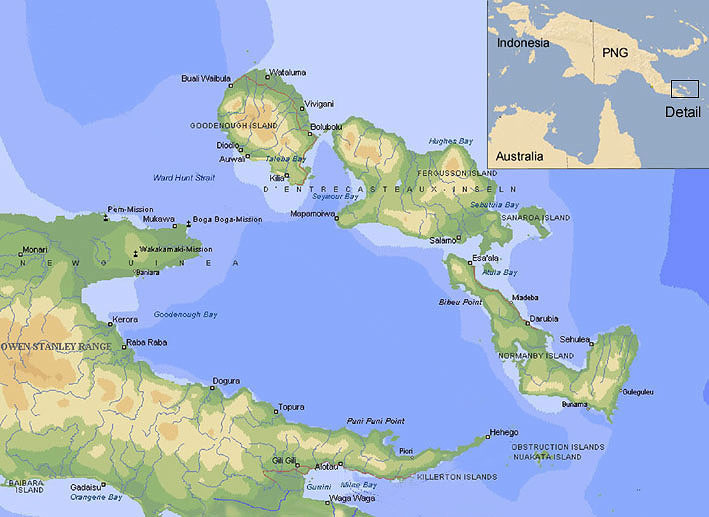
Mon intention était de chercher C. warburgiana tout autour de la baie d'Alotau et dans les montagnes et d'en profiter pour faire un peu de photos sous-marines car Milne bay est mondialement connu pour ses barrières de corail. Puis pour finir d'aller à Goodenough island pour chercher C. wakonai juste avant de partir. Sur les conseils de Seb (un ami de France), je décide d'intervertir et d'aller le plus tôt possible à Goodenough. Ce choix s’avérera judicieux comme la suite le montrera.
Arrivé à Alotau je fais du stop pour aller de l'aéroport à la ville. Je suis immédiatement pris par deux chinois très sympas qui tiennent un grand magasin en ville. Ils me présentent à leur voisin. Une agence de fret-transit qui s'occupe des mouvements dans le port. Il me dit qu'on peut rester dix jours sans bateau pour Goodenough mais qu'un départ est prévu ce week-end. Il m'indique un endroit pour dormir, le Transit Hôtel. Je suis réticent car généralement je ne paye pas pour dormir, mais je vais voir.
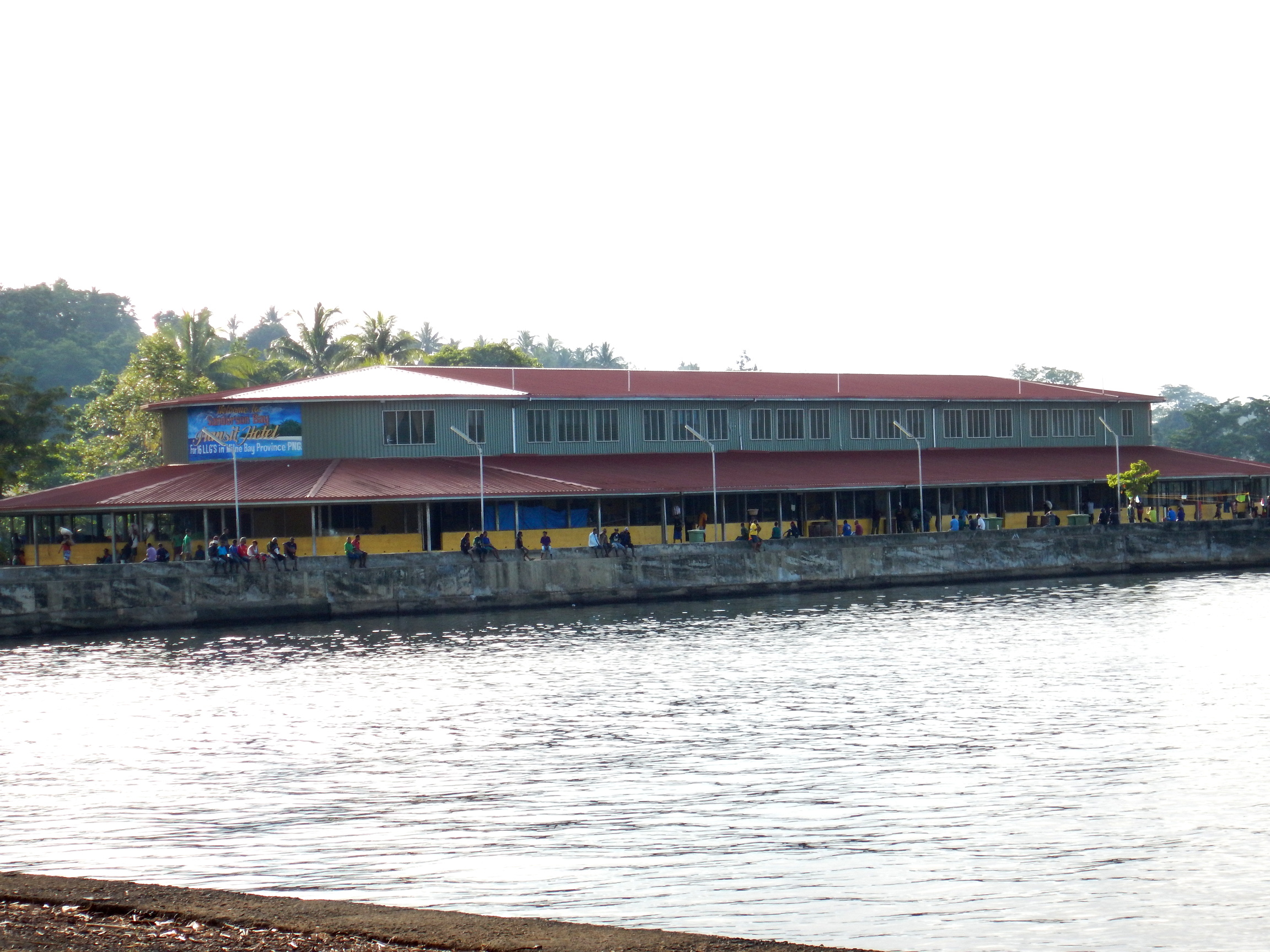
Le Transit Hôtel.
C'est un bâtiment divisé 16 parties correspondantes à 16 LLG (Local Level Government). Chacun correspond à une ou des îles dépendantes d'Alotau. Ce n'est pas vraiment un hôtel...  mais un local de transit entre les îles et Alotau pour les biens et les personnes. C'est une très bonne idée. Ce genre de projet et d'organisation manque malheureusement beaucoup en PNG.
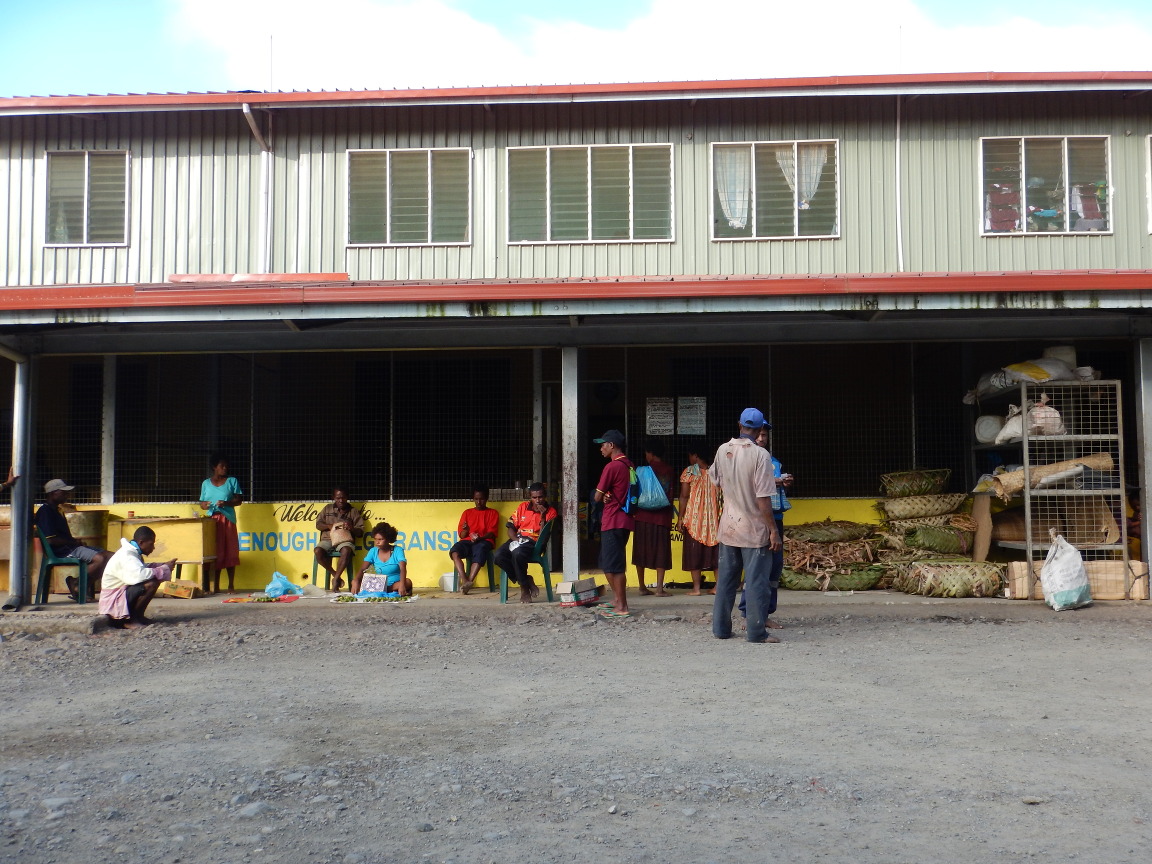
La partie attribuée à Goodenough.
C'est très sympa et pratique pour lier des relations avec les habitants de Goodenough. Je m'y installe et y reviendrai à chaque fois que je serai à Alotau. Le local se compose d'un auvent grillagé où la plupart de gens dorment, d'une salle au rez-de-chaussé composé d'un dortoir, de deux douches et toilettes, et à l'étage un grand dortoir et quatre chambres à un lit. À part dans les chambres, tout le monde dort par terre. Je dors dans le grand dortoir à l'étage.
Samedi 11 octobre.
J'ai trouvé un bateau pour Goodenough qui part cet après midi. Arrivée demain matin à l'aube.
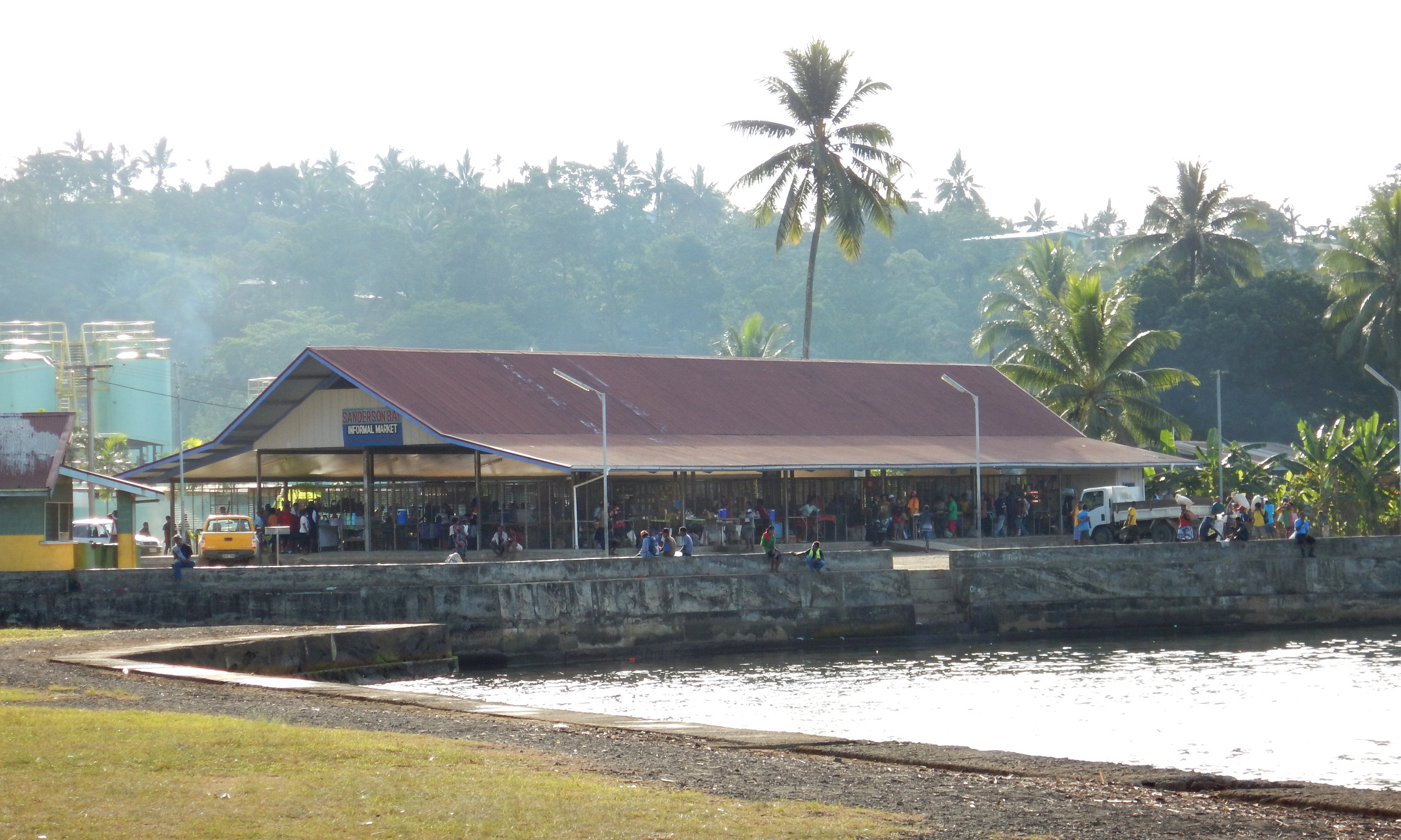
J'en profite pour visiter Alotau. Ici tout est différent du reste de la PNG. Les gens sont souriants et chaleureux. La violence semble absente. Par exemple le soir les gens se promènent dans la rue jusque tard dans la nuit, ce qui est inimaginable à Port Moresby ou dans les autres grandes villes. On se croirait l'été dans le Sud de la France ou en Espagne. Tout le monde rit, flirt, plaisante. Ce que je n'ai encore jamais vu si ce n'est à l'université. La ville est très propre et à échelle humaine. Et cerise sur le gâteau, il n'y a pas de moustiques. Il y a trois marchés couverts. Celui-ci est juste à côté du transit, c'est là que je mange.
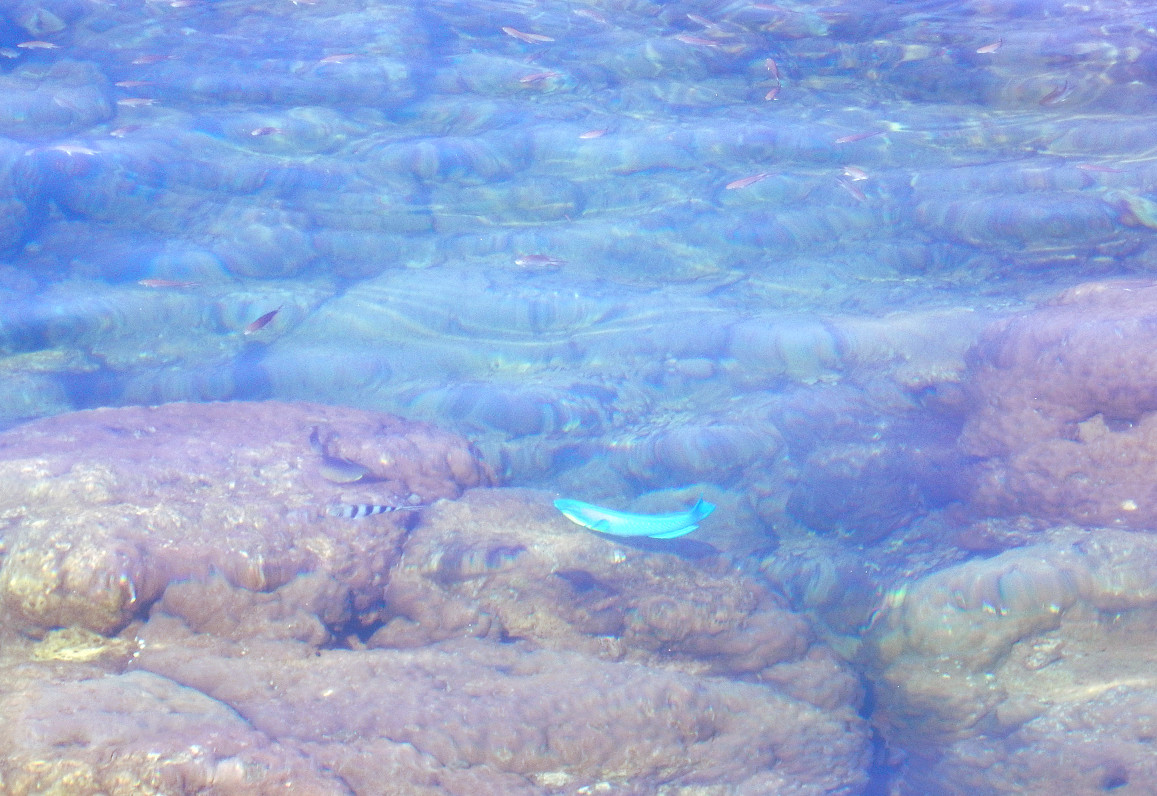
Des quais je fais quelques photos dans l'eau du port.
Des œufs de mégapodes vendus très cher, 5 kinas, ce qui fait 1,50 €. En PNG, tout est très cher.
Les œufs de mégapodes sont très proches des œufs de canes, nettement plus gros que des œufs de poules et au goût plus prononcé.
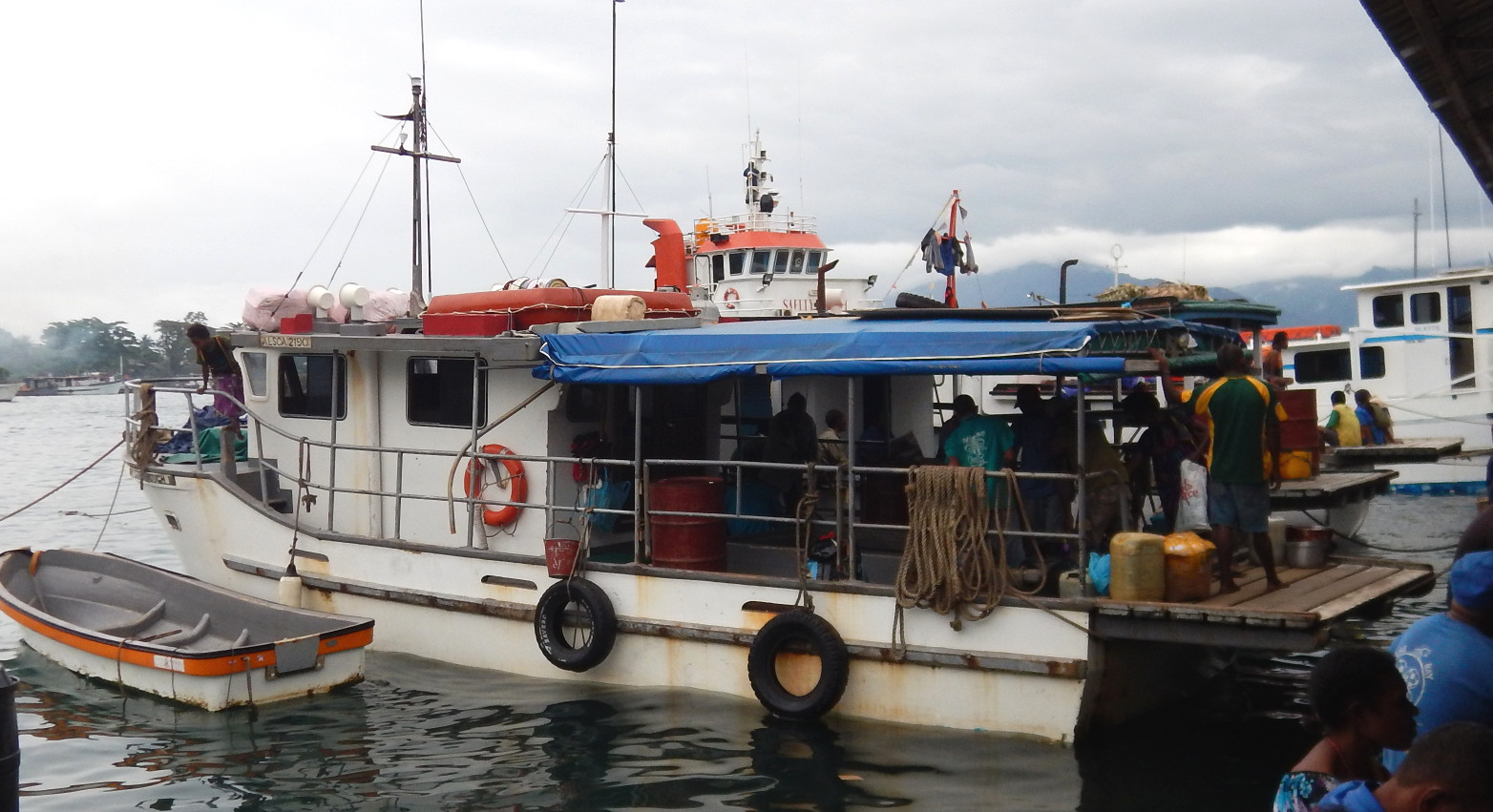
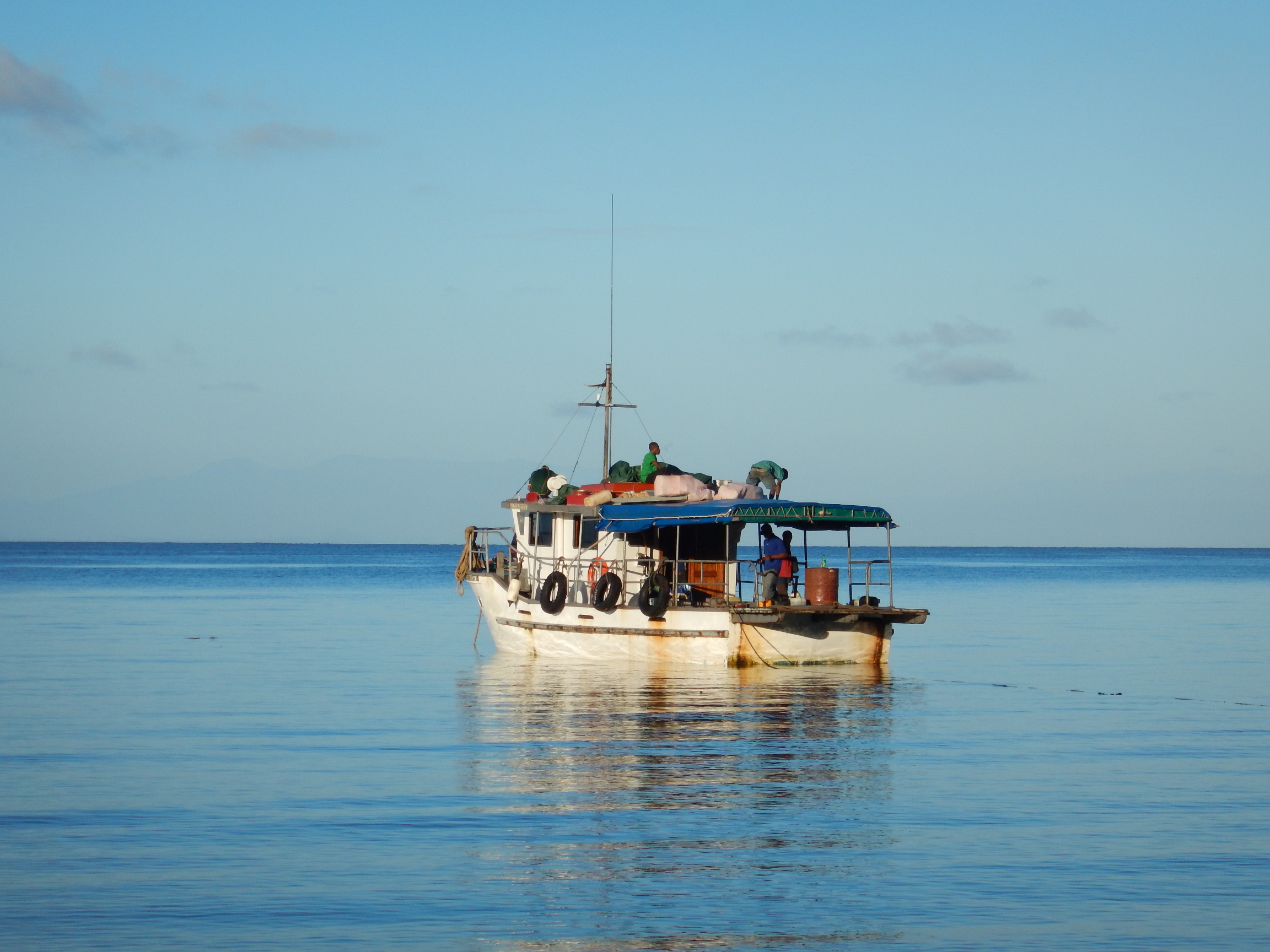
Voici notre bateau. C'est le MV Goodenough II.
Juste à côté se trouve le MV Goodenough I. Le bateau qu'a pris Helena quand elle est venue:
Le bateau en chargement.
19h et toujours pas parti. Maintenant on parle de 20h ou 21h. On verra bien...
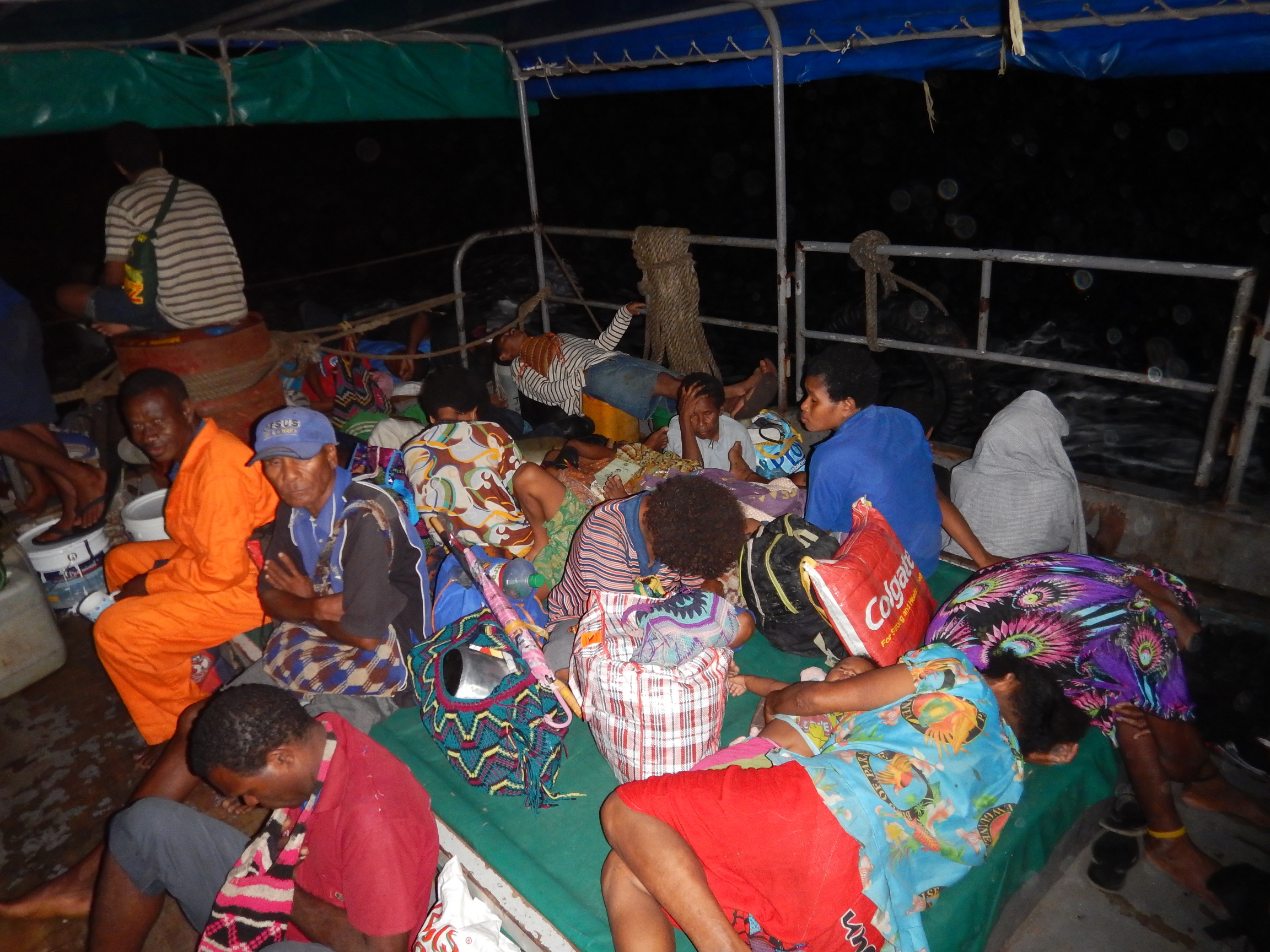
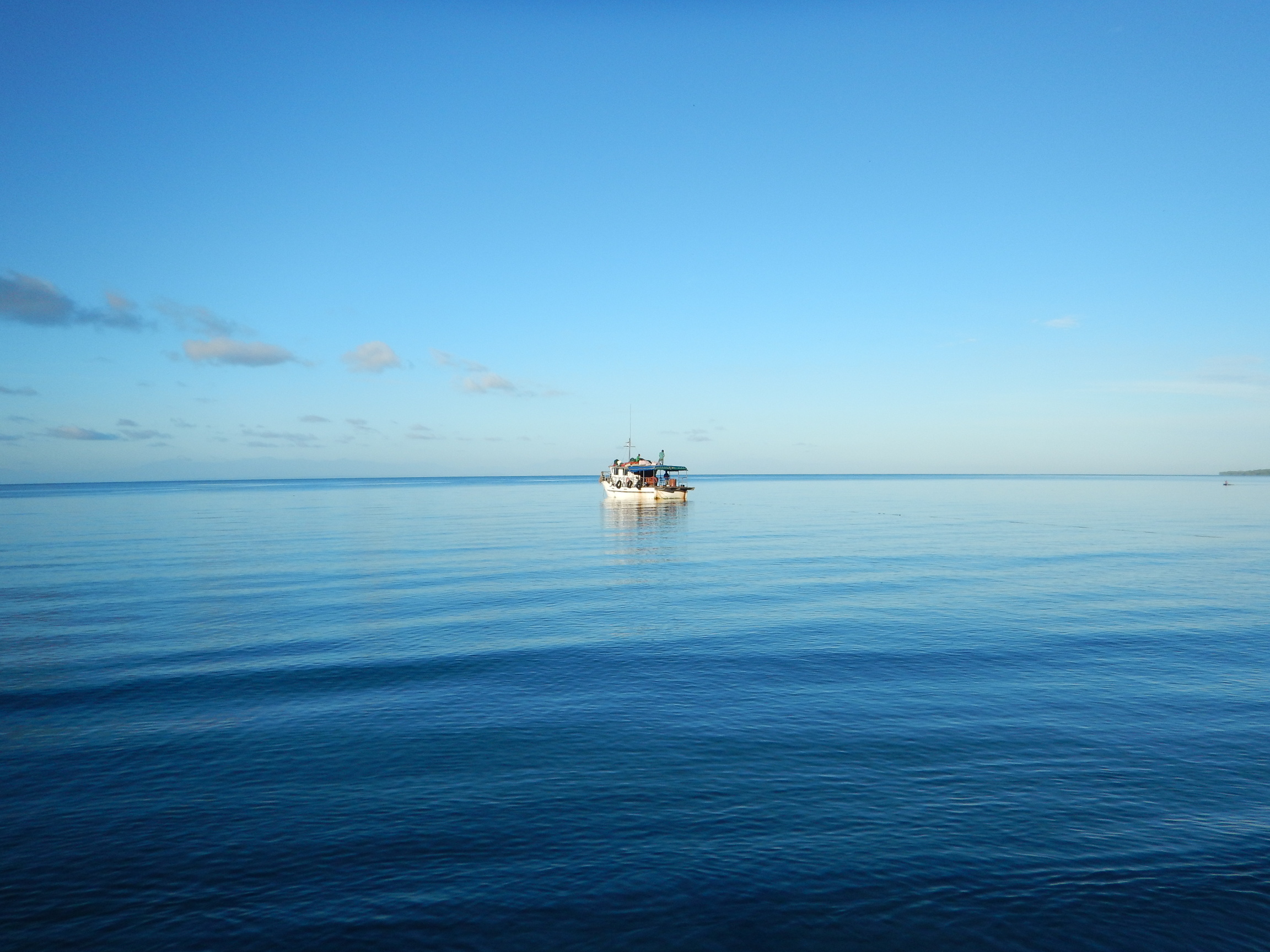
21h 36 on part pour Goodenough island. 12 heures de trajet.
Le jour se lève nous longeons les côtes de Fergusson.
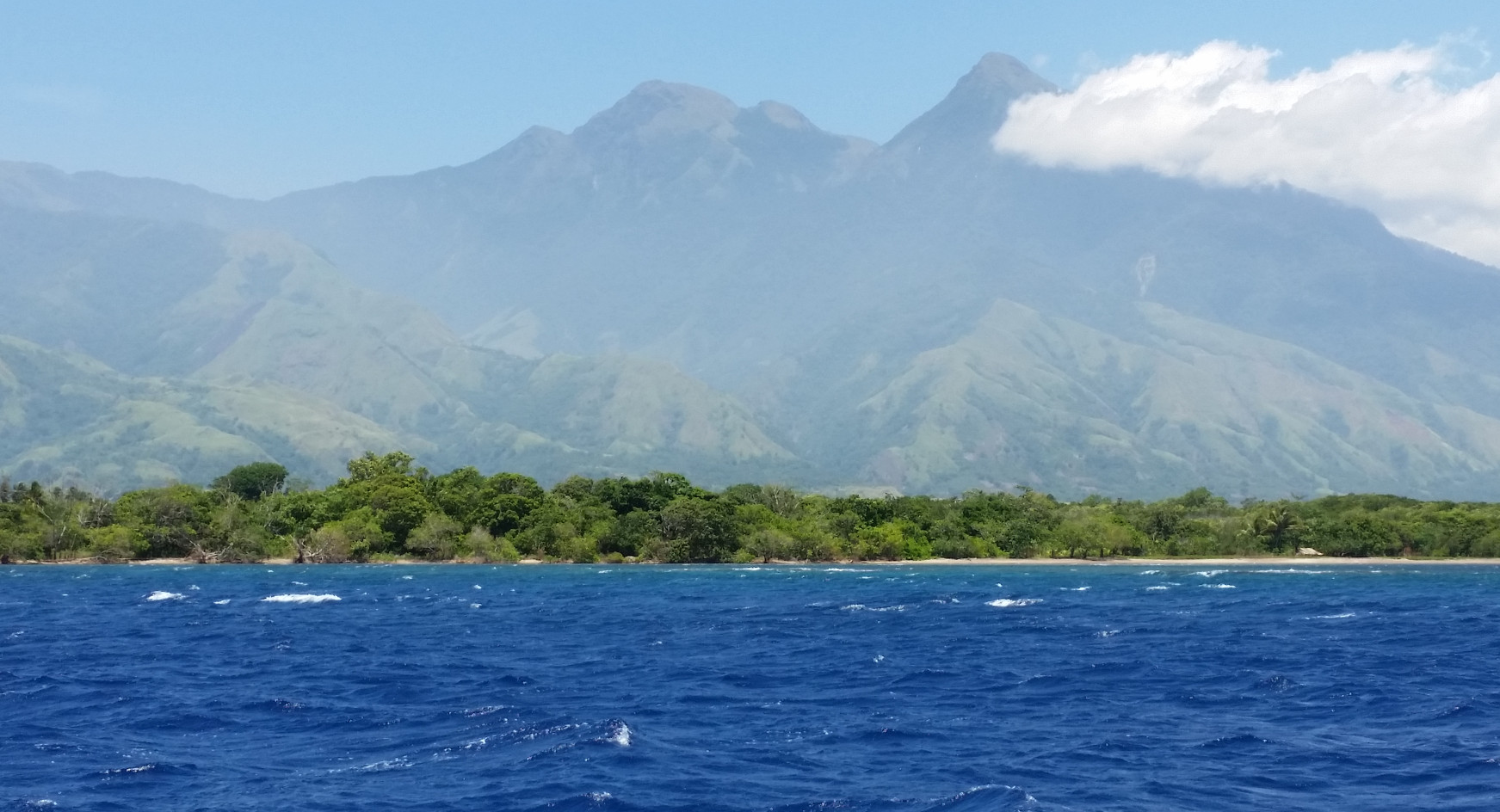
Et quand on passe la pointe Sud-Est, Goodenough apparaît avec sa couronne habituelle de nuages.
On continue à longer les côtes de Fergusson. À 8 h 28 on s'arrête pour déposer des marchandises dans un village.
De là, tout Goodenough est visible.
Tout au long du voyage les marins laissent traîner une ligne de pêche. Notre première prise. Les marins font cuire le poisson avec du riz et partagent avec tous les passagers.
10 h 27. Nouvel arrêt. Nous sommes partis depuis plus de 12 heures, nous devrions être arrivés.
12 h 25. Nouvel arrêt en remontant les côtes de Fergusson vers le Nord.
13 h 20. Nouvel arrêt, puis on part plein Ouest vers Goodenough.
15 h 37. Arrêt à Wagifa une petite île près de Goodenough.
16 h 05. Premier arrêt sur Goodenough. J'arrive à envoyer un mail en captant l'antenne de Fergusson. Ce sera la dernière fois pour la semaine qui vient.
Le capitaine nous explique qu'à cause d'une erreur dans l'ordre de chargement du fret nous devrons livrer les côtes Sud et Ouest de Goodenough avant d'aller vers la côte Est.
On croise la seule pirogue à voile et à balancier que j'ai vu.
On arrive au village natal du capitaine.
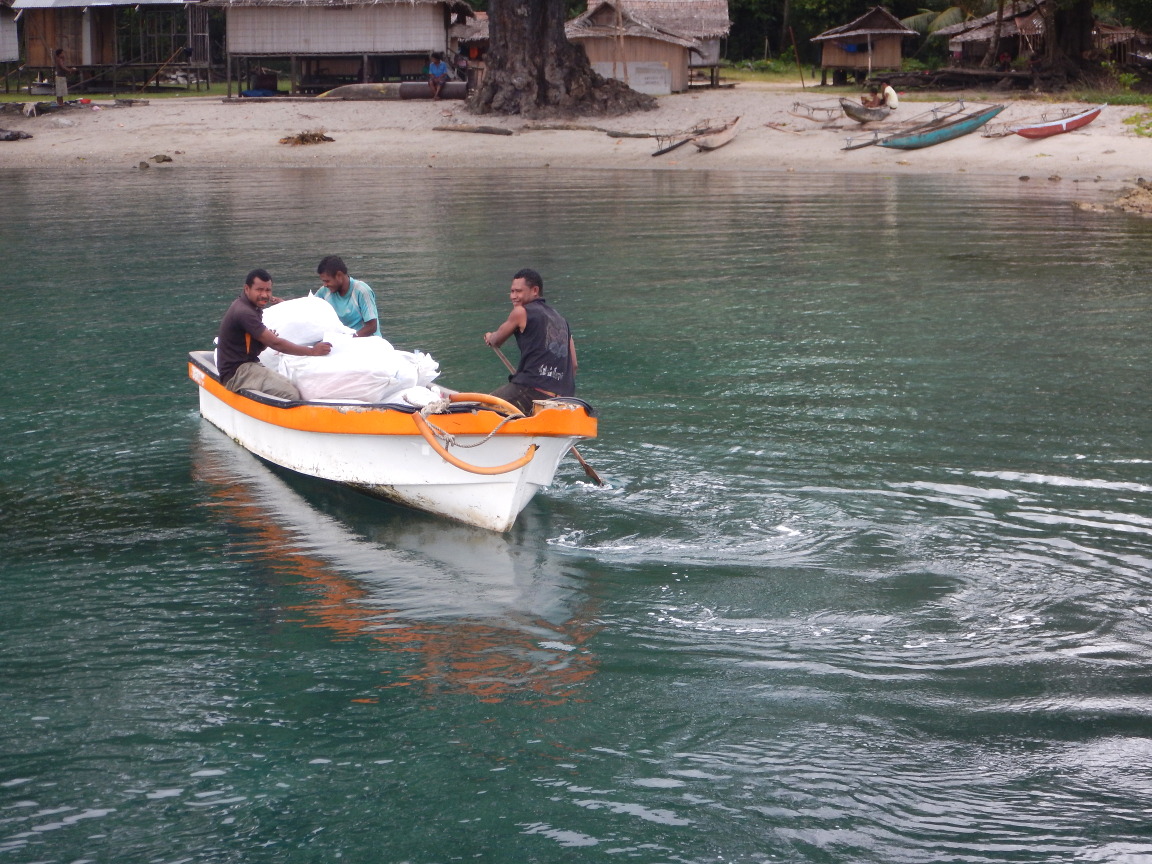
Il propose aux passagers de débarquer. Ils seront pris en charge par sa famille et il les reprendra au retour. Je choisi de rester sur le bateau. L'équipage descend à terre et revient à moitié saoul. À la nuit tombante ( 18 h 30) on part pour l'Ouest. La mer devient forte. Un court circuit dans l'armoire électrique a détruit l'éclairage. Des hommes à la proue surveillent la distance à la côte et la profondeur du fond avec une lampe torche, une spéciale, extrêmement puissante qui éclaire en carré. Je suis avec le capitaine dans la cabine de pilotage. À un moment il éteint son GPS. Je lui demande pourquoi et il répond ça peut nous arriver de nous retrouver sans GPS et sans lumière alors il faut s'entraîner. Il a fait le reste du parcours sans GPS. Comme j'enregistrais la trace sur mon smartphone j'ai pu comparer son trajet de nuit et de jour. Son trajet de nuit a toujours gardé une nette marge de sécurité. Alors bravo. À 20 h 20 On fait une escale à Kiliak, puis deux autres autour de 22 h. Enfin on ancre dans une crique à 23 heures et on dort.
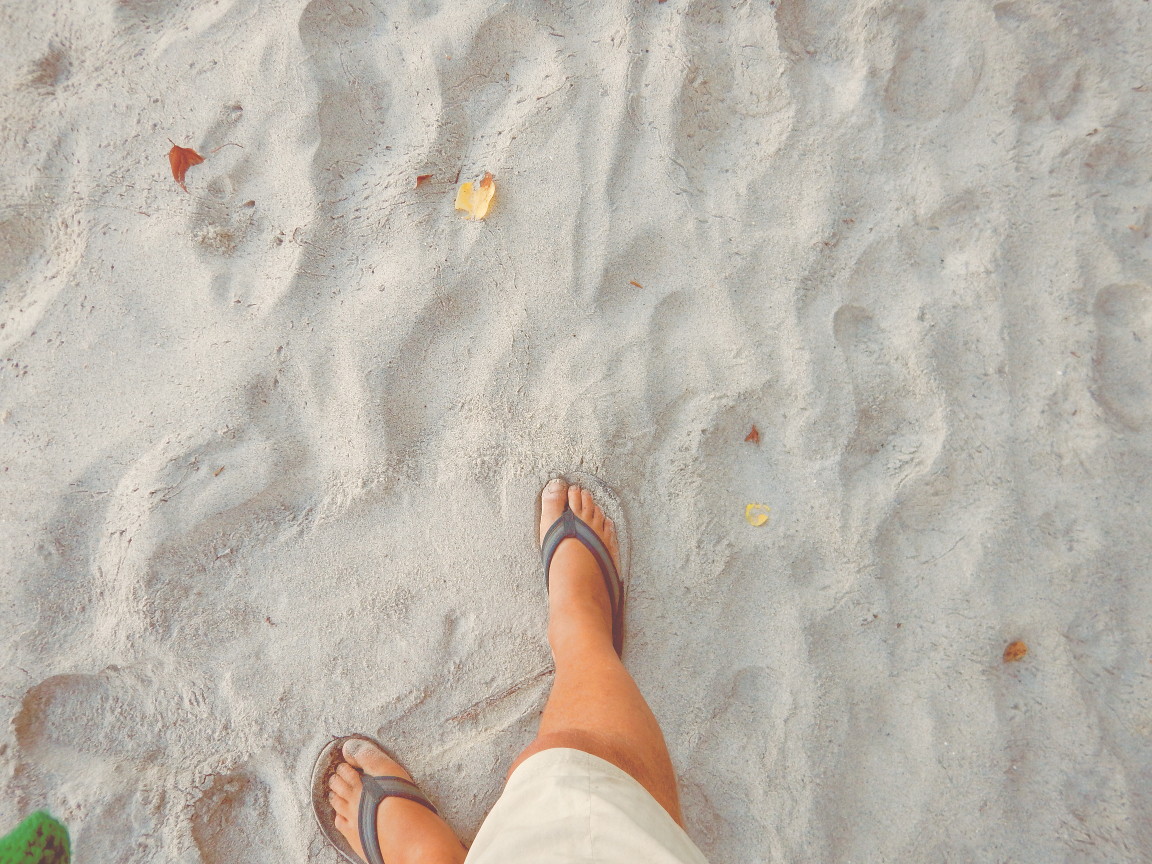
Mes pieds sur le sol de Goodenough. Un petit pas pour l'homme...
À sept heure et demie on lève l'ancre.
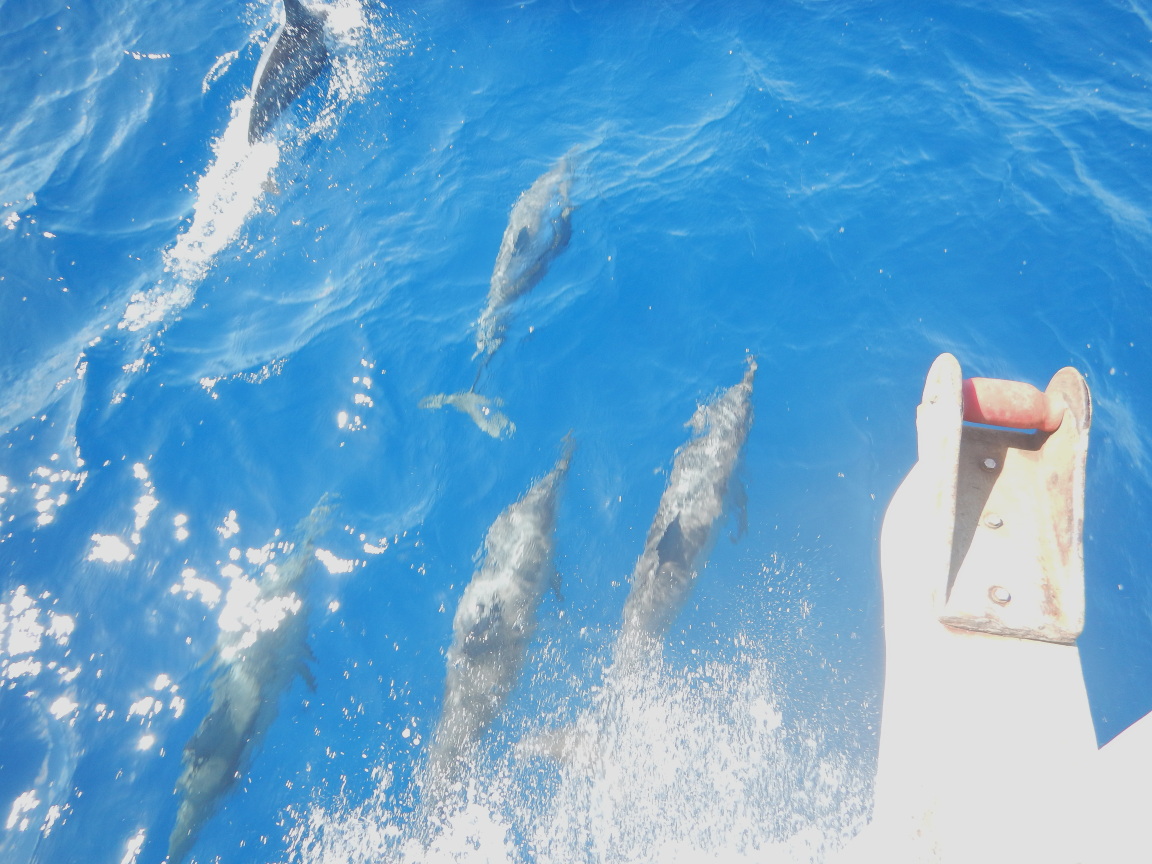
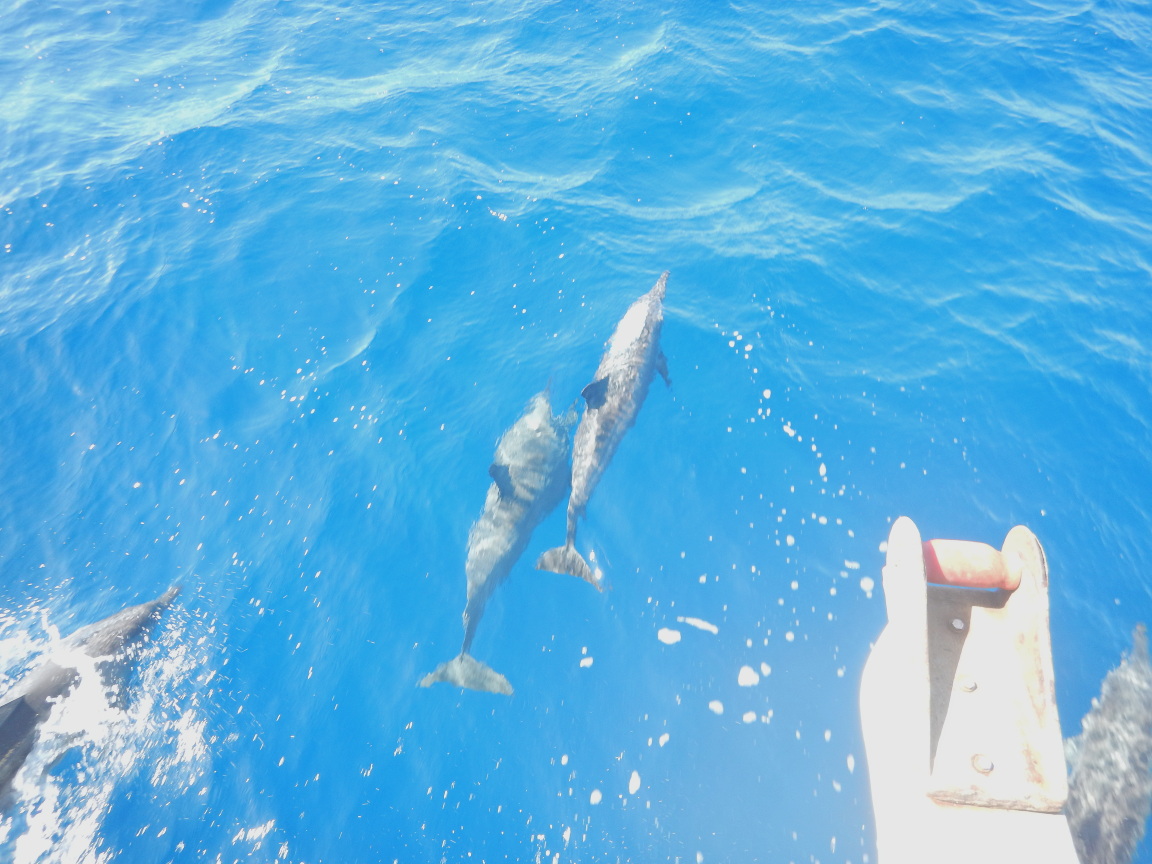
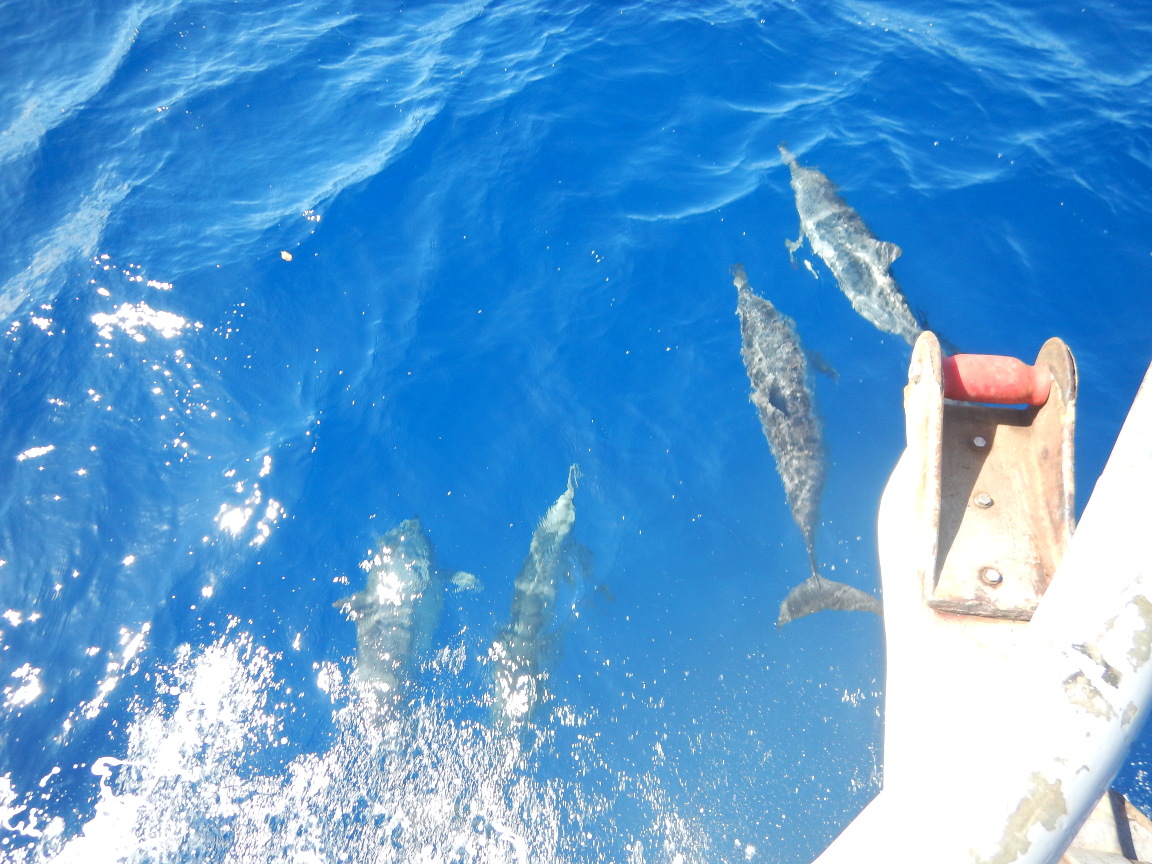
Des dauphins jouent à la proue du bateau.
Petite vidéo de 10 secondes.
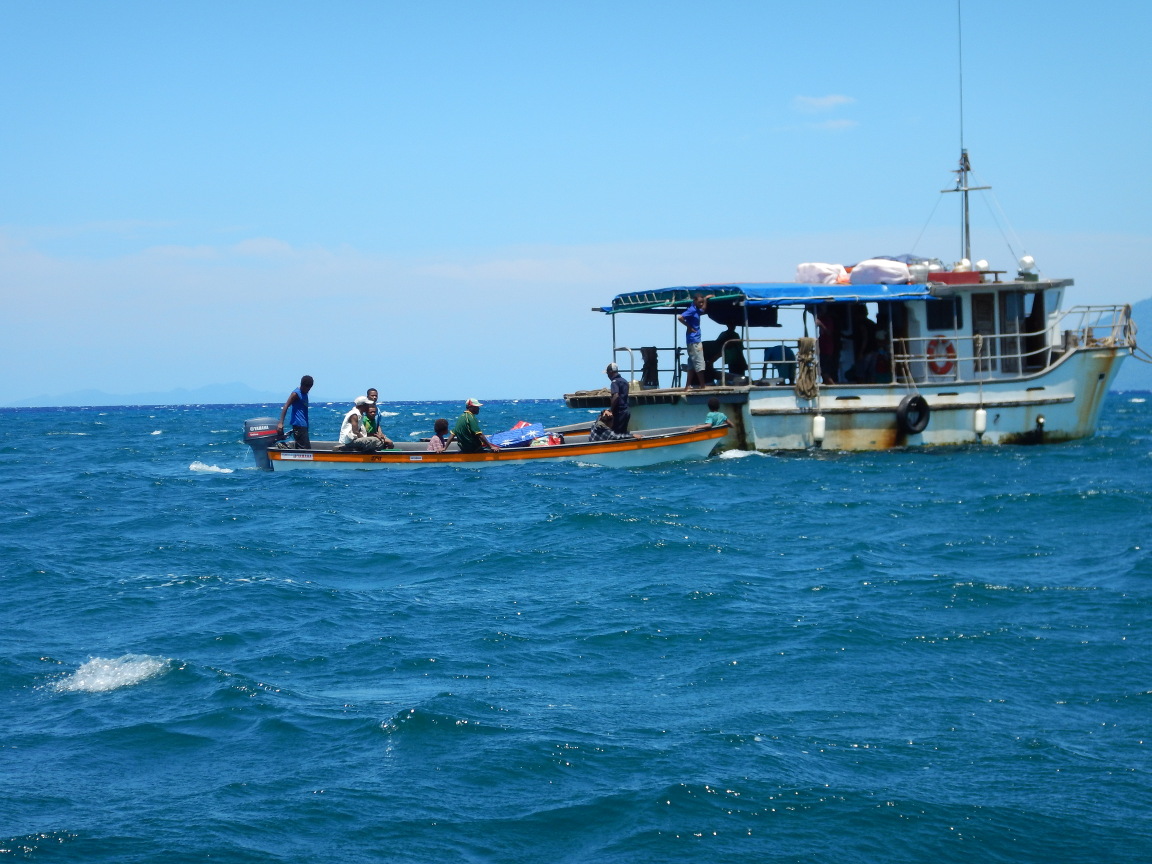
On passe reprendre les passagers et le voyage continue. On cabote le long de toute la côte en direction de l'Est. Huit escales entre 12h et 18h !
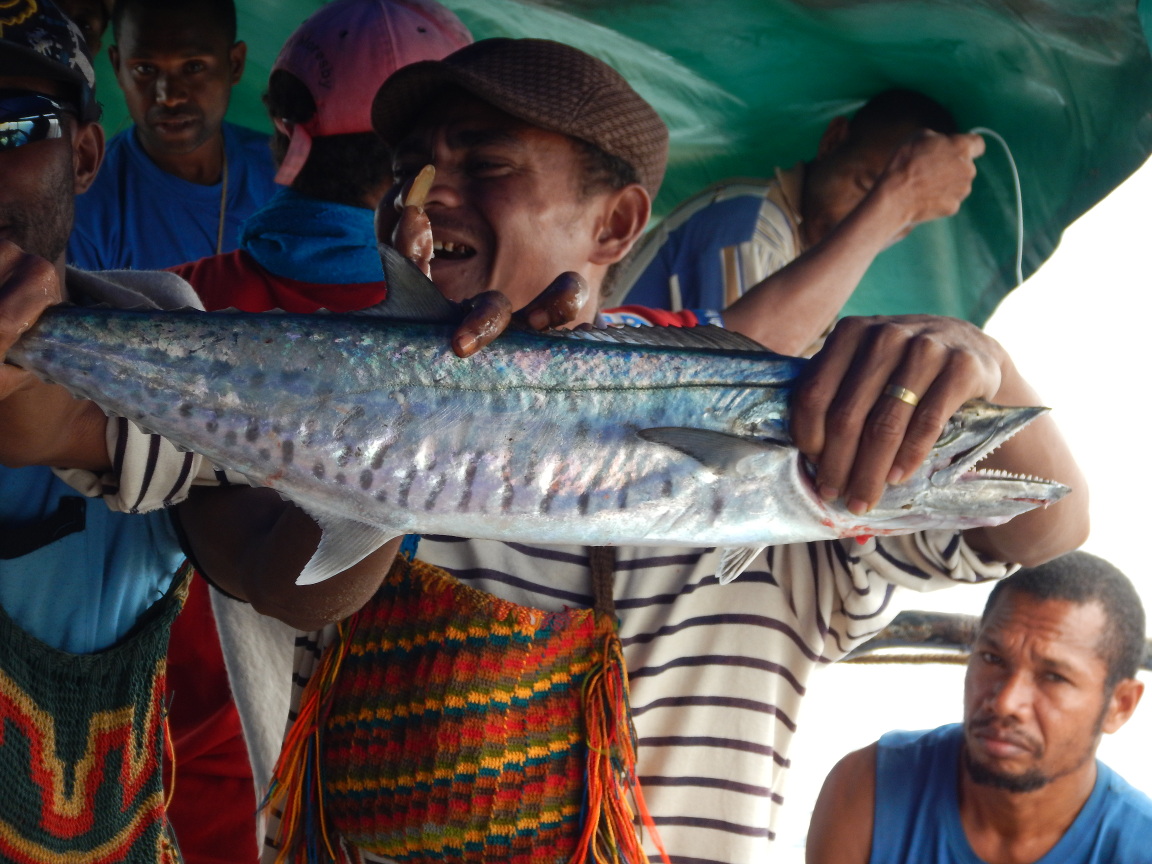
Deux nouvelles prises.
Quand on passe le détroit entre Goodenough et Fergusson on découvre la côte Est de l'île.
À 18 h 30 on jette l'ancre à Bolubolu. Je fais un petit tour dans le village mais impossible de trouver une bière . Nous les avons dans la cale et on déchargera demain. Je n'ai pas envie de marcher de Bolubolu à Wakonai alors je retourne dormir sur le bateau. Demain il va à Vivigani et le chemin pour Wakonai sera plus court.
11h 13, on décharge une maison entière sous forme de planches.
Je descends ici. La piste pour Vivigani est quelques kilomètres plus loin mais le dinghy qui décharge la maison m'y déposera. Je fais mes adieux au Goodenough II.
Déchargement sur la plage avec l'île de Fergusson dans le fond.
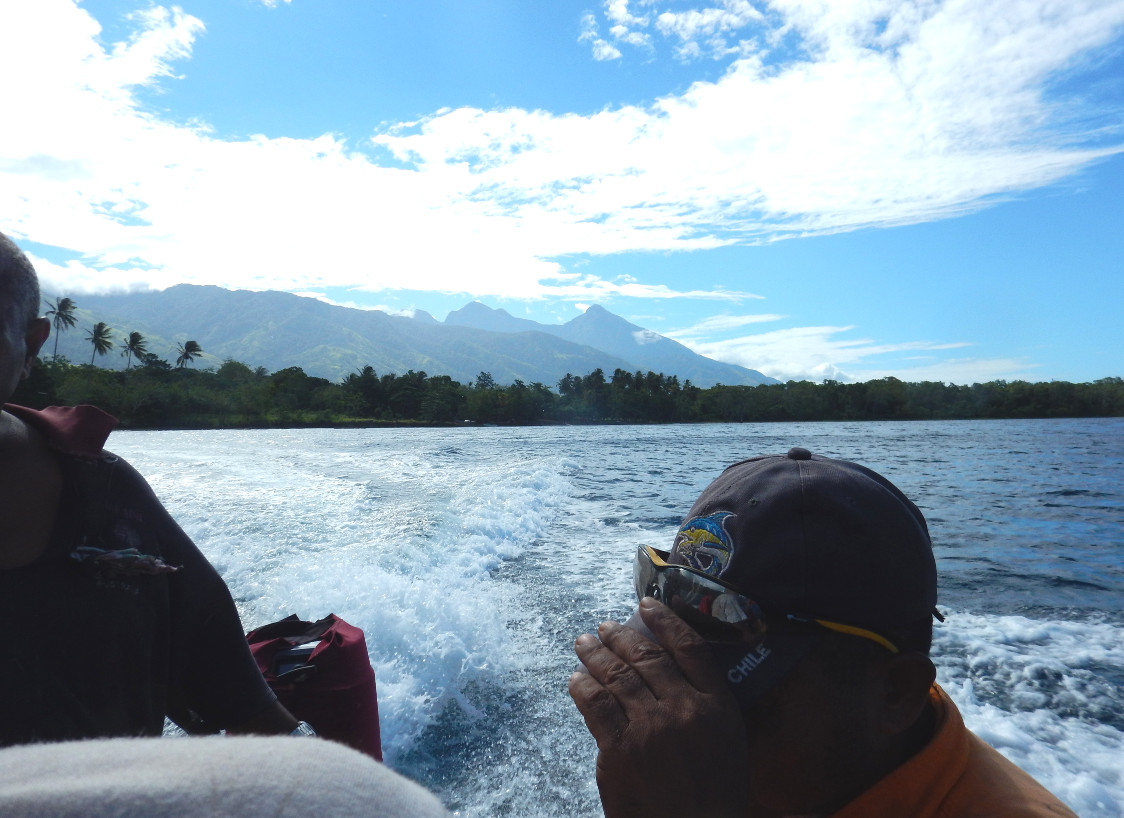
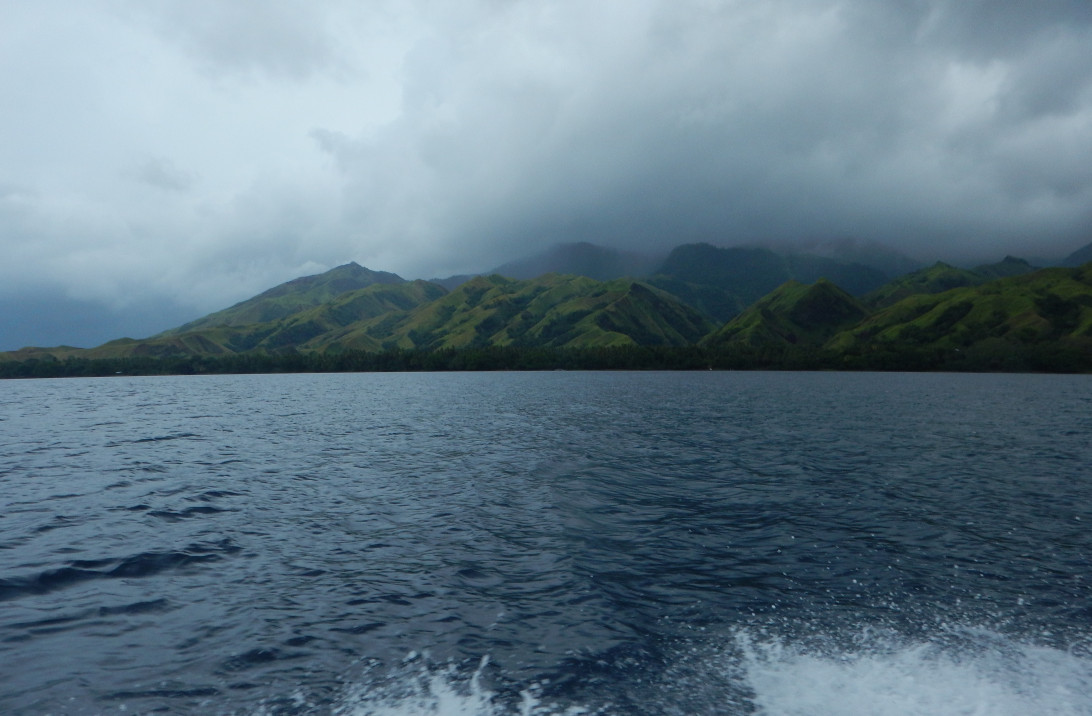
Et on repart pour quelques kilomètres. Vue des montagnes.
On croise un dugong. Pas le temps de sortir l’appareil photo. Il était gros comme une vache, brun roux avec une queue de dauphin. Depuis Alotau j'aurai vu plusieurs vols de poissons volants (exocet), des dauphins et un dugong!
On me dépose au départ de la piste pour l'aérodrome de Vivigani.
Il est 13 heures. Trois jours et trois nuits sur le bateau pour un trajet qui devait durer 12h!!!
Je suis enfin sur cette île qui doit être l'apothéose de ce voyage.
En fait, la forêt ne dure que 150 mètres. Après je traverse une longue clairière de savane herbacée.
Pour arriver à de la savane arborée.
Je passe le poste d'aide sanitaire et atteins l'aérodrome de Vivigani.
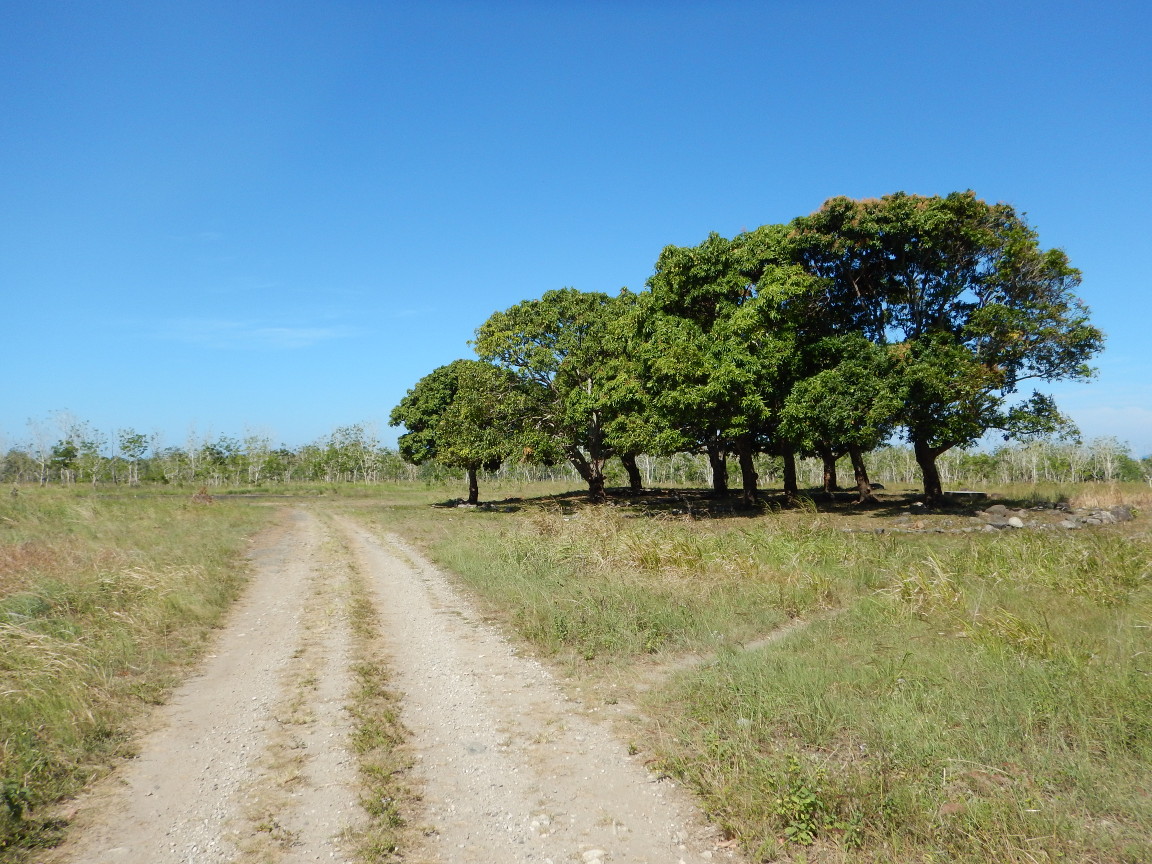
Juste au départ de la piste se trouve un bosquet de manguiersoù se tient le marché hebdomadaire.
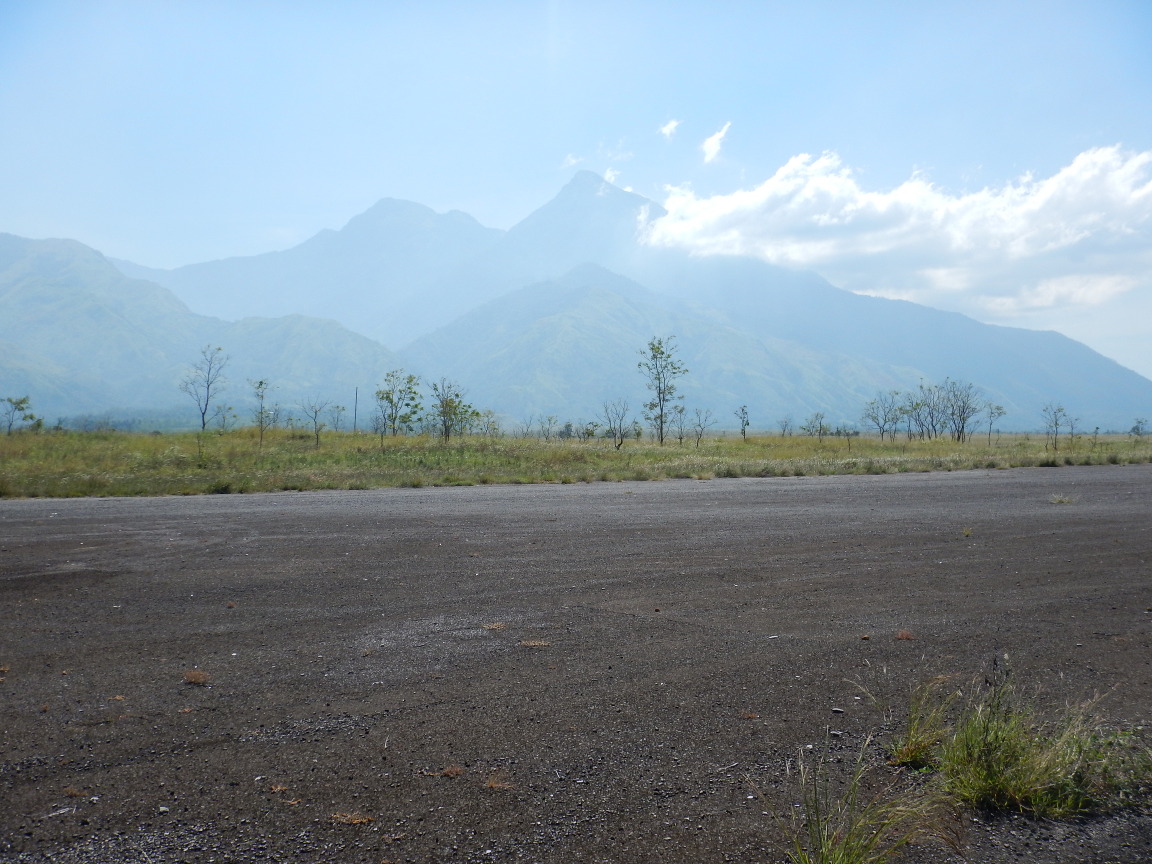
Plus loin, après l'embranchement pour Bolubolu se trouve un tertre en forme de fer à cheval qui doit dater de la deuxième guerre mondiale. Panorama 360° pris du haut de ce tertre.
J'arrive à la première maison de Wakonai. Je demande de l'eau à une femme puis vais me laver à la rivière. J'y rencontre un homme et des enfants avec qui je sympathise. Il m'invite à venir chez lui. C'est la maison où je m'étais arrêté. C'est à sa femme que j'avais demandé de l'eau.
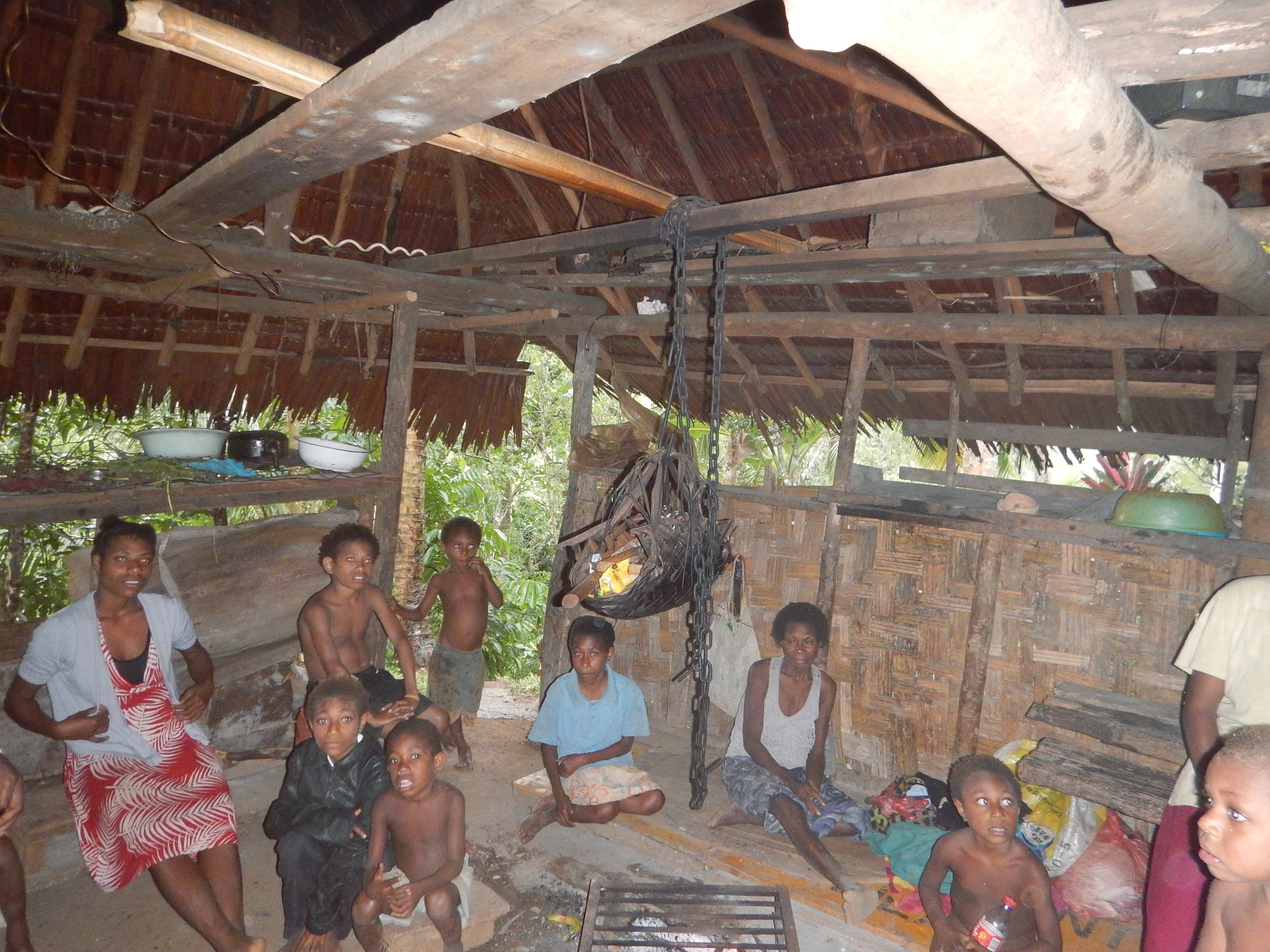
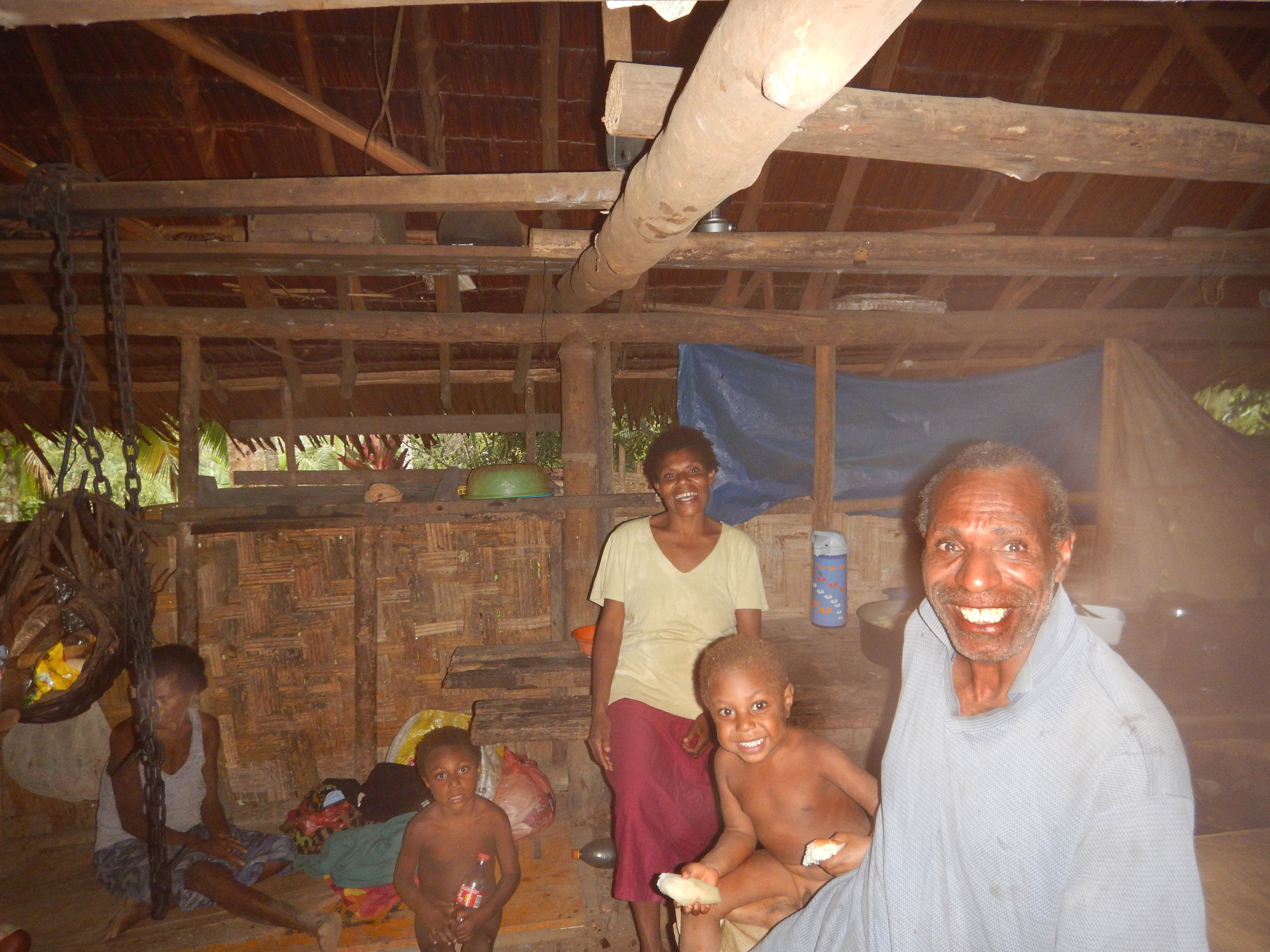
La maison où je vais habiter pendant mon séjour à Wakonai.
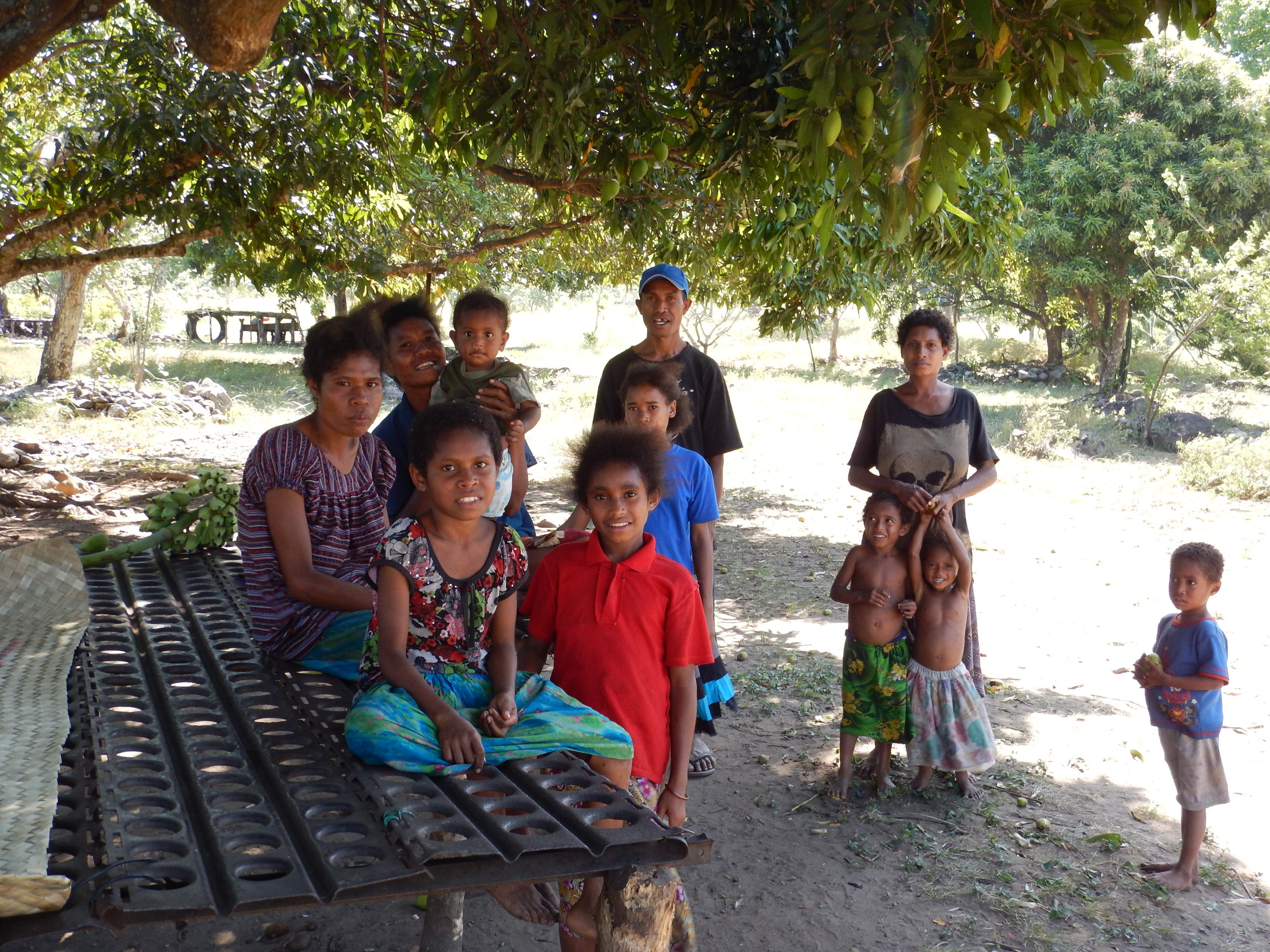
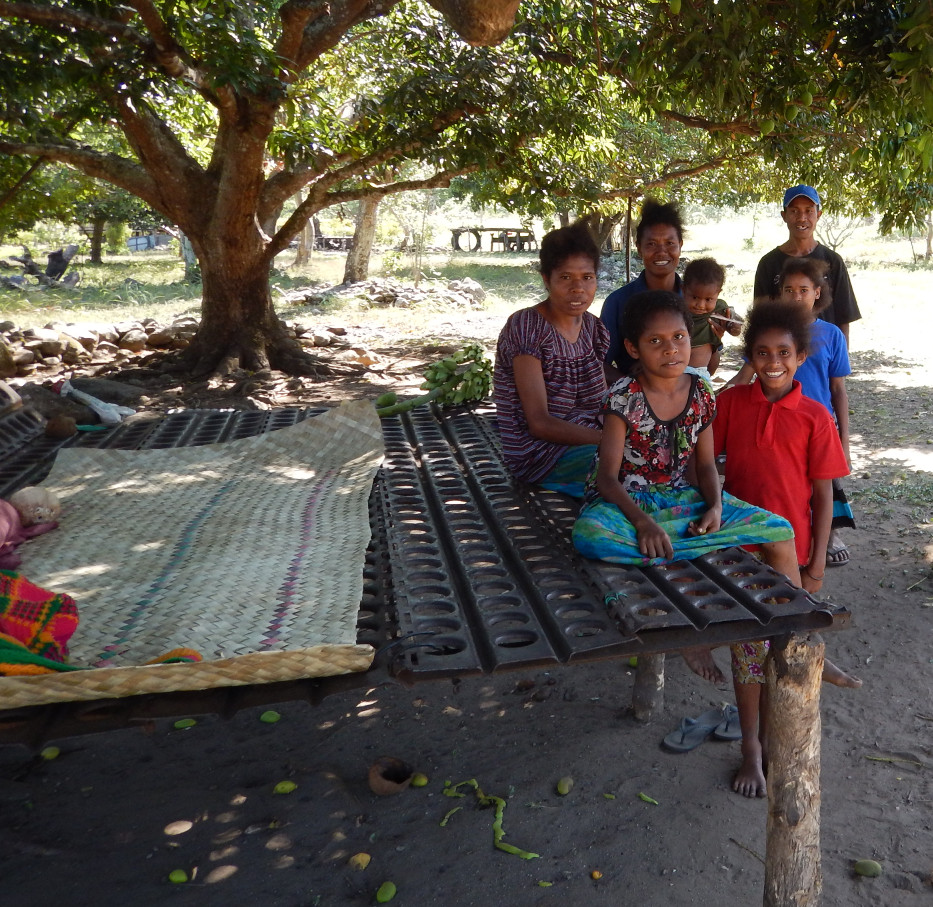
La famille de mes hôtes, Chris et Mispa, debouts à l'arrière plan. De gens adorables.
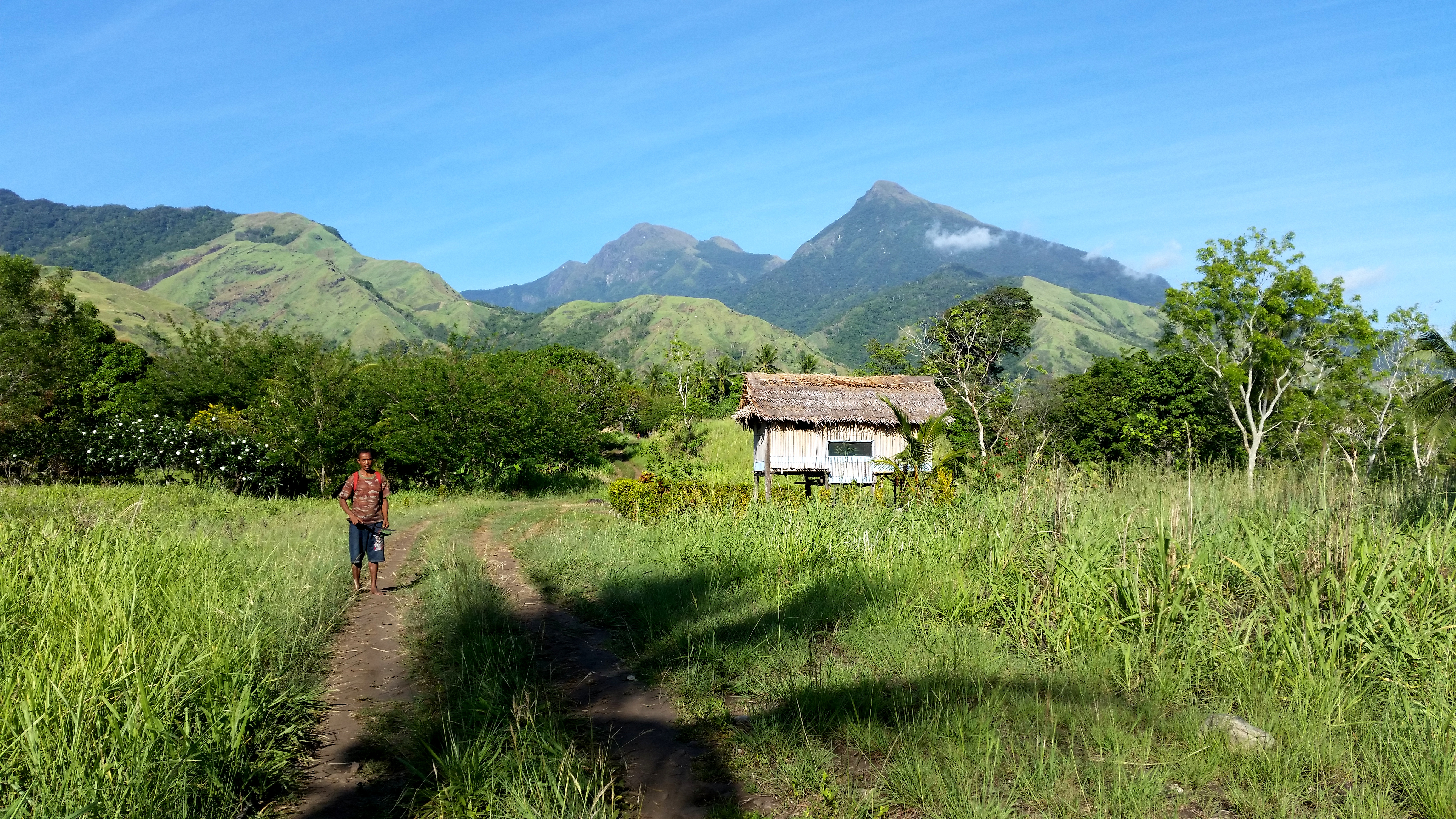
Je suis enfin à Wakonai! Première surprise, le village n'est pas plat. C'est en fait le début de la montagne. La maison de Chris et Mispa est exactement à la limite entre la savane herbacée (à kangourous) totalement plate et le début de la montagne. Deuxième surprise, le village s’étend sur plus d'un kilomètre. Ce n'était pas visible sur les cartes satellites. Demain rencontre avec le chef du village.
7 h 20. On part pour rencontrer le chef dans le village. Mon hôte devant ses belles montagnes pour une fois bien dégagées.
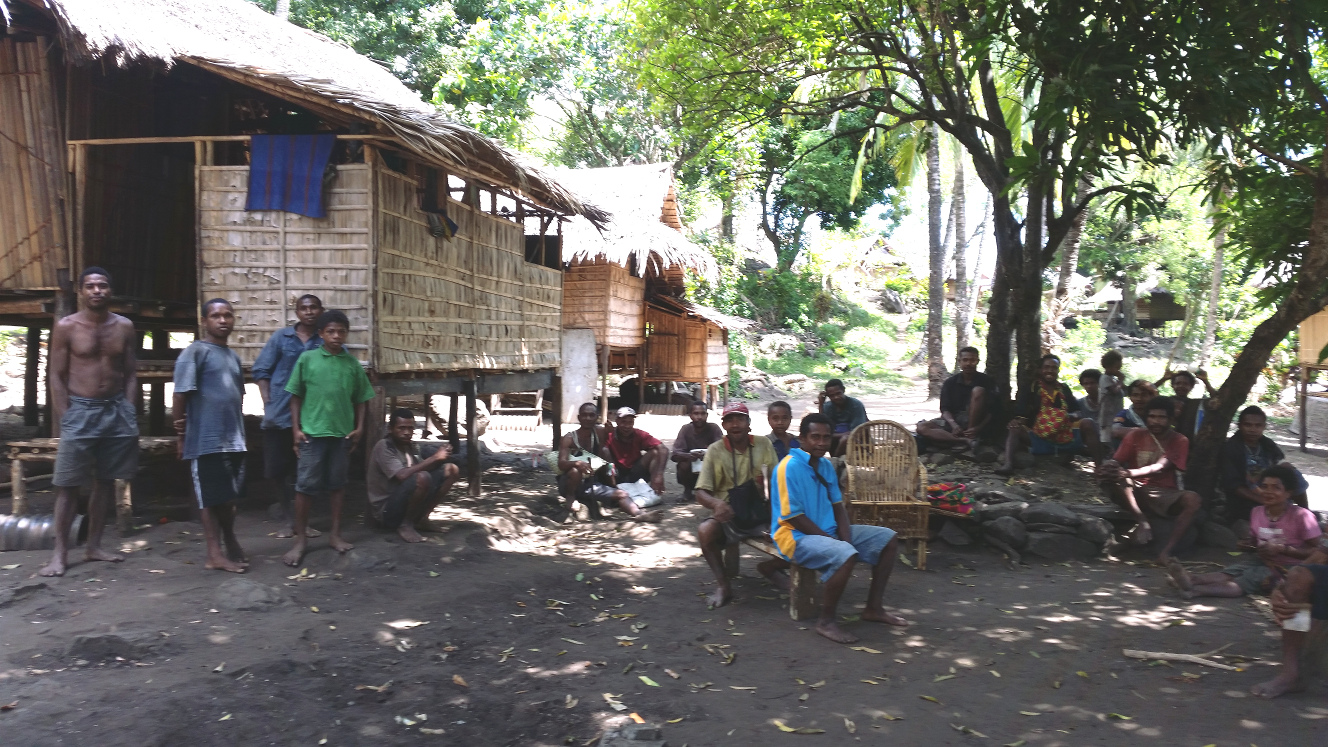
La rencontre avec le chef de village s’avère plutôt être un conseil de village. Le chef du village en T-shirt jaune et casquette rouge. En jaune et bleu le responsable du registre de recensement. On voit aussi mon fauteuil et mon bilum. Photo prise vers le nord.
C'est celui qui est à droite sur cette photo prise par Malcolm Smith durant son expédition à Wakonai en 2000.
Il est cultivateur dans un village de la montagne. J'ai pris rendez-vous pour le lendemain pour le prendre en photo devant un citrus wakonai mais il est retourné dans son village et je ne l'ai pas revu.
La réunion a duré une heure et demie et a principalement été un interrogatoire sur mes motivations pour venir ici et un marchandage autour d'un racket. Personne ne peut venir dans ce village sans donner ses raisons précises. J'ai comme d'habitude dit la vérité, c'était peut-être une erreur. Après avoir dit que je cherchais l'agrume sauvage que les Australiens étaient venu collecter en 2000, le jeune (qui a maintenant 14 ans de plus) se lève et revient 30 secondes plus tard avec une branche et un fruit immature. C'est mon premier contact avec C. wakonai.
Après délibération ils m'annoncent que je peux étudier la plante et avoir autant de graines que je veux pour 300 kinas. Pas de chance je n'ai que 200 kinas (60 €). Re-délibération, ils acceptent 200 Kinas. Plus tard, j'ai appris comment ça marche: Quand on arrive dans ce village on n'est pas autorisé à faire quoi que ce soit sans payer. Pour marcher dans la forêt 500 K. Prendre des plantes en photo 300 K. Prendre des photos d'animaux 400 K. Monter en haut de la montagne 1000 K. Et ainsi de suite...
Évidement pour 200 K je ne serai pas autorisé à aller dans la forêt ou dans la montagne. Je devrai travailler sur les deux plantes qui se trouvent au village.
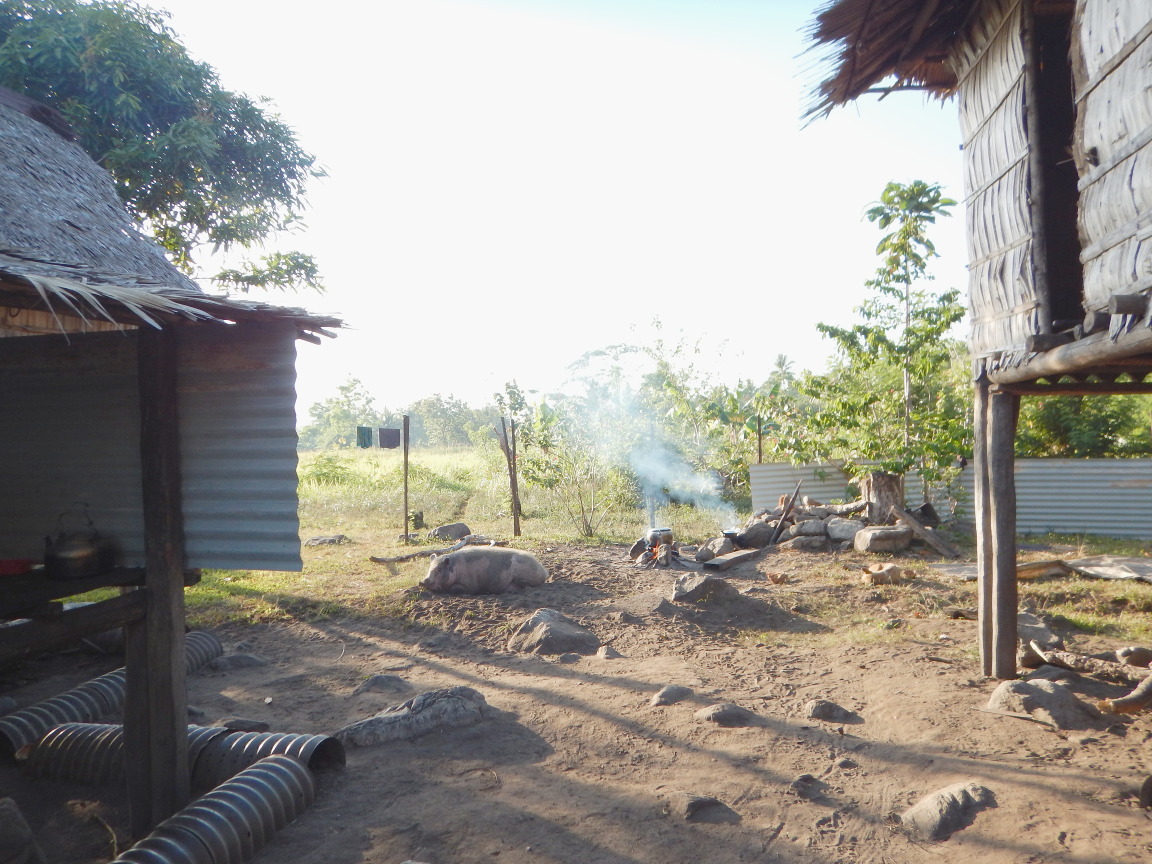
Ils envoient deux jeunes dans la montagne pour rapporter des fruits. Pendant cette réunion, je me blesse le pieds avec un de ces demi-cylindres d'acier qui datent de la guerre.
Sur le retour on passe voir un C. wakonai près de l'école.
Taille approximative 5m.
De retour à la maison, je prends des photos du fruit et de la branche.
Je garderai le fruit le plus longtemps possible pour donner aux graines une chance de mûrir mais quand j'ai ouvert le fruit il n'y avait que deux petites graines et elles n'ont pas germé.
N'aillant plus d'argent pour payer le retour on décide d'aller au village de Vivigani pour rencontrer un propriétaire de dinghy qui doit prochainement aller à Alotau et lui demander s'il peut me prendre et être payé à Alotau après être passé à la banque. Il accepte. Le départ est prévu vendredi 17 aux aurores.
Sur le chemin j'essaie d'envoyer un mail car on me dit que des fois on capte une antenne qui se trouve sur une colline au nord de l'île mais elle n'est en fonction que de temps en temps. En fait le mail partira le 19 quand on approchera de Fergusson.
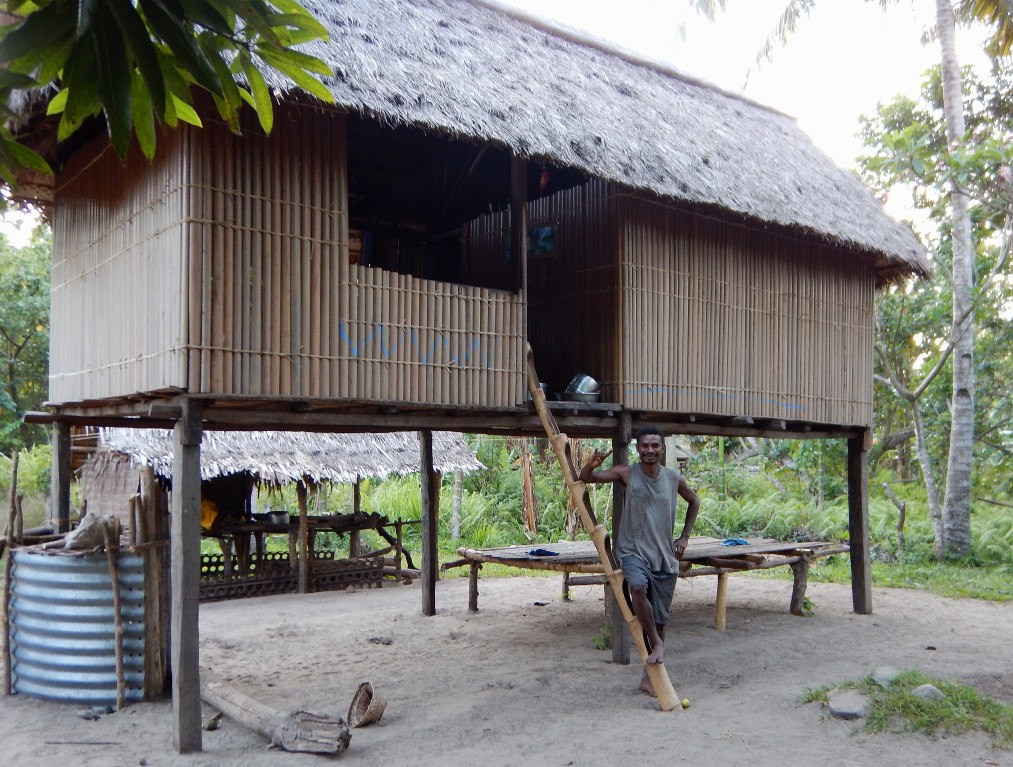
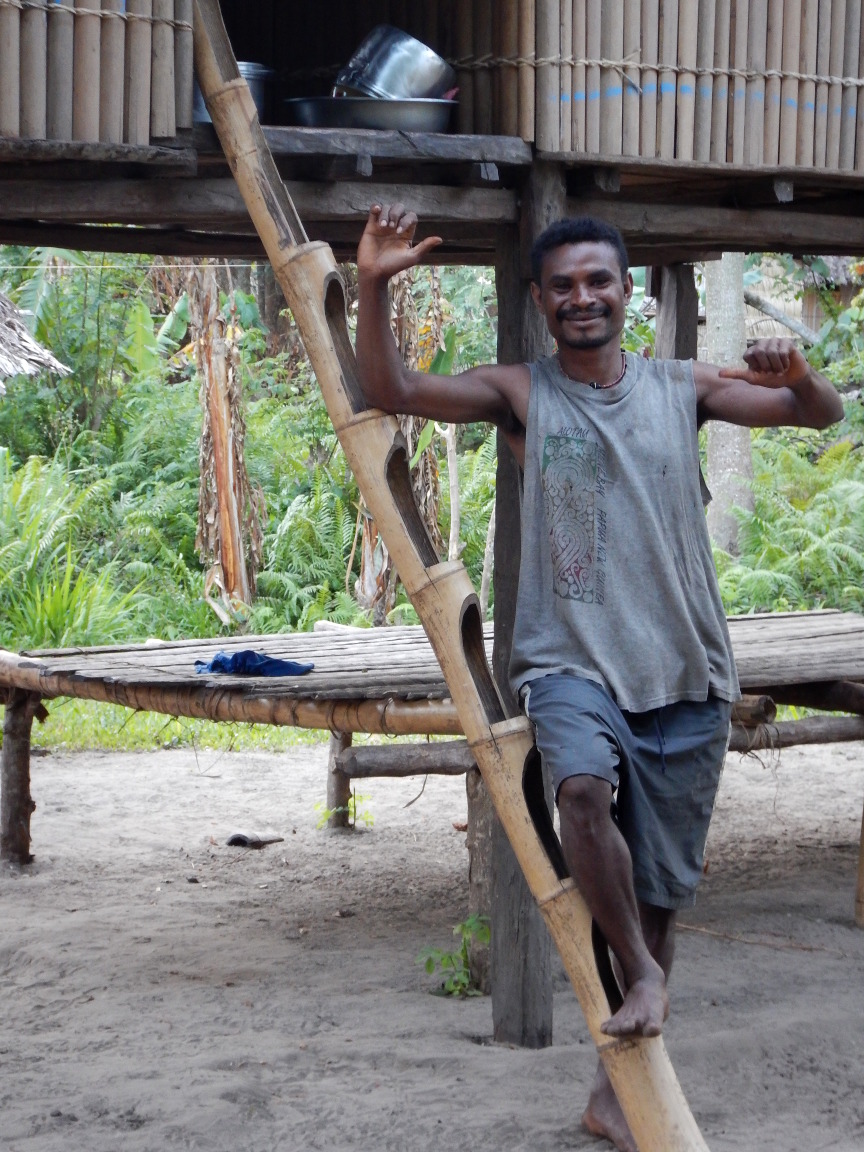
Sur le chemin on trouve une des rares échelle traditionnelle du coin. Toutes les autres sont faites en tôles de désensablage abandonnées après la guerre.
On a mal calculé notre coup et on se retrouve à rentrer de Vivigani par une nuit sans lune et sans lampe. La galère!
Avant de partir étudier les C. wakonai je fais quelques photos à la maison.
Le cochon à sa place préférée.
Une petite fille de la maisonnée.
Et avec sa maman.
Mon poste de travail.
Le C. wakonai du centre du village.
Le même avec un autre appareil photo. La balance des blanc est meilleur.
Hauteur approximativement 3 m.
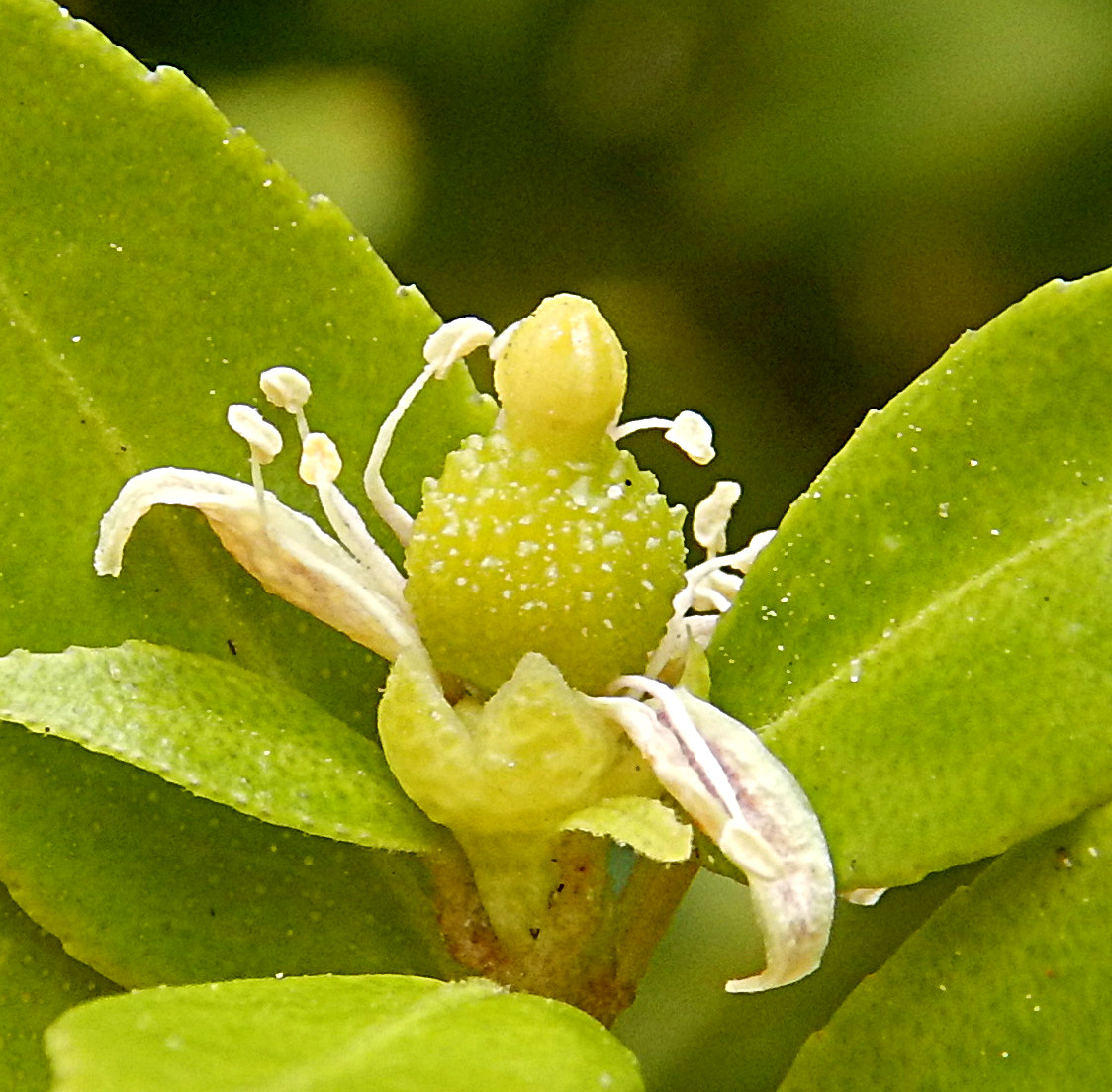
Fleur avant épanouissement.
Fleur ouverte.
Sans les pétales. Les filets d'étamines sont cylindriques et non soudés. Traces de pourpre. 20 étamines.
Les étamines forment un Z dans leur partie supérieure.
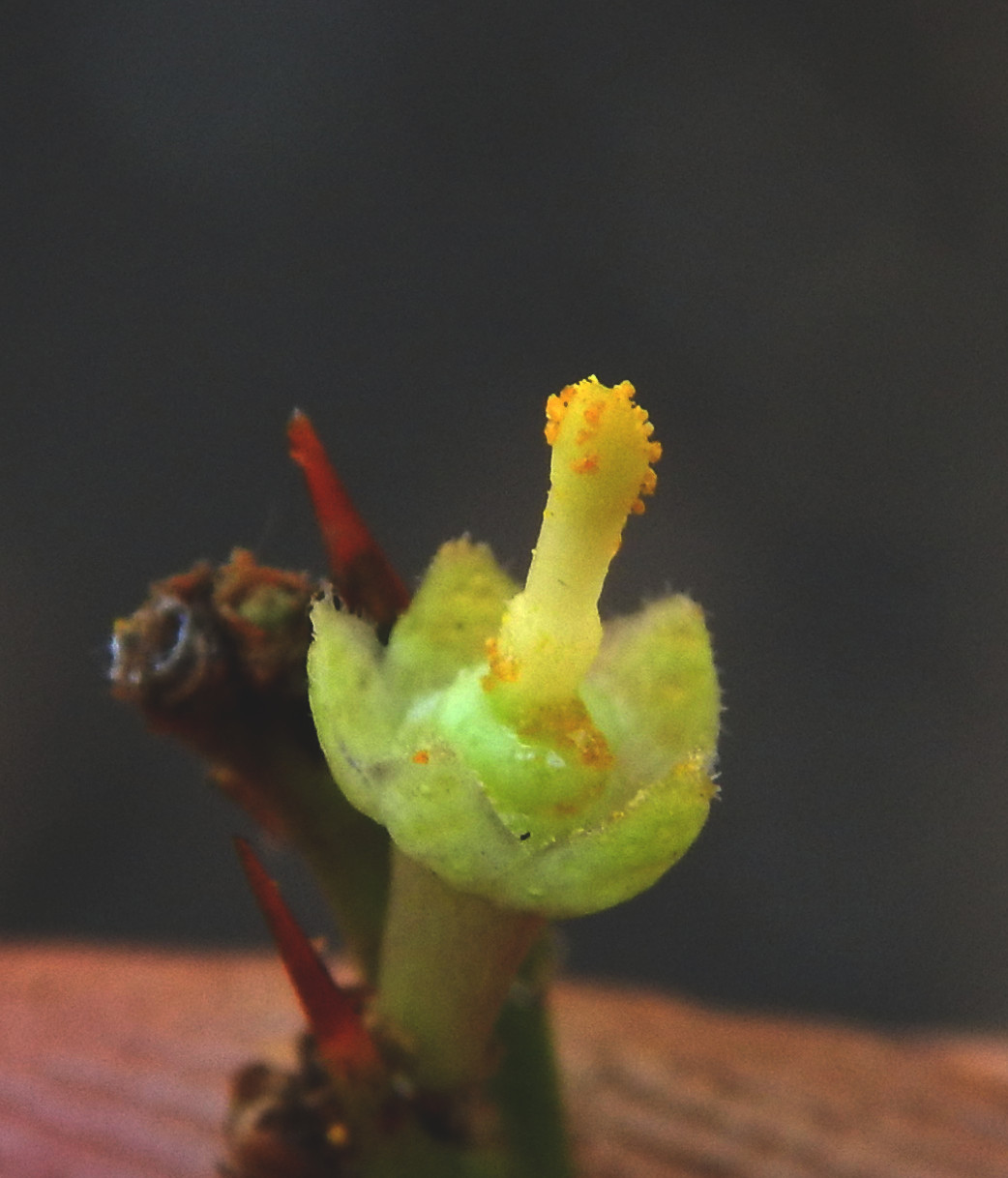
Et sans les étamines. L'ovaire n'est pas formé mais c'est une fleur hors saison.
Le pollen sur les lignes collantes montrent bien la structure pentamère du stigmate.
Les feuilles.
Le tronc.
Avec Dominique le jeune frère de Chris nous allons ensuite à l'école pour retrouver l'instituteur. Il est contre le palmier.
Nous descendons vers l'est pour rejoindre le deuxième C. wakonai du village.
Kenegabu Artson est maintenant instituteur à la Galuwata Elementary School de Wakonai.
C'est le deuxième guide qui a permis à Malcom Smith et Lionel Smith en septembre 2000 de trouver le C. wakonai.
Il est à gauche sur la photo:
Il a maintenant un fils d'une dizaine d'années et comme j'avais cette photo dans mon smartphone il a été très fier de lui montrer à quoi il ressemblait quatorze ans plus tôt quand qu'il portait la barbe.
Les étamines deviennent blanches en fin de floraison.
Un pistil bien formé. On note la surface bosselée de l'ovaire et la quasi absence de style.
La longueur du style étant une des principales causes de la stérilité, on peut imaginer que le style très court intervient dans l'aptitude à se croiser facilement.
Dominique tenant une branche de C. wakonai.
En retournant vers la maison je prends quelques photos dans le village.
Le matin, on a appris que les jeunes qui étaient partis chercher des fruits dans la montagne n'en ont pas trouvés. Les plants étaient tous en fleur. Kenegabu nous explique qu'ils ne peuvent pas être allé au bon endroit en une demie journée, que pour y aller il faut une journée entière. Ils sont allés à une colline proche qui comporte quelques plantes mais pas dans le biotope d'origine (forêt humide). Il se serait proposé pour aller dans la montagne chercher des fruits mais il n'est libre que le week-end vu qu'il est instituteur. Dominique se propose d'y aller demain. Pendant un bon quart d'heure Kenegabu va expliquer à Dominique l’endroit où se trouvent les C. wakonai.
Revenus au village je vais pour marchander le contrat car il n'y a pas de graines. Le chef de village est absent je marchande donc avec le responsable du recensement. 200 K étant pour des graines et l'étude de la plante je dis que comme je n'ai pas de graines je veux payer 100 K. Il accepte gentiment et encaisse les 100 K. Mon calcul est simple: il me reste 100 K, il faut payer 80 K pour aller à East Cape puis 7 K pour le PMV pour rejoindre Alotau. Il me reste donc 13 K, approximativement 4 €uros. Je décide donc d'aller faire des courses pour mes hôtes. La seule boutique du coin se trouve près de la piste Vivigani-Bolubolu (-9.318666, 150.319654). Je ne peux pas prendre grand chose mais le commerçant avec qui j'avais sympathisé sur le bateau me fait des remises... Une petite bouteille d'huile, du riz et quelques autres broutilles. Partout où je suis allé j'ai acheté des choses utiles pour mes hôtes, c'est la première fois que je ne peux pas. Le geste n'est que symbolique. On rentre dans la nuit mais cette fois je n'ai pas oublié ma lampe frontale.
Dominique part pour la montagne. Les C. wakonai se trouvent principalement dans le rond rouge sur la photo suivante. Il transmettra les fruits soit à Bolubolu soit à Alotau.
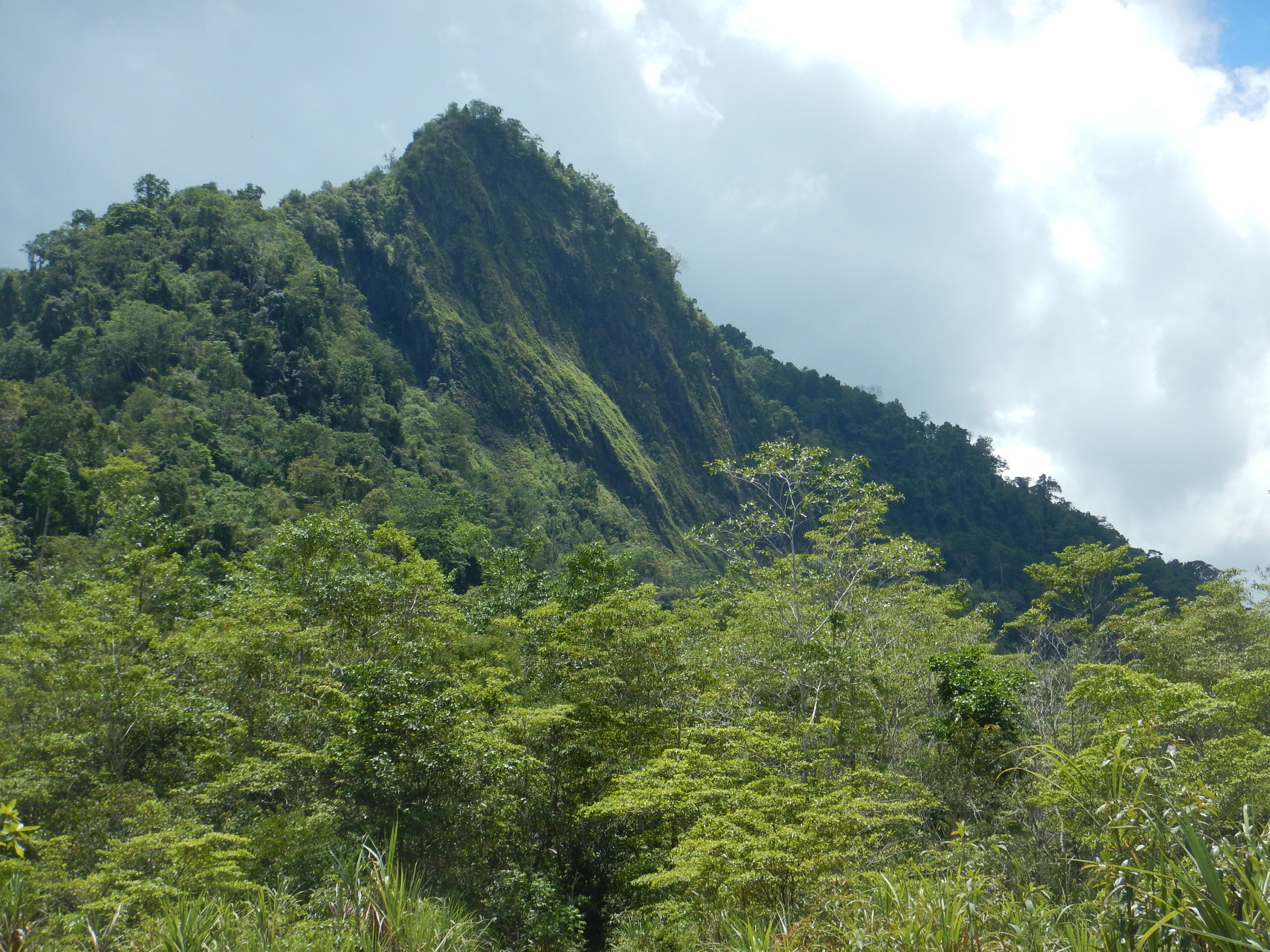
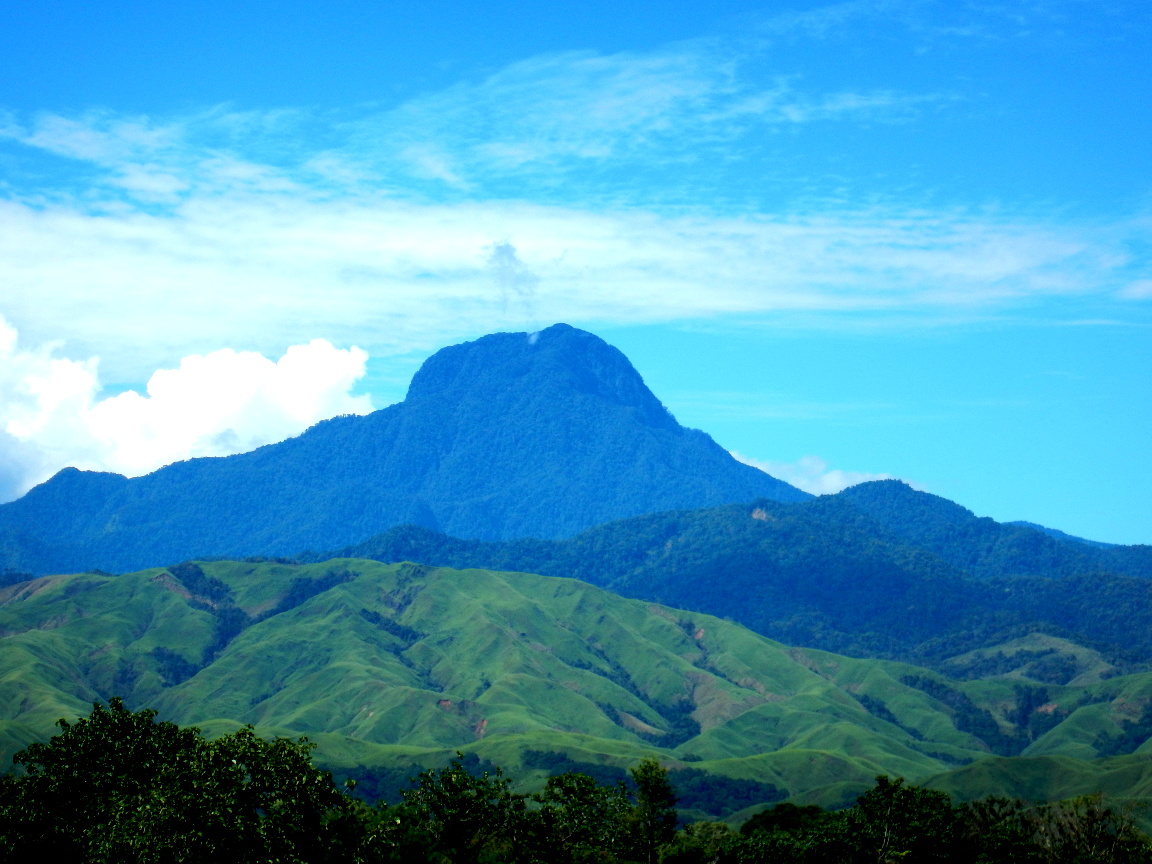
Les deux montagnes font 2500 m et 2300 m.
Je pars aux aurores pour Vivigani, prendre le Dinghy pour rentrer.
Le dinghy et son pilote sont bien au rendez-vous sur la plage mais il est seul. Les autres passager ont fait faux bond. Voyage annulé. Je rentre à Wakonai pour attendre Dominique.
En m'asseyant sur cette plateforme avec une mangue dans une main et mon couteau dans l'autre, je me plante le couteau dans le mollet droit. Il est temps de quitter cet endroit!
Le soir, arrive le chef de village qui commence à me crier dessus. Il veut ses 200 Kinas et dit que le responsable du cahier de recensement n'avait pas le droit d'accepter le nouveau marché. Il me menace de prévenir le commissaire de police de Bolubolu. J'essaye de lui expliquer que je n'avais plus les 200 K. Il se met encore plus en colère et accuse mon hôte de me faire payer le logement et de garder l'argent pour lui. Là il commence à m'énerver. Je lui explique qu'à cause de lui je n'ai pu dépenser que 13 K pour mes hôtes et qu'on ne peut pas appeler ça du profit! il me traite de menteur. Mon hôte dit que c'est la vérité. Les villageois qui commencent à se regrouper autour de nous prennent le chef à parti. Il disent que Chris ne ment pas car c'est un bon chrétien (le matin et le soir je l'entends faire ses prières). Sentant le vent tourner le chef part, disant que demain matin il viendra s'excuser. Pourquoi demain? Je ne comprends pas.
Dans la nuit Dominique rentre de la montagne. Il n'as pas trouvé de fruit. Les arbres sont tous en fleurs.
Samedi 18 octobre.
Le matin, je me blesse le pied gauche avec un morceau de noix de coco qui trainait dans l'herbe. C'est une malédiction. Le chef arrive avec le responsable du livre de recensement. Le chef ne s'excuse absolument pas et le responsable du recensement - c'est un jeune qui jusqu'à présent était sympathique - se met à me traiter de tous les noms tout en terminant en disant qu'ils acceptent le marché. Son discours m'a paru faux comme si il jouait la comédie. Je pense qu'il a fait ça pour se rattraper face au chef du village. En tout cas je sais une chose, c'est qu'il faut que je quitte ce lieu le plus vite possible. Cet après midi un 4x4 doit venir de Bolubolu pour faire le plein de vivres pour un stage de formation des nouveaux instituteurs de la région. Je vais les attendre et essayer de partir avec eux. À l'aller j'avais sympathisé et mangé avec l'inspecteur général responsable de ce stage. On avait passé une heure à parler de pédagogie.
Pour ce voyage j'ai apporté des stocks de stylo-bille, de rasoirs et d'antalgiques, c'est ce qui est très demandé en Afrique. Ici il s'est avéré que les antalgiques sont très peu demandés car la médecine de premier niveau est très bien assurée. Vu la réception dans ce village j'avais décidé que je ne donnerai rien, mais plus tard je me suis dit que les enfants n'étaient pas responsables de le bêtise de leurs parents et j'ai donné les stylos pour l'école et des rasoirs à ceux qui avaient été sympathiques. Hier, je me suis aperçu que mon hammac-moustiquaire avait disparu. Il est vraiment temps de partir.
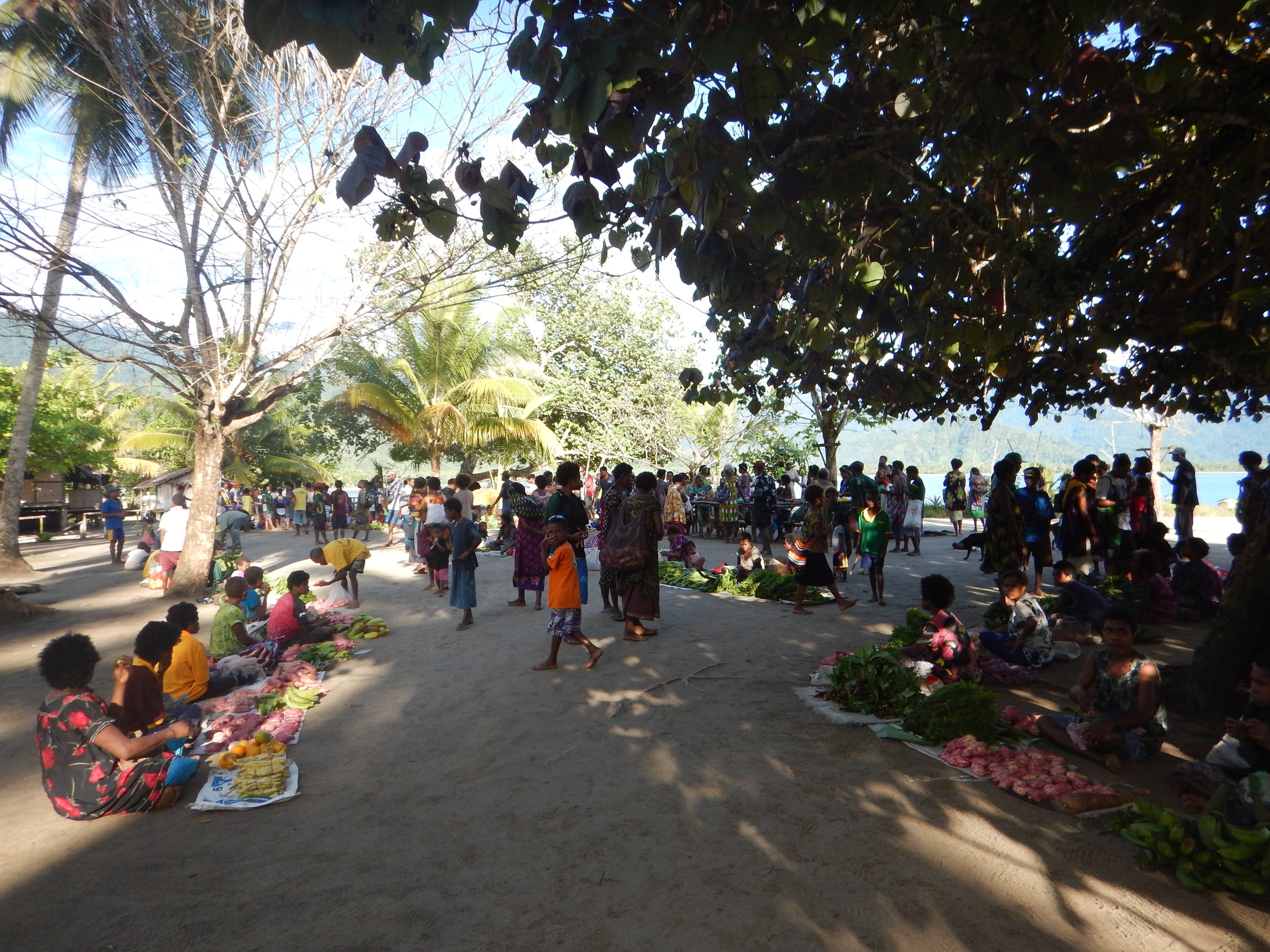
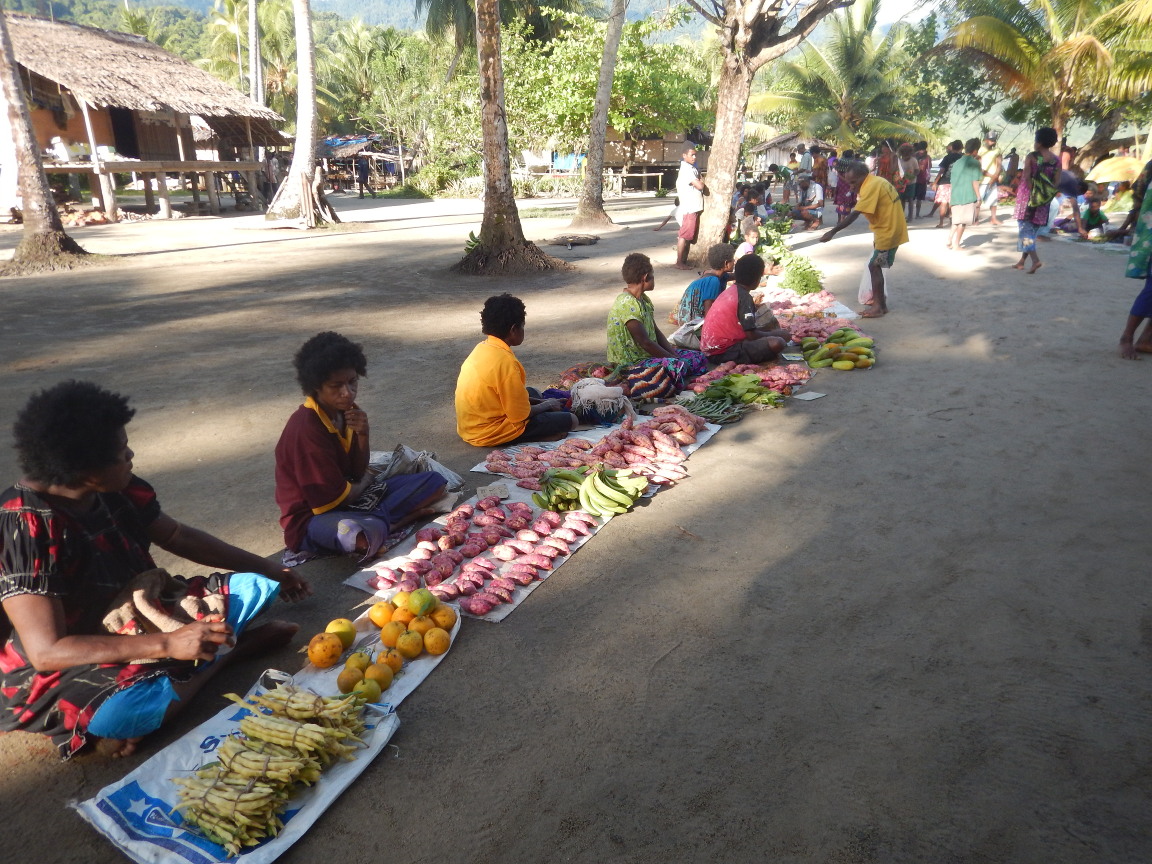
Aujourd'hui c'est le jour de marché. Ça me distrait un peu. Il se passe sous le bosquet de manguiers au bout de la piste d'atterrissage.
Je fais des photos de la famille et de la maison et j'attends le pick-up. Quand il arrive , il est plein, mais je les supplie de me prendre. Je monte entre les régimes de bananes et les autres passagers. Quelques mots d'adieux à ma famille d'accueil et je suis (enfin) parti. Derniers regard sur les montagnes.
Et c'est Bolubolu.
Je passe le reste de la journée sous la pluie à attendre une occasion pour Alotau. À la nuit je m'éloigne des gens et des maisons et je m'installe pour la nuit sous un arbre dans les hautes herbes derrière le terrain de sport.
Pendant que je plie le bivouac un jeune vient m'inviter à prendre le petit déjeuner chez lui et il me montre la maison bleue à 100 mètres. J'accepte et il repart. Quand j'arrive à la maison bleue je suis accueilli par un homme très poli et sympathique. Un très beau déjeuner est prêt. Il m'invite à m'assoir et dit: Pour être honnête, il faut que je me présente,je suis le commissaire de police de Bolubolu et il me montre sa carte. J'avais bivouaqué à 100 m de sa maison.  Il me demande alors comment ça s'est passé à Wakonai. Je lui raconte l'histoire. Il est catastrophé et me dit de ne pas tenir compte de ce qui s'est passé pour juger la Papouasie, que ces gens sont des idiots qui voient un blanc tous les dix ans. Puis on parle d'autres choses. En parlant du C. wakonai il dit que s'il y en a là bas il doit y en avoir aussi près de Bolubolu. Il demande à voir les photos et les descriptions. Il dit qu'il va le faire rechercher et le planter à Bolubolu, comme ça si quelqu'un d'autre le cherche il n'aura pas à aller à Wakonai.
Voilà, la grosse menace du chef de Wakonai s'avère être la personne la plus sympathique que j'ai rencontrée sur l'île.
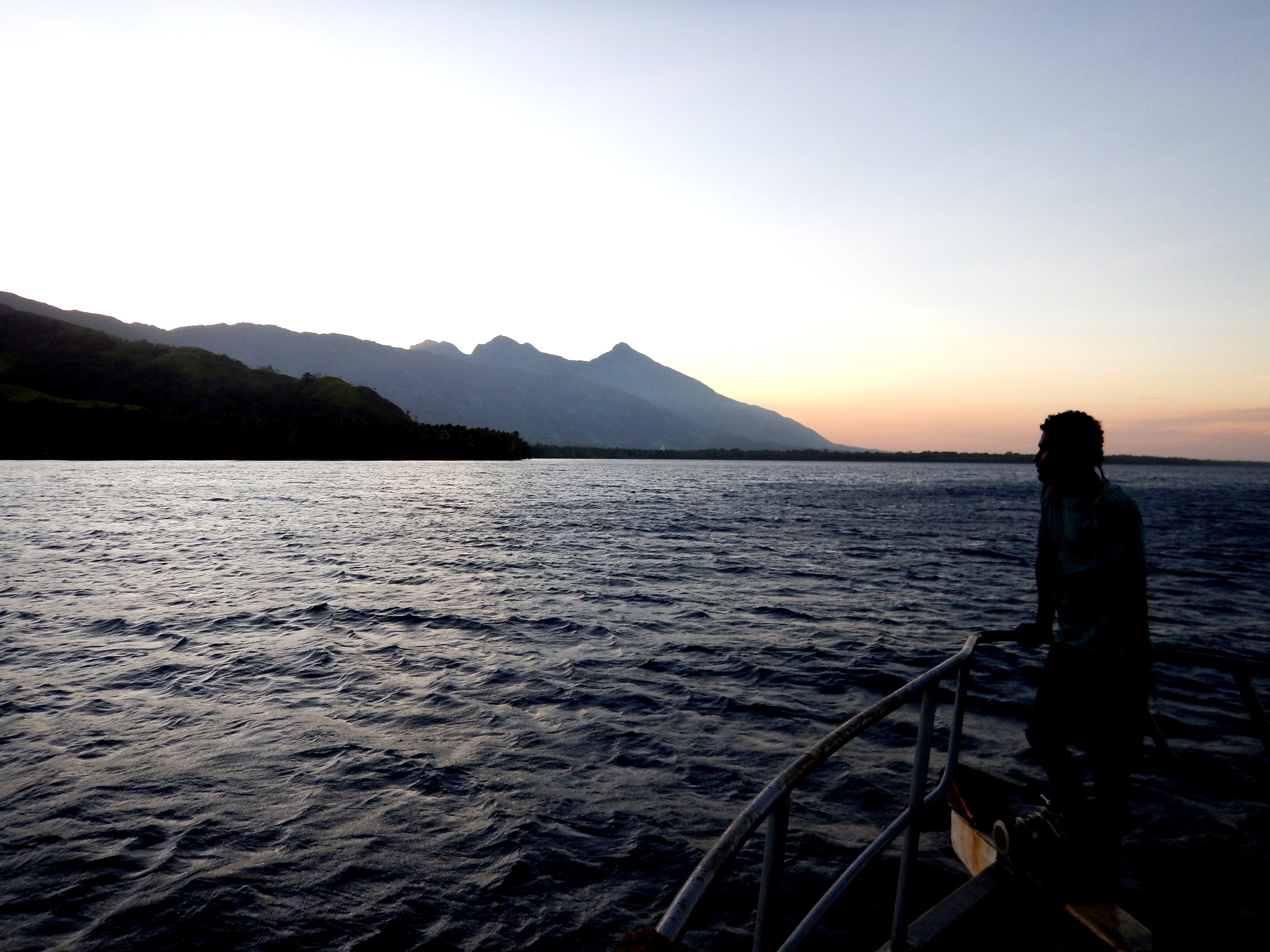
Je retourne attendre au "port". À trois heures je trouve un dinghy qui part pour Alotau. Le voyage doit durer trois heures. Dernier regard sur les montagnes.
Le "port" de Bolubolu.
On longe l'île de Fergusson et arrivés au cap qui ouvre sur la mer que l'on doit traverser pour aller sur le continent, on voit d'énormes vagues à l'horizon. On décide de dormir à la mission qui est juste avant le cap. Accueil très sympathique.
Il reste juste une semaine avant le départ et je suis sur l'île de Fergusson. Il me reste encore un agrume à trouver, C. Warburgiana.
Le matin on attend un peu que le vent baisse et on part. On s'arrête à quelques centaines de mètres du rivage pour je ne sais plus quelle raison et quand on redémarre la ficelle du lanceur casse. Comme le moteur était en marche on discute pour savoir si on tente la traversée ou si on retourne à la mission pour réparer. On choisit de retourner.
Le (premier) départ. Le temps n'est pas fameux...
Le retour à la mission.
Dans le village voisin il y a un mécanicien. On le contacte par téléphone car le téléphone marche sur Fergusson. La réparation.
je profite de l'attente pour faire une photo d'une petite observatrice.
On repart, la traversée doit durer 2 heures. Dès qu'on passe le cap il se met à pleuvoir. La visibilité baisse très vite. Le vent se lève et les vagues grossissent. Deux femmes dont une avec bébé et un vieillard essaient de s'abriter sous une bâche. Les autres reçoivent les embruns en pleine figure. Je suis sur le banc, au milieu avec deux autres personnes. Je n'ai rien à quoi m'accrocher à part le banc lui-même. Je maintiens mon bilum entre mes jambes. Très vite tout est trempé d'eau de mer. Mes deux caméras et mon smartphone sont waterproof, je les ai choisi pour ça en sacrifiant la qualité des images à la sécurité. J'ai bien fait car tout serait hors service. Le disque dur est dans une boîte hermétique aussi. Au bout de 3 heures de tempête ils ont commencé à répéter "là on devrait voir la terre" et "on devrait déjà être arrivés". Au bout de 4 heures le mécano a dit on va tomber en panne d'essence. Ils ont demandé à voir mon GPS, mon smartphone en fait. Comme l'écran tactile était plein d'eau salée il marchait très mal mais j'y suis quand même arrivé. On a eu le temps de voir qu'on avait fait les 2/3 de la distance et qu'on allait dans la bonne direction puis il s'est bloqué. Le mécano a récupéré tous les fonds de bidons pour pouvoir continuer un peu. À partir de là on a pu capter le réseau. On a téléphoné au secours pour dire qu'on était perdu sans essence mais qu'on ne connaissait pas nos coordonnées. D'autres téléphonaient à leur famille... La femme au bébé se lamentait sans arrêt disant qu'on allait mourir puis elle a commencé à faire ses prières. J'ai été un peu sec, mais je lui ai dit de se taire! Comme il y avait le téléphone on savait qu'on était à moins de 40 km des côtes. On attendait de savoir si les restes d'essence nous amèneraient jusqu'à la côte. Après un temps interminable on a discerné une masse noir. C'était les montagnes de la côte. La pluie s'est arrêtée quand on a approché et le dessin des montagnes a été visible. Un passager a reconnu la forme des montagnes et a dit où nous étions. Il nous a guidés vers un endroit où il y avait quelques maisons et une minuscule boutique. On a débarqué comme des zombis, tremblant de froid sur une plage de sable noir. Le pilote disait qu'il avait toujours eu confiance et qu'il était sûr d'y arriver. Alors je lui ai rappelé que je l'avais entendu dire qu'on était perdu et qu'on n'avait pas assez d'essence... Il a reconnu que avant de voir le GPS il pensait qu'on avait passé East Cape et qu'on était perdu au large dans la mer de Corail entre le Papouasie et l'Australie. On a trouvé 20 litres d'essence à acheter et on est repartis en longeant les côtes vers le sud-est. Là on s'est pris la pire des pluies du voyage. Enfin on est arrivé dans un village, Awayama qui est le départ d'une piste pour Alotau à travers la montagne. La traversée a duré près de 5 heures, il était prévu 2 heures... On a trouvé un PMV et on est parti pour Alotau. Je passe à la banque et vais rejoindre le Transit Hotel. Je mets tous mes appareils sous le robinet pour retirer l'eau salée. Les gens sont un peu étonnés de me voir laver une caméra, un appareil photo et un smartphone. Bien heureux d'être sur la terre ferme et encore vivant.
Dès le lever je pars à la chasse au Warburgiana. J'ai décidé d'aller à la station agricole de Bubuleta. La piste est bonne et des PMV y vont. Il semble que la plante est près de la piste ce qui évite de crapahuter en forêt ou en montagne. Le problème c'est que mes renseignements datent de 1976. En 38 ans il peut s'en passer des choses, comme la mort de la plante... Le site est à mi-chemin entre Alotau et East Cape. Le PMV qui me dépose me laisse bien avant le point GPS que j'ai sur mon smartphone. C'est un chantier de construction. Je me renseigne et un jeune qui travaille à la station m'explique que l'ancienne station a été abandonnée il y a bien longtemps et qu'ils en construisent une nouvelle. Il me fait visiter. Un petit élevage de chèvre et quelques bassins de pisciculture, c'est maigrichon. Comme il ne sait pas où était la station nous allons questionner les anciens dans le groupe de maisons où habitent les employés de la station. Ils savent à peu près où c'était mais maintenant c'est de la forêt. On part dans la direction mais trouver une plante dans la forêt c'est difficile. On commençait à se décourager quand Mathew (c'est le nom du jeune) me dit mais pourquoi on n'irait pas où indique le GPS? Je lui explique qu'il y a 40 ans les GPS n'existaient pas et que les coordonnées étaient très approximatives. Mais comme c'est notre seule chance on avance au GPS dans la forêt. À l'endroit indiqué il n'y a rien. Deux femmes arrivent et quand on explique ce qu'on cherchait elles répondent qu'elles connaissent cette plante. On était à 15 m!
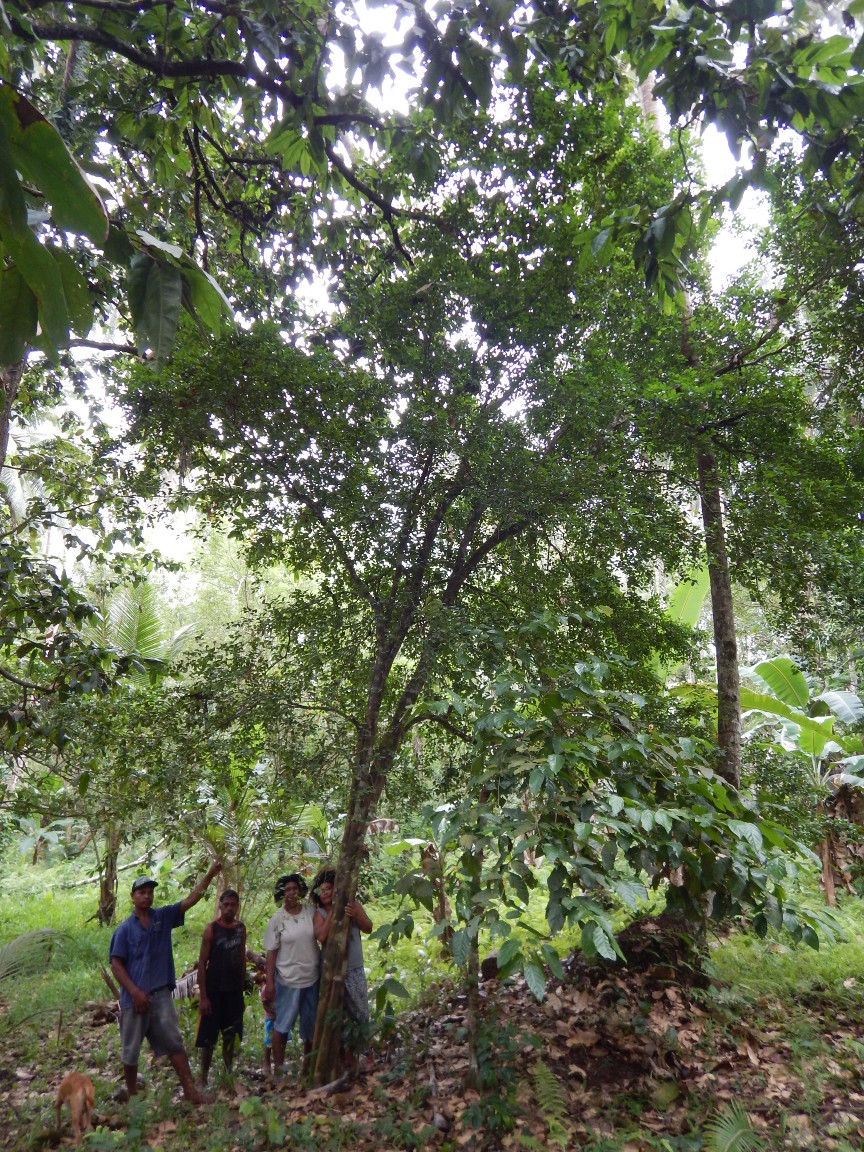
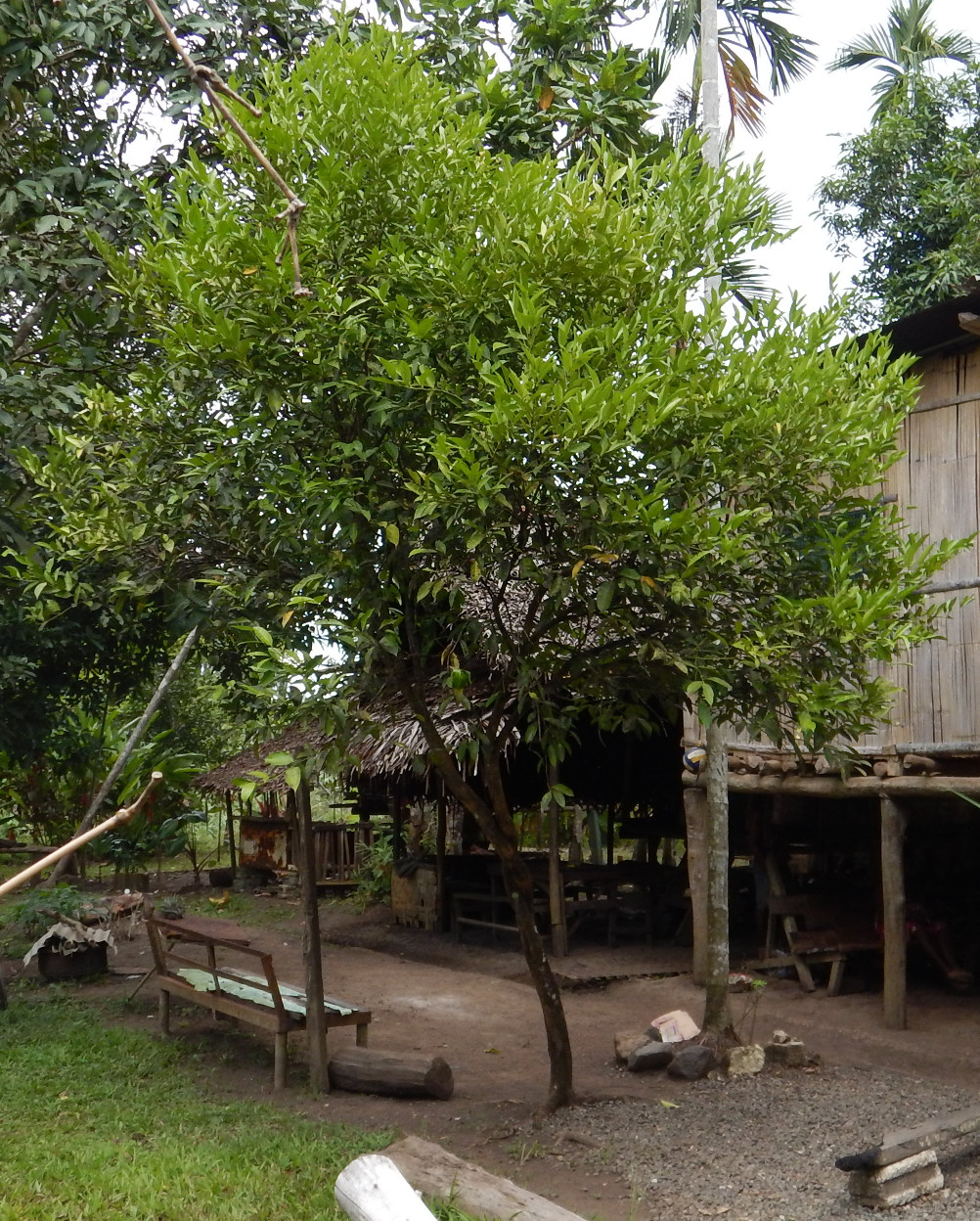
C'est un arbre de 12 m. La partie sur la photo fait 8 m mais l'arbre est très déséquilibré et continue sur la droite.
Diamètre du tronc, 25 cm.
Mes compagnons de découverte: Mathiew, Eddy, Yuna et Lino.
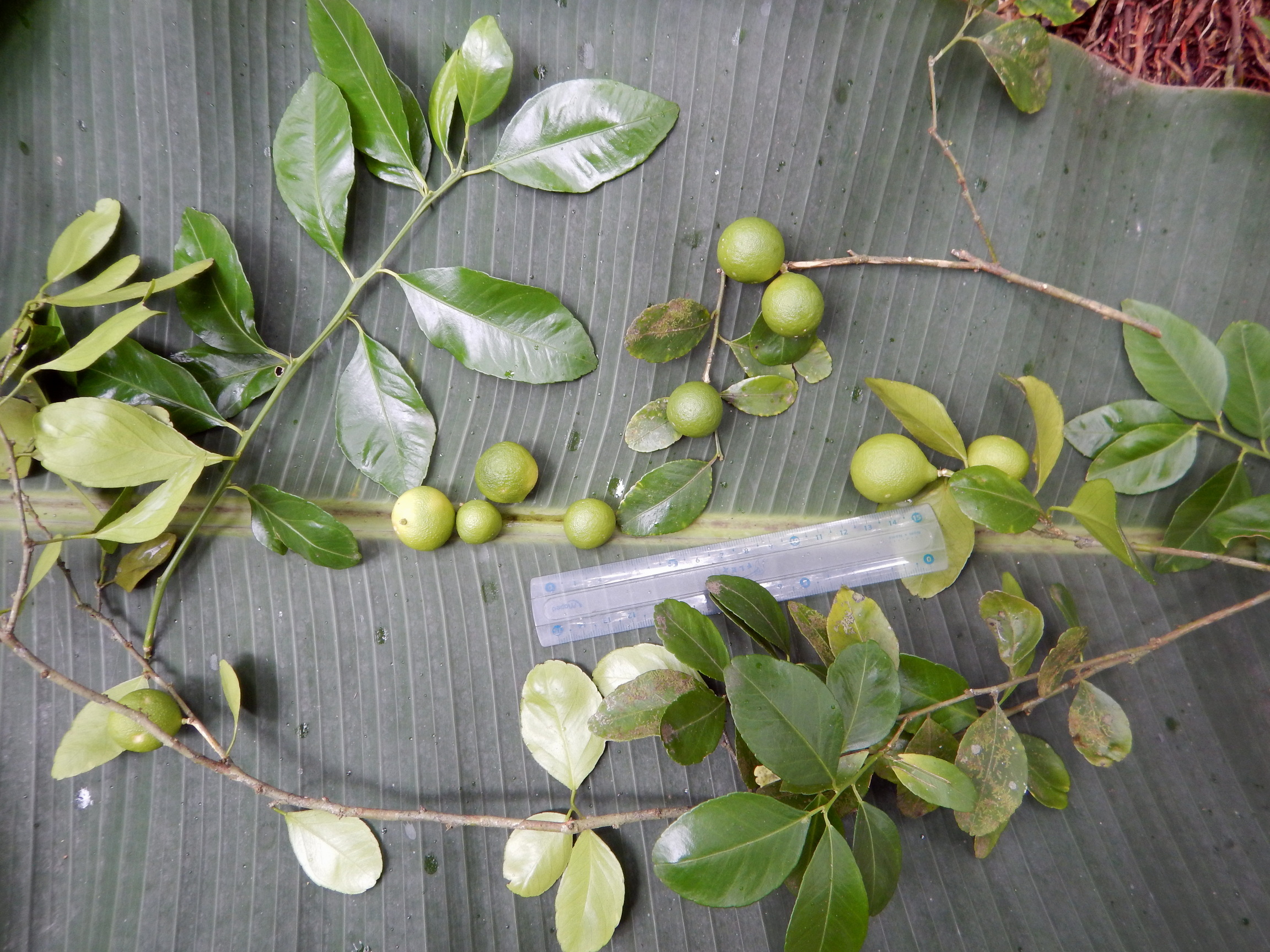
Je me fais un plan de travail avec une feuille de bananier posée sur le sol.
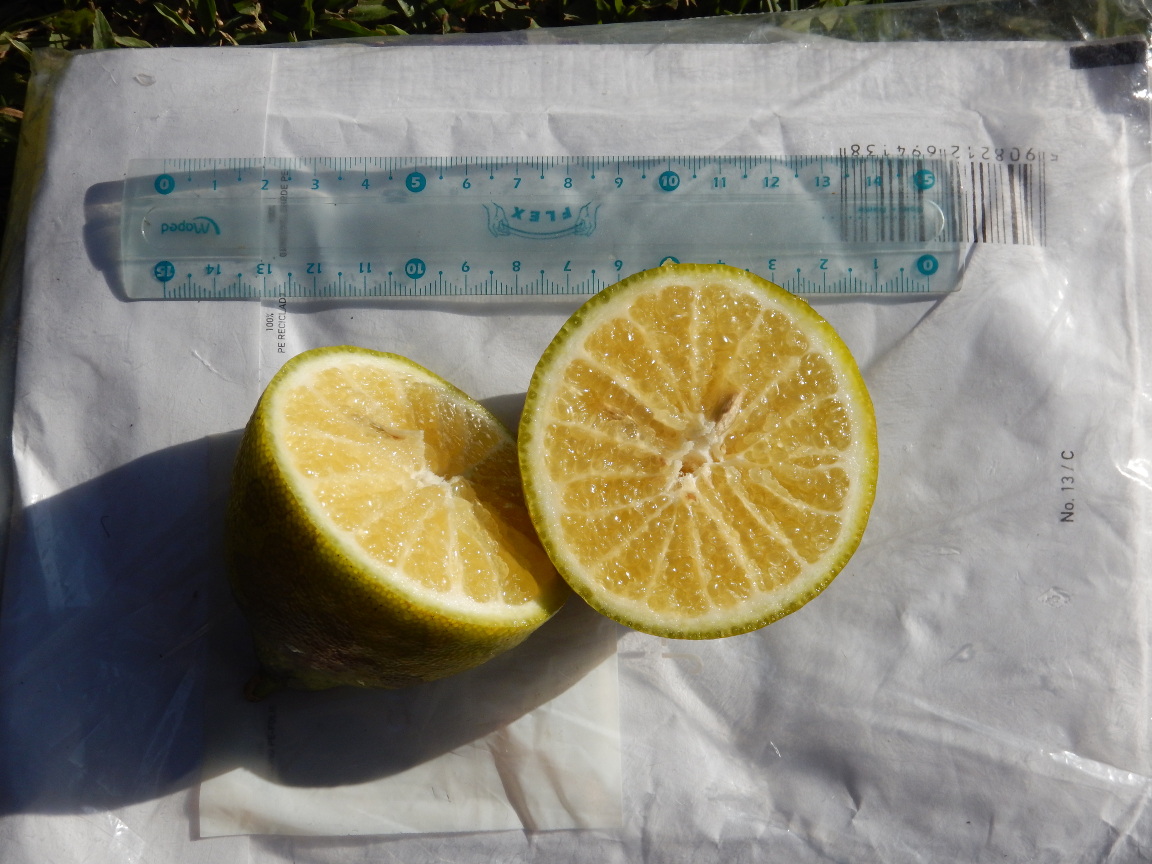
Fruit.
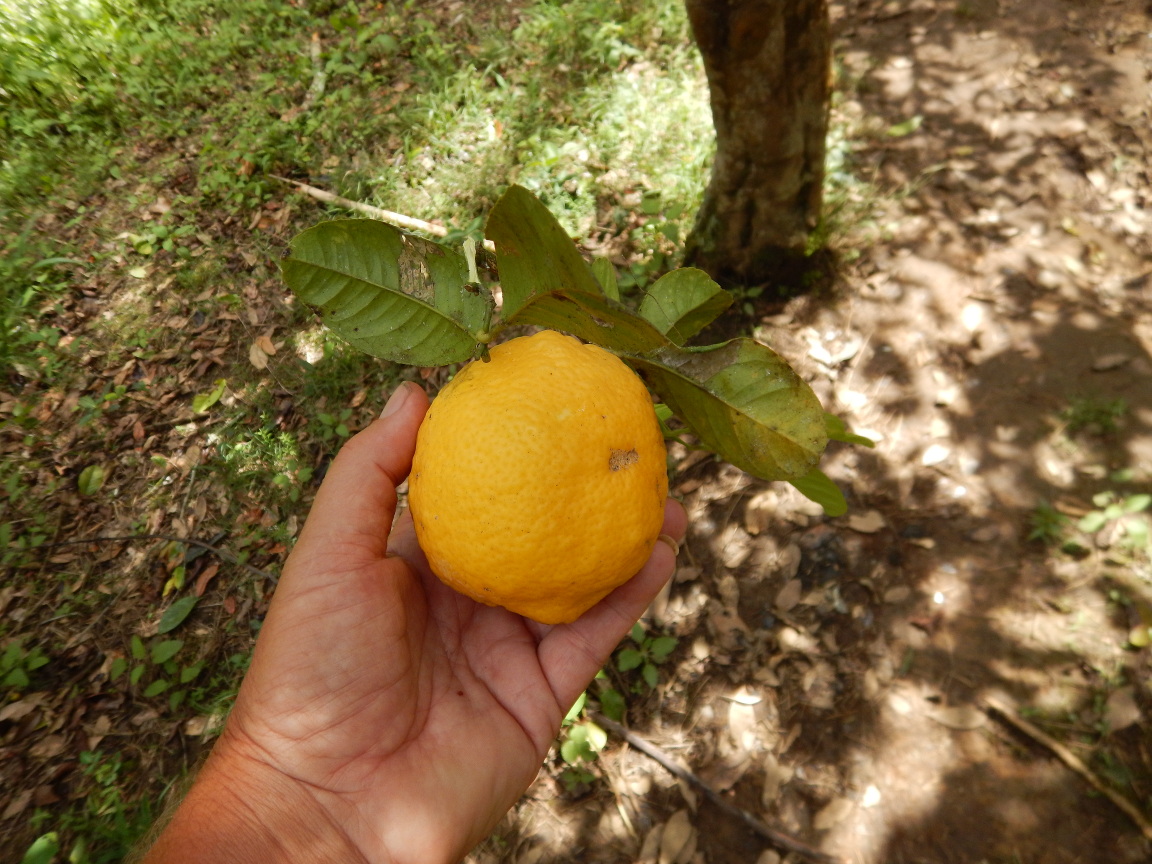
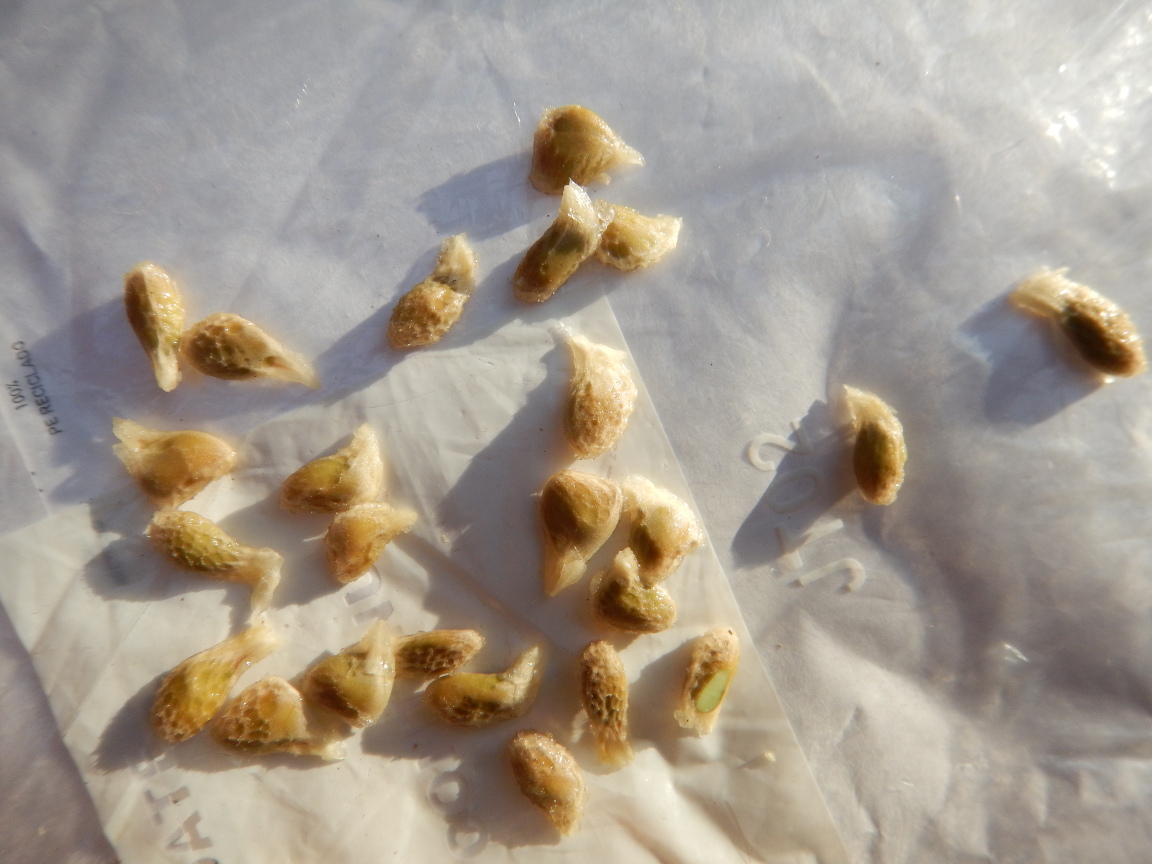
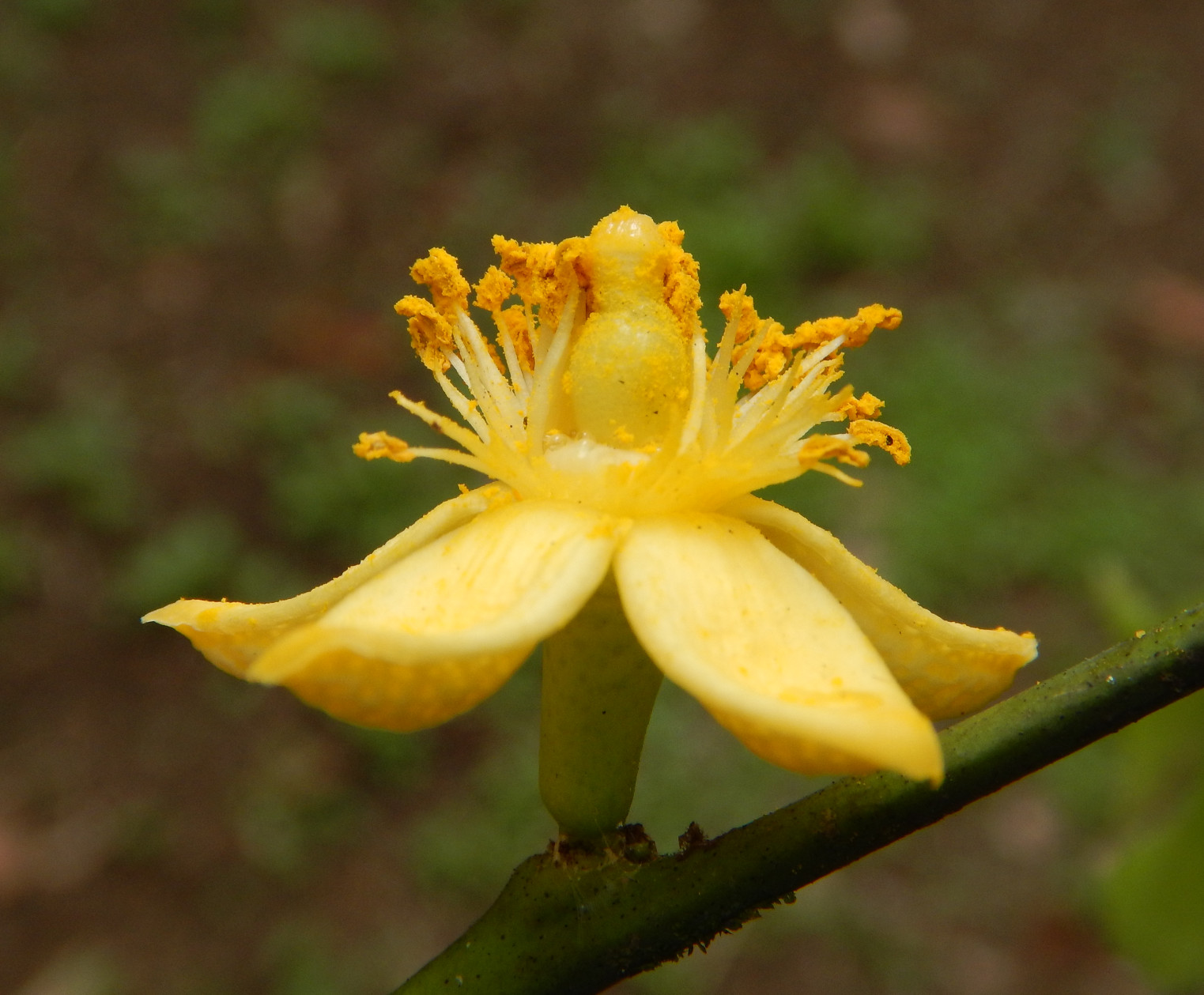
La pulpe est verte mais les femmes me disent que le fruit est jaune quand il est mûr. L'écorce est sucrée et la pulpe acide même à maturité. Tous les fruits sont parasités par un hyménoptère noir. Il n'y a aucune graine. On ne trouvera pas de fleurs non plus.
Feuilles.
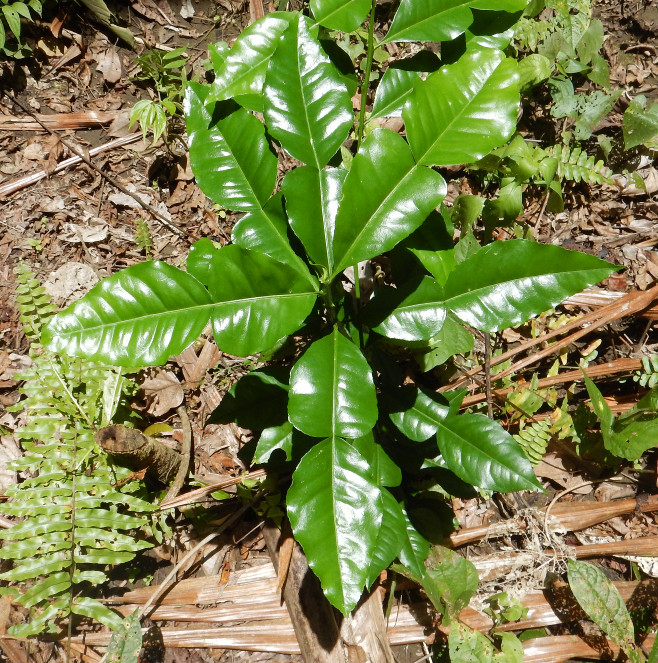
Sous l'arbre il y a de nombreuses germinations. Les feuilles sont incroyablement différentes de celles de la plante adulte. Ce dimorphisme foliaire est fréquent pour les agrumes de cette région, PNG et Australie.
On retourne sur la piste et en attendant un PMV je fais des photos. Une petite île proche de la côte.
Une plage de sable noir.
Je rentre à Alotau juste à temps pour prendre mon billet d'avion pour Port Moresby. Le départ est pour demain midi. J'abandonne l'idée de passer quelques jours de vacances. Tant pis pour les plongées dans les coraux et les vadrouilles dans la forêt et les montagnes.
Comme je n'avais ni bu ni mangé de la journée et que je voulais fêter la réussite à 100% de ma mission je me suis fait une grosse bouffe avec deux bières et une cigarette (je ne fume pas). Je retourne dormir au Transit Hotel. Ça sent la fin et ça fait tout de même un petit serrement de cœur.
Le gérant de la partie Goodenough du Transit Hotel me fait dormir dans une des chambres libres au prix du dortoir comme cadeau pour ma dernière nuit. Ce sera ma seule nuit dans un lit depuis deux mois de voyage. Je fais mes adieux à tous ceux de Goodenough avec qui j'avais sympathisé et je prends le PMV pour l'aéroport. Là je me rappelle que j'avais prévu de passer à la mairie pour demander l'origine du nom Orangerie bay, une baie sur la côte Sud, mais j'ai complètement oublié.
New Guinea s'écrit Niugini en Tokpisin.
Je vais chez la famille Sédé refaire le monde une partie de la nuit.
Jeudi 23 octobre.
Je vais passer une journée à Brown River faire mes au revoir à la famille, aux amis et aux voisins.
Encore une fois, les bilum servent à tout.
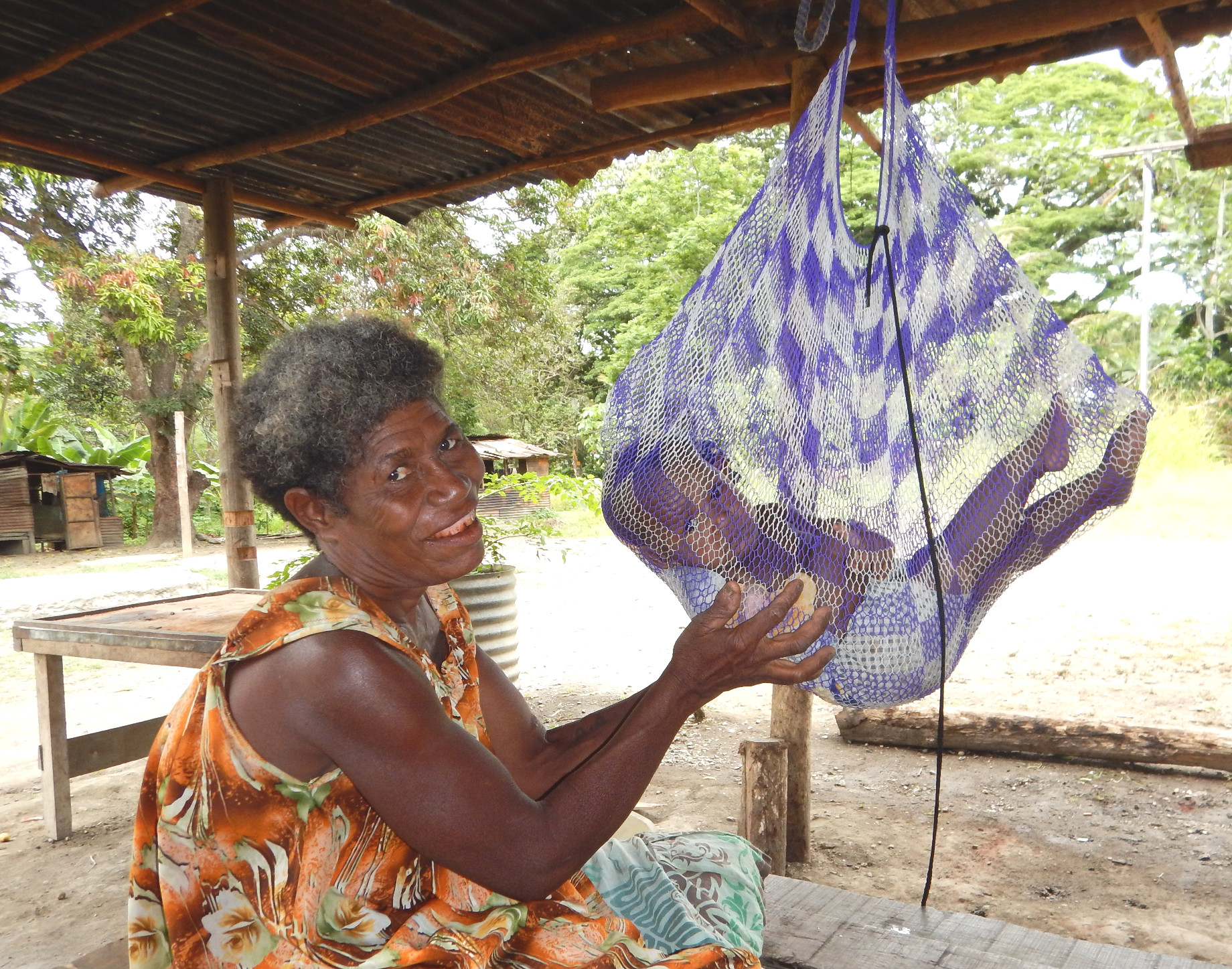
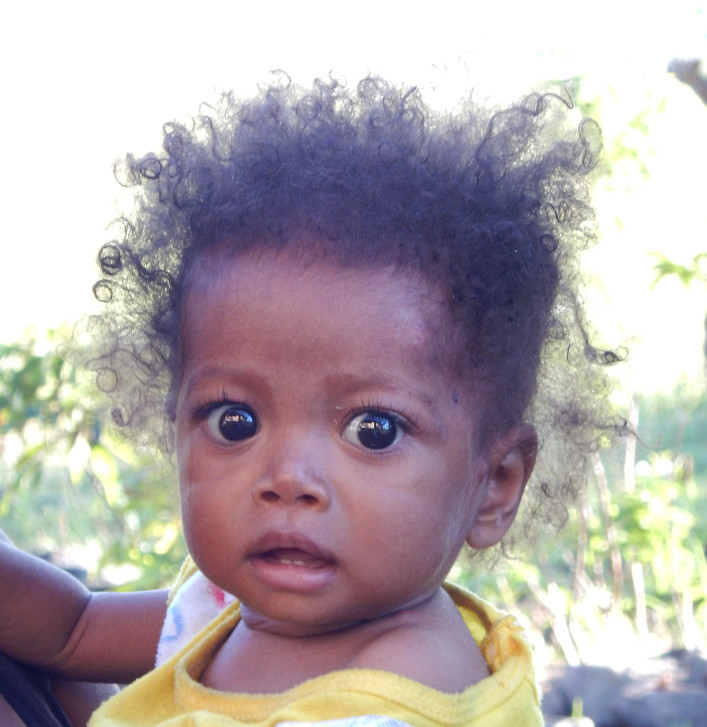
Avec le flash on voit les yeux du bébé qui observe le monde.
Vendredi 24 octobre.
Retour à Port Moresby. À Port Moresby il n'y a qu'un tout petit marché artisanal. J'y passe la journée. Les souvenirs pour touristes sont très difficile à trouver, vu qu'il n'y a quasiment pas de touristes...
Les marchands me disent que demain il n'y aura personne ici car ils seront tous à un marché artisanal organisé par une école à Ela Beach.
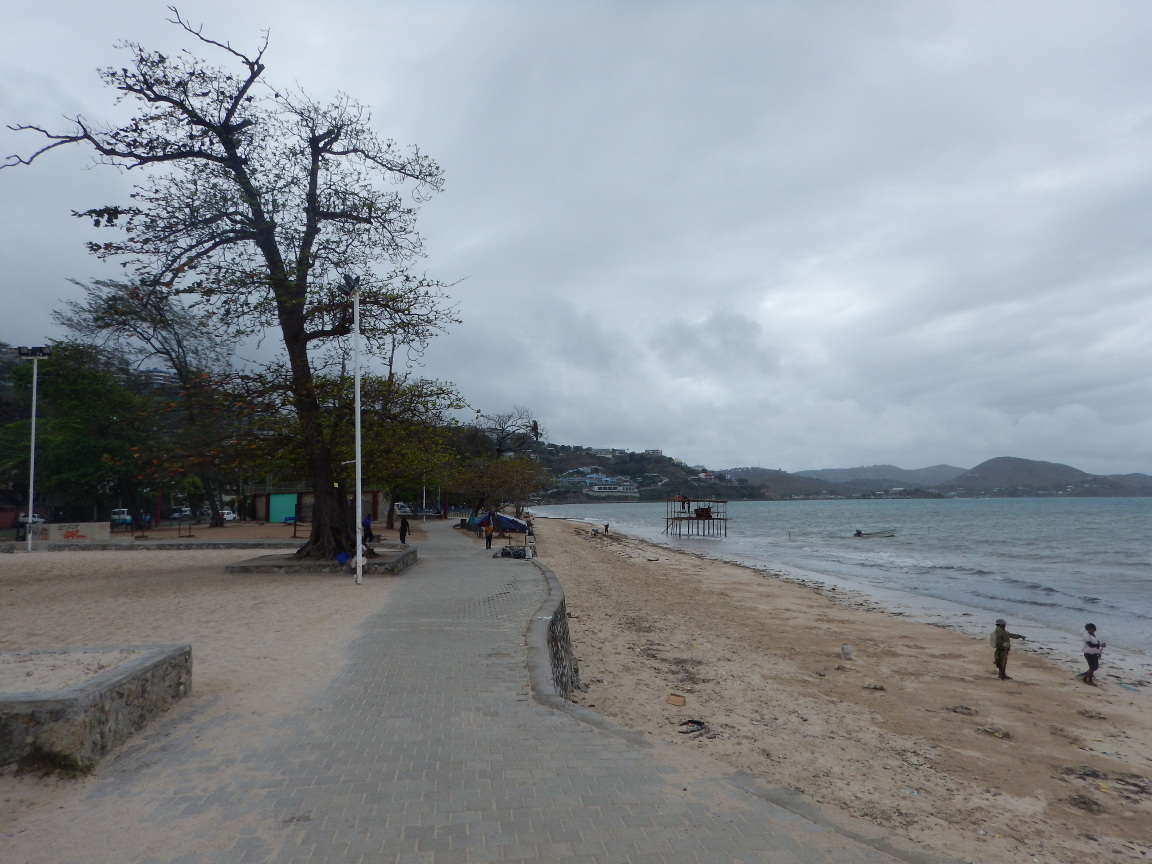
J'arrive à Ela Beach et je m'aperçois que j'étais déjà venu ici le 29 août. C'était un vendredi et c'était comme ça:
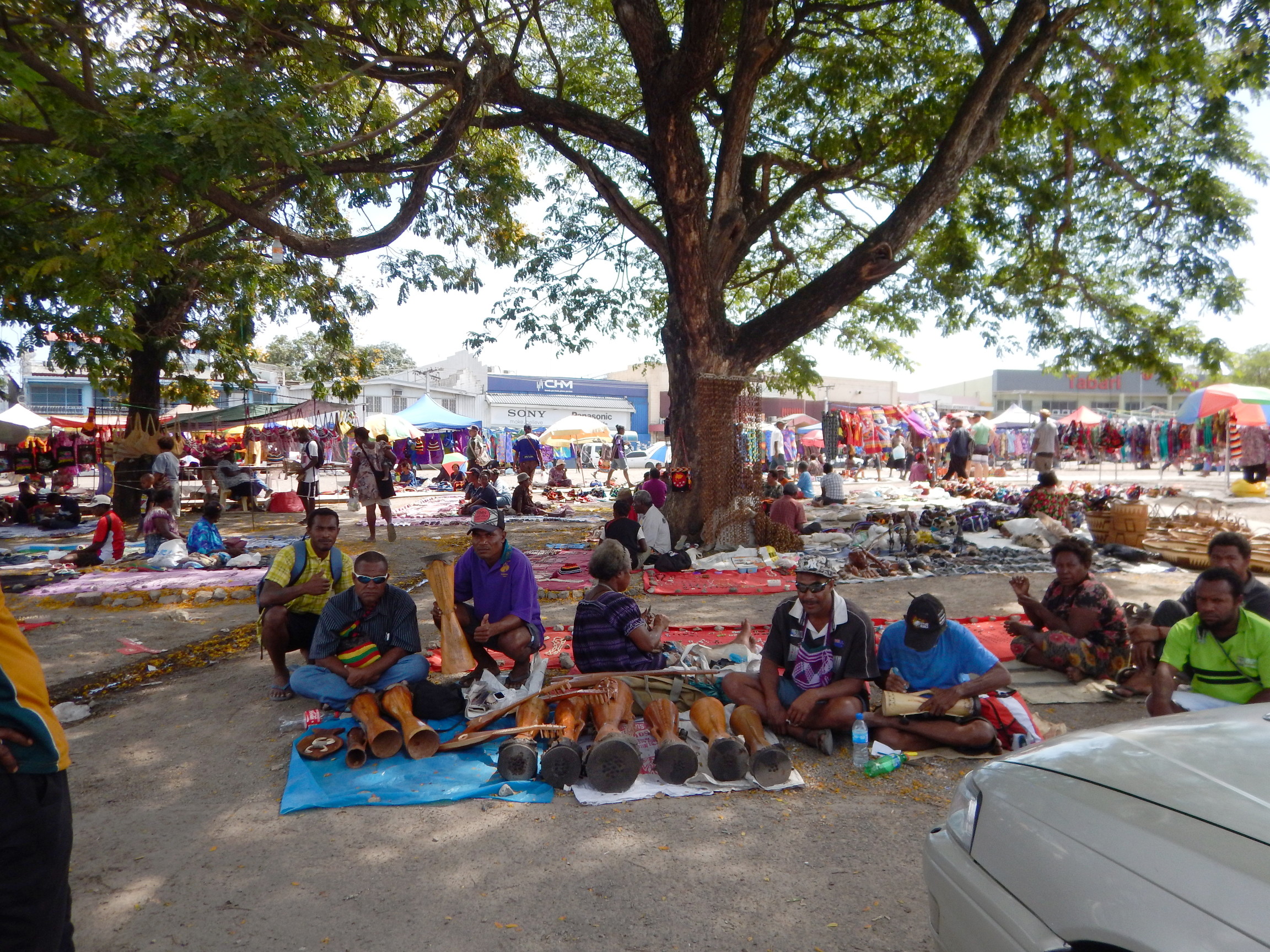
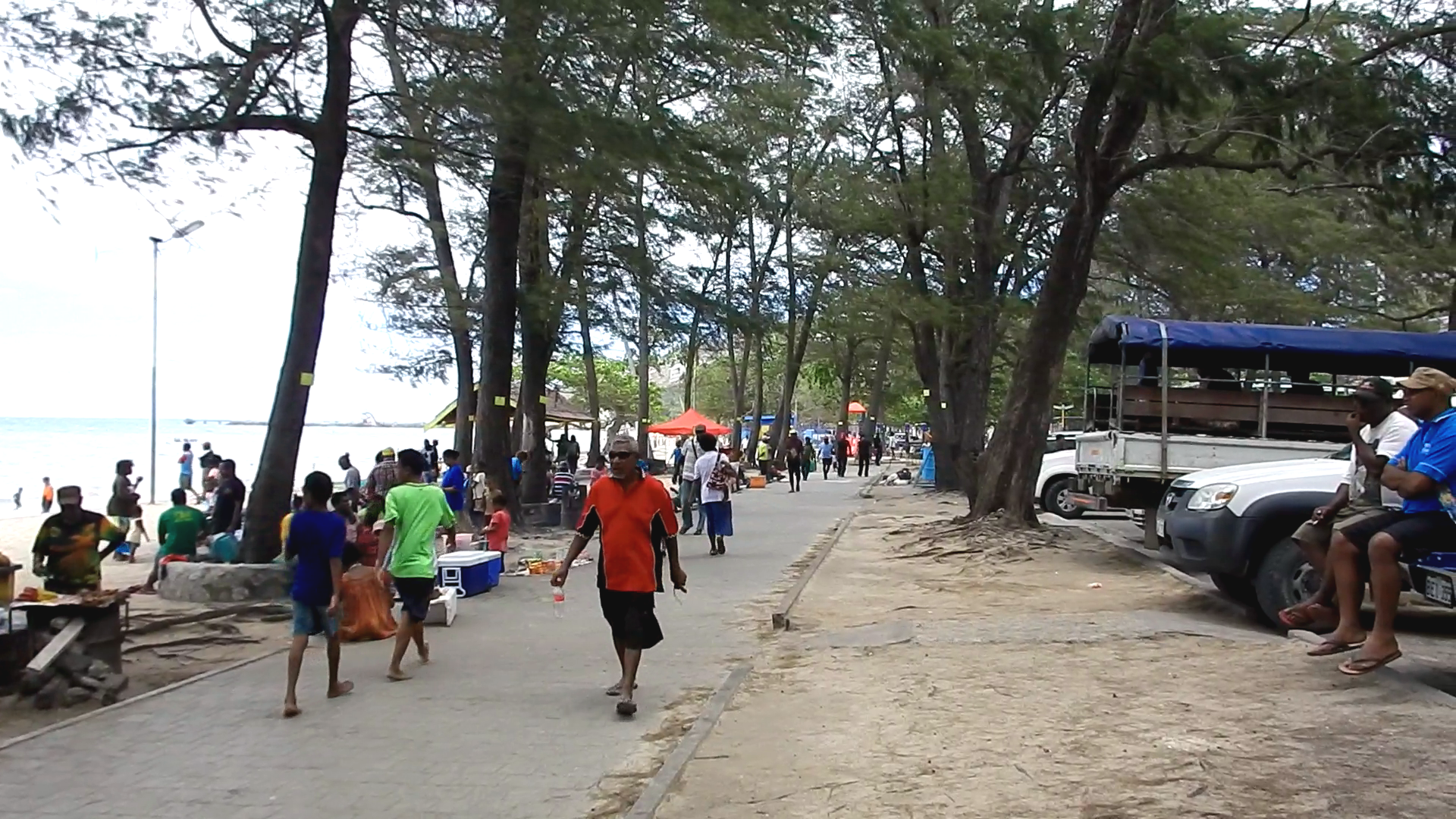
Aujourd’hui on est un samedi et voici comment c'est:
Plein de gens, beaucoup de vendeurs de nourriture et boissons à la sauvette.
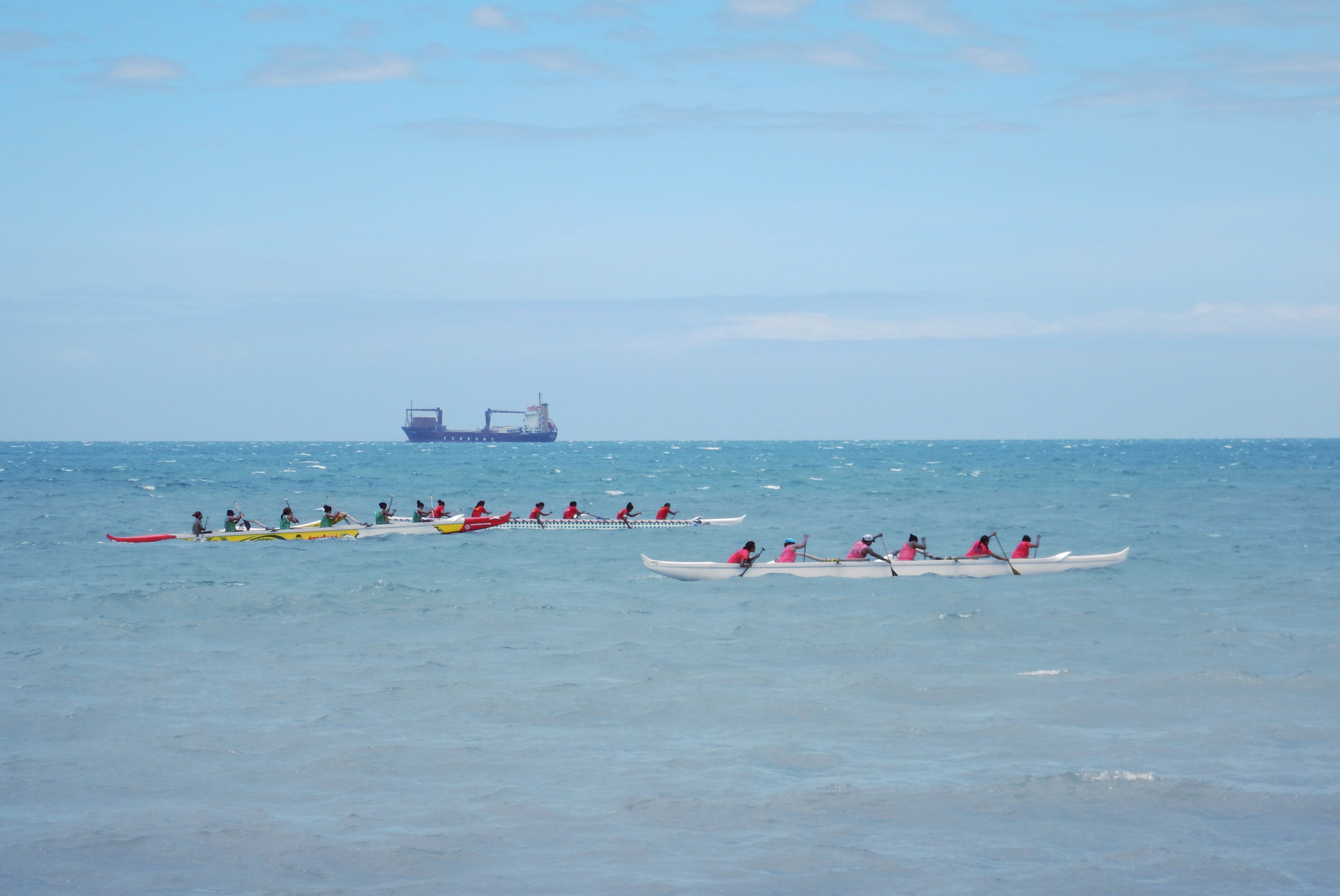
Des jeux de plage et des compétitions de canoë et de basket.
Ambiance sympathique.
J'ai bien aimé le look des toilettes publiques.
Je finis par trouver le marché artisanal. C'est dans la cours d'une école, ça doit leur tenir lieu de fête de l'école. Il y a beaucoup de vendeurs, beaucoup plus qu'au marché artisanal qui se tient tous les jours en ville et beaucoup de blancs aussi. C'est le quartier des hôtels, des ambassades et des grandes entreprises. Je suppose que ce doit être l'école fréquentée par les enfants de blancs. Surprise, le marché est animé par un groupe de musicien-chanteurs-danseurs de l'île de Bougainville. Le style fait plus polynésien que papou. Recyclage des semelles de tongs.
Ici vous avez une vidéo de l'orchestre.
Et ici une vidéo des danseuses.
Un peu de fraîcheur dans un pays assez austère par ailleurs. C'est le seul moment où j'ai vu cette élégance des mains que les africaines ont naturellement.
Je passe la journée au marché artisanal à papoter avec les marchands. Le soir, avec la plus jeune fille de la famille Sédé et une voisine on décide de vivre la grande aventure! On grimpe sur la colline juste derrière la maison.
Au premier plan le lotissement des employés de l'université et au fond, l'université.
Juste derrière l'université les futurs logements des sportifs des Jeux du Pacifique 2015.
Journée au marché artisanal. Je finis par acheter un Kundu, tambour local en peau de lézard. À gauche, en chemise jaune le fabriquant, un pasteur et à droite, qui tient mon kundu, le vendeur.
On dit que la Nouvelle Guinée est le pays de l'inattendu (PNG is The land of Unexpected). Pour moi, ça le sera du premier au dernier jour! De retour vers l'université voilà ce que je vois à un arrêt du PMV.
Un couscous (Spilocuscus maculatus). Sa peau est un des principaux ornements des costumes traditionnels.
En fait, la jeune fille monte dans mon PMV ce qui me laissera le temps de faire plein de photos.
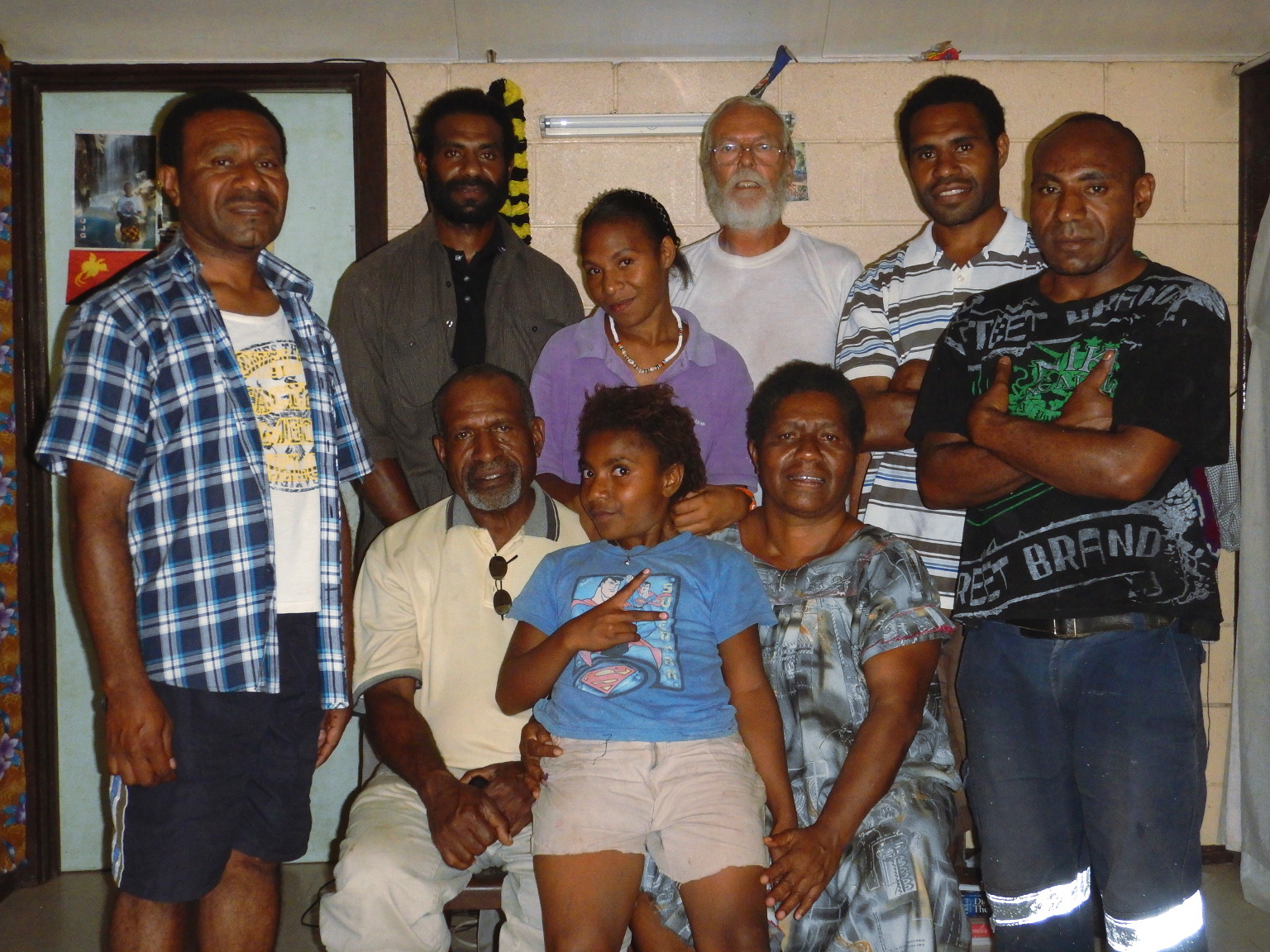
Le soir on décide de faire les photos souvenirs. La famille Sédé au complet.
C'est la seule fois du voyage où j'aurai le loisir d'utiliser mon trépied. Tout était trop rapide pour pouvoir l'utiliser...
Cette photo semble ordinaire, comme toutes les photos de personnes prises pendant le voyage. En fait c'est le résultat d'un travail acharné car les gens de PNG font naturellement cette tête et c'est toute une histoire pour les faire sourire.
Scène de la vie ordinaire. Je montre comment mon smartphone peut déclencher mon appareil photo.
La famille Sédé m'a offert (entre autres) un bilum d'apparat en plumes de casoar.
Or le Casoar est protégé. Je n'étais pas sûr de pouvoir passer la douane. Les vendeurs du marché artisanal m'ont dit que si les plumes sont sur un objet usuel ça passe sans problème mais par prudence Murphy un fils de la maison m'a accompagné jusqu'à la douane pour récupérer le bilum en cas de refus. Je me présente avec mon bilum en bandoulière et demande si je peux passer avec et le douanier me répond qu'ils sont très fièrs que des personnes étrangères s'intéressent à leur culture et qu'ils peuvent emporter les souvenirs qu'ils veulent. J'ai trouvé cette réponse très classe! Je me retourne vers Murphy et lui fait signe que c'est OK et je pars pour l'embarquement.
Dernière photo de Papouasie prise de l'avion avec le trouble du réacteur en travers. On voit nettement le "centre" de Port Moresby avec la plage d'Ela au premier plan.
14h 30 Port Moresby. 9h Hong Kong.
Mercredi 29 octobre.
6h Paris. 10h 30 Bordeaux. Je récupère mes bagages. Le Kundu est arrivé en bon état. 12h Bergerac.
Un an plus tard je ne suis toujours pas complètement revenu en France. La PNG occupe encore une grande partie de mon cerveau.









 Le voleur est parmi les gardiens de l'université!















































































































































 Il est vraiment temps de partir.